When crimping one-piece fittings, switching to a new SKU takes more than changing dies or selecting a machine program. A leftover fitting, an outdated work order, or a setting carried over from the previous job can cause errors in the next batch. Before restarting production, clear the work area, confirm the exact hose-and-fitting combination, verify the approved setup, and inspect and release the first assembly. Clear checkpoints before, during, and after each changeover help prevent mix-ups and keep every batch traceable.
Close the Previous Run Before Opening the Next
The safest transition starts by treating the end of the current order as a controlled production event. The next SKU should not enter the work area while usable parts, rejects, labels, paperwork, or program information from the previous run remain active.
Reconcile parts and work in process
Count or otherwise reconcile the completed assemblies, unused hose, unused fittings, rejected pieces, setup pieces, and any loose components according to the shop’s approved procedure. Return accepted unused stock to its identified location only after confirming the container and label match the parts. Place questionable, damaged, or unidentified pieces in a hold location; never drop them into a convenient bin because they look similar.
One-piece construction can reduce separate ferrule picking, but it does not eliminate mixing risk. Two fittings may have similar plated bodies and retained ferrules while differing in hose-side geometry, connection, dash size, angle, or approved crimp data. A loose fitting without reliable identity must not cross into the next job.
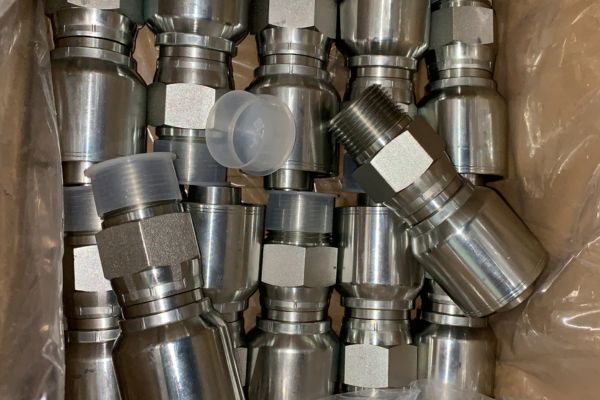
Clear the physical and digital line
Inspect the crimper table, die storage area, measuring station, hose-cutting area, bins, floor, scrap container, label printer, and any transfer tray used between operations. Remove the prior traveler, tags, samples, drawings, and handwritten settings. Close or sign out of the prior machine program according to the equipment procedure so that its values cannot silently remain in use.
Line clearance should be recorded, not assumed. A second-person or electronic confirmation may be required by the local quality plan. The person signing the clearance is confirming that the work area no longer contains active material or instructions that could be mistaken for the incoming SKU.
Admit the New Job Through Positive Identification
Bring the next job to the machine only after the cleared state is visible. The incoming hose, fitting, and traveler must agree as a complete combination; matching one field such as dash size is not enough.
Match the traveler to physical components
Read the full fitting SKU, hose manufacturer and series, hose ID or dash, fitting angle and end connection, and lot or batch identity where required. Compare those fields with container labels and the actual components. Check the hose layline and the fitting’s controlled identification features rather than relying on color, approximate length, or memory.
The job traveler should also identify the governing drawing or work instruction and its revision. If the component label is incomplete, the layline cannot be read, the fitting code is ambiguous, or the traveler describes a neighboring SKU, stop the changeover. Production pressure does not convert an uncertain identity into an acceptable match.
Segregate look-alike materials
Stage only the quantity and containers permitted by the approved material-control method. Keep adjacent SKUs physically separated and retain their labels with them. If two jobs use similar elbows, swivel ends, ferrules, or hose sizes, increase visual separation and identification rather than placing open cartons beside each other.
Useful segregation controls include:
- One active fitting SKU and one active hose identity at the crimper
- Closed or removed containers for every inactive SKU
- Clearly identified hold, scrap, and return-to-stock locations
- A dedicated first-piece location that cannot be confused with released production
- Labels that remain linked to the component lot throughout movement
Rebuild the Setup From Approved Data
Every new SKU requires its own verified setup basis. Do not retain a die, program, or crimp target merely because the next part has the same nominal hose size or resembles the previous fitting.
Link hose, fitting, machine, and tooling
Use the current approved data for the exact hose manufacturer, hose series, construction, size, fitting series, and retained ferrule design. Confirm the required hose preparation, insertion method, crimping machine, die set or tooling, measurement location, and acceptance criteria. Where the system permits more than one machine or tooling path, the traveler must identify the path actually authorized for this job.
Check the crimper and measuring instrument identifiers against the process record. Confirm that calibration or verification status is current under the shop’s system and that the selected dies are clean, intact, and correctly identified. Tooling that is damaged, mislabeled, or outside controlled status creates a stop condition even if it was used successfully on the preceding batch.
Prevent stale program carryover
Select or enter the new program through the machine’s approved method, then verify the displayed identity and revision against the traveler. A program name that contains only a dash size or an informal nickname is vulnerable to confusion. The process record should distinguish the exact combination rather than invite operators to choose the closest-looking option.
Never copy values from an adjacent SKU to fill a missing record. Do not reuse a prior crimp diameter, die selection, insertion depth, skive instruction, or other setting without explicit controlled approval for the new combination. If the approved data cannot be located or the machine entry conflicts with the document, hold the setup and resolve the discrepancy before making a production piece.
Make the Setup Piece a Controlled First Article
The first assembly is evidence that the newly established process was followed; it is not merely the first item off the machine. It must remain segregated until all required identity, preparation, assembly, and measurement checks are complete.
Verify preparation before crimping
Confirm the cut hose belongs to the new job and was prepared according to the applicable instruction. Check required cleanliness, cover preparation when specified, component condition, and the insertion reference before the assembly enters the crimper. A finished crimp measurement cannot prove that the hose was fully inserted or that the correct hose construction was used.
At the machine, compare the staged component and displayed setup with the traveler one final time. Confirm dies are installed and seated as the equipment procedure requires, guards and safety devices are in place, and the work area contains no leftover component from the previous run. Do not bypass an interlock or reach into hazardous tooling to correct a setup problem.
Inspect the completed first article
After crimping, inspect and measure the assembly by the current approved method. The check may include component identity, crimp location, required measurement positions, surface condition, insertion evidence, orientation, marking, and any other characteristics named by the process plan. Compare results only with the acceptance data that apply to this hose-and-fitting combination.
Do not adjust the machine by intuition until a number falls inside a remembered range. If the first piece fails, identify whether the cause is component identity, preparation, tooling, program, machine condition, measurement method, or source data. Segregate each setup piece and record the disposition; repeated trial pieces must not enter production or be returned to stock.
Release and Mark the First Acceptable Assembly
Production begins only after an authorized release. The release must make it clear which assembly was accepted, which process evidence supported it, and from what point the new batch became active.
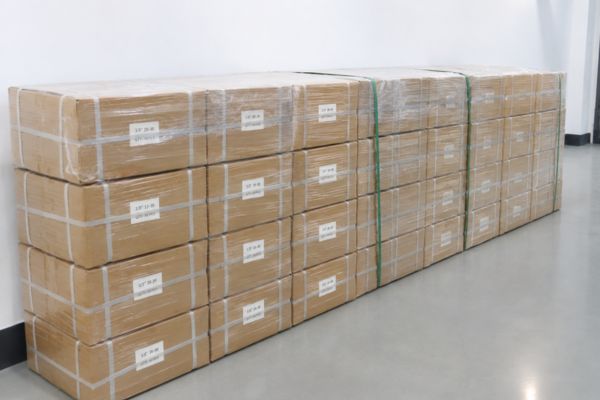
Create an unambiguous release record
Mark or tag the first acceptable assembly as required by the shop’s procedure, without damaging the hose, fitting, or sealing surfaces. Link it to the traveler, fitting lot, hose lot, machine, dies, program or setup record, measurement instrument, results, operator, reviewer when required, date, and document revision. If a retained sample or photograph is specified, preserve its identity and storage location.
The mark is not a general product approval. It confirms one documented setup under a defined process. A change in hose lot, fitting lot, machine, tooling, program revision, work instruction, or other controlled condition may require review or another first-piece check under local rules.
Keep unreleased pieces out of the batch
Use separate locations for pending, accepted, rejected, and investigation pieces. Production labels or batch containers should not be issued until release is complete. If production was started before the first-piece decision, the affected assemblies must remain on hold and traceable; they cannot be blended into accepted work simply because a later piece passes.
The release signal should be visible to downstream inspection and packing. This prevents a cart of unverified assemblies from moving while the paperwork remains at the crimper.
Preserve the Boundary Between Adjacent Batches
Good traceability shows exactly where the former SKU ended and the new SKU began. That boundary allows a later concern to be contained without questioning unrelated work.
Record the transition point
The production record should capture the previous job’s closing quantity and disposition, completion of line clearance, the next job’s component identities, the first acceptable assembly, and the new batch start. Where serial, label, bundle, carton, or time records are used, link the transition to the system that downstream teams can retrieve.
Avoid gaps created by unlabeled trays or work moved between shifts. A shift change during setup should transfer the clearance status, unresolved discrepancies, first-piece status, and staged materials through a documented handoff. Memory is not a reliable batch boundary.
Respond to a suspected mix without guessing
If a leftover fitting, conflicting label, or unexplained assembly is found after release, stop the affected work and contain material back to the last verified boundary. Preserve labels, travelers, machine records, setup pieces, and inspection results. Do not sort solely by appearance when exact identity requires measurement, drawing comparison, or controlled product marking.
The investigation should determine how the item entered the flow and whether the evidence can define the affected scope. Corrective action may involve material-control, labeling, program access, traveler design, or clearance steps—not only reminding the operator to be more careful.
Use Changeover Stop Points That Cannot Be Waived Informally
A short set of mandatory stop points makes the SOP usable at the machine. Each stop should name the missing evidence and the person or function authorized to resolve it.
Stop the changeover when any of these conditions exists:
- Previous-job parts, labels, records, or setup pieces remain unaccounted for
- Incoming hose, fitting, traveler, or lot identity is missing or conflicting
- The approved hose-and-fitting combination cannot be confirmed
- Required tooling, machine program, or process revision does not match the job
- A die or measuring device is damaged, unidentified, or outside controlled status
- The first article fails, cannot be measured by the approved method, or lacks release authority
- Batch-boundary or traceability records cannot identify where the new SKU begins
Resume only after the discrepancy is resolved and the resolution is recorded. Never treat a deadline, similar appearance, matching dash size, or a successful previous SKU as technical authorization for the new setup.
Conclusion
Reliable changeovers depend on a visible boundary between two jobs. Close and reconcile the old run, clear physical and digital work areas, admit only positively identified hose and fittings, and rebuild the setup from current approved data for the exact combination. Keep setup pieces segregated, inspect the first article beyond its finished diameter, and release production only through a traceable record. Then preserve the transition through lot, traveler, machine, tooling, and batch information so any later concern can be contained. Missing identity, conflicting instructions, uncontrolled tooling, failed first pieces, and broken traceability are stop conditions. Those controls make crimping changeovers between one-piece fitting SKUs repeatable without borrowing unsafe settings from adjacent work.
Frequently Asked Questions
Can the same dies stay installed when the next SKU has the same dash size?
Only when current approved data for the exact next hose-and-fitting combination authorize those dies. Matching dash size does not prove identical hose construction, ferrule geometry, tooling, or crimp requirements.
Should leftover acceptable fittings be returned to stock?
They may be returned only through the approved inventory procedure with positive SKU and lot identity and acceptable condition. Unlabeled or questionable pieces belong in a controlled hold location, not an active bin.
Does a passing crimp diameter release the first article?
No, a passing diameter is one process result. Identity, hose preparation, insertion, tooling, program, measurement method, orientation, condition, and all other required characteristics must also be accepted.
What if the machine program and printed instruction disagree?
Stop the setup and resolve which controlled revision governs before crimping production material. Do not choose the value that resembles the prior job or appears more convenient.
When is another first-piece check needed after release?
Follow the approved control plan for changes in lots, machine, dies, program, instructions, interruptions, or other defined conditions. Do not assume the original release remains valid after an uncontrolled change.