
Choosing between a gate valve vs ball valve depends on whether you require a slow-operating, full-bore isolation tool or a fast-acting, quarter-turn mechanism for frequent cycling. While both designs effectively stop fluid flow, their internal components dictate how your system manages pressure drops and long-term sealing integrity. Failing to select the correct valve for your specific medium can lead to costly leaks or total system failure. By matching the valve’s mechanical motion to your operational needs, you ensure maximum safety and efficiency for your facility.
What Is the Primary Gate Valve Vs Ball Valve Difference?
The primary difference between a gate valve vs ball valve lies in the mechanical motion used to obstruct flow, specifically comparing linear sliding versus rotary turning. Gate valves use a vertical wedge that moves up and down, whereas ball valves use a rotating sphere with a hole through the center. This distinction affects how much space you need for installation and how quickly an operator can shut down the line.
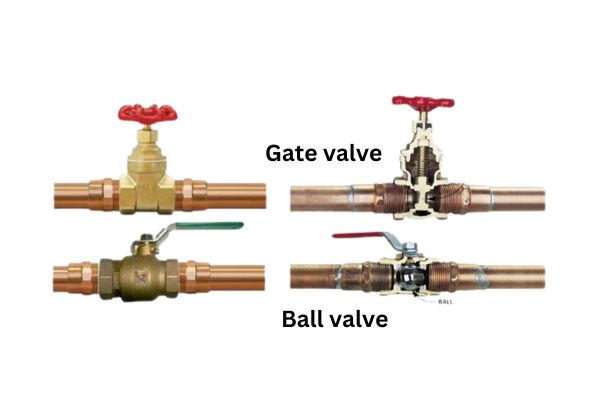
Defining Linear Vs Rotary Motion
- Gate valves operate with a linear motion perpendicular to the flow.
- Ball valves utilize a 90-degree rotary motion to change states.
- Rotary valves are generally faster to operate in manual setups.
Quick Overview of Flow Control Mechanisms
Understanding these mechanisms ensures you select a valve that matches your operator’s skill level and the automated requirements of the line. Because the internal parts move differently, the friction levels and wear patterns vary significantly between these two industrial standards.
The following table highlights the core mechanical differences between the two valve types.
| Feature | Gate Valve | Ball Valve |
| Motion Type | Linear | Rotary |
| Port Design | Wedge | Sphere |
| Travel Distance | Long | Quarter-turn |
How Does a Gate Valve Function in Industrial Piping?
A gate valve functions by lowering a metal wedge into the flow stream to create a physical barrier that stops the fluid. In any comparison of gate valve vs ball valve, the gate valve is recognized for providing a completely unobstructed path when fully open, which minimizes turbulence. These components are strictly designed for isolation rather than regulating the speed of the fluid.
Why Is Full Open or Closed Position Crucial?
- It prevents the high-velocity fluid from eroding the wedge faces.
- It eliminates the vibration often found in partially open valves.
- It ensures the seating surfaces remain clean for a tight seal.
Understanding Rising Vs Non-Rising Stems
Selecting the right stem type is vital for environments where vertical clearance is limited or where visual position indication is a safety requirement. Look at this: stem selection directly impacts how you monitor the system status during daily inspections.
The choice of stem design changes how you interact with the hardware in tight spaces.
| Stem Type | Space Requirement | Position Indicator |
| Rising Stem | High clearance | Visual confirmation |
| Non-rising Stem | Low clearance | External indicator needed |
What Are the Key Mechanical Features of Ball Valves?
The key mechanical features of ball valves center around a precision-machined spherical disc that rotates within the valve body. When comparing the gate valve vs ball valve , the ball valve is preferred for applications requiring immediate shut-off due to its quarter-turn handle. This design is exceptionally reliable and maintains its sealing capability even after years of high-frequency operation.
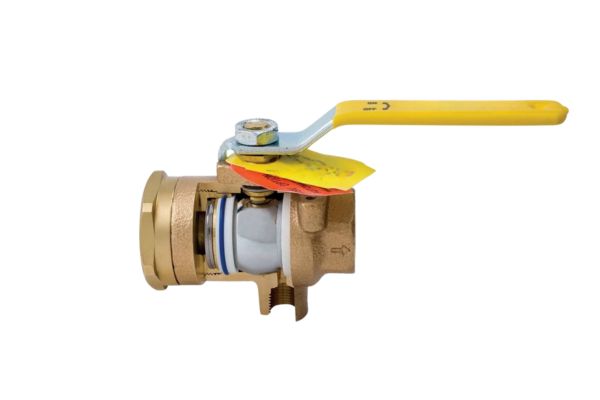
The Quarter-Turn Operation Principle
- Requires only a 90-degree turn to go from open to closed.
- Allows for much faster response times during pipe bursts.
- Simplifies the addition of electric or pneumatic actuators.
Full Bore Vs Reduced Port Configurations
Choosing between full bore and reduced port allows you to balance flow capacity against the initial cost and weight of the hardware. But wait: you must ensure the port size matches your pumping requirements to avoid excessive energy use.
The port configuration you select will dictate the overall efficiency of your fluid transport system.
| Port Type | Flow Restriction | Pressure Drop |
| Full Bore | None | Minimal |
| Reduced Port | Moderate | Significant |
Which Offers Better Flow Performance: Gate Valve Vs Ball Valve?
Ball valves offer superior flow performance because their internal bore can be manufactured to match the exact internal diameter of your pipe. When analyzing gate valve vs ball valve efficiency, both offer straight-through paths that minimize energy loss compared to globe valves. However, the smooth internal surface of a ball valve typically results in lower friction over time.
Minimizing Pressure Drop in Straight-Through Paths
- Both valves provide high flow coefficients (Cv values).
- Straight paths reduce the risk of sediment buildup in the line.
- Ball valves are easier to maintain in systems using cleaning pigs.
Why Is Operation Speed Critical in Valve Selection?
Operation speed is critical because it determines how effectively you can isolate a section of piping during a leak or a process emergency. Utilizing a gate valve vs ball valve for safety shut-offs usually results in picking the ball valve for its instant response. Gate valves require multiple turns of a handwheel, making them slower but safer against pressure surges.
Fast Shut-Off Advantages of Ball Valves
- Prevents significant fluid loss during unexpected pipe failures.
- Highly effective for automated systems with frequent cycles.
- Reduces the physical effort required from maintenance personnel.
Why Does Gradual Operation Prevent Water Hammer?
The slow closure of a gate valve is actually a safety feature in high-pressure steam or water lines to prevent destructive pressure surges. Look at this: speed isn’t always the goal when protecting heavy-duty piping from structural damage.
Selecting the right speed protects your joints and gaskets from being blown out by sudden pressure spikes.
| Operation | Shut-Off Speed | Water Hammer Risk |
| Ball Valve | Fast | High |
| Gate Valve | Slow | Very Low |
What Are the Sealing Capabilities for Gate Valve Vs Ball Valve?
Ball valves generally offer superior sealing capabilities because they often use soft, resilient seats that mold around the ball for a bubble-tight finish. When evaluating gate valve vs ball valve sealing performance, gate valves rely on metal-to-metal contact which can be compromised by small particles. Ball valves are the standard choice for gas applications where even the smallest leak is a safety hazard.

How Do Seat Materials Affect Seal Performance?
- PTFE seats provide excellent chemical resistance and low friction.
- Metal seats in gate valves handle much higher temperatures.
- Seat resilience determines how long the valve stays leak-free.
Bidirectional Vs Unidirectional Sealing Needs
Matching the sealing direction of the valve to your pipe’s flow direction prevents reverse-flow leakage and protects downstream equipment. But wait: always check your fluid’s chemical compatibility before picking a soft-seat material.
Reliable seals reduce your environmental impact by preventing hazardous leaks in your facility.
| Property | Gate Valve | Ball Valve |
| Seal Material | Metal or Rubber | Soft PTFE / Nylon |
| Leakage Rate | Minimal | Zero (Bubble-tight) |
Can These Valves Be Used for Throttling Applications?
Neither a standard gate valve vs ball valve is ideal for throttling because they are engineered primarily for fully open or fully closed states. Using a gate valve to regulate flow will cause the wedge to vibrate and erode, quickly destroying the sealing surface. Ball valves can handle light throttling, but the high-velocity fluid can tear the soft seats if the valve is left partially open.
The Dangers of Throttling with Gate Valves
- Turbulence erodes the bottom of the wedge and the body seats.
- Vibrations can lead to stem fatigue and mechanical failure.
- Achieving precise flow control is nearly impossible with a wedge.
When Can V-Port Ball Valves Regulate Flow?
Using a specialized V-port ball valve allows you to achieve linear flow characteristics without the typical wear associated with standard ball designs. Here is the deal: if you need regulation, standard on/off hardware will eventually fail your system.
Choosing a valve specifically designed for regulation prevents the need for frequent and expensive hardware replacements.
| Property | Gate Valve | Ball Valve |
| Seal Material | Metal or Rubber | Soft PTFE / Nylon |
| Leakage Rate | Minimal | Zero (Bubble-tight) |
What Are the Maintenance Needs for Gate Valve Vs Ball Valve?
Maintenance needs differ because gate valves are designed for in-line repair, while ball valves are often more durable but harder to service. In the gate valve vs ball valve comparison, gate valves often require frequent packing adjustments to stop stem leaks. Ball valves are legendary for their longevity, often lasting many years without any intervention in clean fluid services.
Longevity and Wear Patterns of Internal Parts
- Gate valves suffer more wear during every opening and closing cycle.
- Ball valves are somewhat self-cleaning as the ball wipes the seats.
- Corrosive fluids will impact metal-seated gate valves more rapidly.
Stem Leakage and Seat Replacement Procedures
Planned maintenance intervals for gate valves should focus on the packing glands, while ball valves should be monitored for any increase in operating torque. Look at this: ease of access determines your long-term labor costs and technician safety.
Predictive maintenance on these valves keeps your production lines running without unexpected interruptions.
| Maintenance | Gate Valve | Ball Valve |
| Repairability | High (In-line) | Moderate |
| Service Life | Medium | Very High |
How Do Size and Installation Space Impact Selection?
Size and installation space are critical because gate valves require significant vertical room for the stem to rise, whereas ball valves need horizontal space for the handle. When choosing a gate valve vs ball valve \, you must account for the total footprint of the actuator or the manual lever. In large-scale industrial projects, gate valves are often the lighter and more cost-effective choice for pipes exceeding 12 inches.

Suitability for Large Vs Small Diameter Pipes?
- Gate valves are the industry standard for very large water mains.
- Ball valves are preferred for compact plumbing and gas lines.
- The weight of a ball valve increases significantly as the bore grows.
Weight Considerations in Heavy-Duty Systems
Accounting for the total weight of the valve assembly prevents overstressing your pipe supports and structural beams in industrial settings. But wait: do not ignore the clearance required for a full 90-degree handle swing in tight corners.
Proper spatial planning ensures that your operators can safely reach and move the valves during an emergency.
| Parameter | Gate Valve | Ball Valve |
| Vertical Space | High | Low |
| Large Pipe Cost | Lower | Higher |
Conclusion
Selecting the right valve is the fundamental step in building a reliable, leak-free industrial system. By analyzing the trade-offs between operation speed, sealing requirements, and maintenance access, you can eliminate the most common causes of piping downtime. At Topa, we specialize in solving complex fluid control challenges with precision-engineered hardware. contact us today to secure high-performance valves for your next project and join our vision for a more efficient and sustainable engineering future.
FAQ
Can I use a gate valve to regulate water flow?
No, you should not use a gate valve for regulation. The high-velocity water flowing through a partially open gate will cause the wedge to vibrate and erode, leading to a permanent loss of sealing ability.
What’s the best valve for high-pressure gas lines?
The best choice is the ball valve. Its soft-seating design provides a bubble-tight seal that is significantly more effective than the metal-to-metal contact of a gate valve when preventing gas leaks.
How do I know if I need a rising stem gate valve?
You should choose a rising stem if you require a quick visual indicator of the valve’s position. Since the stem moves upward as the valve opens, an operator can determine the flow status from a distance without touching the hardware.
Can I install a ball valve in a vertical pipe?
Yes, you can install a ball valve in a vertical orientation. Unlike some gate valves that may collect sediment in the bottom pocket when vertical, the ball valve’s rotary design functions reliably regardless of its position in the piping.