
Transit damage begins with failure modes, not with a favorite packaging material. One-piece fitting packaging damage occurs when parts strike one another, threads or seats abrade against metal, caps fall off, heavy packs crush lighter ones, moisture reaches finished surfaces, contamination enters openings, or labels separate from the correct SKU. Effective protection therefore starts by identifying vulnerable features and the distribution route. Threads, sealing faces, swivel nuts, ferrules, and labels need different controls.
Map Vulnerable Features Before Choosing Packaging
The same pack can protect one fitting and damage another. Weight, geometry, protruding ends, surface finish, swivel movement, and mixed SKU sizes change the contact and load paths.
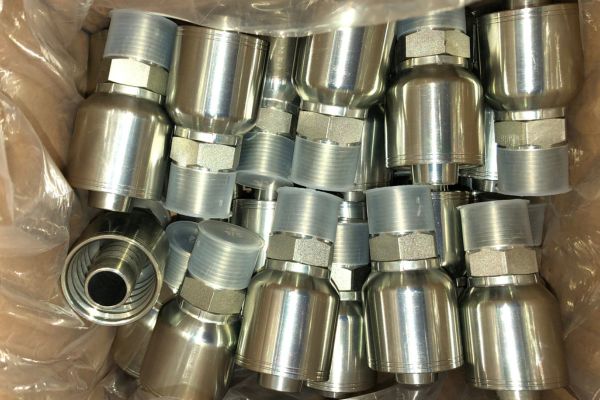
Threads and sealing faces need direct protection
External threads can be dented or flattened by impact, while internal threads can collect debris. Flare seats, cone seats, flat faces, and O-ring grooves can be scratched by loose metal contact or hard caps. Protection should remain attached through expected handling without rubbing the functional surface.
Caps and plugs must match the intended feature and finished condition. A very loose protector can fall off; an overly tight or poorly shaped one can damage threads, coating, or sealing edges. The objective is isolation and cleanliness, not simply covering the end with any available item.
Swivels, bends, and ferrules create load paths
A swivel nut can rotate and strike adjacent parts. Elbows create leverage and concentrated contact at bends. Ferrules can mark plated bodies or receive dents that later complicate visual inspection. Heavy straight fittings can crush lighter bent or small-dash units in the same carton.
Review how each part rests, shifts, and transfers load when the carton is tilted or stacked. A fitting that is stable on a packing table may become a moving impact tool during vibration and handling. Separate parts by vulnerability and weight rather than treating every one-piece fitting as equivalent.
| Vulnerable feature | Main transit risk | Protection objective |
| External or internal thread | Denting, cross-contact, debris, cap loss | Prevent hard contact and keep the opening covered |
| Flare, cone, flat face, or groove | Scratch, dent, embedded particle | Isolate the sealing path without rubbing it |
| Swivel nut | Impact, free movement, coating abrasion | Control movement and prevent contact with other parts |
| Ferrule and hose stem | Dent, deformation, contamination | Support the component and keep internal areas clean |
| Elbow or long fitting | Leverage, puncture, concentrated load | Restrain orientation and spread loads |
| Label and inner pack | Separation, tearing, moisture, mix-up | Keep SKU, batch, and quantity attached to contents |
Control Impact and Part-to-Part Contact
Impact is not limited to a dropped carton. Repeated low-energy movement can dent threads, wear plating, loosen caps, or create metal particles over a long route.
Prevent fittings from becoming loose projectiles
Use inner packs, cells, wraps, dividers, trays, or another validated restraint to limit movement. The selection should reflect part mass, geometry, surface sensitivity, shipment duration, transfers, and handling method. No single material or pack count is universally correct.
Test the arrangement under the organization’s defined transport simulation or trial shipment when risk justifies it. Listen for movement only as a screening clue; silence does not prove that loads are distributed safely. Open and inspect samples afterward for thread, seat, coating, cap, label, and carton changes.
Separate heavy and light parts
Do not place dense fittings above small or fragile packs without a structure that carries the load. Carton stacking can transfer force through inner bags even when parts do not move laterally. Elbows and long fittings may puncture thin inner packaging or focus force on another sealing end.
Arrange layers so weight reaches suitable supports rather than vulnerable products. Avoid empty space that allows acceleration and avoid overfilling that preloads threads, swivels, or cartons. The correct fill condition comes from the specific packaging design and logistics route, not a universal weight rule.
Prevent Abrasion, Cap Loss, and Loose Debris
Abrasion gradually removes or mars the finished surface. It can occur between parts, between a fitting and divider, or under a cap that traps hard particles.
Isolate metal surfaces that can rub
Inspect likely contact points: wrench flats against plating, ferrules against bodies, nuts against seats, and bent ends against carton walls. Repeated rubbing can create bare areas, staining, metal dust, or damaged markings even without a visible impact event.
Separation should not shed fibers or particles into open passages. A soft material is not automatically suitable if it absorbs oil, traps moisture, transfers residue, or tears around sharp threads. Define cleanliness and compatibility requirements for the actual product.
Keep protectors attached and clean
Verify that caps and plugs remain in place after packing, handling trials, and receipt. They should be clean, identifiable where necessary, and appropriate for the thread or sealing feature. Reused protectors need controls that prevent embedded chips or mixed residues from scratching the next part.
A missing cap should trigger inspection of the exposed thread, seat, groove, or bore. Replacing the cap at receiving does not erase exposure. Record loose protectors, particles, and the affected handling unit so the packing method can be reviewed.
Manage Moisture and Corrosion Risk
Moisture can enter through humid air, rain exposure, condensation, wet cartons, or temperature changes during transport and storage. Plated parts still need a packaging plan suited to the route and dwell time.
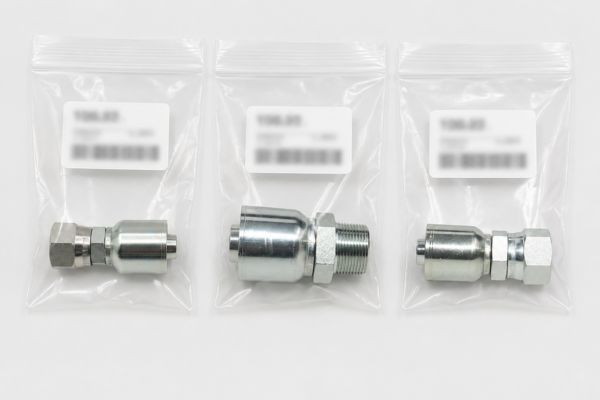
Understand the moisture path
Identify climate transitions, ocean or land segments, unconditioned warehouses, container dwell, seasonal humidity, and the chance of direct water exposure. A sealed pack can trap moisture already present at packing. A dry-looking carton at departure does not guarantee dry parts at destination.
Parts should enter packaging clean and dry under the defined process. Inner barriers, desiccants, corrosion inhibitors, ventilation, or other controls may be considered, but their suitability depends on material, coating, cleanliness, seal compatibility, shipment duration, and disposal requirements. This article does not prescribe a universal method.
Inspect moisture and contamination evidence
Staining, white corrosion products, red rust, damp labels, softened cartons, and condensation are useful findings. Record their location, extent, batch, and package layer. Do not equate a coating test duration with exact field protection or assume one dry sample clears the shipment.
If moisture exposure is suspected, segregate affected units and inspect threads, sealing surfaces, bores, swivels, and coating. Follow the approved cleaning or disposition process. Abrasive removal can damage functional surfaces and should not be used merely to improve appearance.
Packaging must also keep manufacturing residue, torn material, dust, water, and mixed hardware away from openings. Cleanliness can be lost at either end of the logistics chain.
A cap can trap chips just as effectively as it blocks dust. Confirm the required cleanliness and dryness before closing the fitting. Avoid staples, loose fasteners, cut film, cardboard dust, and fragmented dividers near open ports.
Define how operators handle dropped parts and damaged inner packs. A fitting picked up from a dirty floor should not return directly to a clean pack. Provide a quarantine and recleaning path that preserves batch identity.
Receiving teams should open cartons away from machining dust, rain, and uncontrolled traffic. Cut straps and tape without allowing fragments to fall into bags. Keep parts capped until inspection or use, and close any opened unit that returns to storage.
Do not use compressed air casually on open fittings. It can drive particles deeper, spread contamination, or create safety hazards. Use the approved cleanliness and drying procedure for the component and application.
Preserve Labels and Prevent Mixed SKUs
Wrong identity can be as damaging as a scratched seat. Visually similar fittings may differ in thread, sealing method, port dash, hose dash, material, finish, or orientation.
Attach identity to every level that can separate
Outer carton, inner pack, and any smaller unit that may enter inventory independently should retain the necessary SKU, description, batch, quantity, and handling-unit link. Barcodes should resolve to readable data and remain scannable after expected moisture and abrasion.
Do not place the only label on removable wrapping that receiving discards. If parts are repacked, create child labels linked to the original batch before they leave the controlled station. Preserve the original source label in the system or record.

Prevent mixing during pack and receipt
Use line clearance, one-SKU or one-batch work zones where practical, count reconciliation, label verification, and closed-container rules. A leftover fitting on a packing table can contaminate the next carton even when the printed labels are correct.
At receipt, compare outer and inner labels before combining quantities. Quarantine mismatches, unmarked bags, unexpected finishes, or mixed configurations. Never assign an unknown part to the most likely SKU based on appearance.
Inspect the Shipment at Receiving
The outer carton is evidence, not a verdict. An intact carton can contain abraded parts, and a damaged carton can contain undamaged, well-protected units.
Document before rearranging contents
Photograph all carton sides, labels, wet or crushed zones, punctures, tape, pallet condition, and how inner packs sit when first opened. Link images to the receipt, SKU, batch, and handling unit. Preserve damaged caps, separators, and representative packaging when investigation is likely.
Check quantities and label agreement before moving parts to new bins. Sample parts from vulnerable locations, such as carton corners, upper and lower layers, heavy-light interfaces, and areas near visible damage, according to the inspection plan.
Inspect functional features, not only appearance
Review threads, starts, seats, faces, grooves, bores, swivel movement, ferrules, bends, coating, caps, and contamination. Use the specified thread, seat, dimensional, or surface methods when acceptance requires them. Do not approve a damaged thread or sealing face because the carton looks good or the fitting can be forced into a mating part.
Record pass, failure, uncertainty, and access limitations. Segregate affected and potentially related stock until the scope and disposition are defined. Replace packaging only after evidence is captured and traceability is maintained.
Use a Packaging-Risk Review Checklist
Review the pack as a system joining product features to the actual logistics route. The checklist should be completed before approval and revisited after damage trends or route changes.
Verify protection and identity
- List vulnerable threads, sealing faces, grooves, swivels, ferrules, bends, finishes, and markings.
- Identify impact, vibration, abrasion, crushing, puncture, cap-loss, moisture, and contamination paths.
- Separate heavy, light, long, bent, and surface-sensitive parts where their load paths conflict.
- Confirm protectors remain attached without damaging functional surfaces.
- Check that inner materials do not shed, transfer residue, trap moisture, or abrade coating.
- Define carton fill, restraint, layer support, stacking, and handling for the specific route.
- Keep SKU, batch, quantity, and handling-unit labels attached at every separable level.
- Establish controls for line clearance, mixed stock, dropped parts, and repacking.
- Define receiving photos, sample locations, functional checks, and quarantine triggers.
- Review shipment trials and actual damage data before changing the packaging design.
The checklist establishes questions, not universal performance values. Carton strength, drop testing, corrosion protection, and sampling should follow the agreed specification and distribution risk.
Conclusion
Transit protection should be designed around failure modes and vulnerable fitting features. Threads and sealing faces need isolation, swivels and elbows need movement control, ferrules and finishes need protection from concentrated contact, and every separable pack needs durable identity. Inner restraint, carton loading, moisture control, cleanliness, and label hierarchy must work together across the actual route. Receiving teams should document the unopened condition and inspect functional surfaces rather than treating the outer carton as proof. The pack should be revised from recorded damage patterns, not from preference or appearance alone. Before approving a plan for one-piece fitting packaging damage prevention, define the route, part mix, load paths, environmental exposure, cleanliness requirement, batch-label chain, receiving checks, and evidence from controlled shipment evaluation.
Frequently Asked Questions
Does every thread need a cap or plug?
Protection depends on the feature and agreed packaging design, but exposed functional ends need a method that prevents impact and contamination. The protector itself must not damage the surface.
Is bulk packing acceptable for one-piece fittings?
It may be acceptable only when validated for the parts, route, loading, finish, and cleanliness requirements. Heavy contact, abrasion, cap loss, and SKU mixing must remain controlled.
How can mixed SKUs be prevented during packing?
Use controlled work zones, line clearance, label scans, count reconciliation, closed units, and child labels for repacks. Never identify leftover or unlabeled parts by appearance alone.
What should be done when moisture is found inside a carton?
Document the layers and affected units, segregate the stock, and inspect functional surfaces and coating under the approved plan. Do not assume drying alone restores acceptability.
Does a damaged outer carton mean every fitting should be rejected?
Not automatically. Preserve the evidence, define the affected scope, and inspect labels, inner protection, vulnerable features, and contamination against the specified acceptance criteria.