
Hydraulic fluid compatibility must be verified across the complete hose assembly, not inferred from the fitting metal or a general fluid name. For hydraulic fluid compatibility in one-piece fitting selection, review the exact base material, plating, O-ring, sealing element, hose tube, cover, ferrule, adhesive system, fluid formulation, concentration, temperature, contamination, and exposure duration. A mechanically matching fitting can still be unsuitable if one material swells, hardens, corrodes, softens, or loses sealing performance. Mineral-oil experience does not approve every water-containing, synthetic, biodegradable, or specialty fluid. The safe approach is to identify the actual fluid and every wetted material, then use current product and fluid data for that exact condition.
Compatibility Belongs to the Full Assembly
Fluid contacts more than the fitting body. It may reach plating at threads, an O-ring, a bonded seal, the hose tube, adapters, ports, valves, and contamination left from assembly, so the weakest incompatible material can limit the configuration.

Map every wetted component
Create a material path from reservoir to actuator for the section under review. Identify the fitting base material and finish, each seal compound, hose tube, coupling, adapter, port, valve, and cleaning residue that may contact the fluid. Do not assume a component is isolated merely because its sealing element is external; leakage, permeation, assembly practice, or port design may create contact.
Use the exact fluid identity
A category such as “hydraulic oil” is not sufficient. Record product identity, base chemistry, additives, concentration or water content where relevant, approved mixing rules, contamination limits, and operating temperature. When the fluid changes, previous assembly approval should be reviewed rather than inherited automatically.
Prepare these inputs:
- Exact fluid product and current technical information.
- Concentration, water content, additives, and permitted variation.
- Normal, startup, peak, and storage temperatures.
- Fitting, coating, seal, hose, adapter, and port material identities.
- Pressure duty, exposure duration, maintenance, cleaning, and contamination conditions.
Mineral Oil Requires Specific Confirmation
Mineral-oil-based fluids are common, but familiarity can encourage overgeneralization. Compatibility still depends on the particular fluid, additives, temperature, hose tube, seal compound, coating, and equipment requirements.
Common use is not universal approval
A fitting previously used with one mineral oil has not been proven with every mineral-oil formulation. Additive packages, viscosity grade, contamination, and operating temperature may differ. Verify the product sources for the actual combination rather than relying on shop experience or a generic statement that steel and oil are compatible.
Aging and maintenance affect the condition
Oxidation products, water contamination, particles, and mixed fluids can change the environment that seals and surfaces experience. A compatible new fluid does not make a contaminated system acceptable. Maintenance should identify the fluid used, prevent unapproved top-ups, control containers and transfer equipment, and investigate unexplained seal or coating changes.
Sampling and maintenance observations can reveal that the real system no longer matches the approved clean-fluid assumption. Results must be interpreted under the equipment’s maintenance program, not converted into a new compatibility claim by themselves. When contamination is found, trace its source, evaluate affected components, and follow approved filtration, fluid replacement, and inspection procedures. Replacing only a leaking fitting may leave the chemical or contamination cause unchanged.
Water-Glycol and Water-Containing Fluids Need Broader Review
Water-containing fluids can create different corrosion, lubrication, seal, coating, and hose-tube concerns from mineral oil. Approval should address the specified formulation and concentration, not the word “water-glycol” alone.
Water changes material exposure
Base metals, plating systems, passivation, and adjacent components may respond differently when water is present. Concentration, contamination, dissolved substances, temperature, and stagnant areas can influence corrosion. A salt-spray report is not a compatibility report for internal exposure to a hydraulic fluid.
Seals and hose tubes remain critical
An O-ring or hose tube suitable for mineral oil may not be approved for a water-containing fluid, and a dimensionally similar substitute may react differently. Confirm compound and tube identities through current data. Do not change seal materials, hose series, or cleaning products without reviewing the complete assembly and crimp requirements.
| Review item | Why it matters | Evidence needed |
| Exact fluid identity | Category names hide formulation differences | Current fluid product data |
| Concentration or water content | Material response may change with composition | Approved range and control method |
| Base metal and plating | Internal fluid can affect surfaces and corrosion | Part-specific material and finish compatibility |
| O-rings and seals | Swelling, hardening, or loss of seal may occur | Exact compound compatibility data |
| Hose tube and construction | Tube and adhesive system contact the fluid | Current hose-series approval |
| Temperature and duration | Compatibility can change with heat and time | Combined condition from applicable sources |
| Crimped assembly | Compatible materials still need correct assembly | Exact fitting, hose, die, and crimp specification |
Synthetic, Biodegradable, and Specialty Fluids
Specialty fluids should be treated as distinct formulations with their own material and operating requirements. Similar viscosity or intended function does not establish chemical compatibility.
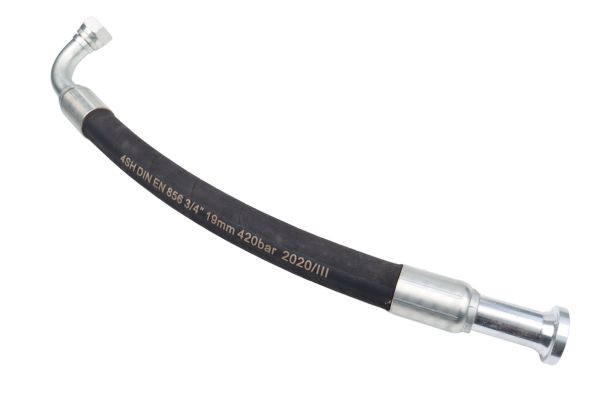
Avoid family-wide assumptions
Synthetic fluids include different chemistries, while biodegradable products can use different base stocks and additives. Phosphate-ester and other specialty fluids may require particular seals, hose tubes, paints, or handling controls. Do not build a compatibility chart from memory or transfer an approval between broad families.
Consider system conversion risks
Changing fluid can leave residual material in hoses, cylinders, valves, and reservoirs. Mixing, flushing, cleaning, seal replacement, disposal, and recommissioning should follow equipment and fluid-provider procedures. A compatible new fitting does not approve a system conversion, and an unverified flush chemical can introduce another incompatibility.
Conversion planning should distinguish parts that can be verified in place from parts that require replacement or separate assessment. Dead legs, accumulators, long hoses, and complex actuators may retain old fluid. Record the conversion sequence and acceptance checks, and do not assume that visual clarity proves complete removal. The decision belongs to the system owner and applicable technical sources, not to the fitting supplier description alone.
Metals, Coatings, Seals, and Hoses Respond Differently
Compatibility is not a yes-or-no property of one material. Each component can have a different failure mechanism, and temperature, concentration, pressure cycling, and time can alter the response.
Metal and coating checks are separate
The base metal may tolerate a fluid while its plated finish, passivation, topcoat, or damaged area behaves differently. Conversely, good coating evidence does not prove the underlying fitting’s pressure rating or connection accuracy. Identify the complete surface system and whether the compatibility source addresses continuous internal contact, occasional leakage, or only external exposure.
Elastomers and hose materials need exact identities
Generic labels such as “rubber seal” or “oil hose” are inadequate. Use the exact O-ring compound, seal material, hose manufacturer or accepted specification, series, tube, reinforcement, cover, and adhesive construction. Matching dash sizes do not establish fluid compatibility or crimp suitability across hose series.
Watch for evidence of a compatibility problem, including:
- Swelling, shrinkage, softening, hardening, cracking, or extrusion of seals.
- Blistering, delamination, softening, or unusual stiffness in hose materials.
- Discoloration, deposits, pitting, coating loss, or corrosion products.
- Repeated leakage after correct mechanical assembly.
- Fluid contamination, unexpected odor or appearance, and abnormal filter findings.
Verify Compatibility Before Approval
A structured approval connects the exact fluid condition to the exact component revisions. Missing data should stop the affected decision instead of being filled with a broad compatibility claim.
Build a compatibility matrix
List every wetted material in rows and the actual fluid, concentration, temperature, and exposure condition in columns. Cite current product-specific sources for each conclusion and record limitations, unknowns, and required tests. If sources conflict, resolve the difference with the responsible product and equipment authorities before use.
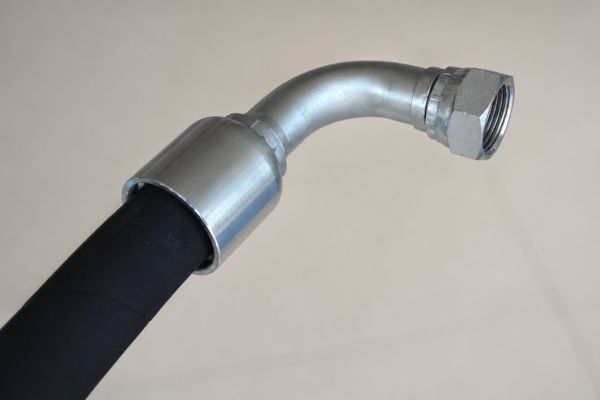
Confirm the mechanical assembly separately
After chemical compatibility is supported, verify thread standard, diameter, pitch, gender, seat, sealing method, orientation, hose side, material, pressure, and installation clearance. Confirm the current preparation, insertion, die, crimp diameter, and inspection procedure for the exact hose-and-fitting combination. Chemical approval cannot correct a mismatched thread or unapproved crimp.
Evidence should remain linked to the delivered revision. A generic certificate may identify a material family without proving which seal, coating, or hose tube is present in the received configuration. Compare purchase description, drawing, label, part marking, and reports, and resolve conflicts before release. A change in material source, seal compound, coating system, or hose construction should trigger the defined review rather than silently inherit the earlier result.
Where published compatibility data is incomplete, define a controlled escalation path. It may require clarification from the equipment, fluid, hose, seal, or fitting authority, or an application-specific evaluation under an approved protocol. Do not create a universal laboratory shortcut or extrapolate from a nearby fluid. Record the missing condition and keep the configuration out of service until the required evidence supports it.
Common Compatibility Mistakes
The recurring mistakes are approving by fluid family, checking only the metal, ignoring concentration and temperature, and treating an old successful installation as universal evidence.
Do not rely on partial charts
A chart may describe one material at one condition without covering the complete fitting or assembly. Verify its scope, revision, rating terms, and fluid identity. Do not invent a rating for an unlisted combination or interpret a blank cell as approval.
Prevent unapproved substitutions and mixing
Do not substitute O-rings by color or dimensions, top up with an unidentified fluid, or reuse contaminated transfer equipment. Labels, storage, maintenance records, and change control should preserve fluid and component identity. If an incompatibility or leak is suspected, stop and isolate equipment, release pressure and stored energy, secure loads, and follow lockout and manufacturer procedures.
Leak response should preserve evidence when safe to do so. Record the exact assembly identity, fluid, operating condition, location, visible material changes, and maintenance history after isolation. Do not conclude that the seal compound failed merely because leakage appeared nearby; damaged sealing faces, wrong threads, contamination, incorrect assembly, pressure spikes, and movement may produce similar symptoms and require different corrective action.
Conclusion
Fluid compatibility is a complete-assembly decision that starts with the exact formulation and every wetted material. Identify the fitting base metal and coating, O-rings, seals, hose tube and construction, adapters, ports, residual fluids, and cleaning agents. Review concentration, additives, temperature, duration, pressure duty, and contamination together; mineral-oil experience cannot approve water-glycol, synthetic, biodegradable, or specialty fluids. Build a traceable matrix from current product and fluid data, then complete separate thread, sealing, hose, crimp, and pressure checks. Never mix fluids or substitute seal materials without approval. Sound hydraulic fluid compatibility for one-piece fitting selection states the exact supported condition, leaves unknown combinations unapproved, and preserves evidence for purchasing, assembly, maintenance, and future replacement through every later maintenance and component replacement decision.
FAQ
Is a steel fitting compatible with every hydraulic oil?
No, the exact fluid, additives, coating, seals, hose, temperature, and application must be checked. A broad metal-and-oil assumption does not approve the assembly.
Can seal color identify fluid compatibility?
No, color is not a reliable compound specification. Use controlled part identity and current compatibility data for the exact seal, fluid, concentration, and temperature.
Does changing to a biodegradable fluid require new fittings?
Not automatically, but it requires a complete compatibility and conversion review. Existing fittings, seals, hoses, residual fluid, cleaning procedures, and equipment requirements all matter.
Can temperature change an otherwise compatible combination?
Yes, temperature can change chemical response, seal behavior, hose performance, and fluid condition. Verify compatibility at the actual operating and exposure conditions.
Does fluid compatibility prove pressure suitability?
No, it addresses material response to the fluid. Pressure suitability still depends on the exact fitting, hose, crimp, port, adapter, seals, temperature, impulses, and lowest-rated component.