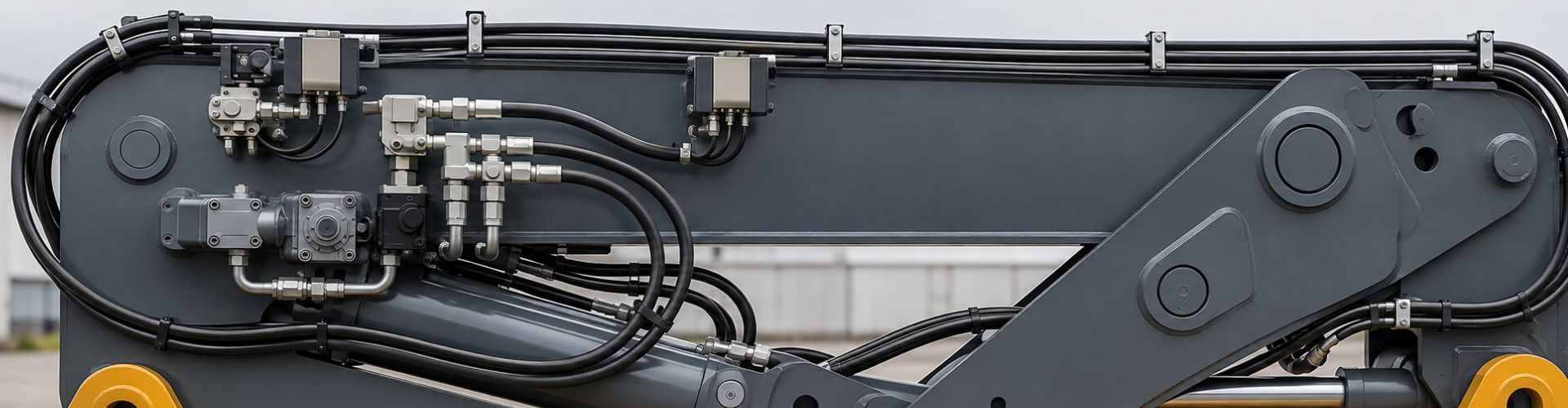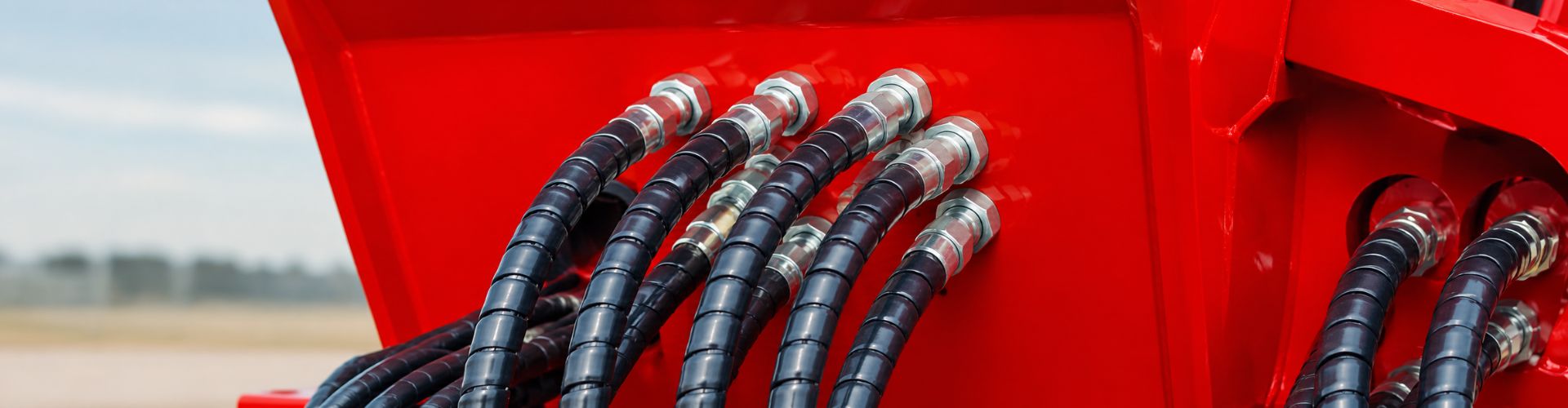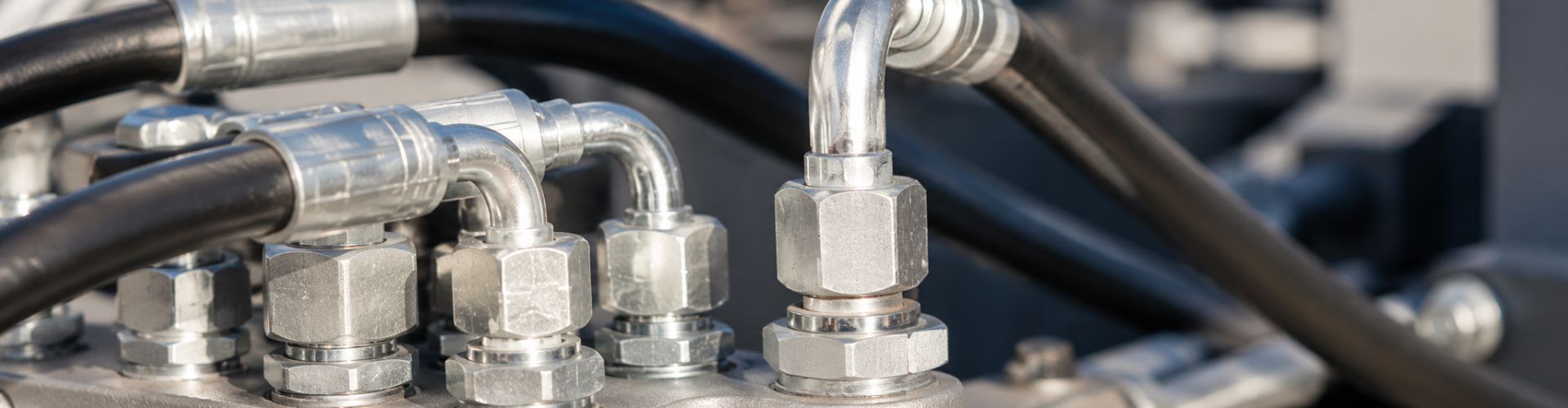
Hydraulic fittings connect hoses, tubes, valves, cylinders, and other hydraulic parts. Different types of hydraulic fittings are used for different thread standards, pressure levels, sealing methods, and installation conditions. To choose the right fitting, buyers need to check size, thread type, pressure range, material, and application before ordering.Hydraulic fittings are critical components in any hydraulic system. They ensure safe, leak-free fluid transfer between hoses, tubes, and equipment under high pressure. Because working conditions, pressure ratings, and connection standards vary, different types of hydraulic fittings are designed to meet specific system requirements.
This guide explains the main types of hydraulic fittings, their functions, and where each type is commonly used—helping you select the right fitting for your application.

Hose fittings have a hose end at one end and can be used to connect hoses. The other end has different types of threads. The threaded end can be used with couplings, pipes, and hydraulic machinery.
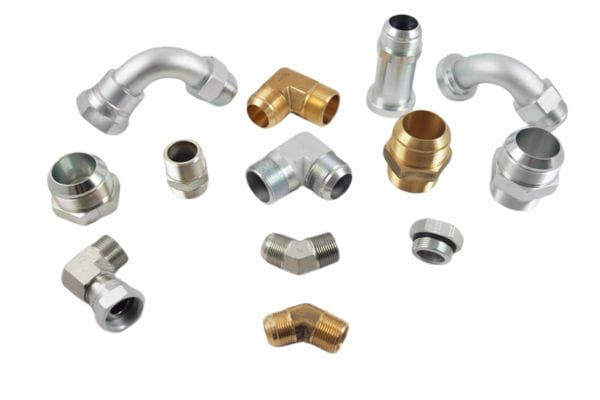
Hydraulic hose fittings are available in straight, 30-degree elbows, 45-degree elbows, and 90-degree elbows. These different elbow fittings and adapters can be used to change the direction of the fluid or the height of the line in the hydraulic system. For more info, consult a professional!

Hydraulic adapters are a broad category, which is a general term for many types of adapters. The ends of common adapters are threaded ends, including various types of threads. These ports can have the same type of thread or different types of threads. The different types of threads allow the fitting to connect two or more components of different sizes and with different roles.
Adapters are commonly applied in a variety of hydraulic environments and they ensure the proper operation of hydraulic systems. Topa has a complete range of hydraulic adapters, including tube fittings, male fittings, NPT, and JIC with guaranteed quality. Please contact us!

A hydraulic bulkhead adapter is used to connect hydraulic components through the plate or cylinder wall. It consists of a fitting and a nut that passes through the obstruction and a nut that holds the fitting in place and together they form a tight connection.
Bulkhead fittings are available in NPT, BSPP, and JIC threads and can be used in automotive, aerospace, and industrial applications.

Both tee and cross fittings can combine or separate fluids in a hydraulic system. Tee fittings have three ports, which can be the same thread or different threads. A cross has four ports and can split the fluid in three directions. Tees and crosses can be adapted to complex hydraulic environments, ensuring the safe connection of multiple hydraulic lines.
Used in the automotive, industrial, and construction industries, tees and crosses ensure the smooth transfer of fluids in hydraulic systems.

Plugs and caps are essential components of a hydraulic system. They are used to close and seal the end of a hydraulic system to prevent contaminants from entering the system and causing damage.
Plugs are male-threaded fittings that connect to the female-threaded end of the hydraulic system to form a seal. The cap is a female fitting that seals the male threads to prevent contaminants from entering the system. It’s important to make sure the cap is securely in place to protect your hydraulic system from dirt and other harmful particles.
Plugs and caps are key accessories for the safety and cleanliness of hydraulic systems, and they play a huge role in construction, transportation, agriculture, and industry.

Flange hydraulic fittings can be secured by flange clamps, bolts, and screws. Flange fittings can withstand different levels of pressure, such as 3000psi, 6000psi, and 9000psi. 3000psi flange is called SAE Code 61 flange and 6000psi flange is called SAE Code 62 flange.
Flange fittings are available in different sizes, threads, and materials. The common threads used for flange fittings are JIC, metric, and ORFS.

Reusable fittings are split fittings that consist of two parts: the fitting and the ferrule. These couplings can be used to connect hoses and other components, and the ferrule holds the hose in place. Reusable fittings are available in a wide range of thread types including JIC, BSP, NPT, metric, and SAE.
Reusable hydraulic fittings are easy to remove and install without the need for additional tools. These fittings are commonly used in applications that require field disassembly, reducing time wasted and maintenance costs.

One-piece hydraulic fittings are one of the most popular types of couplings. These fittings are one piece and cannot be disassembled, eliminating the need for additional components. They allow the fitting to be permanently mounted to the hydraulic hose, creating a strong connection.
One-piece hydraulic fittings can be used in high-pressure environments and can withstand extreme environments. Industries such as gas, mining, and construction require these couplings to reduce the risk of machine operation and to ensure the proper functioning of hydraulic systems.
Parker one-piece hydraulic fittings are the standard fittings and Topa can produce Parker standard one-piece products, feel free to contact us!

Push lock fittings are also known as push-to-connect and push-on fittings, they have a barbed end and a threaded end. The barbed end can be installed directly into the appropriate size hose, while the threaded end can be connected to the appropriate component to form a secure and reliable connection.
Push lock fittings generally do not require additional clamps to secure them, so they are primarily used in low to medium-pressure applications. They are easy to install and disassemble, significantly improving the efficiency of hydraulic systems and reducing operating costs.

Compression fittings, including nuts, ferrule, and joints, are commonly used to connect hydraulic hoses and hydraulic parts of different sizes to form a leak-free seal. One-piece or two-piece ferrule fittings with one or two ferrules (olive) may be used depending on your needs. These fittings are the stars of any hydraulic system.
Compression fittings do not require additional sealants or gaskets and are easy to disassemble, so they are suitable for use in air conditioning, brakes, and refrigeration systems.

Hose barb fittings are hollow fittings that have a barb on one end and a thread on the other. The barbed end can be installed directly into the hose, allowing the hose to expand and deform, and then securely fixed.
Hose barb fittings are very common fittings, they are widely used for their high performance, convenience, and value. Barb fittings can be used in low-pressure fluid applications and generally do not require additional clamps to hold them in place.

Quick couplings are “fast” in that they can be installed and removed quickly, are not easily dislodged, and have a strong seal. Quick couplings typically include NPT and BSP threads, both of which are commonly available for many applications.
Hydraulic quick-release couplings consist of a plug and a socket that allow fluid to pass directly through when they are mounted together. If disconnected, the valve in the quick coupling closes, preventing fluid from leaking.
The tight construction of quick couplings ensures the safe transport of fluids as well as gases in piping systems, including hydraulic hoses. The use of quick couplings may be required for applications such as industry, transportation, oil, and gas.

Ferrule is a cylindrical metal component that can be used with hydraulic hoses. Ferrules include standard ferrule,crimp-on ferrules, and reusable sleeves. Crimp-on sleeves are permanently installed by a crimping machine and cannot be removed. Reusable sleeves can be installed with screws and they can be disassembled for multiple uses.
Sleeves are generally available in stainless steel and carbon steel and can be galvanized or plated to improve aesthetics and corrosion resistance.

Banjo hydraulic fittings include hollow bolts and ball couplings that connect pipes and hoses. Banjo bolts allow fluid to flow from the inside of the coupling and out through small holes in the side, thus ensuring proper system operation.
These fittings are commonly used in automotive brakes, fuel, and hydraulic systems to control fluid pressure and performance.

Grease fittings are used to inject grease into bearings. They are also known as zerk fittings and grease nipples. The tip of the grease fitting has a ball that prevents contaminants from entering.
Grease fittings are available in steel, stainless steel, and brass and can be used in aircraft bearings and similar applications.

Camlock couplings are a special type of quick-release coupling that has the advantage of being easy to install and simple to operate. There are many types of camlock couplings, such as types A, B, C, D, E, F, DP, and DC. These different types are different in appearance and use.
Camlock couplings are suitable for dirty environments and will not be damaged by contaminants, so they are used in many applications. Camlock couplings can be found in industries such as oil, transportation, and industry.

Test point fittings can be installed at pressure measurement points to check the pressure in a hydraulic system and troubleshoot factors. Test point fittings can be used without shutting down the hydraulic piping system, reducing the cost of downtime.
High-performance, durable test couplings are used in cranes, hydraulic presses, construction equipment, and oil and gas applications.

Swivel fittings allow the hose to follow the fitting and prevent it from kinking or twisting. They are usually made of metal, which increases durability and strength.
Fitting Type | Main Use | Common Applications |
Hydraulic Hose Fittings | Connect hose to ports, adapters, or equipment | Mobile hydraulics, agriculture, mining, construction |
Hydraulic Adapters | Connect two threaded ends with different sizes or standards | Repair, OEM assembly, replacement work |
Bulkhead Fittings | Pass hydraulic lines through panels or walls | Power units, industrial equipment, vehicle systems |
Tee and Cross Fittings | Split or combine fluid lines | Manifolds, testing systems, machinery, construction equipment |
Plugs and Caps | Close unused ports and protect threads | Storage, transport, repair, export packing |
Flange Fittings | Connect high-flow and high-pressure hydraulic lines | Excavators, loaders, mining, oilfield equipment |
Reusable Fittings | Assemble hose connections without crimping | Field repair, maintenance, emergency hose replacement |
One-Piece Fittings | Crimp hose with integrated stem and ferrule | High-pressure hose assemblies, construction, mining |
Push-Lock Fittings | Fast connection for push-on hose | Air lines, lubrication lines, return lines |
Compression Fittings | Seal tube connections with ferrules and nuts | Instrumentation, refrigeration, brake lines |
Hose Barb Fittings | Connect hose in low-pressure transfer systems | Fuel, water, air, lubrication |
Quick Couplings | Fast connect and disconnect hydraulic lines | Agricultural attachments, tools, mobile equipment |
Ferrules | Hold hose and fitting together after crimping | Crimped hose assemblies |
Banjo Fittings | Provide compact fluid connection in tight spaces | Brake systems, fuel systems, compact circuits |
Grease Fittings | Inject grease into moving parts | Bearings, pivots, pins, farm and industrial equipment |
Camlock Couplings | Quick connect for fluid transfer | Industrial transfer, oil, transport |
Test Point Fittings | Measure pressure without system shutdown | Cranes, presses, construction equipment |
Swivel Fittings | Reduce hose twist during installation | Tight routing areas, moving equipment |
Because of the special characteristics of swivels can be used in tight places, reducing damage to the hose and reducing maintenance costs.
Almost all hydraulic fittings have threads that distinguish the type of fitting, and determine the standard of the fitting and the use environment. Each type of threaded fitting differs in thread angle, profile, and cone seat.

JIC (Joint Industrial Council) hydraulic fittings are straight threads with a 37-degree flare seat, they are generally SAE J514 standard. JIC male fittings can be used with female fittings to form a metal-to-metal seal without the aid of a seal. Those fittings are American standards and are popular in the US and European countries.
SAE(Society of Automotive Engineers) 45-degree hydraulic fittings are SAE J512 standard with a 45-degree cone to form a tight mechanical connection. SAE fittings are commonly used in low-pressure applications such as fuel lines and refrigeration systems. And they are not compatible with JIC 37-degree fittings.
SAE O-ring boss male hydraulic fittings include an O-ring and straight threads, while the female fittings include chamfers and sealing surfaces. The male and female connectors are installed together to form a tight seal.
BSP (British Standard Pipe) is a british standard fitting that is popular in Europe and the U.K. BSP hydraulic fittings include a 30-degree cone and can be divided into BSPP (British Standard Pipe Parallel) and BSPT (British Standard Pipe Taper) two types.
BSPP fitting is straight thread fitting, it’s thread is parallel. This type of fitting can be sealed by metal seal or sealant.
BSPT fittings are tapered threads, which are similar to NPTF fittings. However, there is a difference between these two threads: NPT thread has a 60-degree taper, while BSPT thread has a 55-degree taper. This difference is not very obvious, so you can use a thread gauge to measure the difference.


There are two types of NPT hydraulic fittings: NPTF fittings and NPSM fittings.
NPTF (National Pipe Tapered Fuel) fitting is dry seal fitting with a 60-degree thread taper. After installing the male fitting to the female fitting, the threads are deformed to a certain degree, creating a seal. NPTF fittings are typically used in fluid power systems and provide a good connection.
NPSM (National Pipe Straight Mechanical) fitting is a straight threaded fitting on both male and female ends. They both have a 30-degree chamfer to create a mechanical seal and are commonly used in fluid power systems. NPSM female fittings can be used with NPTF male threads.
The Metric/DIN fitting is a US standard fitting with a 24-degree taper. They include parallel threads and tarped threads. Straight thread fittings need a sealant or an o-ring to create a strong seal. Ans tapered metric fittings can set a metal seal by male and female threads.
JIS(Japanese Industrial Standard) is a Japanese thread and is commonly used in Asian countries. It includes tapered JIS hydraulic fittings and 30-degree cone JIS fittings.
Both male and female threads of tapered JIS fittings have a certain taper, similar to BSPT threaded fittings, and both can be used together.
The 30-degree cone JIS fitting has parallel threads and is divided into male inverted seat fittings and 30-degree angle female fittings. The male inverted fittings are similar to BSPP fittings in that they both have a 30-degree chamfer and can be used interchangeably. 30-degree female JIS fittings are identical to JIC 37-degree fittings in that they have the same sealing form, but they are not interchangeable.
ORFS(o-ring face seal)hydraulic fittings are straight threaded and have an O-ring installed in the groove of the male end to form a seal with the female end, which improves sealing and reduces vibration damage.

AN (Army-navy)hydraulic fittings are flared fittings with a 37-degree angle to create a metal seal. This type of fitting is mainly used to connect hoses and metal pipes. It is similar to JIS hydraulic fittings and is theoretically universal, but it is not recommended and used interchangeably.
| Standard | Full Name / Origin | Thread Type | Seat / Seal Type | Angle | Seal Method | Interchangeability | Typical Applications |
| JIC | Joint Industrial Council (USA) | Straight thread | Flare seat | 37° | Metal-to-metal flare seal | ❌ Not compatible with SAE 45° | Hydraulic systems, mobile equipment, US & EU markets |
| SAE 45° | Society of Automotive Engineers J512 | Straight thread | Flare seat | 45° | Metal-to-metal seal | ❌ Not compatible with JIC 37° | Fuel lines, refrigeration, low-pressure systems |
| SAE ORB | SAE O-Ring Boss | Straight thread | O-ring + chamfer | — | O-ring face seal | ❌ Only with ORB ports | Industrial hydraulics, high-pressure systems |
| BSPP | British Standard Pipe Parallel | Straight thread | 30° cone or washer | 30° | Metal seal or bonded seal | ⚠ Limited | Industrial & hydraulic systems (EU, UK) |
| BSPT | British Standard Pipe Taper | Tapered thread | Thread interference | 55° taper | Thread deformation | ❌ Not with NPT | Hydraulic & pneumatic systems |
| NPTF | National Pipe Taper Fuel | Tapered thread | Thread interference | 60° taper | Dry seal (no sealant required) | ❌ Not with BSPT | Fluid power systems, North America |
| NPSM | National Pipe Straight Mechanical | Straight thread | 30° chamfer | 30° | Mechanical seal | ⚠ Female fits NPTF male | Low-pressure fluid systems |
| Metric (DIN) | Metric / DIN Standard | Straight or tapered | 24° cone / O-ring | 24° | Metal or elastomer seal | ❌ Not with JIC/BSP | European hydraulic systems |
| JIS Tapered | Japanese Industrial Standards | Tapered thread | Thread interference | — | Thread seal | ⚠ Similar to BSPT | Asian hydraulic equipment |
| JIS 30° | Japanese Industrial Standard | Straight thread | 30° cone | 30° | Metal-to-metal seal | ❌ Not with JIC | Japanese machinery |
| ORFS | O-Ring Face Seal | Straight thread | Flat face + O-ring | — | O-ring face seal | ❌ ORFS only | High-pressure, vibration-prone systems |
| AN | Army-Navy (USA) | Straight thread | Flare seat | 37° | Metal-to-metal seal | ⚠ Similar to JIC | Aerospace, military, performance systems |
Choosing the right hydraulic fitting is not only about matching a thread. It is about matching the full connection, working pressure, and installation condition. A small mistake can lead to leakage, downtime, or costly returns.
Start with the actual size of the hose, tube, or port. This is one of the first checks buyers should make before asking for a quote.
You should confirm hose ID, hose OD, tube OD, port size, and thread size. Even when two fittings look similar, a small size difference can cause poor sealing or installation failure.
For hose fittings, the hose series must also match the fitting design. A fitting that does not match the hose structure may fail after crimping or during pressure use.
For tube fittings, outside diameter is especially important. Wrong tube size can cause loose assembly, leakage, or damage to ferrules and nuts.
If you are replacing an old fitting, do not rely on visual judgment only. Measuring the original fitting is always safer than guessing by shape.
Thread type is one of the most common causes of mismatch in hydraulic sourcing. Many fittings look close, but their thread and sealing method are different.
You should confirm the thread standard, thread diameter, pitch or threads per inch, seat angle, and sealing face. These details decide whether the fitting will seal correctly or not.
JIC, BSP, NPT, Metric, and ORFS are often confused in international orders. This happens often when buyers only provide photos without exact measurements.
A thread may screw in partly and still be wrong. Partial fit does not mean correct sealing or safe pressure performance.
The seat also matters as much as the thread. A 37° flare, 24° cone, flat face, or tapered thread all seal in different ways.
Pressure range should always be checked before ordering. Not all hydraulic fittings are made for the same duty level.
A fitting used in a low-pressure transfer line is very different from one used in a high-pressure hose assembly. Using the wrong type may shorten service life or create safety risk.
Before ordering, buyers should confirm working pressure, burst requirement, system pulse level, and safety factor. These values help narrow the correct fitting type much faster.
In dynamic hydraulic systems, pulse performance is very important. Repeated pressure changes can damage a fitting even when the static pressure looks acceptable.
Pressure selection should also consider the full assembly. The hose, ferrule, fitting, and crimp result need to work together as one system.
Material affects strength, corrosion resistance, service life, and cost. It should match the real working environment, not just the drawing.
Common materials include carbon steel, stainless steel, and brass. Each option is used for different pressure levels, fluid conditions, and budgets.
Carbon steel is widely used in standard hydraulic applications. It is a common choice for general industrial and mobile hydraulic systems.
Stainless steel is often selected for corrosive or outdoor environments. It is useful where moisture, chemicals, or salt exposure are part of the working condition.
Brass fittings are usually used in lower-pressure or special fluid systems. They are not always the first choice for heavy-duty hydraulic pressure work.
Surface treatment also matters in export and field use. Common options include zinc plating, zinc-nickel plating, chrome-free coating, and oil protection.
If the fitting will be used outdoors or shipped to humid regions, corrosion resistance should be checked early. This is especially important for distributors and OEM buyers who care about long storage life.
The fitting should match the actual use condition. A fitting that works well in one system may not be suitable in another.
Buyers should ask whether the fitting is used in mobile hydraulics or industrial equipment. This affects vibration resistance, pressure demand, and connection style.
You should also check whether the system faces outdoor corrosion, dirt, shock, or frequent movement. These conditions often change the best fitting choice.
In tight spaces, compact fittings, elbows, banjo fittings, or swivels may be better options. The easiest fitting to identify is not always the easiest one to install.
If field repair is required, reusable fittings or simpler connection types may be more practical. This is common in service trucks, workshops, and maintenance teams.
The application environment also affects the sealing method. High vibration, temperature changes, and contamination risk all influence fitting selection.
Many buyers do not start with a standard part number. They often come with an old sample, a damaged fitting, a machine brand, or a drawing.
At this stage, the key question is whether the fitting can be replaced directly. That means checking more than thread size alone.
You should confirm whether the thread is the same, whether the seat is the same, and whether the overall connection style matches. Small differences can create large problems during installation.
Hex size may also matter in some equipment. In tight installation areas, a different hex can affect assembly tools and working clearance.
For OEM replacement work, buyers often ask whether a Parker-style, Eaton-style, or other equivalent version can be supplied. This is very common in aftermarket and distributor orders.
Before placing a bulk order, replacement compatibility should always be checked by drawing, sample, or detailed dimensions. This step helps reduce return risk and improves order accuracy.
If you are not fully sure about the fitting type, send more than one reference. A clear photo, thread measurement, drawing, hose size, and application detail will make matching much faster.
For bulk orders, sample confirmation is often the safer option. It helps buyers avoid mismatch before mass production starts.
A correct fitting is not chosen by appearance alone. It is chosen by size, thread, pressure, material, application, and replacement fit working together.
By selecting hydraulic fittings that match the correct standard, thread type, and sealing design, you reduce installation errors, maintenance costs, and unplanned downtime. Whether you are working with JIC, BSP, NPT, Metric, ORFS, or JIS fittings, proper identification and compatibility checks should always be part of your selection process. For complex systems or mixed standards, working with an experienced hydraulic fitting supplier helps ensure each connection performs as intended under real operating conditions. This article describes the types of hydraulic fittings in general, if you still have doubts, we can help you!
JIC (Joint Industry Council) fittings have a 37° flare seating surface, ideal for high-pressure systems like construction equipment and agriculture machinery (SAE J514 standard).
Use NPT (National Pipe Taper) for low/medium pressure systems requiring thread-sealed connections, common in general industrial hydraulics and fuel lines.
ORFS (O-Ring Face Seal) fittings use a flat face with an O-ring for zero-leakage in high-vibration applications like mobile hydraulics and forestry equipment.
BSPP (British Standard Pipe Parallel) fittings with 60° tapered threads dominate European/Asian markets for medium-pressure fluid transfer systems.
SAE code 61/62 flanges handle ultra-high pressures (5,000+ PSI) in compact spaces, widely used in marine and oilfield equipment.
Push-to-connect couplers for fast tool changes, featuring ball-lock or poppet valves to minimize fluid loss during disconnection (ISO 16028 standard).
Find out more about Topa Blog and learn more about specialized hydraulic fittings.