Banjo fittings, also known as banjo bolts or banjo connectors, are essential components in various hydraulic systems. These unique fittings feature a hollow bolt with a spherical, perforated end, allowing fluid to pass through while connecting to a hose or pipe. The purpose of this guide is to offer a comprehensive overview of the different types of banjo fittings available, their specific applications, and the benefits they provide. By the end of this guide, readers will have a thorough understanding of how banjo fittings work, the various types available, and how to select the right fitting for their needs.
Banjo fittings, often referred to as banjo bolts or banjo connectors, are a type of hydraulic fitting that is widely used for creating secure connections in fluid systems. The unique design of a banjo fitting includes a hollow bolt with a perforated, spherical end through which fluid flows. This design allows the fitting to rotate around the bolt, providing flexibility and making it easier to install in tight or awkward spaces. The primary function of banjo fittings is to allow fluid to pass through the bolt and into the attached hose or pipe, creating a secure, leak-free connection that can withstand high pressures and various operating conditions.
The concept of the banjo fitting can be traced back to the early 20th century, coinciding with the rise of automotive and industrial machinery that required more efficient hydraulic systems. Originally, these fittings were designed to address the need for reliable connections in complex hydraulic circuits, where space was often limited. Over the decades, the design and materials used in banjo fittings have evolved significantly. Early versions were typically made from brass or steel, but modern banjo fittings are often made from more advanced materials like stainless steel and aluminum, which offer superior durability and corrosion resistance. Innovations in manufacturing processes have also improved the precision and reliability of these fittings, making them indispensable in many industries today.
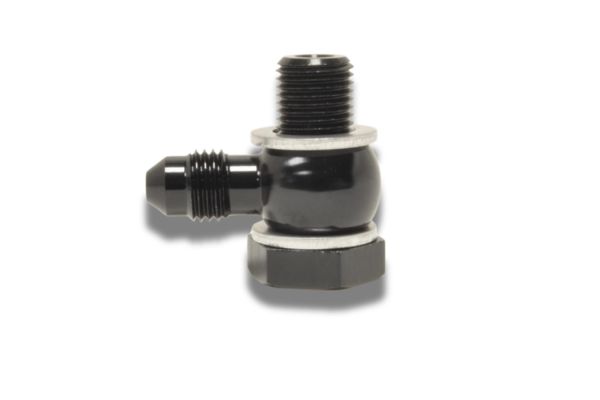
A banjo fitting body and a banjo bolt are separate components. The body connects to the hose or tube, while the hollow bolt passes through its central opening and fastens into the equipment port.
In a conventional washer-sealed assembly, sealing elements sit between the bolt head and fitting body, and between the fitting body and port face. Other designs use integrated or specially shaped seals, so the supplied assembly drawing should determine the component arrangement.
The eye-shaped body contains a fluid passage connecting the area around the bolt to the line connection. Its central bore must match the intended bolt, while its thickness and sealing faces must suit the complete assembly.
The line end may be designed for a crimped hose, tube connection, threaded adapter, or another specified connection. The banjo eye alone does not identify how the opposite end should be assembled.
The bolt combines a fastening function with an internal fluid path. Its axial bore and cross-drilled passages allow fluid to move between the equipment port and the banjo body.
Check the thread, under-head length, passage arrangement, and intended number of banjo eyes. An ordinary solid bolt cannot replace a banjo bolt.
Seals must match the fitting design, contact faces, fluid, and temperature. Conventional assemblies may use crush washers; other series may use bonded or integrated seals.
Do not substitute a general-purpose washer because its hole fits the bolt. Seal dimensions and construction affect both sealing and the assembled height.
Fluid travels through the hollow bolt and its cross passages into the internal passage of the banjo body, then into the connected line. Depending on the circuit, flow can travel in the opposite direction.
In a conventional annular-passage design, the surrounding passage allows the body to be positioned without requiring its line opening to point directly at one bolt hole. However, the bolt’s passage positions must still correspond to the intended fitting geometry and assembled height.
This arrangement can help set the line direction before final tightening. It does not make a conventional banjo assembly a rotary joint. Once secured, the connection should remain in its installed position unless the product is specifically designed for movement during operation.
The internal flow path also matters. Bolt bore size, cross passages, and changes in direction can influence restriction, so nominal connection size alone does not establish flow capacity.
Banjo fittings are manufactured from a variety of materials, each chosen for its specific properties and suitability for different applications. Common materials include:
Industrial and Mobile Hydraulics
Banjo connections can provide compact line routing around equipment ports. Check working pressure, pressure spikes, vibration, supports, and service access for the selected assembly.
Agricultural and Construction Equipment
Restricted spaces around valves, actuators, and other components may make a banjo configuration useful. Routing should avoid hose twisting, rubbing, and loads transferred from unsupported lines.
Automotive Fluid Connections
Banjo designs are used in certain brake, clutch, fuel, and lubrication systems. These applications require the correct product specification, materials, seals, and component approval. A general hydraulic banjo fitting should not be assumed suitable for a vehicle brake or fuel connection.
Pneumatic and Other Fluid Systems
Some product families are designed for pneumatic or other fluid applications. Confirm the stated pressure, temperature, and media limits instead of applying hydraulic-series ratings to a visually similar product.
Banjo fittings come in various types, each designed to meet specific needs and applications. These fittings can be classified based on their design, application, and the materials used in their construction. Understanding these classifications can help in selecting the appropriate fitting for a particular hydraulic system.
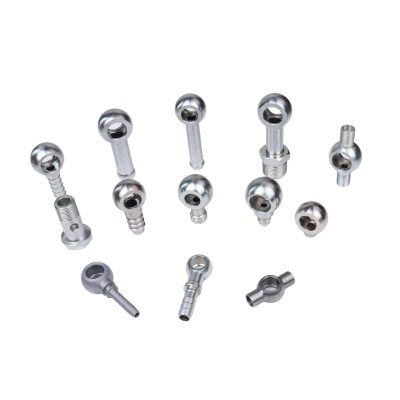
Single banjo fittings are the most common type of banjo fittings. They consist of a single connector and a banjo bolt that allows fluid to pass through. These fittings are typically used in applications where a single line needs to be connected to a hydraulic system. Their simple design makes them easy to install and maintain, making them ideal for a wide range of applications, including automotive braking systems, fuel lines, and industrial machinery.
Key Features:
Simple and compact design
Easy to install and maintain
Suitable for a wide range of applications
Provides a secure and leak-free connection
Double banjo fittings, also known as twin banjo fittings, feature two connectors that allow two fluid lines to be connected simultaneously. This design is particularly useful in applications where multiple hydraulic lines need to be managed in a confined space. Double banjo fittings are commonly used in complex hydraulic systems, such as those found in industrial machinery and heavy equipment, where space efficiency and reliable connections are crucial.
Key Features:
Allows connection of two fluid lines
Ideal for complex hydraulic systems
Saves space and reduces installation time
Ensures reliable and leak-free connections
Hose-end designs connect a banjo eye to a specified hose assembly. The hose side may use a crimped or another approved attachment method.
For a crimped assembly, confirm the hose series, fitting construction, and applicable crimp data. Matching the hose diameter alone does not establish compatibility.
Tube-end designs connect to tubing through a specified tube connection, such as a cutting-ring, compression, or weld-end arrangement.
Selection requires the tube dimensions and material as well as the banjo dimensions. The line end and port assembly each have their own installation requirements.
A threaded-end adapter combines a banjo connection with another threaded interface. Specify the thread and sealing method at the line end independently from the banjo bolt thread.
An adapter with a metric bolt does not necessarily have a metric connection at its opposite end.
Classification | What It Describes | Details to Confirm |
Single assembly | One banjo eye | Eye dimensions, bolt, seals |
Stacked double assembly | Two eyes on a matching bolt | Total height, passages, seal positions |
Hose end | Connection to a hose | Hose series and attachment method |
Tube end | Connection to tubing | Tube specification and connection design |
Threaded adapter end | Connection to another threaded component | Thread and sealing feature |
Seal design | How the contact faces are sealed | Seal type, dimensions, materials |
Selecting the appropriate banjo fitting for your hydraulic system is crucial to ensure optimal performance and reliability. Several factors should be considered to make the right choice, including application requirements, material compatibility, pressure ratings, and size and dimension considerations.
Record the port thread standard, size, and pitch. Check the available thread depth and the port face required by the seal design.
Thread engagement and bolt length must suit the assembly. A bolt must secure the specified components without bottoming in the port before the seals are correctly compressed.
Confirm the eye bore, eye thickness, sealing-face dimensions, and overall envelope. These determine whether the body fits the bolt and available installation space.
For stacked assemblies, measure both bodies and confirm the complete seal arrangement. Do not replace a single bolt with an arbitrarily longer bolt.
Identify the hose, tube, or threaded end in full. Include hose compatibility or tube requirements where applicable.
Also check the required line direction and tool clearance. The fitting should be positioned without forcing the hose or tube into alignment.
The first step in choosing the right banjo fitting is to understand the specific requirements of your application. Consider the type of fluid being transferred, the operating environment, and the specific function of the fitting within the hydraulic system. For example, automotive braking systems may require fittings that can handle high pressures and resist corrosion, while industrial machinery might need fittings that can endure heavy use and extreme conditions. Identifying the primary use and operational demands will help narrow down the selection of fittings that are designed to meet those specific needs.
Material compatibility is another critical factor when selecting banjo fittings. The material of the fitting must be compatible with the fluid it will come into contact with to prevent corrosion and ensure longevity. Common materials for banjo fittings include stainless steel, brass, and aluminum. Stainless steel is ideal for high-pressure and corrosive environments, brass offers a good balance of strength and corrosion resistance, and aluminum is suitable for applications where weight reduction is essential. Understanding the properties of each material and matching them with your system’s requirements will ensure reliable performance and durability.
Pressure ratings are essential to consider when choosing banjo fittings. Each fitting is designed to withstand a specific range of pressures, and using a fitting with an inadequate pressure rating can lead to leaks or failures. Check the pressure requirements of your hydraulic system and select fittings that can comfortably handle the maximum operating pressure. For high-pressure applications, stainless steel banjo fittings are often preferred due to their strength and resistance to deformation under pressure.
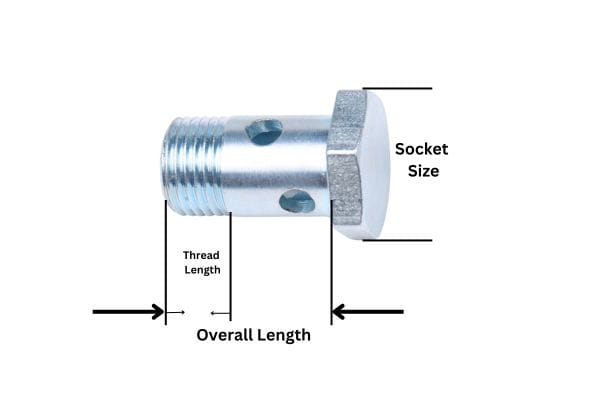
The size and dimensions of the banjo fitting must match the specifications of the hydraulic system components it will connect to. This includes the diameter of the banjo bolt, the size of the connector, and the overall length of the fitting. Ensuring that the fitting fits correctly within the system is crucial for maintaining a secure and leak-free connection. Measure the existing components and verify the dimensions of the banjo fittings before making a purchase to avoid compatibility issues.
Use the assembly instructions for the selected fitting and equipment. Check that the port face and sealing surfaces are clean and undamaged, and use the specified seals. Position the line before tightening the bolt to the applicable requirement.
There is no universal banjo-bolt torque. Thread size, bolt construction, materials, seals, and port design affect the assembly specification.
Problem | Details to Check |
Leakage at a contact face | Seal selection, damaged faces, assembly method |
Bolt tightens but the body remains loose | Bolt length, bottoming, incorrect component stack |
Incorrect line direction | Routing, installation clearance, body configuration |
Restricted flow | Bolt passage geometry and correspondence with the body |
Repeated leakage | Component mismatch, damage, vibration, or line loading |
Do not compensate for a mismatch by adding unspecified washers, modifying the bolt, or repeatedly increasing torque. Isolate and depressurize the system before investigating the assembly.
In this comprehensive guide, we explore the various types of banjo fittings, their construction and components, and the factors to consider when selecting the right fitting for your hydraulic system. If you have specific needs or are unsure which coupling is best suited to your application, consultation with Topa is highly recommended; we can help you make an informed decision and find a solution that meets your requirements.
A banjo fitting is a type of hydraulic fitting that features a hollow bolt with a spherical end, allowing fluid to pass through and connect to a hose or pipe. Its unique design provides flexibility and is commonly used in confined spaces.
Banjo fittings are typically made from materials such as stainless steel, brass, and aluminum. Each material offers different properties, with stainless steel being highly durable and corrosion-resistant, brass offering good machinability and corrosion resistance, and aluminum being lightweight.
Choosing the right banjo fitting involves considering factors such as application requirements, material compatibility, pressure ratings, and size and dimension considerations. Matching the fitting to the specific needs of your hydraulic system ensures optimal performance.
Yes, certain banjo fittings, particularly those made from stainless steel, are designed to handle high-pressure applications. It is important to check the pressure rating of the fitting to ensure it meets the requirements of your system.
Banjo fittings are used in various applications, including automotive braking systems, fuel lines, industrial machinery, agricultural equipment, and medical and laboratory equipment. Their versatility and reliability make them suitable for a wide range of hydraulic systems.
To ensure a leak-free connection, make sure to use the appropriate washers or sealing rings and tighten the banjo bolt to the manufacturer’s specifications. Regular inspection and maintenance of the fittings can also help prevent leaks and ensure reliable performance.