Hydraulic hose failures directly destabilize agricultural fleets by causing immediate machinery immobilization, severe fluid loss, and expensive operational delays during critical harvesting windows. Imagine a multi-ton combine harvester grinding to a sudden halt in the middle of a tight harvest schedule with rain fast approaching. The smell of burning fluid fills the air as an entire crew stands idle, waiting for an emergency service vehicle to arrive.
Why Do Hydraulic Hose Failures Cause Sudden Fleet Downtime?
Hydraulic hose failures completely halt field operations because agricultural machinery relies entirely on pressurized fluid systems to actuate heavy mechanical components. When a line breaks, the immediate loss of system pressure prevents steering, lifting, and power transmission functions.
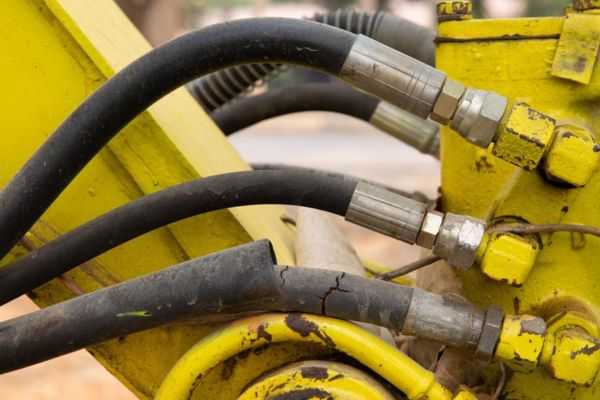
How Does Fluid Loss Paralyze Heavy Machinery?
A ruptured line quickly expels high-pressure oil directly into the surrounding engine bay or open soil. This rapid fluid depletion starves the hydraulic pump of necessary lubrication and causes immediate system lockup.
- Pump cavitation occurs within seconds of major fluid drops.
- Actuators lose all structural holding capability immediately.
- System contamination spikes as dirt enters the open rupture.
You must stop the engine immediately to prevent catastrophic internal component scoring.
Can Pressure Drops Stop Active Harvesting Operations?
Sudden pressure loss prevents the hydraulic cylinders from maintaining the correct header height or threshing speed on your equipment. This variance damages active crops and clogs the internal feeding mechanisms of the machine. You will find that even a minor pressure drop disrupts the precise calibration required for automated steering systems.
| Downtime Factor | Immediate Operational Impact | Long-Term Fleet Risk |
| Fluid Loss | Complete actuator immobilization | Severe hydraulic pump cavitation |
| Component Damage | Collateral valve contamination | Extended system flushing requirements |
What Role Does Environmental Exposure Play in Hose Degradation?
Environmental exposure degrades flexible rubber compounds by breaking down the molecular chains that give the material its elasticity and pressure resistance. Constant outdoor operation accelerates this weathering process significantly.
How Does Intense Solar Radiation Weaken Outer Rubber?
Ultraviolet rays dry out the external synthetic rubber cover, leading to deep structural cracking along the entire length of the line. These small surface cracks gradually expand until the underlying high-tensile steel wire reinforcement becomes exposed to moisture.
- Surface oxidation reduces external material flexibility.
- Deep ozone cracking splits the protective outer barrier.
- Exposed steel braiding begins to oxidize almost immediately.
Can Ambient Thermal Extremes Accelerate Material Cracking?
Operating heavy equipment in extreme summer heat causes the internal hydraulic oil temperature to skyrocket, baking the tube from the inside out. Conversely, freezing winter storage makes the outer shell brittle and prone to fracturing during initial engine start-ups.
| Exposure Type | Primary Visual Symptom | Internal Structural Effect |
| UV Radiation | Deep chalking and surface checking | Loss of outer cover elasticity |
| Thermal Cycle | Hardened, brittle inner tube linings | Micro-fracturing under high pressure |
How Does Mechanical Friction Damage Agricultural Hydraulic Systems?
Mechanical friction destroys flexible lines through continuous abrasive contact with sharp structural edges, chassis brackets, or moving machine components. This constant rubbing wears away the protective exterior cover.
Why Does Constant Structural Rubbing Strip Protective Shields?
As agricultural implements pivot and bounce over uneven terrain, the hoses rub against metal frames. This abrasive action cuts through the outer rubber layer and exposes the high-tensile steel reinforcement wires below.
- Chassis contact points act as abrasive files during field transport.
- Vibration speeds up the destruction of unclamped fluid lines.
- Exposed metal braiding frays rapidly under constant physical rubbing.
You must install protective textile sleeves or plastic spirals on high-friction zones to mitigate this structural wear.
What Happens When Misrouted Hoses Twist Under High Pressure?
Incorrect routing forces a line to twist continuously as the agricultural attachment cycles through its full range of motion. This torsional stress separates the internal steel reinforcement layers, creating structural weak points that cannot withstand standard operating pressures.
| Friction Source | Accelerated Wear Mechanism | Preventative Equipment Fix |
| Frame Contact | Continuous outer cover abrasion | Heavy-duty plastic spiral wrapping |
| Torsional Twist | Reinforcement layer separation | Dual-axis swivel joint installation |
Why Does Operating Pressure Overload Cause Catastrophic Ruptures?
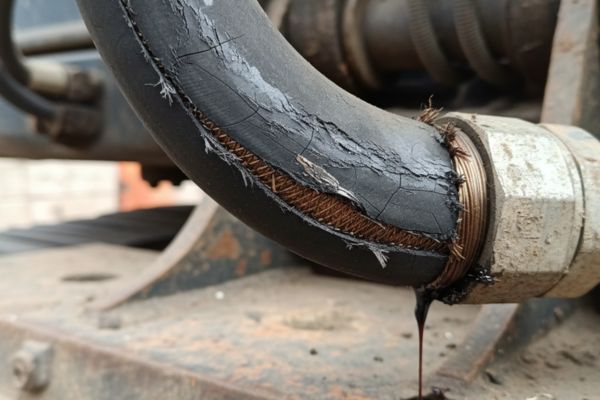
Operating pressure overload causes immediate, explosive ruptures because the internal fluid force exceeds the structural design limits of the steel reinforcement layers. These high-pressure blowouts present significant safety hazards and cause massive fluid messes.
Can Frequent Hydraulic Spikes Exceed Factory Safety Margins?
Spool valves cycling rapidly under heavy loads create sudden pressure spikes that travel through the system like shockwaves. These instantaneous spikes easily pass the maximum rated working pressure of standard lines, weakening the core wire braid over time.
- Rapid valve shut-offs create extreme internal pressure waves.
- Repeated stress cycles fatigue the high-tensile steel braiding.
- Microscopic wire fractures develop long before an explosive failure occurs.
You can install accumulator systems to absorb these dangerous pressure spikes before they reach vulnerable lines.
How Do Over-Pressurized Fluids Create Microscopic Pinholes?
Continuous operation near upper limit thresholds forces hot oil through the inner elastomer tube via microscopic material imperfections. This process creates high-velocity pinhole leaks that can pierce heavy leather work gloves and cause severe injection injuries.
| Pressure Stress | Direct Structural Reaction | Preventive Component Choice |
| Shock Spikes | Wire braid structural fatigue | Four-spiral wire reinforcement lines |
| Constant Overload | Inner tube material degradation | Ultra-high-pressure rated hose series |
What Happens When Incompatible Fluids Corrode Internal Tubes?
Incompatible fluids chemically attack the internal elastomer tube, causing the material to swell, harden, or break down into sludge. This internal chemical destruction remains invisible from the outside until a complete system failure occurs.
Why Do Mismatched Chemical Compounds Degrade Elastomer Linings?
Using low-grade mineral oils or specialized biodegradable fluids in a system designed for standard petroleum oils triggers a destructive chemical reaction. The inner lining absorbs the fluid, loses its structural strength, and begins to peel away from the wire reinforcement.
- Chemical incompatibility causes severe internal tube swelling.
- Softened rubber strips easily under high-velocity fluid flow.
- Inner tube degradation reduces the overall pressure rating of the line.
You must verify chemical compatibility charts before introducing new fluid types into your agricultural equipment.
Can Degraded Rubber Particles Clog Sensitive Control Valves?
As the inner tube degrades, tiny rubber particles break free and travel through the high-pressure fluid stream. These small contaminants lodge inside directional control valves, blocking precision orifices and causing erratic hydraulic cylinder behavior.
| Fluid Type | Target Rubber Compatibility | Long-Term System Impact |
| Biodegradable Oil | Specially formulated synthetic polymers | Prevented internal rubber swelling |
| Petroleum Base | Standard Nitrile inner tube linings | Maintained long-term core pliability |
How Do Improper Installation Practices Compromise Hose Integrity?
Improper installation practices introduce built-in physical stresses that severely reduce the service life of high-pressure fluid lines. Careless assembly techniques often cause premature component failures within the first few hours of field operation.
Why Does Over-Tightening Fittings Strip Critical Metallic Threads?
Applying excessive torque to dual-axis swivel nuts crushes the integrated seating cone and strips the mating threads on your hydraulic fittings. This localized physical deformation creates a pathway for high-pressure oil to seep out during operation.
- Stripped threads completely lose their structural holding torque.
- Crushed seating cones prevent reliable metal-to-metal sealing.
- Overtightened joints crack under standard system vibrations.
You must use a calibrated torque wrench and follow manufacturer specifications for every single connection.
Can Incorrect Bend Radii Restrict Core Volumetric Flow?
Bending a high-pressure line too sharply near the fitting connection kinks the internal tube and restricts fluid flow. This restriction increases localized fluid velocity and generates intense heat, accelerating internal tube failure.
| Installation Error | Structural Component Failure | Field Correction Method |
| Excess Torque | Stripped threads and cracked nuts | Adherence to standard torque charts |
| Sharp Bends | Kinked tubes and localized heat | Use of 90-degree elbow adapters |
Why Are Regular Inspections Essential to Mitigate Fleet Risks?
Regular inspections mitigate fleet operational risks by identifying minor surface wear before it develops into a catastrophic field blowout. Catching a frayed line in the yard is always cheaper than repairing a broken machine in the field.
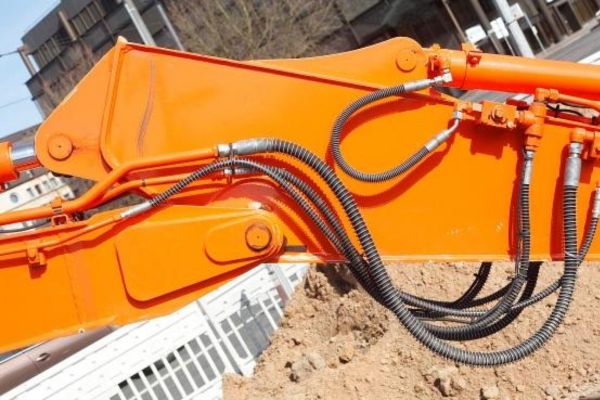
How Do Visual Checklists Reveal Early Structural Blisters?
A simple walk-around inspection allows operators to spot external cover blisters caused by oil leaking through the inner tube. These fluid bubbles indicate that the primary pressure-retaining layer has failed and the hose is about to burst.
- Cover blisters show that internal oil has reached the braid.
- Rusty reinforcement wire indicates severe moisture penetration.
- Slipping couplings reveal immediate structural retention loss.
You should replace any line displaying external blisters or rusted wire braid before operating the machine.
Can Predictive Scheduling Prevent Unexpected Mid-Season Blowouts?
Tracking operational hours allows you to replace high-stress lines before they reach their calculated material fatigue limit. This proactive replacement strategy eliminates unexpected downtime during time-sensitive planting and harvesting windows.
| Inspection Point | Critical Failure Indicator | Corrective Fleet Action |
| Outer Jacket | Exposed steel reinforcement wires | Immediate assembly replacement |
| Coupling Interface | Visible oil weeping or metal slippage | Recrimp or replace connection fitting |
How Do Extreme Working Conditions Accelerate Fitting Corrosion?
Extreme working conditions accelerate coupling corrosion by exposing raw metal surfaces to aggressive chemical fertilizers, constant moisture, and abrasive soil particles. Corroded connections crack easily under high system pressures.
Why Do Synthetic Fertilizers Aggressively Attack Metal Couplings?
Liquid fertilizers contain highly active chemical compounds that rapidly strip protective zinc plating from steel fittings. Once this protective barrier is gone, the underlying steel rusts quickly, weakening the connection points.
- Chemical fertilizers act as oxidizers on raw steel surfaces.
- Pitted metal surfaces create small stress concentration points.
- Corroded threads freeze up, making future field maintenance difficult.
You should wash down your equipment after applying chemicals to remove corrosive residues from metal surfaces.
Can High Moisture Levels Drive Severe Galvanic Pitting?
Operating equipment in wet environments allows moisture to collect in the small gaps between the hose sleeve and the metal fitting. This trapped moisture drives galvanic corrosion, eating away at the crimping shell until it can no longer hold the line under pressure.
| Environmental Stress | Direct Corrosion Mechanism | Protective Maintenance Step |
| Fertilizer Salt | Accelerated zinc plating oxidation | Immediate post-application wash |
| Trapped Moisture | Galvanic pitting inside crimp shells | Use of premium plated couplings |
What Are the Key Criteria for Selecting Replacement Hoses?
Selecting the correct replacement components requires a detailed understanding of your equipment’s operating pressure, fluid temperatures, and environmental conditions. Using an incorrect line tier can lead to rapid assembly failure.
How Do You Match Working Pressures to Equipment Demands?
You must select a line with a maximum working pressure rating that matches or exceeds the peak pressure of your hydraulic system. Using a lower-rated alternative can lead to an explosive rupture during heavy lifting operations.
- System relief settings dictate your minimum hose rating.
- Surge pressures require robust multi-wire braid reinforcement.
- Safety factor multipliers must follow standard engineering rules.
You should consult your machine’s manual to find the exact pressure ratings needed for replacement parts like a crimped hose fitting.
Why Must Core Material Compatibility Guide Your Procurement?
The inner tube material must be compatible with the specific hydraulic oil used in your machinery to prevent chemical breakdown. Selecting the wrong compound can cause the inner tube to soften and wash into your system’s valves.
| Selection Metric | Equipment Design Standard | Procurement Checklist Target |
| Working Pressure | Must meet peak system relief settings | High-tensile steel wire specification |
| Inner Tube Liner | Must resist target hydraulic fluid | Nitrile or specialized polymer core |
Conclusion
Managing hydraulic line failures requires an active approach that combines daily visual inspections, proper installation techniques, and high-quality replacement parts. Addressing environmental degradation, physical friction, and pressure surges helps protect your agricultural fleet from sudden downtime during busy seasons. Using premium lines and heavy-duty fittings keeps your machinery operating at peak efficiency in demanding field conditions.
Partnering with us gives your fleet access to durable, field-tested components that reduce maintenance costs and improve operational uptime. contact us today to find the right fluid conveyance solutions for your agricultural machinery.
FAQ
Can I use a high-pressure hose that shows minor outer cover cracks?
No, you should replace the assembly immediately because outer cover cracks allow moisture to reach the internal steel reinforcement wires. Once moisture gets in, the steel braid rusts and weakens, which can lead to an explosive rupture under normal system pressures.
What’s the best way to protect hydraulic lines from frame friction?
The most effective solution is to install heavy-duty plastic spiral wraps or high-tensile textile sleeves over the primary contact areas. You should also secure the lines with rubber-cushioned clamps to stop them from rubbing against sharp metal edges during operation.
How do I know if my system pressure is too high for a hose?
You need to compare the relief valve settings on your equipment with the maximum working pressure printed on the hose layline. If the system pressure spikes exceed this printed rating, you need to upgrade to a higher-rated multi-wire or spiral reinforced assembly.
Can I mix components from different manufacturers when building an assembly?
No, you should avoid mixing parts because different manufacturers design their hoses and crimp fittings to unique dimensional tolerances. Interchanging these components can cause the fitting to blow off the hose end during high-pressure operation.
How often should I perform visual inspections on my agricultural fleet?
You should conduct visual check-walks daily before starting up your machinery, especially during busy planting and harvesting seasons. Catching minor leaks, cover blisters, or routing issues early helps prevent costly breakdowns and cleanups in the field.