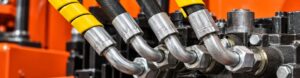
Excavator hydraulic hoses fail during hot weather servicing primarily due to severe thermal expansion and improper coupling selection that degrade the rubber composition under peak pressures. Picture a blistering July afternoon on a high-stakes construction site where your critical earthmover suddenly grinds to a halt with a blown main boom line. The project deadlines are slipping away, fluid is soaking into the dirt, and your repair team faces immense pressure to swap the ruptured line quickly.
Why Does Extreme Summer Heat Accelerate Hydraulic Hose Blowouts?
High environmental temperatures compromise core elastomer stability, causing lines to rupture under normal working parameters when excavator hydraulic hoses fail during seasonal maintenance overhauls. Ambient heat forces the internal oil temperature past safe operating limits, hardening the inner tube liner and rendering it brittle.
Once the rubber loses its inherent flexibility, the constant flexing of the excavator arm creates micro-cracks throughout the internal wall.
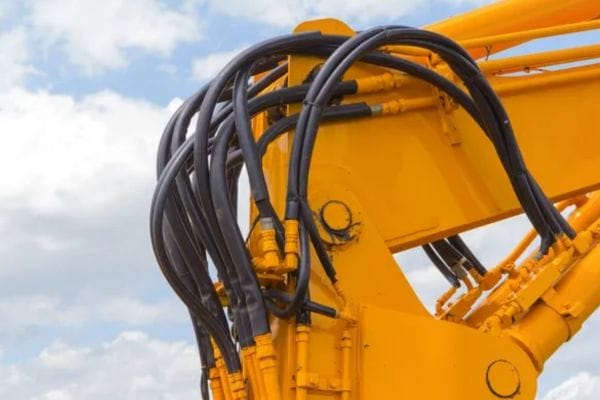
Thermal Degradation Of Rubber Layers
High ambient heat breaks down the molecular bonds within standard synthetic rubber compositions during heavy operation. This chemical breakdown reduces the outer jacket’s capacity to withstand high-velocity oil flow.
- Elastomer compounds lose flexibility above eighty degrees Celsius.
- Internal reinforcement wires become exposed to direct friction.
- Brittle layers fracture under structural load shifts.
You will notice tiny black flakes contaminating your return filters as the inner liner degrades.
Pressure Spikes From Expansion
Solar radiation raises fluid temperatures rapidly, causing hydraulic oil to expand significantly within locked lines. When valves remain closed during mid-day maintenance, this trapped volumetric expansion spikes static pressure beyond the hose’s design threshold.
- Thermal expansion increases fluid volume within steel-reinforced lines.
- Trapped pressure can exceed maximum working limits within minutes.
Standard relief valves cannot relieve static pressure when the machine is completely shut down. Choosing premium multi-spiral wire reinforcement protects your machinery from these unpredictable midday pressure surges.
Proper component selection shields your line infrastructure from extreme thermal degradation.
| Failure Mechanism | Primary Thermal Trigger | Structural Consequence |
| Core Hardening | Extreme Ambient Heat | Inner Liner Fractures |
| Static Pressure Spike | Fluid Thermal Expansion | Coupler Joint Blow-Off |
How Does Wrong Routing Ruin Your Excavator Assembly?
Incorrect routing paths force flexible lines into tight angles and abrasive contact zones, guaranteeing immediate ruptures when excavator hydraulic hoses fail after hurried field installations. Technicians frequently overlook layout prints during emergency field repairs to save time.
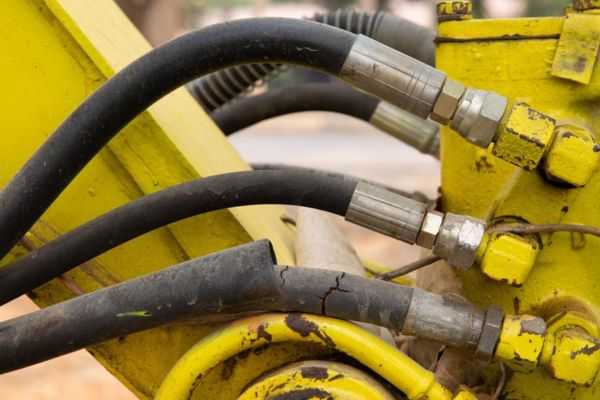
Bending Radius Violations Under Load
Improper routing forces the moving assembly to bend tighter than specified minimum parameters during full bucket extensions. This structural restriction concentrates high stress directly at the metal fitting interface.
- Exceeding minimum bend radius deforms the internal steel braid.
- Kinked areas restrict high-velocity fluid flow patterns.
- Localized velocity increases generate intense internal friction.
You must maintain a straight section of line at least twice the outer diameter right before any fitting connection. Adhering to this layout protocol prevents localized fatigue from tearing the reinforced hose body apart.
Friction Against The Excavator Frame
Poorly routed lines rub continuously against sharp steel corners on the boom arm during repetitive digging movements. Without proper clearance, the protective outer rubber cover wears away quickly, exposing structural wire braids to ambient moisture.
- Constant vibration grinds away outer elastomer protection layers.
- Exposed steel reinforcement wires rust and weaken rapidly.
A single millimeter of cover wear reduces the overall burst pressure rating of the component by half. Utilizing protective textile sleeves or plastic spiral guards shields vulnerable components from direct steel contact.
| Routing Fault | Physical Cause | Prevention Metric |
| Sharp Bends | Length Cut Short | Use 40-Percent Minimum Slack |
| Frame Friction | Missing Retaining Clamps | Install Heavy-Duty Polypropylene Guards |
What Role Do Incorrect Fitting Connections Play In Failures?
Mismatched thread profiles and unrated couplers create weak points that separate violently under peak operational pressures. Installing an incorrect thread style during field maintenance destroys the sealing surfaces permanently.
Forcing a metric thread into an imperial port might seem secure initially, but the threads will strip completely under high operating pressures.
Thread Mismatch During Emergency Field Repairs
Using incorrect fittings during urgent field swaps leads to fluid tracking and catastrophic coupling separation. Operators often mistake British standard threads for American pipe threads because their pitches look nearly identical to the naked eye.
- Mismatched thread pitches prevent full thread engagement depth.
- High operational vibrations loosen unbacked fitting assemblies.
- Fluid leaks across deformed thread flanks under load.
You must utilize a precise thread gauge and caliper to confirm fitting dimensions before completing any field repair. Installing matched components ensures long-term sealing integrity.
Over-Torquing Flanges And O-Rings
Applying excessive force during assembly crushes elastomeric seals and deforms matching flange faces. This over-tightening splits the critical O-ring seal, creating an easy escape path for hot oil.
- Excessive torque deforms soft copper and rubber washers.
- Split seals allow high-velocity oil to bypass connections.
A crushed O-ring cannot expand properly to seal changing fluid pressures. Following precise manufacturer torque specifications protects delicate seals from over-compression failures.
| Fitting Type | Common Identification Mistake | Correct Verification Tool |
| JIC 37-Degree | Confused with SAE 45-Degree | Angle Gauge Measurement |
| ORFS | Overlooked O-Ring Groove | Caliper O-Ring Identification |
Why Does Poor Crimping Quality Truncate Hose Lifespan?
Improperly calibrated crimping machines produce loose or over-crushed couplings that fail quickly when excavator hydraulic hoses fail during critical summer operations. Achieving a perfect mechanical seal requires precise dimension control down to the millimeter.
A field crimp that looks perfectly solid to your eye can easily blow off the machine if the compressed diameter deviates from factory specifications.
Inaccurate Die Selection On Field Workbenches
Using incorrect crimper dies distorts the metal shell without compressing the internal wire braid uniformly. This uneven pressure allows high-pressure fluid to seep between the coupling shell and the outer rubber cover.
- Incorrect die sizes create uneven crimp patterns.
- Loose shells lack the clamping force to retain couplings under load.
- Internal wire braids slip out from the collar teeth.
You risk catastrophic injury if a loose coupling blows off a high-pressure line during operation. Utilizing factory-specified die charts ensures correct shell compression.
Under-Crimping Leading To Coupling Blow-Offs
Failing to compress the metal fitting shell fully allows the line to slide out of the coupling under heavy load. The high system pressure pushes the hose straight out of the collar, causing sudden fluid loss.
- Insufficient compression fails to bite into the steel braid.
- High operational pressures force the line out of the fitting.
You must measure every finished crimp with a calibrated micrometer to confirm it matches the exact target dimension. Verifying dimensions guarantees the assembly withstands its full rated burst pressure.
| Crimp Error | Physical Result | Verification Protocol |
| Under-Crimp | Hose Separation Under Pressure | Caliper Diameter Cross-Check |
| Over-Crimp | Crushed Wire Braids and Core | Visual Inspection for Collar Cracks |
How Does Environmental Abrasion Destroy Reinforced Sleeves?
Constant contact with abrasive rock debris and structural friction wears away protective outer layers. Heavy excavation environments expose lines to continuous mechanical impacts and scraping.
A single deep gouge from a sharp rock can cut through the protective cover, exposing the load-bearing wire braid underneath.
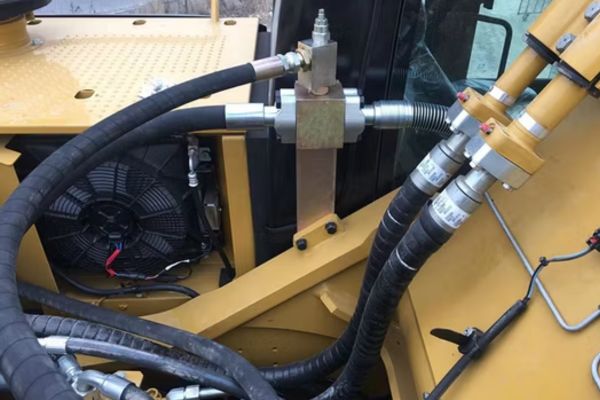
Rock Debris Striking Exposed Excavator Booms
Falling rocks and debris hitting the boom arm dent steel lines and tear outer rubber covers. These mechanical impacts deform the internal wire reinforcement matrix, creating instant localized stress concentration zones.
- Falling rocks crush or dent exposed line runs.
- Torn outer jackets allow moisture to reach internal wires.
- Damaged braid structures fail prematurely under normal system pressures.
Rust develops on wet steel braids within forty-eight hours, eating away the structural wire strength. Installing heavy-duty poly guards shields vulnerable boom lines from falling debris.
Chemical Exposure In Demolition Sites
Operating in contaminated environments exposes rubber covers to aggressive solvents, concrete dust, and corrosive chemicals. These external agents dry out the synthetic rubber, causing deep cracking across the outer cover.
- Corrosive chemicals strip essential plasticizers from rubber covers.
- Dried rubber cracks deeply when the boom flexes.
You must wash down your equipment regularly when working in corrosive environments to remove harmful chemical residues. Applying specialized high-abrasion covers prevents environmental degradation from ruining your assemblies.
| Abrasion Source | Damage Style | Defense Mechanism |
| Rock Impacts | Localized Braid Distortion | Heavy-Duty Steel Spiral Guards |
| Chemical Dust | Outer Cover Micro-Cracking | High-Density Polyethylene Sleeves |
Why Are Inadequate Support Clamps Dangerous For Hoses?
Missing or loose support clamps allow lines to whip and vibrate excessively. Support clamps hold lines in their engineered tracks, preventing destructive harmonics from shaking connections loose.
Without stable clamping, the natural pressure pulses from the hydraulic pump cause the line to whip like a loose rope.
Excessive Vibration Loosening Secure Mounts
High-frequency engine and pump vibrations shake loose improperly torqued mounting hardware over time. Once a clamp falls off, the unsupported line sags into moving machine components or hot exhaust systems.
- Unsupported lines sag into dangerous mechanical pinch points.
- Excessive movement fatigues structural metal connections.
- Loosened fittings develop slow fluid leaks around threads.
The vibrating weight of a long line pulls directly against the fitting coupling, causing localized stress fractures. Inspecting clamp hardware during daily pre-start checks prevents vibration-induced failures.
Structural Whipping Effects During Full Extension
Rapid changes in oil flow direction cause long, unclasped lines to whip violently during operation. This structural snapping action subjects internal wire matrices to intense mechanical fatigue.
- Flow reversals create sudden mechanical line movement.
- Whipping actions stress the fitting crimp interface heavily.
You cannot substitute zip-ties for heavy-duty polypropylene mounting clamps. Installing solid, correctly sized mounting blocks keeps your lines securely tracking within their designed paths.
| Clamp Condition | Failure Path | Corrective Action |
| Missing Block | Line Whipping and Pinching | Install Heavy Polypropylene Clamps |
| Loose Bolt | Structural Thread Chafing | Apply Thread-Locking Compound to Fasteners |
What Preventive Inspection Regimens Stop Sudden Downtime?
Implementing a disciplined, daily visual and tactile inspection routine prevents costly field failures before excavator hydraulic hoses fail during critical operations. Catching a worn line on the service pad saves thousands of dollars in lost field productivity and spilled fluid cleanup costs.
Most line blowouts give clear warning signs long before they actually rupture.
Tactile Inspections For Blisters And Cracks
Running a gloved hand along cooled lines reveals soft spots, outer cover blisters, and hidden localized kinks. A small surface blister indicates that the inner liner has failed, allowing oil to seep into the outer wire layers.
- Cover blisters indicate internal fluid leakage pathways.
- Deep outer cracks expose structural wire braids to weather.
- Local soft spots reveal internal core layer collapses.
You must never check for leaks with your bare hands while the system is pressurized, as fluid injection injuries are life-threatening. Replacing blistered lines immediately prevents catastrophic field failures.
Setting Up A Proactive Replacement Schedule
Tracking machine operating hours allows you to replace high-pressure lines before they reach their calculated fatigue limits. Swapping high-load lines every two years eliminates unpredictable field breakdowns.
- Hour-based tracking catches hidden internal fatigue cycles.
- Scheduled overhauls minimize emergency field repair stress.
It is always cheaper to replace a suspect line in a clean service bay than to fix a blown machine deep in a muddy trench. Establishing a proactive management plan ensures high fleet uptime.
| Inspection Zone | Trouble Sign | Corrective Step |
| Fitting Interface | Wet Oil Film Accumulation | Retorque or Replace Stranded O-Rings |
| Mid-Span Section | External Braid Exposure | Install New High-Pressure Hose Assembly |
Conclusion
Resolving recurring summer hydraulic line blowouts requires a systematic approach that addresses thermal degradation, precise coupling installation, and rigorous field inspection routines. This technical guide has diagnosed the primary root causes of seasonal line ruptures—ranging from extreme thermal expansion and incorrect layout routing to poor crimp execution and misadjusted relief valves—providing actionable field solutions to protect your heavy equipment investments. If your team is fighting high maintenance costs and frequent fleet breakdowns this summer, contact us today to integrate factory-certified fluid power solutions built for extreme industrial duty.
Frequently Asked Questions
Can I Reuse Old Fitting Connections On A Fresh Hydraulic Hose Assembly?
No, you should never reuse crimped fittings on a new hose assembly. Once a fitting collar is compressed by a crimping tool, the metal shell deforms permanently to grip the structural wire braid.
What Is The Best Way To Determine Correct Hydraulic Hose Length During Field Repairs?
The best approach is to calculate the length by measuring the old assembly and adding an extra five to ten percent slack to accommodate system movement. High-pressure hydraulic lines actually shrink up to four percent in length when fully pressurized during heavy operations.
How Do I Know If My Excavator Hydraulic Fluid Is Running Too Hot For My Hoses?
You can confirm fluid overheating by checking your dashboard temperature gauge or using an infrared thermometer on the steel reservoir tank. If hydraulic oil temperatures exceed eighty-five degrees Celsius, the fluid loses its protective viscosity, accelerating the chemical degradation of the inner rubber tube liner.
Can I Install A Two-Wire Braid Hose Where A Four-Spiral Wire Hose Was Originally Used?
No, you must never replace a multi-spiral wire hose with a lower-rated braided hose compound. Spiral wire hoses are engineered specifically to handle high-pressure impulses and heavy mechanical shocks, whereas braided styles are suited for lower steady pressures.
How Do I Prevent Fluid Injection Injuries While Checking For System Leaks?
The absolute rule is to never use your bare hands or fingers to check for suspected leaks along a pressurized line. High-pressure fluid can easily penetrate heavy leather work gloves and puncture your skin, causing severe, life-threatening tissue damage.