
Quick couplings fail under heavy pressure primarily due to localized mechanical fatigue, extreme fluid velocity spikes, and elastomer seal degradation that compromise the joint’s structural integrity. Imagine a heavy-duty hydraulic excavator handling a maximum load on a remote mining site. Suddenly, an intense pressure spike surges through the high-pressure circuit, blowing out a vital connection and spraying hydraulic oil across the manifold. This unexpected downtime delays your operation, costs thousands in lost fluid, and poses a severe safety hazard to operators on the field. To prevent these systematic field failures, engineers must identify the hidden mechanical indicators and fluid dynamics that cause these precise components to rupture.
Why Do Pressure Spikes Blow Out Internal Coupling Seals?
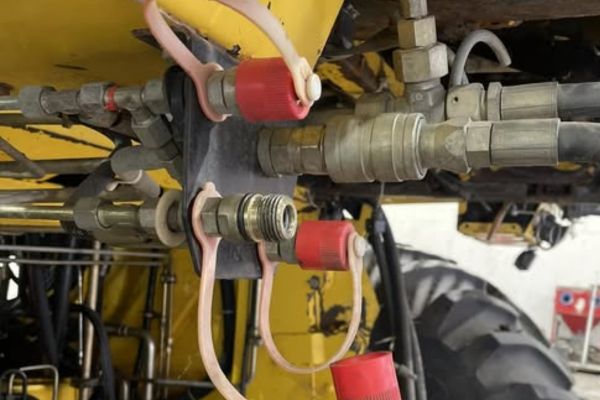
Internal coupling seals fail during pressure spikes because the fluid force exceeds the yield strength of the elastomer, forcing it into the clearance gaps. When these quick couplings fail under high-impact conditions, you will notice immediate physical extrusion or tearing along the primary seal boundary.
What Drives Elastomer Extrusion Under Peak Mechanical Loads?
Excessive system pressure spikes alter the physical properties of your internal O-rings by pushing them beyond their engineered physical constraints. When this happens, the material deforms and shears against the sharp metallic edges of the coupling body.
You can identify this specific issue by inspecting the seal for a characteristic nibbled or shaved appearance along its trailing edge.
- High durometer backing rings prevent elastomer migration during rapid pressure escalation.
- Polyurethane compounds offer superior resistance to extrusion compared to standard nitrile rubbers.
- Reduced clearance gaps between mating components minimize the structural space available for extrusion.
How Does Trapped Hydrodynamic Energy Warp Internal Valving?
High velocity fluid surges generate severe localized forces that physically distort the poppet valves and internal springs inside your quick disconnect fittings. This structural deformation prevents the valve from seating flat, leading to continuous bypass leakage even after system pressure normalizes.
- Hardened steel valve seats resist the pounding forces of repetitive high-pressure cycles.
- Streamlined internal flow paths minimize the localized pressure drops that cause mechanical shifting.
| Failure Mode | Root Cause | Preventive Action |
| Seal Extrusion | Excessive Clearance Gaps | Install High-Durometer Backup Rings |
| Poppet Distortion | Hydrodynamic Fluid Surges | Implement Pressure-Compensated Valving |
How Does Fluid Turbulence Accelerate Brinelling Degradation?
Fluid turbulence accelerates brinelling degradation by inducing high-frequency microscopic movements that drive the locking balls directly into the retaining grooves. When quick couplings fail due to this mechanism, you will find distinct, evenly spaced indentations machined into the hardened steel surface of the plug.
What Generates The High Frequency Micro Movements?
High fluid velocities combined with sharp bends immediately preceding the connection point create intense localized turbulence inside the assembly. This erratic flow creates a rapid oscillation effect that continually vibrates the spring-loaded sleeve mechanism against the locking balls.
- Straight pipe runs before the coupling smooth out the fluid entry profile.
- Internal flow straighteners reduce the rotational velocity of the incoming hydraulic fluid.
- Heavy-duty locking sleeves damp out high-frequency mechanical vibrations from the pump.
Why Do Hardened Locking Balls Indent The Mating Grooves?
The localized contact stress between a perfectly spherical ball and a curved retaining groove concentrates immense force onto a minuscule surface area. Under turbulent high-pressure conditions, this concentrated force exceeds the localized surface hardness of the metal alloy.
- Multi-ball locking designs distribute the radial forces across a broader geometric surface area.
- Case-hardened steel alloys resist localized indentation better than standard carbon steel variants.
| Wear Indicator | Primary Mechanism | Structural Remedy |
| Radial Indentations | Concentrated Contact Stress | Increase Total Number Of Locking Balls |
| Sleeve Scuffing | Turbulent Fluid Oscillation | Integrate Rigid Straight Pipe Dampeners |
Can Mechanical Vibration Induce Accidental Sleeve Unlocking?
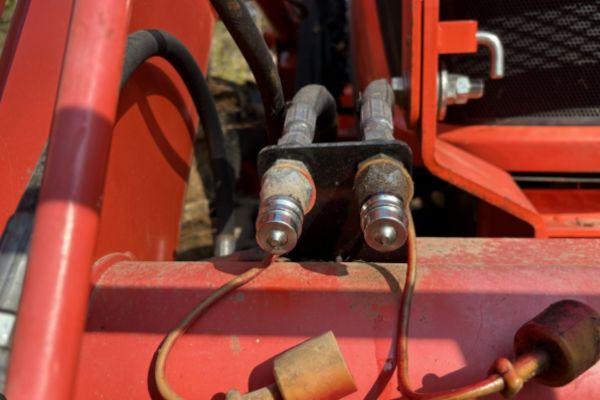
Mechanical vibration can induce accidental sleeve unlocking by causing the spring-loaded outer sleeve to drift axially until it aligns with the ball-release ports. When heavy-duty quick couplings fail from vibration, the plug completely detaches from the socket while under full operational load.
How Do Resonant Frequencies Overcome Internal Spring Tensions?
Every hydraulic machine operates at a specific harmonic frequency generated by the axial piston pumps and heavy mechanical movements. If this frequency matches the natural resonant frequency of the coupler’s internal retaining spring, the spring will momentarily compress on its own.
- Threaded sleeve lock designs eliminate the reliance on axial spring tension alone.
- High-rate premium springs resist harmonic compression across standard pump operating frequencies.
- Rigid mounting blocks isolate the coupling body from structural machine vibrations.
What Limits The Effectiveness Of Standard Ball Retainers?
Standard ball retainers rely entirely on the continuous forward position of the sleeve to hold the locking balls inside the plug groove. If the sleeve moves backward even a few millimeters due to vibration, the balls gain the freedom to move outward.
- Safety pin locks prevent the sleeve from rotating or sliding back accidentally.
- Cam-locking mechanisms provide a visual confirmation that the connection is entirely secure.
| Vibration Metric | Structural Influence | Corrective Engineering |
| Harmonic Resonance | Spontaneous Spring Compression | Upgrade To Threaded Sleeve Mechanisms |
| Axial Sleeve Drift | Retaining Ball Release | Install Manual Safety Pin Enclosures |
What Causes Hydrogen Embrittlement In Heavy Duty Couplers?
Hydrogen embrittlement in heavy-duty couplers is caused by the absorption of atomic hydrogen into the high-tensile steel matrix under extreme pressure and corrosive conditions. When your quick couplings fail because of hydrogen infiltration, the metallic body will fracture cleanly with zero prior warning or visible plastic deformation.
How Does Moisture Contamination Initiate Molecular Infiltration?
When hydraulic fluids carry trace amounts of water into high-pressure zones, the intense localized shear forces can split the water molecules apart. This chemical shearing releases free atomic hydrogen that quickly migrates into the microscopic grain boundaries of the coupling alloy.
- Synthetic fluids with advanced water-separating additives limit free hydrogen generation.
- Low-alloy steels with controlled chemical compositions are less susceptible to hydrogen trapping.
- Regular oil analysis testing detects moisture levels before they can trigger chemical breakdown.
Why Do High Tensile Alloys Fracture Under Continuous Loads?
High-tensile steel provides excellent pressure ratings but possesses a tight molecular lattice structure that easily traps migrating hydrogen atoms. These trapped atoms build up immense internal gas pressure within the micro-voids of the metal, destroying its natural ductility.
- Stainless steel grades with high nickel content resist hydrogen-induced cracking patterns.
- Stress-relief baking during the manufacturing process eliminates residual tensile stresses.
| Material Profile | Embrittlement Risk | Optimized Selection |
| Ultra-High Tensile Steel | High Internal Gas Trapping | High-Nickel Austenite Stainless Steel |
| Case-Hardened Carbon Steel | Moderate Micro-Void Cleavage | Stress-Relieved Low-Alloy Carbon Steel |
How Do Contaminated Hydraulic Fluids Eradicate Precision Mating?
Contaminated hydraulic fluids eradicate precision mating by introducing abrasive micro-particles that score the close-tolerance sealing surfaces of the plug and socket. When internal quick couplings fail from particulate contamination, the mating components will bind together or fail to connect smoothly.
How Do Abrasive Particles Score Mirror Polished Surfaces?
Hard particles such as silica, weld slag, and metallic wear debris act like microscopic cutting tools when forced through the tiny clearances of a coupling. As fluid flows under heavy pressure, it drives these contaminants straight past the main poppet seals, carving deep axial scratches into the metal.
- High-efficiency inline filters capture abrasive debris before it reaches sensitive quick joints.
- Protective dust caps prevent environmental dirt from entering the coupler face while disconnected.
- Flat-face coupling designs eliminate the deep recesses that naturally trap external contamination.
Why Does Silt Accumulation Lock Spring Loaded Sleeves?
Extremely fine particulate matter, often referred to as hydraulic silt, settles into the tight internal cavities behind the locking sleeve and springs. Over time, this silt packs tightly under pressure, creating a solid physical obstruction that prevents the internal springs from compressing or expanding.
- Automated fluid flushing procedures remove packed silt from internal coupling recesses.
- Regular manual cleaning with solvent spray maintains the free movement of the sleeve mechanism.
| Contaminant Type | Primary Failure Point | Operational Defense |
| Large Abrasive Debris | Mirror-Polished Plug Faces | Deploy Heavy-Duty Flat-Face Couplers |
| Fine Hydraulic Silt | Internal Spring Cavities | Enforce Strict System-Wide Fluid Filtration |
Why Does Thermal Expansion Truncate Coupling Flow Pathways?
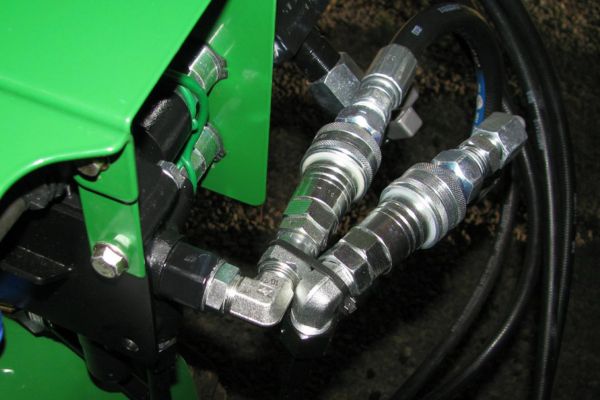
Thermal expansion truncates coupling flow pathways because extreme temperature increases cause internal metallic components to expand at different rates, narrowing the critical tolerances. When your quick couplings fail due to thermal stress, the pressure drop across the connection rises sharply, causing severe system overheating.
How Do Differential Material Expansion Rates Jam Poppet Valves?
When a coupling utilizes a brass poppet inside a heavy-duty steel body, the brass expands significantly faster than the surrounding steel as temperatures climb. This unequal volumetric expansion reduces the engineered clearance gap to zero, causing the internal valve to seize in a semi-closed position.
- Matching material expansion coefficients across all internal components prevents thermal binding.
- Increased baseline clearance designs accommodate the natural expansion of internal moving elements.
What Triggers Trapped Thermal Pressure Locks In Disconnected Hoses?
When a disconnected hydraulic line is exposed to direct sunlight or ambient engine heat, the trapped fluid expands rapidly in volume. Because hydraulic fluid is virtually incompressible, this thermal expansion causes a massive internal pressure spike that locks the coupling face completely solid.
- Pressure-connect couplers allow manual connection even when facing high trapped thermal pressure.
- Thermal expansion relief valves bleed off minor volume increases to protect the main seals.
| Material Pairing | Expansion Variance | Risk Factor | Engineering Choice |
| Brass Poppet / Steel Body | High Differential | Valve Seizure | Single-Material Steel Construction |
| Steel Poppet / Steel Body | Zero Differential | Flow Stability | Monolithic Alloy Component Matching |
Can Improper Installation Torque Distort Coupling Threads?
Improper installation torque can distort coupling threads by stretching the metallic structural wall and forcing the internal mating cavities out of round configuration. When quick couplings fail from over-torquing, the main body develops microscopic stress fractures that rapidly propagate under high operational pressure.
How Does Excessive Tension Yield The Metal Backing?
Applying excessive torque to the mounting threads creates an intense axial pulling force that stretches the metal beyond its elastic limit. This permanent deformation warps the highly precise circular bore that houses the primary O-ring and backup seals.
- Calibrated torque wrenches prevent operators from exceeding the material’s yield point.
- Heavy-walled coupling designs provide greater structural resistance to installation stresses.
What Causes Thread Galling During High Speed Assembly?
When stainless steel or aluminum couplers are threaded together too quickly without proper lubrication, the friction tears away the protective surface oxide layer. The bare metal surfaces then fuse together under pressure, destroying the threads completely when you attempt to disassemble the joint.
You must apply high-quality anti-seize lubricants to prevent this destructive molecular bonding.
- Anti-seize compounds reduce interfacial friction and prevent thread material transfer.
- Slow manual threading allows the component threads to align perfectly before final torque application.
| Assembly Error | Structural Result | Prevention Protocol |
| Over-Torquing | Bore Ovality and Seal Leaks | Utilize Calibrated Digital Torque Wrenches |
| High-Speed Threading | Thread Galling and Seizure | Apply Premium Anti-Seize Thread Lubrication |
What Triggers Sudden Metal Fatigue In Quick Release Sleeves?
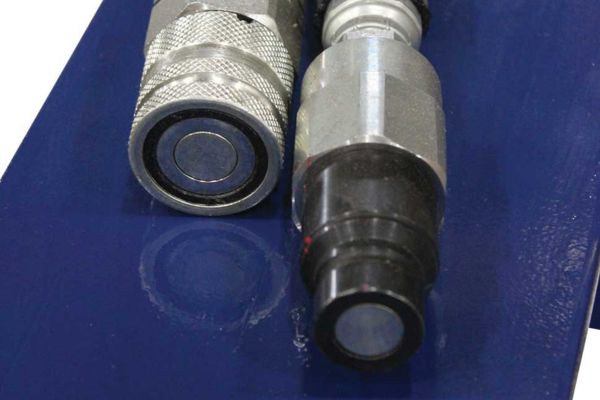
Sudden metal fatigue in quick release sleeves is triggered by the repetitive cyclic loading and unloading of internal hydraulic pressures over millions of operational cycles. When quick couplings fail from material fatigue, the outer sleeve will split open lengthwise without showing any previous signs of external wear or deformation.
How Do Cyclic Pressure Waves Propagate Microscopic Cracks?
Every time a hydraulic valve opens or closes, a wave of intense pressure travels through the fluid, causing the coupling body to expand minutely. These millions of microscopic expansion cycles concentrate intense tensile stress at the sharp roots of the internal machining grooves.
You will not see these internal micro-cracks without utilizing advanced non-destructive testing methods like dye penetrant inspection.
- Generous internal fillet radii eliminate the sharp corners that concentrate structural stress.
- Forged coupling bodies offer vastly superior fatigue resistance compared to bar-stock components.
Why Do Sharp Internal Corners Accelerate Component Failure?
Machining steps with sharp 90-degree internal corners act as massive stress multipliers within the structural wall of the coupling sleeve. Under heavy cyclic pressure, these sharp geometric transitions experience stress concentrations up to three times higher than smooth, radiused sections.
- Shot-peening treatments introduce beneficial compressive stresses that retard crack growth.
- Finite element analysis ensures optimized wall thickness across high-stress zones.
| Manufacturing Style | Stress Concentration | Fatigue Resistance |
| Sharp-Cornered Bar Stock | High Multiplier | Low Operational Cycle Life Expectancy |
| Forged With Fillet Radii | Low Uniform Stress | Superior High-Cycle Fatigue Durability |
Conclusion
Industrial quick couplings operate under grueling mechanical conditions where minor fluid anomalies can quickly escalate into catastrophic component failures. By recognizing the critical indicators of seal extrusion, surface brinelling, hydrogen embrittlement, and micro dieseling, you can implement robust preventive maintenance programs that safeguard your high-pressure systems. Our team specializes in engineering premium, heavy-duty fluid power components that eliminate unpredicted operational downtime in the field. If you are facing persistent coupling failures or need expert guidance on component selection for extreme environments, please contact us today to connect with our senior applications engineering team.
Frequently Asked Questions
Can I reuse a quick coupling seal after it has experienced a minor blowout?
No, you should never reuse a damaged or extruded seal under any circumstances. Once an elastomer seal takes a permanent compression set or suffers microscopic tearing, its structural integrity is entirely compromised and it will fail immediately upon re-pressurization.
What’s the best way to clean a quick coupler that has been dropped in the dirt?
The best method is to thoroughly flush the coupler face with clean solvent spray and blow it dry with filtered compressed air. You must ensure that all external grit and particulate matter are completely removed from the locking recesses before attempting to reconnect the joint.
How do I know if my quick couplings fail due to pressure spikes or thermal expansion?
You can differentiate the two by closely inspecting the physical damage patterns on the failed internal seals. Pressure spikes typically cause localized tearing, fraying, or jagged extrusion marks, whereas thermal expansion results in uniform flattening, hard glazing, or an even compression set across the entire seal surface.
Can I connect different brands of quick couplings if their nominal body sizes match?
No, you should avoid mixing different coupling brands even if their connection sizes appear identical. Minor geometric variations in valve depth, ball groove placement, and manufacturing tolerances can prevent full mechanical engagement, leading to restricted fluid flow or sudden uncoupling under heavy pressure.
What’s the best material option for quick couplings used in highly corrosive environments?
High-nickel austenitic stainless steel is the premier choice for demanding, highly corrosive industrial applications. This material provides exceptional resistance to environmental rust, chemical attack, and hydrogen embrittlement while maintaining the required structural yield strength under maximum operational loads.