
Which TP43 Crimp Fitting Shipment Documents Need to Confirm

Which TP43 Crimp Fitting Shipment Documents Need to Confirm?

TP43 crimp fitting shipment documents should let a buyer trace every multi-SKU order line from the purchase order through the commercial invoice, packing list, carton references, transport documents, and receiving record. Product descriptions, model numbers, quantities, units, carton counts, weights, dimensions, shipping marks, and shipment references should reconcile without guesswork. When those fields conflict, customs review, freight handling, receiving, SKU verification, and trial-order evaluation may be delayed. Exact legal and import requirements vary by destination and shipment, so qualified local customs and logistics professionals must confirm them.

Document Consistency Matters More in Multi-SKU Shipments

A single shipment may contain many fittings that look similar but differ by connection standard, port dash, hose dash, angle, O-ring, nut, stem, or ferrule. Documents become the identity map that prevents commercial quantities from separating from technical product lines.
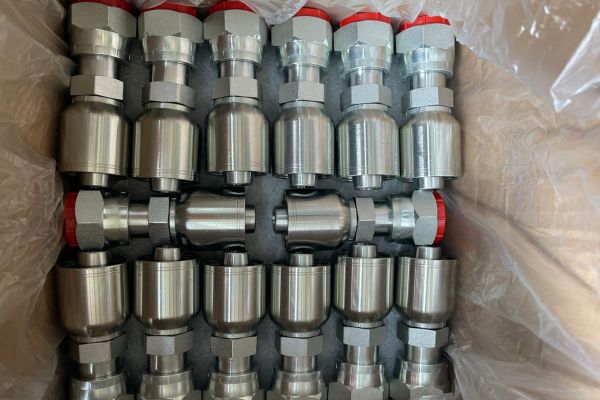
Flange Fitting protection

Every document serves a different purpose

The purchase order defines what the buyer authorized. The commercial invoice describes the commercial transaction for the stated purpose. The packing list describes how goods are physically organized. Transport documents identify movement and shipment references, while receiving records show what arrived and how it was counted or held.

These documents do not need identical layouts, and no one format is universal. They do need consistent shared identifiers so a reviewer can connect a line across the set. A model number without a description, or a carton quantity without a line reference, can create ambiguity even when totals appear correct.

Inconsistency creates downstream work

If the invoice shows one model description and the packing list uses an unexplained abbreviation, staff may not know whether the difference is clerical or technical. If carton counts or weights change without revision, logistics and receiving teams may stop the shipment for clarification. If SKU quantities are correct in total but assigned to the wrong lines, the warehouse can bin the wrong parts.

Document reconciliation before shipment is usually simpler than rebuilding records during clearance or receiving. It also creates a baseline for trial-order analysis: the buyer can connect inspection findings, shortages, packaging issues, or accepted quantities to the intended order line.

Review Commercial Invoice Fields Against the Order

The commercial invoice should describe the agreed transaction consistently with the purchase order and approved product scope. The exact fields required for a particular destination must be confirmed professionally.

Product and commercial identity

Compare seller and buyer identities as applicable, invoice number and date, purchase-order reference, currency, commercial term and named place, payment information where appropriate, line numbers, product descriptions, model or SKU identifiers, quantities, units, unit values, and line totals. Check arithmetic and document-level totals using the agreed currency.

Descriptions should be specific enough to distinguish order lines without making unsupported technical or brand claims. Parker references can support identification and comparison, but an alternative should not be described as an original branded item. Agree on neutral descriptions before documents are issued.

Shipment-related statements

Review country-of-origin statements, package counts, weight references, shipment identifiers, and other fields required by the agreed process. Do not invent or guess an HS code, duty rate, tax treatment, origin rule, or document requirement. These depend on product facts, destination, and applicable law and should be confirmed with qualified customs professionals.

If a value, quantity, or term changes after the first invoice draft, issue a controlled revision rather than editing one document in isolation. The revised invoice should remain synchronized with the packing list, booking or transport records where necessary, and the buyer’s receiving reference.

Packing Lists Must Map Products to Physical Cartons

A useful packing list tells the warehouse where each SKU is packed and how package totals were built. A list showing only grand totals forces receivers to open and search through cartons.

Line, carton, and quantity structure

For each relevant order line, record product identifier, description, quantity, unit, inner-pack information where used, carton number or range, and quantity per carton. Identify mixed cartons clearly. Carton numbering should be unique within the shipment and match external labels.

Partial cartons need explicit treatment because they often create quantity errors. If a model occupies several full cartons and one partial carton, the packing list should show that structure. Do not assume receiving staff will derive it from total quantity and a nominal pack size.

Weight and dimension records

Record net and gross weights according to the agreed definitions and units. Gross weight should reflect product and packing, while net-weight interpretation should be consistent across documents. Carton dimensions and totals should correspond to the actual shipment plan, especially when freight or handling depends on them.

Weights may change slightly with approved packing adjustments, but unexplained differences deserve review. Do not force totals to match a previous estimate when actual packed data is available. Update affected documents under revision control and preserve the reason for the change.

Model Descriptions Must Connect to Approved Order Lines

Model descriptions should preserve technical identity without pretending that the shipment document proves complete compatibility. The buyer needs consistent terms across purchasing, inspection, packing, and receiving.
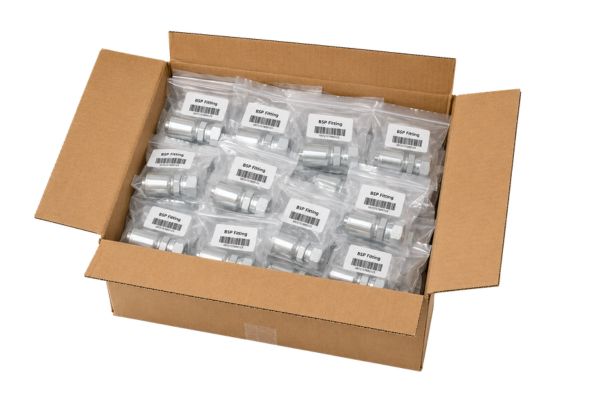
clear label

Use one controlled description set

Create an approved line-description table before shipment. It may include internal SKU, reference number, fitting form, connection description, port dash, hose dash, angle, material or finish notation where required, and unit. Use only the fields needed to distinguish the items and align them with approved drawings or specifications.

Avoid informal abbreviations that different teams interpret differently. A short description can work when the internal SKU is unique and the controlled cross-reference is available, but documents should not rely on unstated tribal knowledge. When a description changes, keep the line identity and revision trail visible.

Documents are not technical approval

A commercial invoice stating a model number does not prove thread form, seat angle, O-ring, dimensions, material, pressure capability, hose compatibility, or crimp suitability. Those characteristics require technical drawings, specifications, inspection records, and application review. Shipment documents confirm commercial and logistical identity.

This distinction prevents two opposite mistakes: rejecting technically conforming goods because a document uses an approved alternate description, and accepting technically wrong goods because the invoice wording looks correct. Reconcile documents and product inspection as linked but separate controls.

Quantities, Cartons, and Weights Should Reconcile

Reconciliation means each lower-level record sums logically to the higher-level totals. It does not mean every document must repeat every detail.

Build totals from the SKU level upward

For each SKU, sum inner-pack quantities to carton quantity, carton quantities to line quantity, and line quantities to shipment quantity. Then reconcile the total number of cartons or packages with external labels and transport records. Use consistent units such as pieces, sets, or other agreed measures; do not switch units silently.

For weight, sum carton gross weights to shipment gross weight and compare product or carton net weights according to the agreed method. Check dimensions and palletization records if they affect booking or handling. Differences caused by rounding should follow the accepted documentation practice rather than an invented universal tolerance.

Investigate instead of overwriting

When totals do not match, identify whether the cause is counting, data entry, pack change, carton replacement, measurement update, unit conversion, or document revision. Correct the source record and regenerate dependent documents. Manually changing only the grand total can hide the mismatch until receiving.

Keep a clear revision reference and approval for the final document set. If the shipment has already moved, notify the responsible logistics and customs parties through the proper channel. The exact response depends on timing, destination, and professional guidance.

Reconciliation checks may include:

Shipment Documents Support Receiving and Trial Review

Receiving staff should be able to use the final document set without decoding sales correspondence. Clear carton and line links reduce unnecessary opening, sorting, and recounting.

Prepare the receiving map

Provide the warehouse with the purchase order, final packing list, invoice reference as needed, carton sequence, SKU descriptions, expected quantities, batches, and any mixed-carton notes. Identify which cartons are selected for inspection or contain samples where the approved plan requires it. Keep commercial values restricted according to internal access needs.

At arrival, record package condition, cartons received, shortages or extras, SKU counts, batch identities, inspection holds, and accepted quantities. Link photographs and discrepancies to carton and line numbers. Do not overwrite expected quantities with received quantities; preserve both so differences remain visible.

Preserve trial-order evidence

For a first multi-SKU TP43 order, connect incoming dimensional, thread, sealing, O-ring, swivel, cleanliness, packaging, and label findings to the same order lines and batches used in shipment documents. This permits later decisions about expanding, correcting, or stopping particular models.

A generic note that “the shipment passed” loses line-level evidence. Some SKUs may be accepted while others remain on hold. The receiving record should show disposition by affected quantity and maintain separation between accepted, uninspected, review, and rejected stock.

Control Revisions and Communication Before Shipment

The final document set should be identifiable and shared through a controlled channel. Multiple email attachments with similar names can leave logistics, customs, finance, and receiving teams using different versions.
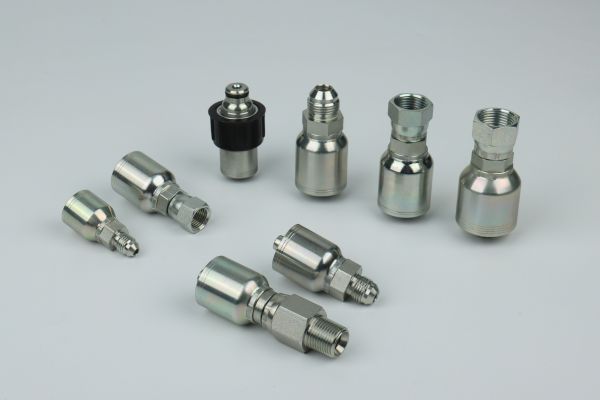
43 series Crimp Fitting

Use a final-set checklist

Assign document numbers, dates, or revision identifiers according to the organization’s process. Mark draft documents clearly and withdraw superseded versions. Confirm that the final invoice, packing list, carton labels, purchase-order references, and booking information use the same shipment identity.

Store the set in the project or order folder with restricted access as appropriate. Do not place customer or commercial details in unrelated systems. A short document index can show which file is final, who approved it, and which professional confirmed destination-specific requirements.

Resolve questions with the responsible specialist

Purchasing can verify order-line consistency, while logistics can review packing and transport references. Finance may review values and currency, and qualified customs professionals must confirm country-specific classification, origin, duties, taxes, licenses, and formal documents. Clear ownership prevents one team from guessing outside its role.

Do not delay technical verification because shipment documents look complete. Connection, material, sealing, hose, crimp, pressure, temperature, fluid, and application approval remain with the relevant technical process.

Avoid Common Documentation Mistakes

Most errors are simple: inconsistent names, copied old values, wrong units, missing carton links, or unsynchronized revisions. A systematic comparison catches them before they become expensive delays.

Mistakes that create ambiguity

Avoid copying a previous invoice without updating order reference, currency, quantities, or terms. Do not use one SKU description on the invoice and a different unexplained code on carton labels. Do not omit partial cartons, mix pieces and sets, or let packing-list weights remain estimates after final packing.

Do not guess tariff classifications or state that one document package works globally. Requirements change by product, route, destination, and regulation. Seek current local professional guidance.

Neutral pre-shipment document checklist

Before document release, confirm:

Conclusion

Reliable TP43 crimp fitting shipment documents create one traceable path from buyer authorization to commercial invoice, physical packing, transport reference, and warehouse receipt. Use controlled product descriptions and model identifiers, map every SKU to quantities and cartons, and reconcile net weight, gross weight, dimensions, package count, and revisions before shipment. Keep invoice, packing-list, carton-label, and receiving terminology consistent without assuming one universal document layout. When data conflicts, correct the source and dependent records rather than overwriting totals. Provide receiving teams with the final line-and-carton map so trial findings remain linked to the actual batch. Shipment documents support commercial and logistical control only; exact customs requirements need qualified local advice, and technical fitting suitability still requires separate verification.

FAQ

Must the invoice and packing list use identical product descriptions?

They should use consistent, traceable descriptions even if their layouts differ. Any approved abbreviation must map unambiguously to the same order line and SKU.

Can one carton contain multiple TP43 SKUs?

It can if the agreed packing plan permits it and inner quantities remain separated and labeled. The packing list and carton mark should make the mixed structure clear to receiving.

Should estimated weights remain on final documents?

Final documents should use the appropriate actual or approved values required by the process. If packing changes the estimate, revise connected records consistently and follow professional shipping guidance.

Does a model number on an invoice prove technical conformity?

No, it identifies the commercial line but does not prove thread, seal, dimensions, material, hose compatibility, crimp data, or pressure suitability. Technical evidence remains separate.

Who should confirm customs document requirements?

Qualified customs brokers, legal or tax advisers, freight professionals, and relevant authorities should confirm requirements for the destination and shipment. Purchasing should not invent codes or rules from a generic checklist.
How to Choose TP43 Crimp Fitting for a Limited Trial Order

How to Choose TP43 Crimp Fitting for a Limited Trial Order

A limited trial budget should be divided across models that test both real demand and meaningful supplier risk, not spent only on the cheapest or easiest fitting. Effective TP43 crimp fitting trial order model selection combines common configurations with a small number of difficult, decision-relevant variants, then applies the same packaging, documentation, and inspection controls expected in later orders. This approach gives a regional fitting business useful commercial evidence without pretending that a few samples approve an entire product family. The goal is to learn whether selected models can be identified, documented, received, and evaluated reliably while keeping technical assembly approval separate for every hose-and-fitting combination.

Why the Cheapest Models Provide Limited Evidence

Low-cost straight fittings may confirm that an item can be ordered and delivered, but they reveal little about how consistently more demanding configurations are controlled. A trial that avoids elbows, swivel ends, less obvious dash combinations, or connection-specific sealing features may pass because it never tests the areas where descriptions, drawings, labels, or packing are most likely to fail.

43 series Crimp Fitting

Easy samples create a narrow result

A simple item can still be valuable when it represents repeat demand, because commercial validation should reflect what the business actually sells. The problem begins when every selected sample has the same low-complexity profile. A clean result then supports only those exact items and controls; it does not establish that the supplier can distinguish similar configurations, retain orientation details, or provide usable dimensional evidence for other models.

Price is one input, not the selection method

Unit price affects how many useful checks fit within a budget, but the trial should purchase information as well as parts. Each chosen model should answer a defined question about demand, technical identification, order processing, inspection, or packaging. If a model adds no new evidence and duplicates another item’s risk profile, it may consume budget without improving the decision.

Start with Demand and Risk Data

The strongest starting point is the business’s own demand history, corrected for stockouts, substitutions, and incomplete descriptions. Sales frequency alone is not enough: repeated emergency inquiries, returns caused by identification errors, and models that require frequent clarification can deserve trial attention even when their volume is lower.

Separate commercial signals from technical risk

Commercial data identifies which configurations matter to the market. Technical and operational data identifies which of those configurations are difficult to control. Review recent sales, lost inquiries, urgent requests, returns, manual corrections, and the connection systems common in the equipment population being served. Then flag items whose thread, sealing form, angle, port dash, hose dash, or orientation is often confused.

Useful selection inputs include:

Give each model a reason to exist in the trial

A selected model should represent a demand segment, expose a control risk, or provide a baseline for comparison. Recording that reason prevents a late change toward whichever sample is easiest to source. It also makes the final review more disciplined: a model passes or fails against its planned purpose, not against a vague impression of quality.

Balance Common and Difficult Configurations

A useful trial is neither a basket of only fast-moving straight fittings nor a collection of rare, highly unusual parts. Common models show whether routine business can be supported; difficult models test whether identification and control remain reliable when geometry or connection details become less forgiving.

Use common models as operational anchors

Fast-moving items help evaluate order confirmation, markings, count accuracy, packing, and repeatable incoming inspection. They also make later commercial conclusions more relevant because the trial includes products likely to be reordered. However, several common models that differ only slightly may produce redundant evidence unless those differences are themselves a known source of errors.

Add difficult models for defined risks

An elbow may test orientation and dimensional reporting. A female swivel may test the distinction between thread identity and sealing seat. A flange configuration may require clearer dimensional and connection evidence than a familiar straight threaded end. Select difficult items because they expose a known decision risk, not merely because they look impressive or are rare.

Test Connection Types, Angles, and Dash Combinations

The configuration mix should challenge the specific fields that drive correct identification. A family label such as TP43 does not replace confirmation of the connection end, sealing method, orientation, hose-side design, and applicable assembly data.

one piece fitting size

Keep port dash and hose dash separate

The connection size and hose size can differ, so a shorthand description can cause the wrong item to be quoted, labeled, or inspected. Include at least one decision-relevant configuration that tests whether both identities stay visible through quotation, order confirmation, packaging, and dimensional reporting. This is an order-control test, not proof that the fitting is compatible with a hose series.

For every selected model, record:

Include Packaging and Documentation in the Trial

Parts that meet dimensional expectations can still create operational cost if their labels, packing, or evidence cannot support receiving and later picking. The trial should therefore use the same document and identification expectations that would matter for a normal stock order.

Packaging should preserve identity and condition

Check whether distinct SKUs remain separated and whether the label carries the agreed part identity, quantities, and revision-relevant description. Packaging should protect sealing faces, threads, swivel areas, and coating from avoidable contact or moisture exposure. A polished outer carton does not compensate for mixed inner packs or labels that omit the port-versus-hose distinction.

Documents must connect to the sample

A dimensional report is useful only when its item identity, drawing revision, measured characteristics, and sample relationship are clear. Photographs can support traceability, but they do not replace measurements or technical approval. Request evidence proportionate to the model’s risk and verify that the document follows the same naming convention used on the order and package.

The receiving review can check:

Define Pass/Fail Criteria Before Ordering

Pass/fail criteria must be written before samples arrive, because post-arrival standards tend to shift toward accepting what is already on the table. Criteria should cover commercial execution, product identity, evidence quality, and incoming condition while clearly excluding untested family-wide claims.

Use model-specific and process-level criteria

Model-specific criteria address the connection, dimensions, geometry, hose-side identity, and condition of the exact sample. Process-level criteria address quotation clarity, revision control, label accuracy, packing separation, report linkage, and response to discrepancies. A supplier may pass one layer and fail another, which is more informative than a single overall score.

43 series crimp fittings protection

Keep assembly approval separate

Commercial validation asks whether the selected order can be controlled and supported. Technical assembly approval asks whether an exact hose, fitting, ferrule arrangement, crimp specification, equipment setup, pressure requirement, temperature, fluid, and application combination is suitable. Do not approve the full TP43 range, or even a tested-looking model for assembly, solely because dimensions and packaging passed incoming review.

Before ordering, define outcomes such as:

Pass: all critical identity, dimensional, condition, packaging, and evidence requirements are satisfied for the exact model. Conditional review: a non-safety-critical discrepancy is documented, corrected, and rechecked before any expansion decision.

Fail: critical identity, sealing, geometry, traceability, or required evidence is missing or inconsistent. Not evaluated: hose compatibility, crimp performance, or application suitability was outside the trial and remains unapproved.

Avoid Common Trial-Selection Mistakes

Most weak trials fail at the planning stage rather than the inspection bench. The recurring errors are choosing models for convenience, allowing unclear descriptions, and drawing a broader conclusion than the selected evidence supports.

Watch for unbalanced or redundant selections

Choosing only inexpensive common items under-tests difficult controls, but choosing only unusual items can distort the commercial decision and create problems unrelated to normal demand. Another mistake is selecting several models that test the same easy attribute while omitting angle, swivel, sealing, or dash-combination risks. A balanced trial uses the smallest set that still answers distinct, high-value questions.

Do not move the acceptance boundary afterward

Changing critical dimensions, evidence requirements, or identity fields after delivery makes comparison unreliable. Avoid accepting an undocumented substitution because it appears close, and do not use a recognizable brand-style number as proof of geometry or compatibility. Discrepancies should remain visible in the decision record so the next order does not repeat them.

Neutral TP43 Trial-Selection Checklist

The final selection should be auditable before a purchase order is released. A short worksheet can show why each model was included, what evidence it should produce, and which questions remain outside the trial.

Information to approve before release

The completed worksheet should also identify who reviews commercial execution, incoming dimensions, and technical assembly suitability. Separating these responsibilities reduces the chance that a clean package or familiar appearance is mistaken for engineering approval.

Conclusion

A limited budget produces useful evidence when every TP43 crimp fitting is selected for a clear demand or risk question. Combine commercially relevant straight and angled items with a few configurations that test swivel ends, connection systems, dash identities, documentation, and packaging controls. Define critical descriptions, measurements, evidence, and pass/fail rules before ordering, then record what was not evaluated. Common models keep the trial connected to future sales, while difficult models reveal whether higher-risk details remain controlled. Neither group should dominate without a business reason. Most importantly, treat incoming and commercial results as evidence for the exact samples only. Complete TP43 trial order model selection should prepare the next verification step, including current hose, fitting, crimp, pressure, temperature, fluid, and application data.

FAQ

Can one successful TP43 sample approve other sizes?

No, one successful sample supports only the characteristics and controls actually evaluated. Other sizes or connections can change geometry, ratings, hose-side requirements, and manufacturing controls, so they need proportionate verification.

Should the highest-volume model always receive the most trial attention?

Not automatically, although demand is an important input. A lower-volume model may deserve attention when an identification or configuration error would be difficult to detect or costly to correct.

Is a dimensional report enough to approve a trial fitting?

No, a dimensional report is one part of the evidence. Identity, sealing features, material and finish requirements, condition, traceability, hose compatibility, crimp data, and application limits may also require confirmation.

Should every trial include a flange or ORFS model?

Only when that connection is relevant to expected demand or a defined control risk. Adding an unrelated connection spends budget without producing useful evidence for the intended market.

Can packaging performance be evaluated with a small trial?

Yes, a small trial can reveal label clarity, SKU separation, surface protection, and document linkage. It cannot fully predict how packaging will perform across larger quantities, longer routes, or different storage conditions.

Hydraulic Fluid Compatibility for One-Piece Fitting Selection

Hydraulic Fluid Compatibility for One-Piece Fitting Selection

Hydraulic fluid compatibility must be verified across the complete hose assembly, not inferred from the fitting metal or a general fluid name. For hydraulic fluid compatibility in one-piece fitting selection, review the exact base material, plating, O-ring, sealing element, hose tube, cover, ferrule, adhesive system, fluid formulation, concentration, temperature, contamination, and exposure duration. A mechanically matching fitting can still be unsuitable if one material swells, hardens, corrodes, softens, or loses sealing performance. Mineral-oil experience does not approve every water-containing, synthetic, biodegradable, or specialty fluid. The safe approach is to identify the actual fluid and every wetted material, then use current product and fluid data for that exact condition.

Compatibility Belongs to the Full Assembly

Fluid contacts more than the fitting body. It may reach plating at threads, an O-ring, a bonded seal, the hose tube, adapters, ports, valves, and contamination left from assembly, so the weakest incompatible material can limit the configuration.

hydraulic fluid Topa

Map every wetted component

Create a material path from reservoir to actuator for the section under review. Identify the fitting base material and finish, each seal compound, hose tube, coupling, adapter, port, valve, and cleaning residue that may contact the fluid. Do not assume a component is isolated merely because its sealing element is external; leakage, permeation, assembly practice, or port design may create contact.

Use the exact fluid identity

A category such as “hydraulic oil” is not sufficient. Record product identity, base chemistry, additives, concentration or water content where relevant, approved mixing rules, contamination limits, and operating temperature. When the fluid changes, previous assembly approval should be reviewed rather than inherited automatically.

Prepare these inputs:

Mineral Oil Requires Specific Confirmation

Mineral-oil-based fluids are common, but familiarity can encourage overgeneralization. Compatibility still depends on the particular fluid, additives, temperature, hose tube, seal compound, coating, and equipment requirements.

Common use is not universal approval

A fitting previously used with one mineral oil has not been proven with every mineral-oil formulation. Additive packages, viscosity grade, contamination, and operating temperature may differ. Verify the product sources for the actual combination rather than relying on shop experience or a generic statement that steel and oil are compatible.

Aging and maintenance affect the condition

Oxidation products, water contamination, particles, and mixed fluids can change the environment that seals and surfaces experience. A compatible new fluid does not make a contaminated system acceptable. Maintenance should identify the fluid used, prevent unapproved top-ups, control containers and transfer equipment, and investigate unexplained seal or coating changes.

Sampling and maintenance observations can reveal that the real system no longer matches the approved clean-fluid assumption. Results must be interpreted under the equipment’s maintenance program, not converted into a new compatibility claim by themselves. When contamination is found, trace its source, evaluate affected components, and follow approved filtration, fluid replacement, and inspection procedures. Replacing only a leaking fitting may leave the chemical or contamination cause unchanged.

Water-Glycol and Water-Containing Fluids Need Broader Review

Water-containing fluids can create different corrosion, lubrication, seal, coating, and hose-tube concerns from mineral oil. Approval should address the specified formulation and concentration, not the word “water-glycol” alone.

Water changes material exposure

Base metals, plating systems, passivation, and adjacent components may respond differently when water is present. Concentration, contamination, dissolved substances, temperature, and stagnant areas can influence corrosion. A salt-spray report is not a compatibility report for internal exposure to a hydraulic fluid.

Seals and hose tubes remain critical

An O-ring or hose tube suitable for mineral oil may not be approved for a water-containing fluid, and a dimensionally similar substitute may react differently. Confirm compound and tube identities through current data. Do not change seal materials, hose series, or cleaning products without reviewing the complete assembly and crimp requirements.

Synthetic, Biodegradable, and Specialty Fluids

Specialty fluids should be treated as distinct formulations with their own material and operating requirements. Similar viscosity or intended function does not establish chemical compatibility.

Hydraulic Hose Crimp Diameter

Avoid family-wide assumptions

Synthetic fluids include different chemistries, while biodegradable products can use different base stocks and additives. Phosphate-ester and other specialty fluids may require particular seals, hose tubes, paints, or handling controls. Do not build a compatibility chart from memory or transfer an approval between broad families.

Consider system conversion risks

Changing fluid can leave residual material in hoses, cylinders, valves, and reservoirs. Mixing, flushing, cleaning, seal replacement, disposal, and recommissioning should follow equipment and fluid-provider procedures. A compatible new fitting does not approve a system conversion, and an unverified flush chemical can introduce another incompatibility.

Conversion planning should distinguish parts that can be verified in place from parts that require replacement or separate assessment. Dead legs, accumulators, long hoses, and complex actuators may retain old fluid. Record the conversion sequence and acceptance checks, and do not assume that visual clarity proves complete removal. The decision belongs to the system owner and applicable technical sources, not to the fitting supplier description alone.

Metals, Coatings, Seals, and Hoses Respond Differently

Compatibility is not a yes-or-no property of one material. Each component can have a different failure mechanism, and temperature, concentration, pressure cycling, and time can alter the response.

Metal and coating checks are separate

The base metal may tolerate a fluid while its plated finish, passivation, topcoat, or damaged area behaves differently. Conversely, good coating evidence does not prove the underlying fitting’s pressure rating or connection accuracy. Identify the complete surface system and whether the compatibility source addresses continuous internal contact, occasional leakage, or only external exposure.

Elastomers and hose materials need exact identities

Generic labels such as “rubber seal” or “oil hose” are inadequate. Use the exact O-ring compound, seal material, hose manufacturer or accepted specification, series, tube, reinforcement, cover, and adhesive construction. Matching dash sizes do not establish fluid compatibility or crimp suitability across hose series.

Watch for evidence of a compatibility problem, including:

Verify Compatibility Before Approval

A structured approval connects the exact fluid condition to the exact component revisions. Missing data should stop the affected decision instead of being filled with a broad compatibility claim.

Build a compatibility matrix

List every wetted material in rows and the actual fluid, concentration, temperature, and exposure condition in columns. Cite current product-specific sources for each conclusion and record limitations, unknowns, and required tests. If sources conflict, resolve the difference with the responsible product and equipment authorities before use.

identify connection

Confirm the mechanical assembly separately

After chemical compatibility is supported, verify thread standard, diameter, pitch, gender, seat, sealing method, orientation, hose side, material, pressure, and installation clearance. Confirm the current preparation, insertion, die, crimp diameter, and inspection procedure for the exact hose-and-fitting combination. Chemical approval cannot correct a mismatched thread or unapproved crimp.

Evidence should remain linked to the delivered revision. A generic certificate may identify a material family without proving which seal, coating, or hose tube is present in the received configuration. Compare purchase description, drawing, label, part marking, and reports, and resolve conflicts before release. A change in material source, seal compound, coating system, or hose construction should trigger the defined review rather than silently inherit the earlier result.

Where published compatibility data is incomplete, define a controlled escalation path. It may require clarification from the equipment, fluid, hose, seal, or fitting authority, or an application-specific evaluation under an approved protocol. Do not create a universal laboratory shortcut or extrapolate from a nearby fluid. Record the missing condition and keep the configuration out of service until the required evidence supports it.

Common Compatibility Mistakes

The recurring mistakes are approving by fluid family, checking only the metal, ignoring concentration and temperature, and treating an old successful installation as universal evidence.

Do not rely on partial charts

A chart may describe one material at one condition without covering the complete fitting or assembly. Verify its scope, revision, rating terms, and fluid identity. Do not invent a rating for an unlisted combination or interpret a blank cell as approval.

Prevent unapproved substitutions and mixing

Do not substitute O-rings by color or dimensions, top up with an unidentified fluid, or reuse contaminated transfer equipment. Labels, storage, maintenance records, and change control should preserve fluid and component identity. If an incompatibility or leak is suspected, stop and isolate equipment, release pressure and stored energy, secure loads, and follow lockout and manufacturer procedures.

Leak response should preserve evidence when safe to do so. Record the exact assembly identity, fluid, operating condition, location, visible material changes, and maintenance history after isolation. Do not conclude that the seal compound failed merely because leakage appeared nearby; damaged sealing faces, wrong threads, contamination, incorrect assembly, pressure spikes, and movement may produce similar symptoms and require different corrective action.

Conclusion

Fluid compatibility is a complete-assembly decision that starts with the exact formulation and every wetted material. Identify the fitting base metal and coating, O-rings, seals, hose tube and construction, adapters, ports, residual fluids, and cleaning agents. Review concentration, additives, temperature, duration, pressure duty, and contamination together; mineral-oil experience cannot approve water-glycol, synthetic, biodegradable, or specialty fluids. Build a traceable matrix from current product and fluid data, then complete separate thread, sealing, hose, crimp, and pressure checks. Never mix fluids or substitute seal materials without approval. Sound hydraulic fluid compatibility for one-piece fitting selection states the exact supported condition, leaves unknown combinations unapproved, and preserves evidence for purchasing, assembly, maintenance, and future replacement through every later maintenance and component replacement decision.

FAQ

Is a steel fitting compatible with every hydraulic oil?

No, the exact fluid, additives, coating, seals, hose, temperature, and application must be checked. A broad metal-and-oil assumption does not approve the assembly.

Can seal color identify fluid compatibility?

No, color is not a reliable compound specification. Use controlled part identity and current compatibility data for the exact seal, fluid, concentration, and temperature.

Does changing to a biodegradable fluid require new fittings?

Not automatically, but it requires a complete compatibility and conversion review. Existing fittings, seals, hoses, residual fluid, cleaning procedures, and equipment requirements all matter.

Can temperature change an otherwise compatible combination?

Yes, temperature can change chemical response, seal behavior, hose performance, and fluid condition. Verify compatibility at the actual operating and exposure conditions.

Does fluid compatibility prove pressure suitability?

No, it addresses material response to the fluid. Pressure suitability still depends on the exact fitting, hose, crimp, port, adapter, seals, temperature, impulses, and lowest-rated component.

Contact Topa

Save 30% on maintenance costs with our easy-install hydraulic fittings. Contact Now!