
Hard-to-source one piece fittings are sourced faster when the request defines the complete connection, hose side, geometry, material, application, and required quantity. An old part number or unclear photograph may narrow a search, but it cannot prove thread standard, sealing method, fitting series, hose compatibility, or installation clearance. Uncommon, obsolete, and regional fittings require disciplined identification before any candidate is approved.
Why Some Fittings Are Difficult to Source
Difficulty usually comes from incomplete identity, limited current production, regional connection systems, or a special geometry rather than from the word “obsolete” alone. The first task is to establish what the existing fitting actually is.
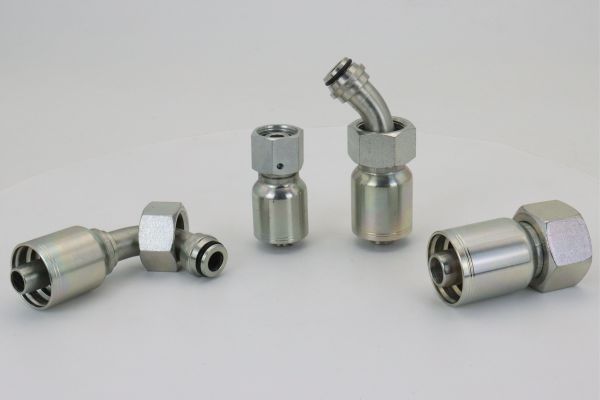
Legacy descriptions lose technical meaning
Old labels may show only a brand code, customer nickname, or shortened size. Part numbers can be revised, superseded, reused in internal systems, or separated from their original catalog. A code remains useful evidence, but it should be connected to a verified drawing, catalog record, equipment documentation, or measured sample before it controls a replacement.
Search records should preserve failed leads as well as possible matches. Note which catalog family, thread assumption, or cross-reference was checked and why it was rejected. This prevents another reviewer from repeating the same path and helps reveal the missing fact that separates candidates. Keep the notes factual: “pitch not confirmed” or “centerline exceeds available space” is more useful than “looks wrong.”
Uncommon combinations reduce obvious options
A fitting can combine a familiar thread with an uncommon hose dash, reducer arrangement, long drop, special angle, restricted envelope, material, or finish. One-piece construction means the stem or body and ferrule are preassembled, attached, or retained together; the exact design varies by series. That arrangement does not make a visually similar hose tail compatible with the existing hose or crimp process.
Complete Identification Information Reduces Delay
A structured request prevents repeated questions and eliminates candidates that could never fit. Separate preliminary identity evidence from final technical approval.
Define the port connection
Record male or female connection, measured outside or inside diameter, pitch or TPI, straight or tapered thread, seat angle where relevant, sealing face, O-ring location, and sealing method. Do not identify NPT, NPTF, BSPP, BSPT, JIC, SAE, ORFS, ORB, Metric, DIN, JIS, or flange connections from appearance alone. Photos support screening, but final identification may require suitable thread gauges, measurement, and standards-based comparison.
Define the hose side and geometry
Record hose manufacturer or compatible specification, hose series, construction, hose ID, dash size, reinforcement, existing fitting series, and ferrule relationship. Include straight, 45-degree, or 90-degree form, orientation, drop, overall envelope, and any clearance-critical dimensions. The same port end can be paired with different hose tails, and the same hose dash does not prove compatibility.
Prepare these request items:
- Legacy and controlled part numbers with their source
- Complete connection measurements and sealing description
- Port dash, hose dash, fitting series, and hose information
- Clear overall, thread, sealing-face, marking, and hose-tail photos
- Critical dimensions or an approved drawing
- Material, finish, fluid, temperature, pressure, and application requirements
- Required quantity, urgency, destination market, and whether the need is trial, repair, or stock
Use Old Part Numbers as Leads, Not Final Proof
Cross-reference searches can save time, but a suggested match must be checked against technical requirements. A shared number fragment or catalog description does not establish interchangeability.
Verify the source and revision
Ask where the number came from: product marking, package, invoice, machine parts list, distributor database, or handwritten record. Record any manufacturer name and approximate document date without assuming the information remains current. If an archived catalog or drawing is available, compare its revision and full suffixes because those may encode material, angle, or size.
Build a comparison record
For each candidate, compare thread and seal, port dash, hose dash, stem and ferrule design, fitting series, configuration, critical dimensions, material, finish, and application data. Mark missing evidence explicitly. A candidate can be “possible for further review” without being “approved for use.” Never invent a cross-reference to close an urgent request.
Use a comparison sheet with one requirement per row and separate columns for the original evidence, candidate evidence, and review status. This makes important technical gaps visible early and prevents an attractive catalog description from outweighing an unverified thread or hose side. Record who supplied each document and its revision. When two sources conflict, pause the decision and resolve the discrepancy rather than selecting the value that makes the candidate fit.
| Information | Identification value | Approval limit |
| Old part number | Narrows records and product families | May be incomplete, obsolete, or revision-specific |
| Photos | Shows form, markings, and visible seal features | Cannot prove thread, material, or compatibility |
| Measurements | Supports thread and geometry comparison | Must use suitable methods and reference data |
| Drawing | Defines controlled dimensions and features | Must be current and tied to the actual part |
| Physical sample | Enables direct inspection | Wear or damage may distort original condition |
| Application data | Tests pressure, fluid, temperature, and clearance suitability | Does not replace product and assembly specifications |
Photos, Drawings, and Samples Have Different Roles
Use the least ambiguous evidence available, but understand what each source can and cannot prove. Combining them is often more effective than asking for more photographs of the same uncertain feature.
Capture useful photographs
Photograph the complete fitting from several orientations with markings readable. Add close views of the male or female thread, seat or sealing face, O-ring location, ferrule, and hose tail. Include a scale only as a visual aid; perspective and lens distortion make photos unsuitable for final measurement. Clean only enough to reveal features without damaging evidence.
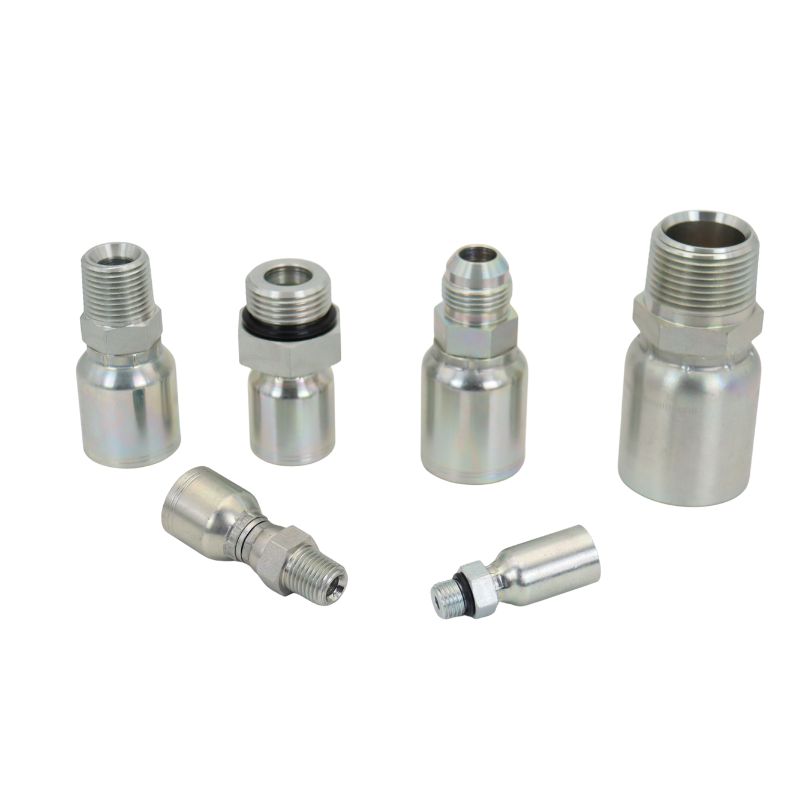
Measure or submit a sample safely
Before removing a fitting, stop equipment, isolate the hydraulic system, release pressure and stored energy, secure raised loads, and follow lockout and manufacturer procedures. Never check a suspected injection leak by hand. A physical sample should be tagged with its machine position, hose information, orientation, and known part reference. Note damage, wear, corrosion, or deformation so it is not mistaken for original geometry.
Drawings are especially valuable for critical lengths, centerlines, angles, thread callouts, seal features, and installation envelope. A hand sketch can organize questions, but it is not an approved technical drawing unless its dimensions and authority are verified.
Measurement planning matters because worn threads and damaged sealing faces can mislead the review. Clean the part without altering surfaces, identify where measurements are taken, and repeat questionable readings with suitable equipment. Where the old part is installed, record accessible dimensions and orientation before removal. After removal, compare those notes with the free part so hose twist or installation load does not distort the assumed geometry.
If a sample must be sent for inspection, protect threads, sealing surfaces, and the ferrule from shipping damage. Include a reference sheet linking it to the inquiry while removing customer-identifying information not needed for technical review. Photograph its condition before dispatch and state whether it is worn, damaged, or known to have leaked.
Regional Standards Narrow the Search Carefully
Destination country, equipment origin, and application sector can suggest likely connection families. They should guide the search order, not decide the answer.
Equipment fleets mix standards
Imported machines, replacement subsystems, attachments, previous repairs, and local modifications can introduce different thread systems on one site. A machine built in one region may use components sourced globally. Never assume all ports follow the country’s most common standard.
Confirm measured features
Use equipment origin to choose likely gauge and reference checks, then confirm diameter, pitch or TPI, taper, gender, seat, seal, and engagement requirements. Similar tapered threads must not be forced together. Thread sealant cannot correct the wrong thread form, pitch, taper, damaged seal face, or cross-threading.
Compare Replacement Options as Complete Assemblies
Identifying a connection is only one part of approval. The candidate must also suit the hose, crimp process, application, and installation space.
Verify hose and crimp compatibility
Require current data for the specific hose manufacturer or compatible specification, hose series, construction, size, fitting series, ferrule, crimp machine, die, preparation, insertion, and final crimp. Do not infer a diameter, die, skive requirement, or pressure rating from another assembly. Pressure suitability is limited by the lowest-rated component and affected by fluid, temperature, impulse, routing, condition, and installation.
Review geometry and environment
Compare orientation, centerline, wrench clearance, bend near the fitting, adjacent components, and hose routing. Material and finish decisions may depend on fluid compatibility, corrosion, temperature, outdoor exposure, washdown, chemical contact, and equipment requirements. No material or surface treatment is universally best.
Use a staged decision: identify, compare documents, inspect a sample where appropriate, verify the assembly procedure, and approve only after relevant evidence is complete. High-risk use may require additional validation defined by the responsible manufacturer or engineering authority.
Commercial availability should be assessed only after the technical boundary is clear. Determine whether the candidate is a current standard item, a configurable combination, a special manufacture, or an unsupported proposal. Confirm what documentation will accompany it and whether repeat identity can be maintained. A low initial quantity may support inspection, but one accepted sample does not approve later batches or other sizes. Record the exact SKU, revision, evidence, and validation scope so a successful search does not become a vague cross-reference in the next order.
Avoid Common Sourcing Mistakes
Most delay is created by starting with a vague request, chasing many visual matches, and discovering late that the hose side or geometry was never recorded.
Do not confuse speed with approval
Avoid sending only one photograph, using “same as” without a reference, treating nominal size as a thread measurement, or requesting a substitute before identifying the seal. Do not approve by price or availability when technical evidence is incomplete. If no direct replacement exists, the safe outcome may be redesign review, an adapter solution approved for the application, or continued search—not a forced near-match.
Use this final request checklist:
- Confirm connection, gender, thread measurements, taper, seat, and seal
- Confirm hose series, construction, ID, dash, fitting series, ferrule, and crimp data
- Record angle, orientation, envelope, and clearance-critical dimensions
- State material, finish, fluid, temperature, pressure, and environmental needs
- Attach traceable part numbers, drawings, photos, and sample notes
- Identify destination market, equipment origin, application, quantity, and urgency
- Label each candidate as screened, awaiting evidence, rejected, or approved
Conclusion
Faster sourcing begins by replacing a vague search with a complete technical record. Use an old part number to locate evidence, but verify the connection, sealing method, port dash, hose dash, fitting series, geometry, material, finish, and application independently. Combine clear photos with suitable measurements, drawings, or a safely removed sample, and use equipment origin only to prioritize likely standards. Compare candidates as complete hose-assembly and installation solutions, using current manufacturer data for hose, ferrule, equipment, die, and crimp requirements. When evidence is missing, keep the candidate in review instead of calling it interchangeable. This disciplined approach reduces delay and makes hard-to-find one-piece fittings safer to identify, compare, and approve.
Frequently Asked Questions
Can a clear photo identify an obsolete fitting?
No, it can narrow possible forms and show visible markings or seals. Final identification usually needs thread measurements, sealing details, hose information, and critical dimensions.
Is an old branded part number enough for a replacement?
No, the number may be incomplete, obsolete, or revision-specific. Verify it against controlled technical data and the actual application.
Does the destination country confirm the thread standard?
No, it only suggests likely standards. Imported equipment, attachments, and prior repairs can mix connection systems on the same machine.
Can an adapter solve every unavailable fitting problem?
No, an adapter changes geometry and adds interfaces that may affect clearance, sealing, pressure suitability, and routing. It requires application-specific technical approval.
What if no direct replacement can be verified?
Do not use a close-looking substitute. Keep the request open for further verified technical evidence or obtain an authorized redesign or repair decision based on the complete system requirements.