
Free female swivel fitting rotation is useful, but it is not enough to approve the assembly. A nut can rotate while its threads, sealing seat, retention feature, or adjacent surfaces are damaged; another nut may feel tight because of contamination, packaging pressure, surface condition, or an assembly issue that still needs investigation. Hand feel alone cannot define a universal acceptance limit. A reliable review combines controlled movement checks with visual inspection, product identity, applicable drawing requirements, sample comparison, and batch evidence.
Free Rotation Confirms Only Limited Movement
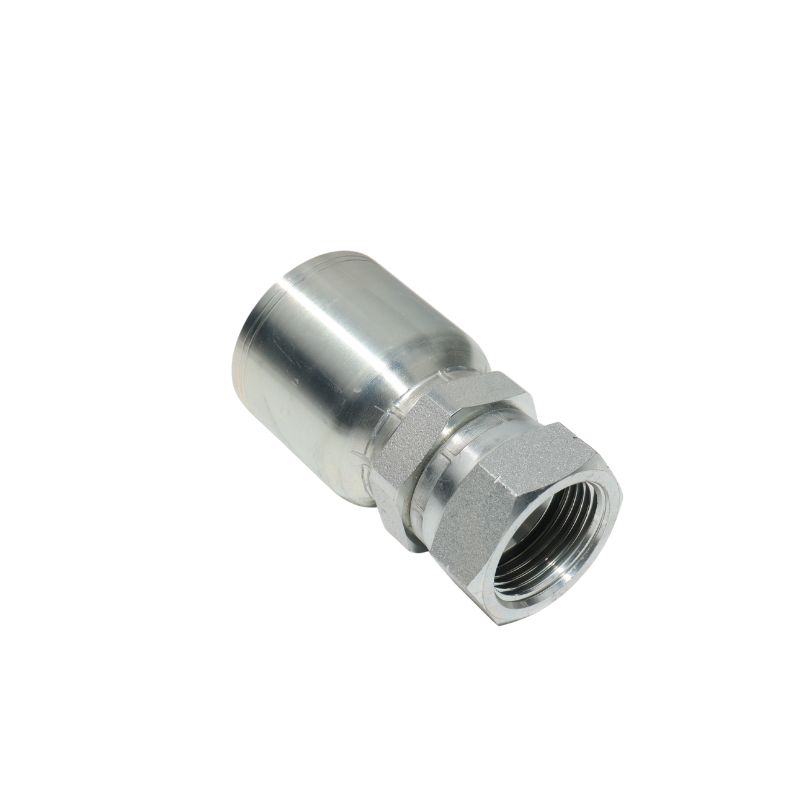
A freely rotating nut confirms that it can move around the fitting at the time and under the conditions of the check. It does not prove that the nut will engage the intended male connection correctly or form the specified seal.
What the movement check can reveal
Slow, nondestructive rotation can screen for obvious seizure, repeated binding, gritty movement, or a sudden stop. Comparing several units from the same SKU and an approved reference may expose unusual variation. The check is most useful when the inspector records the fitting’s identity, temperature and cleanliness conditions where relevant, and whether protective packaging was just removed.
Movement should be evaluated through the permitted range without using tools or applying force beyond the approved method. A swivel is not a test bearing, and aggressive spinning can mask the original feel or cause damage. If the procedure does not define manipulation, observation may be safer than experimentation.
What rotation cannot establish
Rotation does not identify thread form, diameter, pitch or TPI, straight or tapered geometry, or male/female pairing. It also does not confirm the seat angle, sealing face, O-ring arrangement, or connection standard. A nut may spin normally even when the part is the wrong model or when a thread crest is damaged farther inside.
Nor does rotation verify the hose side. A one-piece fitting has a body or stem and ferrule preassembled, attached, or retained together, but that structure does not guarantee compatibility with a hose construction, hose series, crimp machine, die set, or crimp specification. Swivel movement is one incoming characteristic, not approval of the complete hose assembly.
Interpret Stiffness, Looseness, and Binding Separately
Different movement symptoms point to different questions. Labeling every unusual feel as a dimensional defect can lead to false rejection, while dismissing it as “normal tightness” can move a real issue into inventory.
Stiffness and binding are not identical
Stiffness describes higher-than-expected resistance that may remain fairly uniform. Binding is a localized catch, rough point, or interruption during movement. Possible contributors include contamination, surface residue, impact, deformation, incorrect assembly, burrs, protective material contact, or differences in the approved construction; the symptom alone does not establish the cause.
One tight nut does not automatically prove the dimensions are wrong. First check for cap contact, debris, corrosion, packaging pressure, temperature-related residue behavior, and visible damage, then compare with the approved method and technical requirements. Do not add lubricant, force the nut, disassemble it, or modify the retention area unless an authorized procedure explicitly allows it.
Looseness and axial movement need context
Swivel designs require clearance to rotate, so some movement may be inherent in the assembly. The relevant question is whether rotational and axial conditions meet the current approved design and inspection criteria, not whether the nut feels completely rigid. Without a drawing or approved limit, an inspector should record the observation rather than invent a universal play value.
Excessive apparent looseness may raise questions about retention, missing components, wear, deformation, or incorrect assembly. Compare like-for-like units, observe whether the nut remains securely retained, and inspect the surrounding body and sealing features. A freely rotating nut that can move out of its intended retained position is not approved merely because rotation is easy.
| Observed condition | What it may indicate | Controlled next action |
| Smooth rotation with normal retained position | Basic movement is present | Continue thread, seat, identity, and evidence checks |
| Uniform stiffness | Residue, construction, temperature, or assembly variation | Compare baseline and inspect without forcing |
| Localized binding or gritty feel | Debris, damage, burr, or deformation | Hold unit and inspect affected features and package |
| Noticeable axial or lateral looseness | Design clearance or possible retention concern | Compare approved criteria and batch references |
| Nut does not remain retained | Assembly or retention nonconformity | Quarantine and request technical disposition |
| Movement changed after unpacking | Cap, bag, impact, or transport influence | Review protection and related units |
Inspect the Nut, Threads, Seat, and Retention
The swivel assembly should be reviewed as a group of functional features. Rotation that feels acceptable cannot cancel damage found on the nut, thread, sealing seat, or retention interface.
Nut and thread condition
Inspect flats, edges, wrenching surfaces, thread entry, accessible thread flanks, and the inner cavity for impact, crushing, contamination, corrosion, or raised material. The nut should correspond to the correct SKU and connection description. Starting a random mating part is not a safe identification method and can cross-thread or damage a surface.
Thread verification may require the approved drawing, correct gauge, or controlled mating reference. Keep thread form, pitch, diameter, taper, seat, and sealing method as separate characteristics. Similar-looking JIC, SAE, NPSM, metric, BSP, and other female swivels must not be assumed interchangeable.
Sealing seat and nut retention
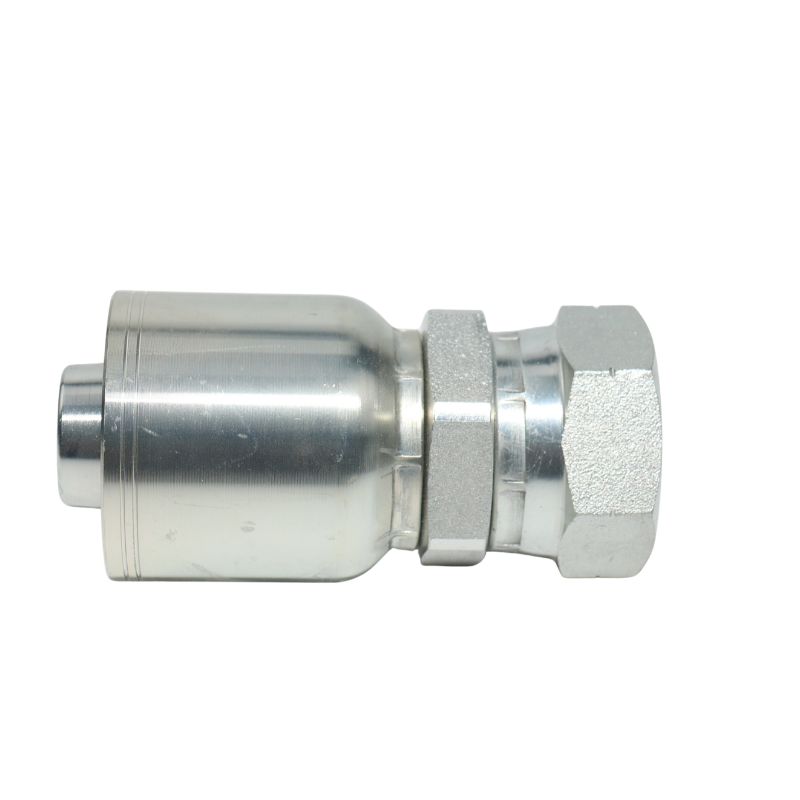
Examine the sealing seat with suitable lighting and access. Scratches, dents, embedded debris, corrosion, or raised edges can matter even if the nut rotates freely. Do not use sealant to compensate for an incorrect seat, damaged face, wrong thread standard, or cross-threaded connection.
The retention feature keeps the nut associated with the fitting while allowing intended movement. Inspect for missing elements, deformation, cracks, unusual gaps, contact marks, and evidence that the nut has struck the body or packaging. Do not dismantle the assembly during routine receiving simply to view a hidden feature unless the approved inspection plan requires and controls that action.
Key inspection items include:
- Part number, connection description, angle, port dash, and hose dash
- Nut shape, wrenching surfaces, thread entry, and accessible threads
- Seat or sealing face condition and cleanliness
- Rotation through the approved check without tools or added lubricant
- Axial and lateral observations against a controlled reference
- Nut retention and surrounding body condition
- Protective cap, inner package, carton, and batch identity
Transport and Packaging Can Change Swivel Condition
A swivel that passed final inspection can arrive with different movement if the nut was loaded, contaminated, or struck during transport. Packaging review helps separate a product characteristic from damage introduced after production.
Impact, abrasion, and compression
Heavy fittings moving together inside a carton can strike nut edges, threads, ferrules, and sealing ends. A bag may keep pieces together without preventing metal-to-metal contact. Carton compression can transfer load through a cap or nut, while abrasive particles from damaged packaging may enter the swivel cavity.
Look for patterns: multiple nuts marked on the same side, caps pushed inward, torn bags, loose dividers, or damaged cartons. A single dent has a different evidence trail from repeated binding across intact packages. Preserve the packaging long enough to document its relationship to the finding.
Protection must not interfere with the assembly
A cap or plug should protect the connection without engaging incorrectly, contacting the sealing seat, trapping debris, or loading the nut. There is no single packaging method suitable for every fitting geometry. The agreed solution should consider weight, shape, exposed threads, swivel travel, shipment route, and warehouse handling.
After an inspector removes protection, the accepted item should be reprotected according to the defined process. Leaving a nut open on a bench can introduce the very debris later blamed on shipment. Maintain separation and identification throughout inspection, repacking, binning, and counter sales.
Approved Samples Establish a Movement Baseline
Sample review should produce a written and visual baseline rather than a memory of how one nut felt. The baseline must also record which characteristics were not verified.
Capture more than subjective feel
Link the approved sample to its part number, drawing revision, connection, batch, and inspection record. Record the permitted movement check, nut position, retention condition, thread and seat results, packaging arrangement, and clear photographs. If no quantified resistance or play criterion exists, describe the controlled comparison method without inventing a number.
Subjective observations can support inspection when they are repeatable and paired with objective checks. They should never be the sole basis for approving thread geometry, sealing condition, or retention. Retain the sample in a way that prevents corrosion, contamination, handling wear, or mix-up from changing its value as a reference.
Reconfirm after changes
If the drawing, nut, retention method, finish, protective cap, assembly process, or packaging changes, determine whether the sample remains valid. A change is not automatically a defect, but undocumented change undermines comparison. Record the decision and the effective batch so later incoming results use the correct baseline.
One acceptable sample also does not prove every unit in the first or repeat order is consistent. Batch-linked inspection remains necessary, particularly when new packaging, long transport, or multiple similar swivel SKUs increase the chance of damage or mixing.
Incoming Inspection Needs a Repeatable Sequence
A repeatable sequence reduces variation between inspectors and helps preserve evidence when a finding appears. It should use an approved sample scope and acceptance basis suited to the order, not a universal frequency invented for all products.
Screen identity before movement
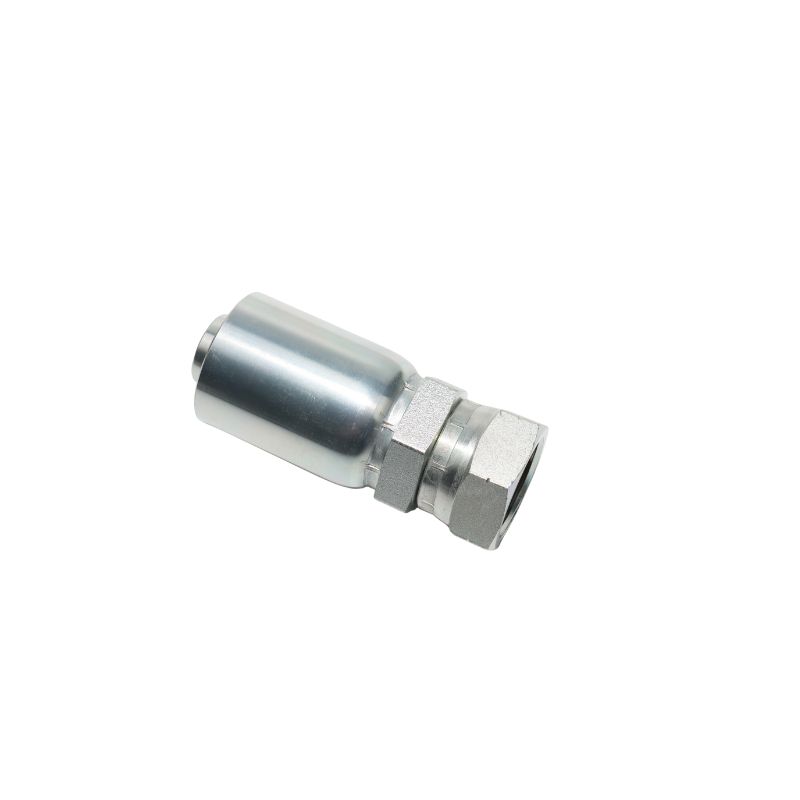
Confirm purchase-order line, SKU, label, connection, angle, batch, and package identity before handling the nut. Review cap and carton condition, then observe the assembly for visible displacement, impact, corrosion, or contamination. This prevents an inspector from comparing two similar but different female swivel models.
Perform the authorized movement check with clean hands or suitable protection and without force. Note uniformity, local binding, gritty feel, retained position, and visible axial behavior. Continue with thread, seat, body, ferrule, and hose-side inspection because a normal movement result does not waive those checks.
Contain and record unexpected conditions
When a fitting differs from the baseline, hold it and identify the carton, inner pack, batch, and nearby units. Capture an overview and close-up before cleaning or repacking. Record the exact observation—such as binding at one position or damaged thread entry—instead of a vague label like “bad swivel.”
Review the approved criteria and decide whether broader inspection, technical clarification, or controlled disposition is required. Keep held items away from accepted bins. Do not attempt to make the movement feel normal through lubricant, tools, repeated forcing, or unauthorized disassembly.
Common Acceptance Mistakes Create False Confidence
The fastest swivel check is not always the most informative. Accepting all freely rotating nuts and rejecting every stiff nut ignores both hidden defects and legitimate construction or condition differences.
Mistakes to remove from the process
Do not spin only one sample from the top of a carton. Do not judge different SKUs by a single hand-feel reference. Avoid mating with an unidentified adapter, using pliers on the nut, cleaning away residue before recording it, or treating finish color as proof of material and quality.
Do not classify a fitting as compatible because its female swivel resembles a branded reference. Parker-style identifiers support comparison, but complete replacement verification still requires thread, seat, sealing method, dimensions, hose side, material, crimp data, pressure, temperature, fluid, and application review.
Neutral swivel-condition checklist
Before accepting stock, confirm:
- Correct SKU, connection standard, port dash, hose dash, angle, and revision
- Nut identity, wrenching surfaces, thread entry, and accessible thread condition
- Sealing seat or face is clean and free from unacceptable damage
- Rotation follows the approved method without forcing or added lubricant
- Stiffness, binding, looseness, and axial observations are recorded precisely
- Nut remains retained and surrounding features show no abnormal contact
- Caps, inner packaging, cartons, and batch links are intact
- Results compare with the current approved sample and technical criteria
- Held units, photographs, and disposition remain traceable
Conclusion
Female swivel fitting rotation is a valuable screening characteristic, but free movement is not an acceptance certificate. Inspectors should distinguish uniform stiffness, localized binding, gritty movement, apparent looseness, axial condition, and retention rather than relying on a single hand-feel judgment. The nut, thread entry, accessible threads, sealing seat, body, protection, and package history all contribute evidence. Before releasing a batch, confirm the exact SKU and connection, compare movement under an approved method, review the current drawing and sample, and document any transport-related change. Never force, lubricate, disassemble, or modify a questionable swivel without authorization. Most importantly, remember that rotation quality does not independently prove thread identity, sealing performance, hose compatibility, valid crimp data, pressure suitability, or safe application.
FAQ
Should every female swivel nut rotate with the same hand feel?
Not necessarily, because design, finish, residue, temperature, and approved clearance can influence feel. The relevant comparison is the controlled requirement and like-for-like baseline, not an invented universal sensation.
Can a freely rotating nut still have damaged threads?
Yes, rotation occurs around the fitting body and does not prove thread integrity. Inspect the thread entry and accessible flanks, then use the applicable technical verification method.
Is a tight swivel automatically defective?
No, tightness is a symptom that requires investigation. Check contamination, packaging contact, impact, corrosion, and the approved construction before deciding disposition.
May receiving staff add oil to improve swivel movement?
Not without an approved procedure. Added lubricant can hide the original condition, contaminate the connection, or be incompatible with the seal, fluid, or application.
Does swivel inspection approve a Parker 43-style replacement?
No, it addresses only part of the fitting’s condition. Replacement approval still requires verified connection, seal, dimensions, material, hose side, crimp data, and application requirements.