
A fitting pressure rating is determined for an exact design and condition, then limited in use by every component in the connected assembly and circuit. A one-piece hydraulic fitting pressure rating cannot be assigned from the fitting body’s appearance or family name alone. Size, connection, geometry, material, hose, ferrule, crimp specification, adapter, port, seal, temperature, fluid, pressure impulses, spikes, installation, and applicable product data all matter. Working, proof, burst, and impulse conditions describe different questions and must not be exchanged. The usable working limit is no higher than the lowest applicable rating in the complete configuration, under the actual operating and environmental conditions.
What a Fitting Pressure Rating Represents
A published rating applies only within the scope defined by its source. It may be tied to an exact part, size, connection, material, test method, temperature condition, or assembly combination, so the number has no safe meaning when those boundaries are removed.
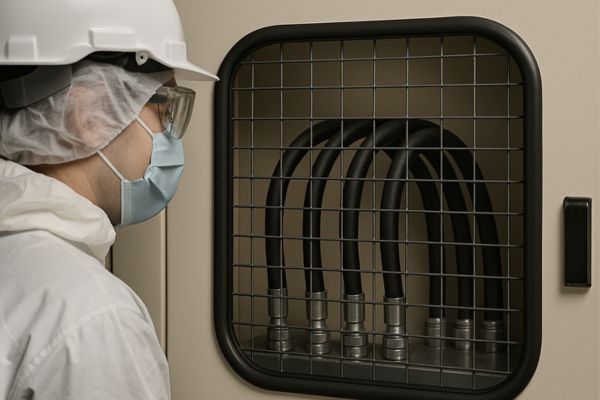
Rating belongs to a defined configuration
Identify the fitting part and revision, connection standard, size, shape, wall geometry, material, finish, and sealing form. An elbow, swivel, flange, or reduced passage may have a different controlling geometry from a straight item in the same series. Do not assume one family has one universal rating or transfer data between sizes.
Published value and usable limit differ
The fitting may have a stated limit, but the connected hose, crimped interface, adapter, port, seal, valve, or equipment requirement may be lower. Temperature, impulse duty, fluid, vibration, corrosion, and installation can add conditions or derating. The system should use the lowest applicable approved limit, not the highest number found in the document set.
Separate Working, Proof, Burst, and Impulse Conditions
These terms are related to pressure evaluation but are not interchangeable operating ratings. Their exact definitions and acceptance criteria must come from the applicable current standard, manufacturer, or equipment data.
Working and proof pressure answer different questions
Working pressure is the approved operating boundary under stated conditions. Proof pressure is generally a controlled verification condition and is not permission to operate continuously at that level. A passed proof event also does not establish unlimited fatigue life, compatibility, or suitability for a different assembly.
Burst and impulse are not working pressure
Burst testing examines failure under a defined increasing-pressure procedure, while impulse testing evaluates repeated pressure cycling under stated conditions. Burst pressure must never be used as normal working pressure. An impulse result must be linked to waveform, temperature, cycle conditions, hose, fitting, crimp, sample identity, failure mode, and acceptance criteria before it supports a decision.
Keep these records separate:
- Approved working pressure and its exact product and temperature scope.
- Proof-test condition, method, sample, and acceptance purpose.
- Burst-test condition and failure observation without converting it to a working limit.
- Impulse waveform, pressure condition, temperature, cycles, assembly, and failure mode.
- Pressure spikes and transient limits defined by the equipment or system design.
The Complete Assembly Controls the Usable Rating
The hose assembly is a chain of pressure-containing and sealing elements. Its usable limit is controlled by the lowest-rated applicable component and the validity of the exact combination.
Hose and crimp are configuration specific
Matching dash size does not prove that a hose and fitting can be assembled safely. Verify hose manufacturer or accepted specification, series, construction, ID, reinforcement, fitting series, ferrule design, crimping equipment, die set, preparation, insertion, crimp diameter, and inspection procedure. Use current data for the exact combination; an approximate crimp measurement is not approval.
Interfaces can lower the boundary
Adapters, quick couplings, tubes, valves, ports, seals, and equipment connections may have different ratings or conditional limits. A highly rated fitting cannot raise a lower port or hose rating. Likewise, adding an adapter to solve a thread mismatch creates another rated component and sealing interface that must be reviewed.
| Evidence level | Question it answers | Common misuse |
| Part-specific fitting data | What limit applies to this size and configuration? | Applying a family maximum to every part |
| Hose-and-fitting crimp data | Is the exact assembly combination approved? | Matching only the dash size |
| Port and adapter data | What do connected interfaces allow? | Assuming the fitting controls the whole circuit |
| Working-pressure data | What operation is approved under stated conditions? | Replacing it with proof or burst values |
| Impulse information | How did the defined assembly handle cycling? | Reading cycle count without test conditions |
| Equipment requirements | What limit and duty does the machine permit? | Ignoring spikes, temperature, or application rules |
Size, Material, Connection, and Temperature Matter
Pressure capability can change across sizes and connection forms because geometry, wall sections, stress paths, and sealing designs change. Material and temperature must also be evaluated at the product level rather than through generic assumptions.
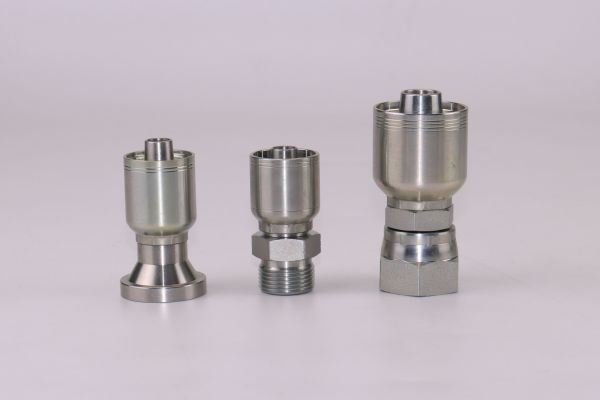
Size and connection alter the design
Larger or smaller versions do not necessarily scale proportionally. Threads, seats, flange interfaces, bends, swivels, and internal transitions create different critical sections. A visual cross-reference or shared series name cannot establish equivalence; use the exact part’s current pressure data and drawing.
Material and temperature change the condition
Carbon steel, stainless steel, and other materials include different grades and conditions, and none is universally higher rated. Temperature may affect metal properties, O-rings, hose tube and cover, fluid, coating, and crimped behavior. Apply only documented temperature-related limits or derating for the exact component and assembly; do not create a local universal value.
Ports, adapters, and seals also matter because pressure containment and sealing are separate but connected functions. A component may withstand pressure structurally yet leak or become unsuitable because the wrong thread, seat, O-ring, or seal is used.
Confirm connection and sealing identity
Distinguish thread form, diameter, pitch or TPI, straight or tapered form, gender, seat angle, sealing face, and O-ring location. JIC, SAE flare, NPT, NPTF, BSPP, BSPT, ORFS, ORB, metric, and flange systems must not be interchanged by appearance. Thread sealant cannot correct a wrong standard, damaged face, incorrect seat, cross-threading, or wrong port.
Review every pressure boundary
The port may be part of a valve, pump, cylinder, manifold, or adapter with its own material, geometry, condition, and installation procedure. Seals need verified fluid and temperature compatibility as well as correct dimensions and support. Confirm the connected equipment’s rating and assembly instructions rather than assuming a port accepts whatever the fitting can withstand.
Account for Static Pressure, Impulses, and Spikes
A system that normally operates below a stated limit can still impose damaging transient or cyclic loads. Pressure duty should be described over time, not by one steady gauge reading.
Static readings can hide dynamic demand
Valve shifts, load changes, actuator stops, pump behavior, and trapped pressure can create spikes or repeated impulses. The instrument, sampling rate, measurement location, and operating state influence what is observed. Use approved diagnostic methods and equipment data; do not infer that no spike exists because a slow gauge did not display one.
Duty cycle affects validation
Frequent cycling, vibration, temperature changes, and hose movement can make an application more demanding than occasional steady operation. An impulse test report is relevant only when its configuration and conditions support the intended comparison. It does not prove suitability for every machine or authorize operation beyond the approved working limit.
Pressure-duty review should include:
- Normal, startup, shutdown, peak, trapped, and transient conditions.
- Cycle frequency, waveform where relevant, duration, and equipment state.
- Fluid and ambient temperature throughout the duty.
- Vibration, movement, bend, support, corrosion, and external damage.
- Measurement method, location, instrument capability, and uncertainty.
Verify Pressure Suitability Before Use
A documented hierarchy prevents a convenient high number from overriding the actual weakest component. Complete the review before purchasing, assembly, or replacement and repeat it when the configuration changes.
Build the component hierarchy
List the hydraulic fitting, hose, ferrule, crimp data, adapter, coupling, port, valve, tube, cylinder, seals, and equipment limit. Record each source, revision, condition, and any temperature or duty restriction. The selected working boundary is the lowest applicable approved value after all conditions are aligned.
Conflicting documents need resolution rather than selection of the most favorable number. A catalog, drawing, crimp table, test report, and equipment manual may describe different scopes or revisions. Identify which source controls the exact assembly and ask the responsible technical authority to resolve inconsistencies. Preserve the resolution with the part record so receiving and maintenance teams do not recreate the dispute during an urgent replacement.

Validate identity and assembly
Compare purchase description, drawing, markings, labels, and reports with the received components. Confirm critical dimensions, material and finish evidence, hose compatibility, and the approved crimp procedure. A sample result supports only the exact configuration evaluated and should not approve other sizes, shapes, materials, or the entire series.
Installation and inspection also need controlled boundaries. Follow the specified port preparation, seal installation, tightening or assembly procedure, routing, support, and cleanliness requirements. Misalignment, damaged sealing faces, side loading, contamination, or incorrect torque procedures can cause leakage or failure below an otherwise valid component rating. After safe commissioning, inspect according to the equipment plan and investigate abnormal pressure, movement, heat, noise, or leakage without touching an energized line.
Common Pressure-Rating Mistakes
The common errors are using burst as working pressure, assigning one rating to a series, ignoring ports and adapters, and approving a replacement by appearance.
Reject number shopping
Do not choose the largest value from unrelated catalogs, tests, or components. Check what the value means, which configuration it covers, and which conditions apply. Proof, burst, and impulse evidence can support defined evaluations but cannot replace the approved working-pressure limit.
Do not bypass safety for downtime
Never install a mismatched fitting temporarily, reuse a damaged component, or check a pinhole leak by hand. Stop equipment, isolate the hydraulic system, release pressure and stored energy, secure suspended loads, and follow lockout, equipment, hose, and fitting procedures before inspection or replacement.
Conclusion
Pressure suitability is established for an exact configuration and operating condition, not for a fitting family by appearance. Keep working, proof, burst, and impulse information separate, and never use burst pressure as an operating limit. Verify the fitting size, connection, geometry, material, temperature condition, hose, ferrule, crimp, adapters, ports, valves, and seals. Then include spikes, cycling, fluid, vibration, corrosion, routing, and equipment requirements. The lowest applicable approved component or condition controls the usable assembly limit. Before accepting a one-piece hydraulic fitting pressure rating, prepare current part-specific sources, the complete pressure hierarchy, verified assembly instructions, and a traceable duty profile so later substitutions or operating changes trigger review instead of inheriting an unsupported value, and keep that limit visible during maintenance.
FAQ
Does every fitting in one series have the same pressure rating?
No, size, connection, geometry, material, and design can change the rating. Use current data for the exact part and stated condition.
Can burst pressure be divided to estimate working pressure?
Not without an applicable approved rule and product data. Burst and working pressure answer different questions, so a local calculation cannot replace the stated operating limit.
Does a proof test approve repeated operation at proof pressure?
No, a proof test is a controlled verification condition. Repeated operation must remain within the approved working and duty limits for the complete assembly.
Can a higher-rated fitting raise a hose assembly rating?
No, the assembly remains limited by its lowest-rated component and exact combination. Hose, crimp, ports, adapters, seals, temperature, and duty all require verification.
Is a matching thread enough to confirm pressure suitability?
No, thread engagement does not confirm seat, sealing method, material, wall geometry, hose compatibility, crimp data, temperature condition, or pressure rating.