
Hydraulic hoses on excavators face constant exposure to mud, dust, and abrasive debris. These materials are not harmless surface contamination—they act as grinding agents that wear through hose covers, damage fittings, and push grit into sensitive hydraulic components. Once this process begins, the machine becomes vulnerable to leaks, pressure loss, and costly downtime.
The Abrasive Reality of Mud and Dust
On active jobsites, mud and dust behave like aggressive enemies of hydraulic hoses. They do not just sit on the surface. They work their way into every contact point, speeding up outer-cover wear, damaging support hardware, and creating serious risks for the hydraulic system itself.

More Than Just Dirt: The Sandpaper Effect
Most soil contains sharp minerals such as silica and quartz. When this material collects on a hose and gets trapped between the hose and nearby metal parts, it behaves like sandpaper. Every lift, swing, and boom movement drags these particles across the outer cover. Over time, this repetitive scraping removes the rubber layer, exposing the reinforcement beneath it. Once the reinforcement is visible, the hose is already close to failure.
The Grinding Paste Phenomenon
When water mixes with fine dust, a thick abrasive slurry forms. This mud sticks to clamps, brackets, guards, and the hose itself. As the machine vibrates, the slurry works like a polishing paste. It slowly eats through rubber, paint, and even steel. Many hose failures on excavators and loaders begin with this slow grinding process rather than sudden impact damage.
Contamination at the Connection Points
Loose contamination around fittings is another serious hazard. Dust collects inside wrench flats, threads, and swivel joints. If a hose is changed on the worksite without proper cleaning, grit can enter the hydraulic line. These particles then travel through pumps and valves, scoring surfaces and reducing component life.
Common Contaminants and Their Effects
| Contaminant | Typical Source | Damage Caused |
| Silica dust | Soil, sand | Cuts outer cover, accelerates abrasion |
| Mud slurry | Water + soil | Wears clamps, covers, fittings |
| Metal particles | Machine wear | Scars valve spools and pump surfaces |
Physical Shielding: The First Line of Defense
Keeping abrasive materials away from hydraulic hoses is one of the most effective ways to extend service life. Mud, dust, and sharp debris cannot destroy what they cannot reach. Physical shields act as outer armor, taking the abuse so the hose underneath can continue to work safely. This approach gives contractors a strong return because the cost of guards is far lower than the cost of hose failures, downtime, or oil leaks on the jobsite.
Heavy-Duty Spiral Guards
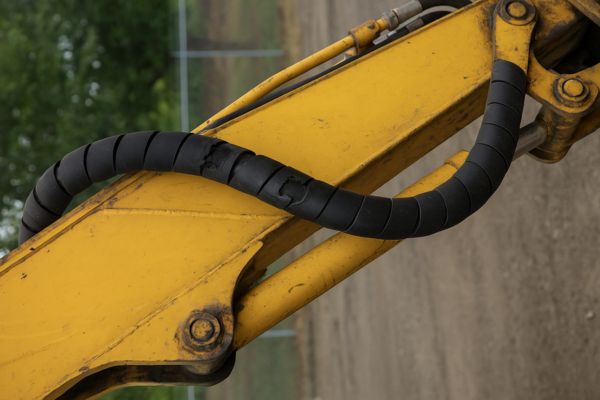
Hard plastic spiral guards are commonly used on excavators, loaders, and cranes. Their helical shape allows them to flex with the hose while still resisting heavy abrasion. When a hose rubs against a boom, frame, stone, or rebar, the guard absorbs the friction instead of the outer cover. Even if the guard becomes scratched or gouged, the hose inside stays protected. These guards also help organize multiple hoses, preventing them from twisting into each other during movement.
Woven Textile Sleeves
For protection against lighter but persistent abrasion, a tight-weave nylon sleeve works well. It creates a soft barrier that prevents hose-to-hose rubbing. The material also helps block fine dust and grit, keeping particles from settling between bundled lines. This reduces the chance of slow surface wear that is easy to overlook during daily inspections.
Strategic Clamping and Routing
Good routing design strengthens the effect of any guard. Factory clamps must be in place and firmly tightened so the hoses stay in their intended path. When possible, hoses should be positioned away from low points where mud collects. Small routing changes often eliminate early wear problems.
Comparison of Common Hose Protection Options
| Protection Type | Strengths | Typical Use |
| Spiral guard | High abrasion resistance, impact protection | Excavators, loaders, harsh environments |
| Textile sleeve | Stops hose-to-hose rubbing, blocks dust | Bundled lines, medium duty areas |
| Rigid guard or shield | Strong physical barrier | Near sharp edges or heavy debris zones |
Built to Resist: Selecting the Right Hose Cover
Hydraulic hoses face constant movement, vibration, and environmental stress. While guards and sleeves help, the hose cover itself is the first built-in defense against abrasion. Choosing the correct cover adds a layer of protection that works every hour the machine runs. This decision affects service life, downtime, and long-term operating cost.
The Baseline: Standard Rubber Covers
Standard synthetic rubber is suitable for general industrial work. It handles sunlight, oil mist, and light scraping. But in harsh environments, it wears down fast. Dust, gravel, concrete edges, and steel brackets can grind through this material in a short time. Once the cover breaks, moisture reaches the reinforcement layer. That leads to corrosion, reduced pressure capacity, and early failure.
The Upgrade: Abrasion-Resistant Covers
Many manufacturers offer improved cover formulas marketed as “Tough,” “Super Tough,” or “Abrasion-Resistant.” These use advanced rubber blends with higher density and better tear resistance. They survive much longer in high-movement areas like excavator booms and skid steer lift arms. When choosing a hose, check ratings that meet or exceed MSHA flame-resistant and abrasion-resistant requirements. These are proven benchmarks for demanding work areas.
The Ultimate: UHMW-PE Covers
For extreme conditions, Ultra-High Molecular Weight Polyethylene (UHMW-PE) is the top option. This material has a very low friction surface. Sand, dust, and grit slide across it instead of cutting in. It also resists sharp edges and constant rubbing. UHMW-PE covers are common on mining machines, drilling rigs, demolition equipment, and any site with nonstop abrasive contact.
| Cover Type | Key Material Trait | Best Use Case |
| Standard Synthetic Rubber | Basic flexibility and oil resistance. | Light-duty applications with minimal external abrasion risk. |
| Abrasion-Resistant (MSHA) | Specially formulated rubber compounds, often 50x-300x more durable than standard. | The ideal choice for most excavator boom/stick applications. Excellent cost-to-performance ratio. |
| UHMW Polyethylene | Extremely hard, slick, low-friction plastic outer layer. | Extreme mining, dredging, or tunneling where hoses are dragged through abrasive material. |
| Textile Covered | Woven fabric cover, sometimes impregnated with rubber. | Good for hose-to-hose bundling and resisting chaffing, but not heavy grinding on steel. |
Sealing Out the Grit: Protecting Fittings and Connections
Hydraulic fittings carry a higher level of risk than most hose components because they sit at the entry points of the system. When mud, dust, and debris collect around these areas, the danger is not only cosmetic. Packed contamination around fittings increases the chance of corrosion, weakens hardware, and creates a direct path for grit to enter the hydraulic circuit during maintenance.
The Dangers of Packed Debris
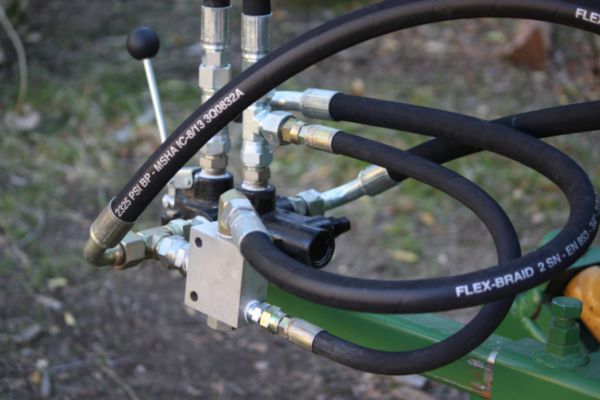
Mud holds moisture tightly against metal surfaces. When this slurry gathers around crimp shells, nuts, or valve ports, corrosion becomes unavoidable. Over time, the plating begins to break down. Thread strength weakens, sealing surfaces lose their integrity, and the technician must apply more torque to break the connection free. This extra force increases the chance of damaging soft-seal fittings or O-ring end types. Even worse, any attempt to loosen a fitting surrounded by packed dirt risks bringing contamination directly into the open port.
The Importance of Dust Caps and Plugs
The simplest way to protect open hydraulic connections is to seal them immediately. Proper dust caps and plugs block fine dust, stop moisture, and prevent accidental debris entry. Caps should be used every time a hose or valve port is disconnected—whether in a workshop, on a jobsite, or during transport. Skipping this step leads to contamination that later moves through pumps, cylinders, and spools, reducing machine life.
Corrosion-Resistant Plating
Advanced coatings add an extra layer of security. Zinc-Nickel (Zn-Ni) plating, for example, delivers excellent resistance to moisture and mud exposure. Fittings with this coating typically withstand 700–1,000 hours of salt spray testing, offering strong protection in wet or abrasive environments.
| Plating Type | Typical Protection Level | Field Benefits |
| Standard Zinc | Basic corrosion resistance | Suitable for clean environments |
| Trivalent Chrome | Better durability | Moderate moisture protection |
| Zinc-Nickel (Zn-Ni) | High resistance, long life | Best for mud, dust, and corrosive sites |
The Power of Proactive Cleaning and Inspection
A hydraulic system can only be protected when technicians can actually see what is happening on the machine. Dirt hides problems. Mud conceals early warning signs. A structured cleaning routine is far more than surface care—it forms the foundation of every reliable preventative maintenance plan. Clean hoses and fittings give technicians the visibility they need to catch failures before they shut the machine down.
Cleaning as a Maintenance Tool
A layer of mud may look harmless, but it covers the small defects that indicate early hose wear. Cuts, soft spots, cracked covers, pinhole leaks, and damaged clamps become visible only after the bulk dirt is removed. Cleaning also helps expose hose routing issues, missing guards, loose fittings, or packed debris that signals corrosion. When cleaning is done consistently, technicians can detect changes from one inspection to the next and act before the machine suffers a hydraulic failure.
The Right Way to Wash
Cleaning needs a thoughtful approach. A pressure washer should never be used with a concentrated pinpoint jet, as this can slice through a rubber cover or force water into sensitive seals. A wider fan setting gives a controlled, gentle wash that removes mud while keeping components safe. Focus on clearing heavy buildup from boom arms, undercarriage areas, hose bundles, and fittings. The goal is functional visibility, not aggressive stripping of coatings or paint.
The “Clean, Inspect, Act” Cycle
A simple cycle keeps machines in safe working order:
- Clean: Remove mud, dust, and debris from hoses, clamps, and fittings.
- Inspect: Check for damage, leaks, corrosion, and routing problems.
- Act: Document findings and schedule repairs before a failure occurs.
| Frequency | Task | Objective | Tools Required |
| Daily (End of Shift) | Rinse-Down: Knock off heavy, bulk mud accumulation from boom, stick, and undercarriage hoses. | Prevent overnight hardening of mud. Reduce abrasive load for the next day. | Water hose or pressure washer (low-pressure, wide fan). |
| Weekly | Detailed Cleaning: Thoroughly clean all hoses, fittings, valves, and cylinders. | Prepare the machine for a detailed visual inspection. Remove all abrasive slurry. | Pressure washer, degreaser, brushes. |
| During Service | Point-of-Work Cleaning: Meticulously clean the area around any fitting before loosening it. | Prevent any grit or dust from entering the pristine hydraulic system during maintenance. | Brake cleaner/solvent, clean rags, compressed air. |
| As Needed | Interior Cleaning (Borescoping): Inspect inside a hose if contamination is suspected before installation. | Ensure a new or stored hose is internally clean before introducing it to the system. | Hose cleaning projectiles, borescope. |
Conclusion
Mud, dust, and abrasive debris attack hydraulic systems from every angle, wearing down hose covers, damaging fittings, and hiding early warning signs. The strategies in this guide—stronger hose covers, proper shielding, clean routing, protected fittings, and a steady cleaning routine—work together to keep excavators running safely. When these measures are applied consistently, equipment stays in service longer, failures are reduced, and maintenance becomes far more predictable.
If you need hydraulic hoses, fittings, protective sleeves, or complete hose assemblies built for tough environments, Topa can support your projects with reliable products and fast delivery. Reach out to our team anytime for recommendations or a customized quote.
FAQ
What is the single best investment to protect my hoses in mud?
Plastic spiral guard. It is a relatively inexpensive, easy-to-install sacrificial part that provides excellent protection against the heavy grinding and impact damage caused by mud, rocks, and contact with the machine frame.
Is a “Tough Cover” hose really worth the extra cost?
Absolutely. An abrasion-resistant (MSHA-rated) hose cover can last orders of magnitude longer than a standard cover in abrasive conditions. The small upfront cost is easily justified by preventing just one premature failure and the associated downtime.
I see a hose with its wire braid exposed. Can I just wrap it with a guard?
No. Exposed wire is a critical failure condition. It means the cover’s protection is gone, and the structural wire is now corroding and fatiguing. The hose assembly must be replaced immediately. A guard is for prevention, not a repair.
My worksite is just dry and dusty, not muddy. Do I still need to worry?
Yes. Dry dust and sand are highly abrasive. The “sandpaper effect” can rapidly wear down hose covers, especially when combined with machine vibration. Physical shielding and routine cleaning are still essential.
How can I clean around a fitting without forcing dirt into the threads?
Use a combination of tools. Start with a brush to remove loose debris. Then use a targeted spray cleaner (like brake cleaner) and clean rags to wipe the fitting down. Finally, use a gentle puff of compressed air to blow contaminants away from, not into, the seal area.
What is the biggest mistake people make regarding hoses in dirty environments?
Ignoring the problem until there’s a leak. They view a mud-caked machine as normal and fail to clean and inspect it proactively. This allows abrasion to go unchecked until a hose bursts, shutting down the entire operation.