Machinery downtime can halt your entire production line, leading to thousands of dollars in lost revenue and emergency repair costs. When a standard component fails, the frustration of searching for a replacement that doesn’t quite fit can agitate even the most experienced site manager. Our custom hydraulic hoses provide the precise solution you need, engineered to match your equipment’s exact specifications for long-term reliability.
What Are The Hose Dimensions And Length For Custom Hydraulic Hoses?
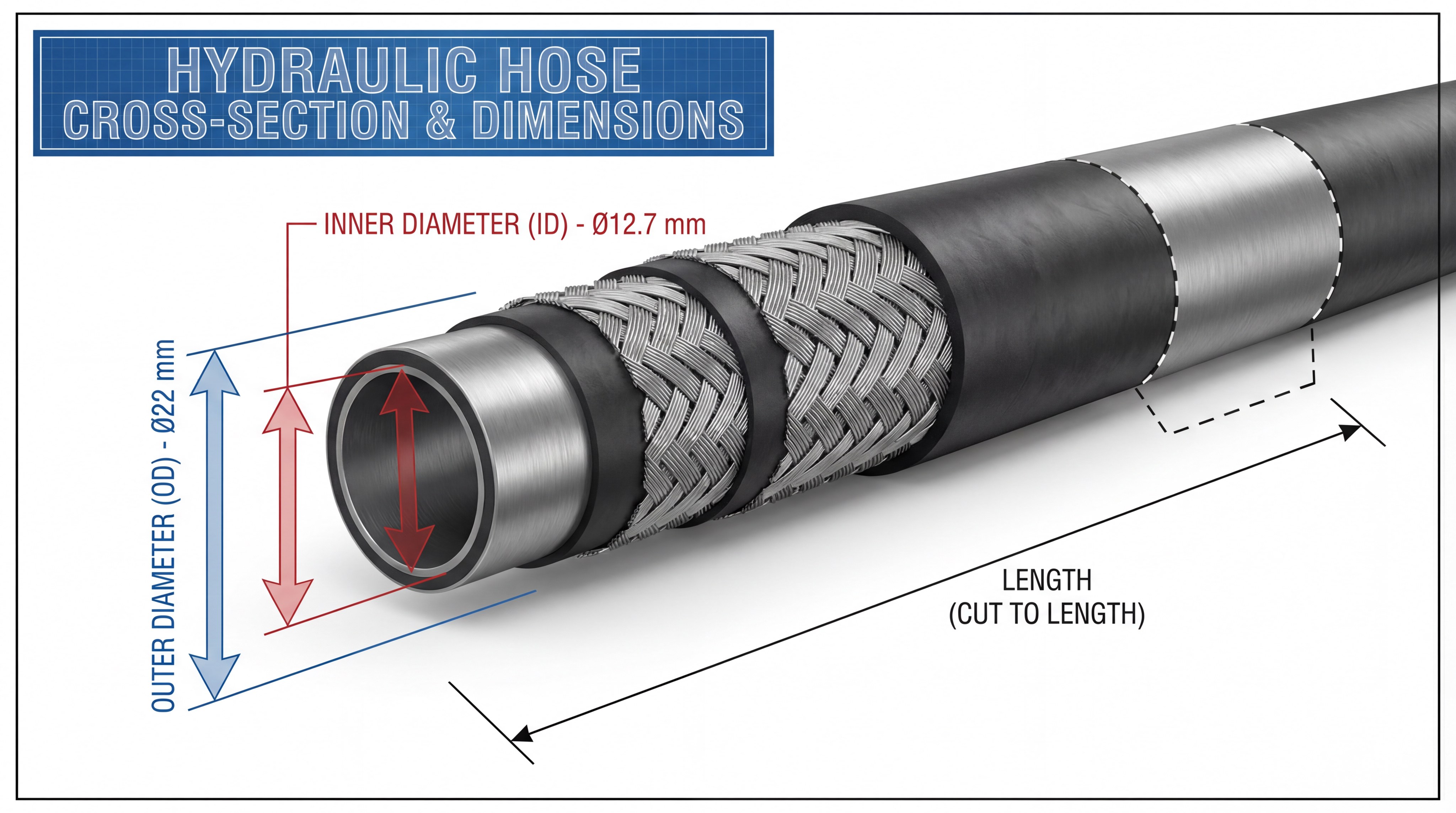
Providing the correct dimensions is the first step in ordering your custom hydraulic hoses to ensure a perfect fit. You must follow the STAMPED acronym, focusing specifically on “Size” to avoid catastrophic system failures. Incorrect sizing often leads to significant pressure drops or excessive heat buildup that damages internal components.
How do you measure the inside diameter?
Think about it: even a minor deviation in the inside diameter (ID) can change the fluid velocity within your system. You should always use a high-precision caliper to measure the ID of your existing hose rather than guessing based on the outer cover. This measurement determines the flow capacity and prevents turbulence that wears down the hose liner prematurely.
- Use a digital caliper for exact ID readings.
- Measure the outer diameter (OD) to ensure routing clearance.
- Verify the overall length from the sealing surface of each fitting.
- Account for hose “growth” or “contraction” under high pressure.
Precise ID measurement is the most critical dimension for maintaining flow velocity and system efficiency.
| Dimension | Importance | Measurement Tool |
| Inner Diameter | Flow Velocity | Caliper |
| Outer Diameter | Routing Space | Caliper |
| Overall Length | Reach/Slack | Tape Measure |
Getting the dimensions right prevents installation delays and ensures your machine operates at its designed flow rate.
What Is The Maximum Working Pressure For Custom Hydraulic Hoses?
Determining the maximum operating force is vital when selecting custom hydraulic hoses for your heavy machinery. You need to consider both the steady-state working pressure and the sudden surges that occur during heavy lifting. Most industrial standards require a safety factor of 4:1 to protect operators and equipment from accidental bursts.
Why do pressure spikes matter?
Here is the kicker: surge pressures can be significantly higher than the nominal pressure shown on your machine’s gauge. If you don’t account for these spikes, the reinforcement layers in the hose will fatigue much faster than expected. We ensure every assembly can handle these moments of peak stress without compromising the hose structure.
- Identify the relief valve setting of your hydraulic system.
- Check for intermittent spikes during specific machine cycles.
- Select reinforcement (wire braid or spiral) based on pressure.
- Ensure fittings are rated for the same pressure as the hose.
Always specify the highest possible surge pressure to prevent catastrophic hose bursts during operation.
What Fluids Will The Hose Carry In Custom Hydraulic Hoses?

Chemical compatibility is a primary factor that determines the lifespan of your custom hydraulic hoses. Different fluids react differently with internal rubber compounds, potentially causing the hose to swell or become brittle. You can learn more about us and how we select high-grade Nitrile or EPDM materials to match your specific media.
Is the fluid petroleum or water-based?
But that’s not all. Using a hose designed for petroleum oil with a phosphate ester fluid will lead to total system contamination within days. The inner tube must be completely inert to the fluid passing through it to prevent erosion. Our team analyzes your fluid type to provide the most durable liner available for your application.
- Verify if your system uses mineral-based hydraulic oil.
- Specify if you are using fire-resistant synthetic fluids.
- Note if the hose will carry fuel, water, or chemicals.
- Check the fluid’s acidity and concentration levels.
Chemical incompatibility can cause the inner tube to swell or erode, leading to total system contamination.
| Fluid Type | Recommended Material | Avoid |
| Petroleum Oil | Nitrile (Buna-N) | EPDM |
| Phosphate Ester | EPDM | Nitrile |
Matching the tube material to the fluid chemistry prevents internal leaks and protects your pumps from debris.
What Are The Temperature Requirements For Custom Hydraulic Hoses?
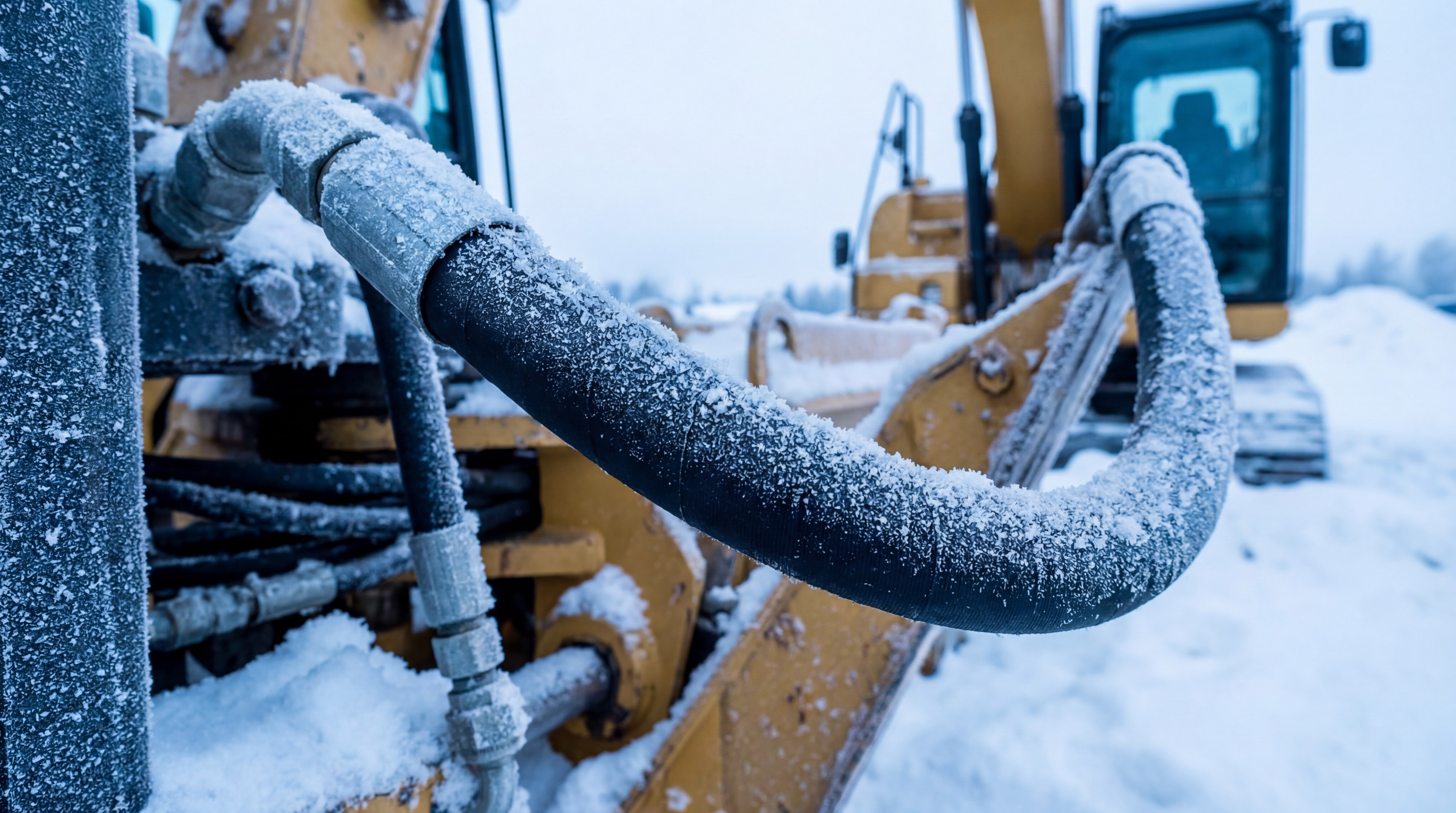
Extreme environments require specialized custom hydraulic hoses that can maintain flexibility and strength. You must evaluate both the internal fluid temperature and the external ambient conditions of your job site. Whether you are working in sub-zero mining conditions or near high-heat furnaces, the hose cover must withstand these thermal stresses.
How does heat affect hose life?
The truth is: operating even slightly above the maximum rated temperature can drastically shorten the life of your equipment. Excessive heat causes the rubber to lose its elasticity, leading to “heat cracking” when the hose is flexed. By specifying your thermal range, we can provide covers that stay pliable and protective regardless of the weather.
- Determine the peak fluid temperature during heavy operation.
- Identify external heat sources like engines or manifolds.
- Consider low-temperature flexibility for outdoor winter use.
- Use thermal sleeves if the ambient heat exceeds 100°C.
Operating just 10 degrees above the maximum temperature rating can cut the service life of your hose in half.
| Temperature Zone | Material Requirement | Failure Sign |
| Internal Fluid | High-Temp Inner Tube | Hardened Tube |
| External Ambient | Heat Shield/Sleeve | Cracked Cover |
Thermal management is essential for preventing the premature hardening and cracking of the hose’s outer shell.
What End Fittings Are Needed For Custom Hydraulic Hoses?
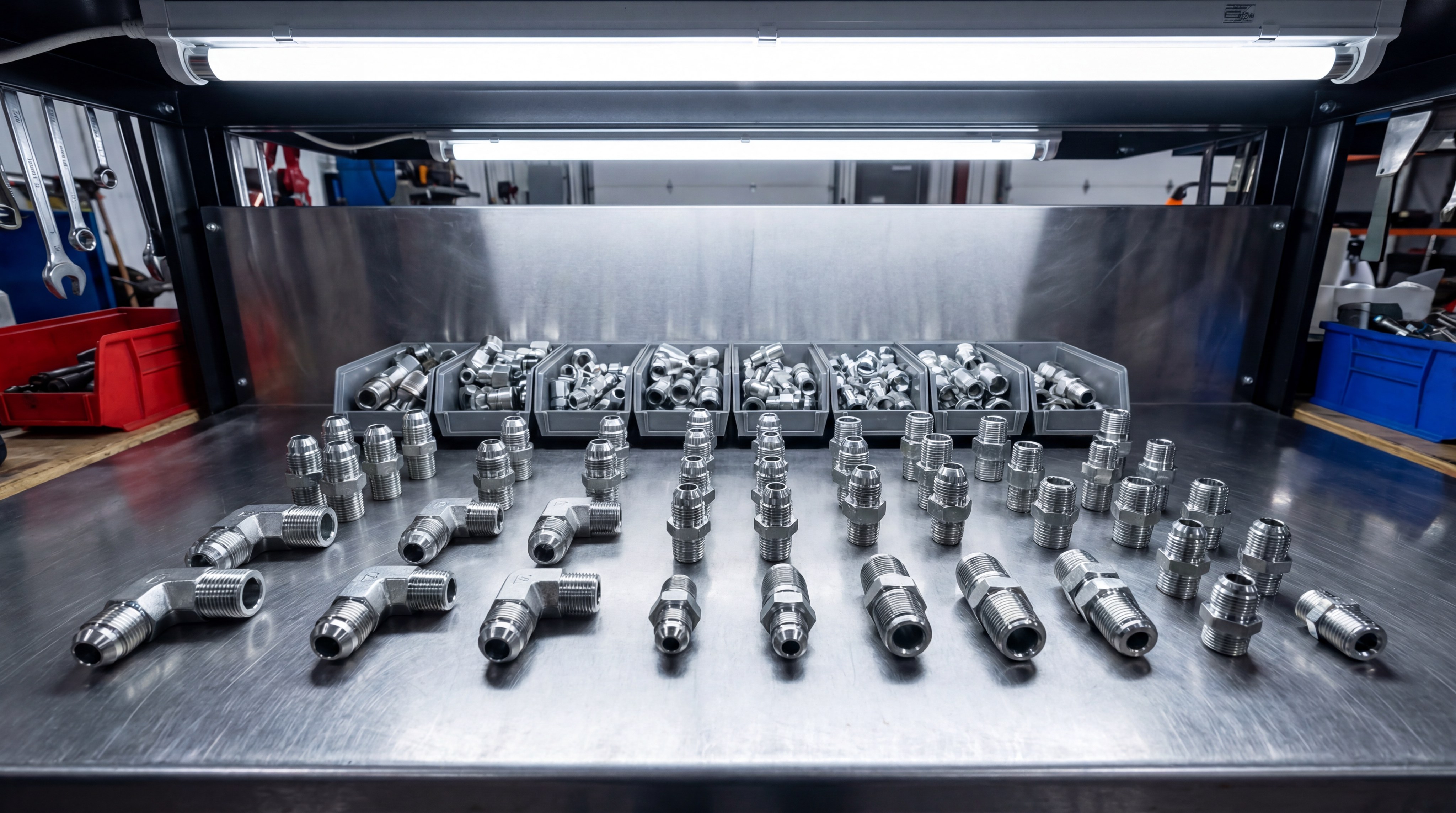
Finding the right connection is often the most challenging part of ordering custom hydraulic hoses. You need to identify the exact thread type and sealing surface to prevent leaks at the connection points. We have many success cases where our specialized fittings solved integration problems for complex international machinery.
Can you identify the thread type?
You might be wondering: how can I be sure about the thread size without a label? The only reliable way is to use a thread pitch gauge and a seat angle tool. Mistaking a JIC fitting for an SAE fitting is a common error that leads to damaged threads and messy leaks. We provide guidance on identifying everything from NPT to O-ring face seals.
- Use a pitch gauge to determine threads per inch.
- Check if the seal is metal-to-metal or uses an O-ring.
- Identify the angle of the flare (e.g., 37 or 45 degrees).
- Specify if you need straight, 45-degree, or 90-degree elbows.
Using a thread gauge and seat angle tool is the only way to ensure a leak-free connection between the hose and the machine.
What Is The Application’s Movement Type For Custom Hydraulic Hoses?
Understanding how your machine moves is critical for the longevity of custom hydraulic hoses. If your application involves constant bending, like an excavator arm, the hose must have a high flexibility rating. Static applications, where the hose remains stationary, allow for stiffer reinforcement layers that might be more cost-effective.
What is the minimum bend radius?
Look: exceeding the minimum bend radius is a leading cause of premature hose failure. When you force a hose into a tight curve, the wire reinforcement experiences uneven stress and begins to fray. We calculate the optimal length and flexibility to ensure your assembly can move freely throughout its entire range of motion.
- Map out the full range of motion for moving parts.
- Check for potential twisting or “torsion” during operation.
- Calculate the minimum bend radius based on hose diameter.
- Add extra length to prevent the hose from becoming a “string.”
Exceeding the minimum bend radius causes the wire reinforcement to fatigue and fail prematurely.
Are There Specific Abrasion Needs For Custom Hydraulic Hoses?
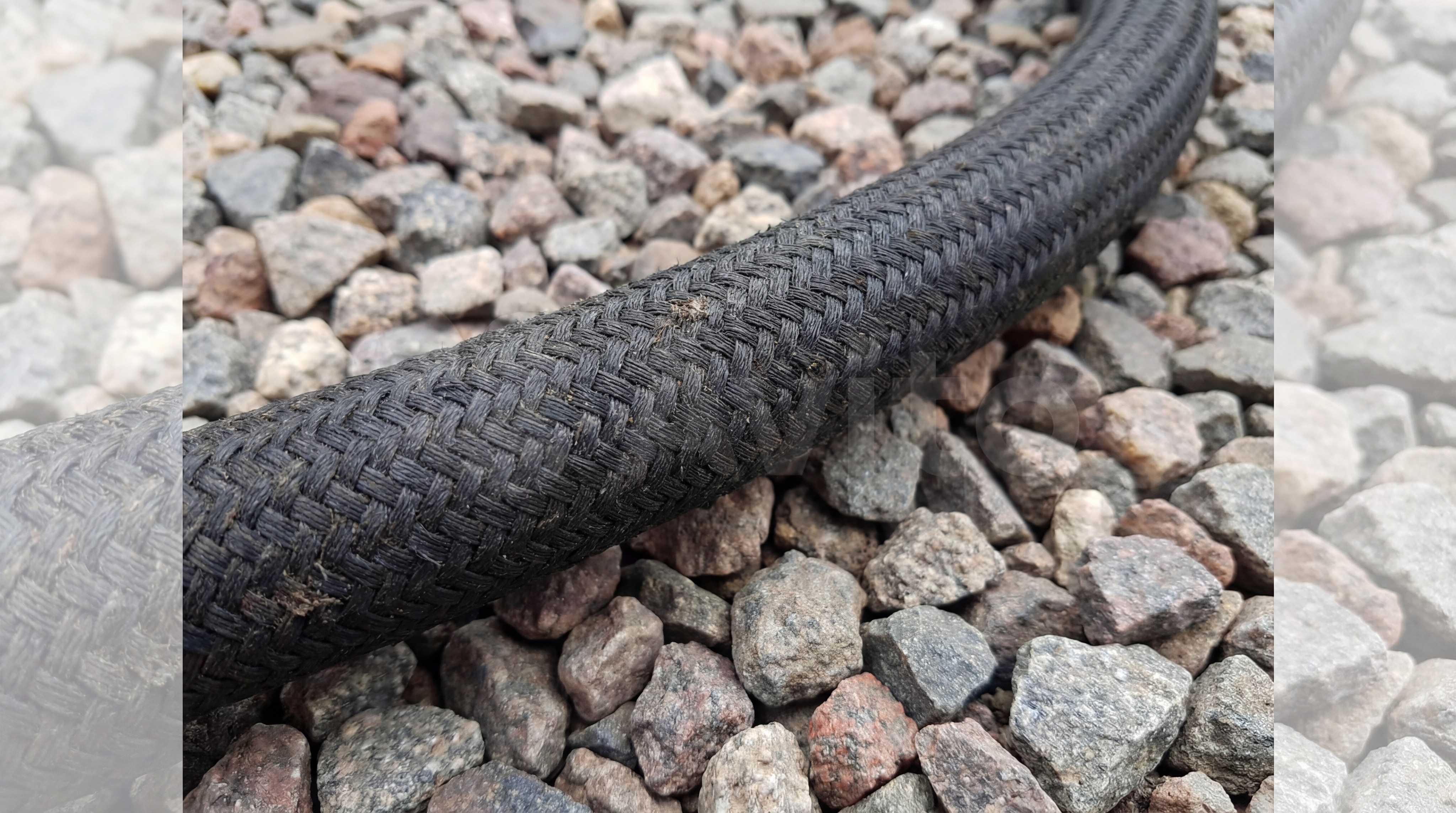
Environmental hazards can wear down the outer cover of your custom hydraulic hoses long before the internal pressure does. If your hoses frequently rub against metal frames or gravel, you need a high-abrasion resistant cover. These hoses often work in tandem with a hydraulic cylinder, where movement and friction are constant parts of the job.
Do you need a protective sleeve?
It gets even better: you can add secondary protection like plastic wraps or fire sleeves to extend service life. High-density polyethylene (HDPE) guards are excellent for protecting against sharp edges and constant vibration. We offer various “ToughCover” options that provide up to 100 times more abrasion resistance than standard rubber covers.
- Inspect for areas where the hose might rub against the chassis.
- Use spring guards to prevent kinking near the fittings.
- Apply plastic spiral wrap for bundles of multiple hoses.
- Consider nylon sleeves for protection against “pinhole” leaks.
High-density polyethylene (HDPE) wraps can extend hose life by 10x in environments with constant vibration or friction.
What Safety Standards Must Be Met For Custom Hydraulic Hoses?
Compliance with international regulations is mandatory for custom hydraulic hoses used in regulated industries. You must ensure your assemblies meet SAE, ISO, or MSHA standards depending on where and how they are used. These certifications guarantee that the hose has passed rigorous testing for impulse, burst, and flame resistance.
Why is SAE J517 important?
Simply put: this standard defines the performance levels for different hose constructions. Following these guidelines ensures that a hose from one manufacturer will perform consistently with a hose from another. We adhere to these strict manufacturing protocols to provide you with peace of mind and legal compliance on the job site.
- Check if your industry requires MSHA flame-resistant covers.
- Verify SAE 100R series requirements for your equipment.
- Look for ISO certification to meet international export laws.
- Ensure the hose layline includes all necessary safety codes.
Standards ensure that hoses from different manufacturers meet consistent performance and safety benchmarks.
Is There A Specific Delivery Timeline For Custom Hydraulic Hoses?
Timing is everything when your machinery is stuck and production has stopped. You should communicate your required lead times early so we can prioritize your order for custom hydraulic hoses. We offer various shipping options to help you balance the cost of freight with the urgency of your repair needs.
Do you offer emergency assembly?
Best of all: our factory-direct model allows for rapid turnaround on urgent orders. While custom projects typically take longer than standard ones, we can expedite the process for critical breakdowns. You should contact us today to discuss your specific deadline and get a realistic delivery estimate.
- Clearly state your “machine down” date for priority service.
- Choose air freight for small, critical replacement parts.
- Plan ahead for routine maintenance to save on shipping costs.
- Provide a clear shipping address to avoid logistics delays.
Early communication of deadlines allows suppliers to optimize production and shipping methods for your project.
Do You Have Technical Drawings For Custom Hydraulic Hoses?
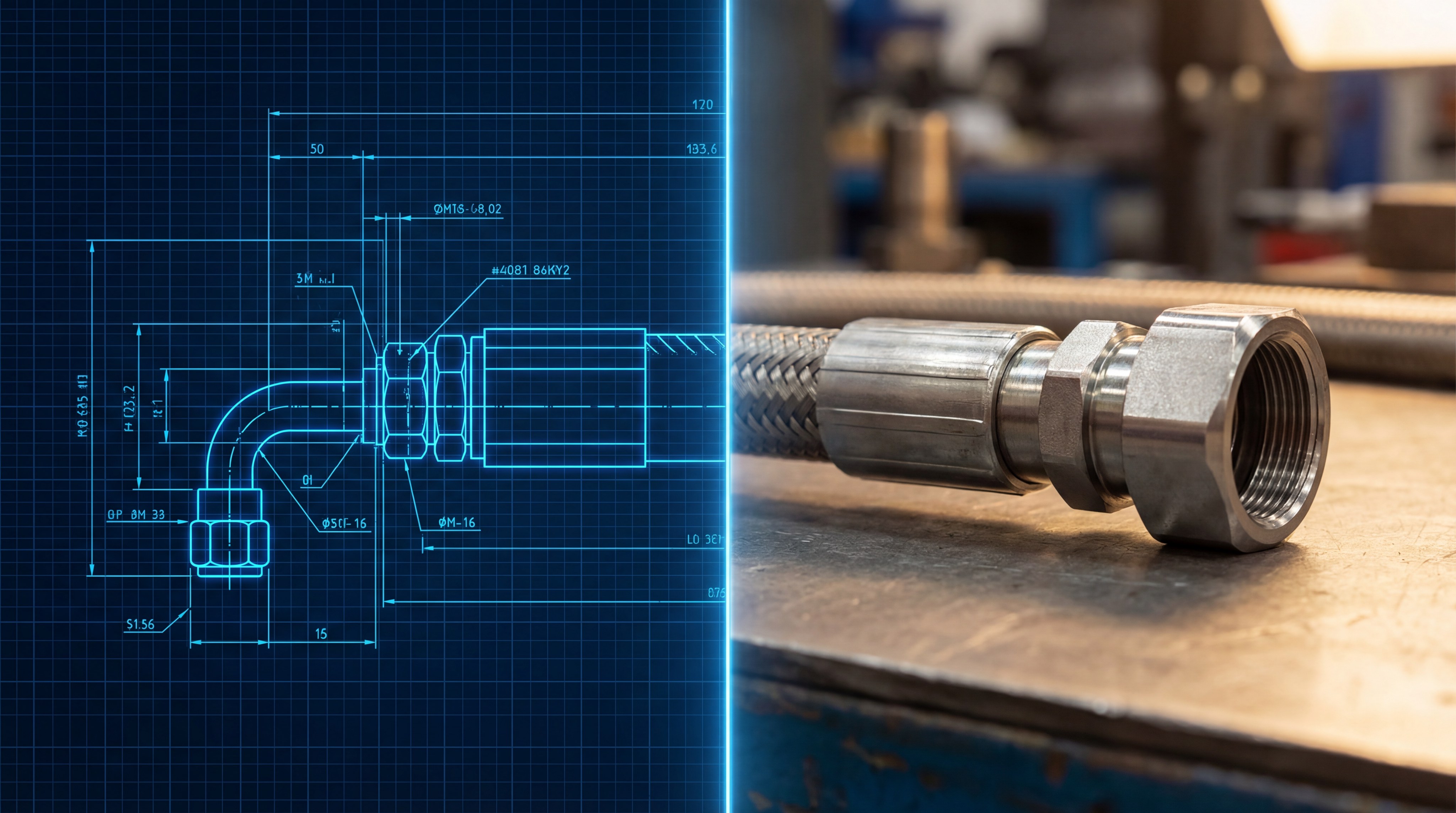
Providing a blueprint is the best way to ensure your custom hydraulic hoses are manufactured exactly to spec. Drawings eliminate the guesswork associated with fitting orientation and complex routing. If your machine uses high-performance custom hydraulic cylinders, a precise drawing ensures the hose assembly integrates perfectly with the cylinder ports.
What should a drawing include?
Here’s the bottom line: a good drawing should specify every detail from the hose type to the fitting angles. If you have elbow fittings on both ends, you must specify the orientation angle to ensure the hose doesn’t twist during installation. Our engineering team can review your CAD files to suggest optimizations for better performance.
- Include the Bill of Materials (BOM) with part numbers.
- Specify the fitting orientation (angle of rotation).
- Detail any specific labeling or marking requirements.
- Show the total assembly length with tolerances.
A detailed drawing reduces the risk of error and speeds up the quoting process significantly.
Conclusion
At TOPA, we pride ourselves on being a factory-direct partner that understands the high stakes of industrial operations. By providing these ten critical pieces of information, you ensure that your custom components will perform reliably under the most demanding conditions. To get a precise quote and expert engineering review for your project, contact us today .
Frequently Asked Questions
Can I provide a sample hose instead of technical drawings?
Yes, sending a physical sample is an excellent way for us to match the dimensions and fittings exactly. Our technicians will reverse-engineer the sample to create an identical replacement for your machine.
What’s the best way to determine if my fluid is compatible with the hose material?
Directly consult a chemical compatibility chart or share your fluid’s technical data sheet with our engineers. We will cross-reference the chemical composition with our hose liner specifications to ensure a long-lasting match.
Can I use a high-pressure hose for a low-pressure application?
Yes, using a higher-rated hose is generally safe, although it may be less flexible and more expensive than necessary. However, never use a low-pressure hose in a high-pressure system, as this will lead to immediate failure.
Can I get a custom hose with different fitting types on each end?
Yes, we frequently build “adapter” hoses that transition between different thread standards, such as JIC to Metric. This is a common requirement for machines that use components from different global manufacturers.
How do I measure the orientation angle of two elbow fittings?
Directly look down the bore of the hose from one end and measure the clockwise angle from the near fitting to the far fitting. This “offset angle” is crucial for ensuring the hose installs without harmful twisting.