
A useful Parker reference quote evaluation asks whether the reply shows a controlled understanding of the requested part, connection, hose side, material scope, quantity, evidence, assumptions, and unresolved risks—not whether it merely lists a low price. A Parker number can start cross-reference work, but it cannot independently prove that a proposed TP43-style alternative has the correct thread, sealing method, dimensions, hose compatibility, or crimp data. The strongest replies distinguish confirmed facts from assumptions and ask focused clarification questions where information is missing.
A Price-Only Reply Is Not a Product Confirmation
A unit price can be commercially interesting while leaving the underlying product undefined. If the quoted line does not state what the supplier believes the reference means, the buyer cannot tell whether competing responses cover the same fitting.

Reference numbers have limits
Part numbers may identify a family, configuration, connection, port dash, hose dash, material option, or revision, but the buyer should not assume every cross-reference database interprets them identically. Suffixes, obsolete numbers, incomplete typing, and family-level references can change the intended product. A responsible reply repeats the received reference and provides a neutral proposed description for verification.
Parker references should remain identification and comparison terms. A proposed alternative must not be presented as an original branded product, and similarity does not establish interchangeability. Ask for the product’s own model identity, drawing, and evidence rather than accepting a borrowed brand number as the complete specification.
Commercial numbers need stated scope
Price, currency, quantity basis, Incoterm and named place where relevant, packaging, payment basis, validity, and exclusions should be visible. Lead-time information may be useful when actually offered, but this article does not invent one or treat a fast promise as evidence. The buyer needs to know whether samples, inspections, reports, labels, caps, or special packing are included.
An incomplete quote may still deserve clarification if it identifies uncertainties honestly. A polished quote deserves caution if it hides assumptions. Screen substance before presentation quality.
Technical Confirmations Should Define the Proposed Part
The quotation response should establish enough product identity for a meaningful comparison. It should not claim technical approval beyond the available evidence.
Connection end and configuration
Look for male or female form, connection standard, thread form, diameter, pitch or TPI where appropriate, straight or tapered geometry, seat angle, sealing face, O-ring location, and straight, 45-degree, or 90-degree orientation. Port dash and hose dash should be stated separately because a correct port end does not prove a correct hose end.
Do not accept a generic label such as “JIC fitting” when the order requires a specific swivel, elbow, seat, or size combination. Similar-looking JIC, SAE, NPT, NPTF, BSP, ORFS, ORB, metric, DIN, JIS, and flange forms must not be treated as interchangeable. Applicable drawings, gauges, and measurements are needed for final verification.
Hose side and one-piece assembly
A one-piece fitting normally has the stem or body and ferrule preassembled, attached, or retained together, with exact construction varying by series. The quote should identify the proposed fitting series, hose-side size, stem and ferrule scope, and whether a current crimp reference is available for the intended hose combination.
Matching dash sizes alone do not prove compatibility. Final assembly approval depends on hose manufacturer or qualified specification, hose series, construction, ID, reinforcement, fitting series, ferrule, crimp machine, die, and valid crimp data. A quotation should not promise universal fit where these inputs are missing.
Uncertainty Should Trigger Focused Clarification
Good clarification questions close a decision gap. They differ from generic sales questions because each answer changes product identity, evidence scope, or commercial risk.
Questions that improve identification
If the reference is incomplete, ask for the original part marking, full fitting photos, connection-end photos, hose-side photos, thread outside or inside diameter, pitch or TPI, straight or tapered form, seat or sealing face, O-ring position, angle, and critical dimensions. Ask which hose manufacturer, series, construction, ID, and crimp system the buyer intends to use when assembly compatibility is part of the decision.
Questions should explain why the data matters. For example, requesting port dash and hose dash separately prevents a common line-entry error; requesting a sealing-face view helps distinguish visually similar connections. This is more useful than broad statements such as “send all specifications.”
Questions that reveal scope
Clarify quantity by SKU, trial versus replenishment purpose, required material and finish, O-ring scope, markings, protective caps, inner labels, carton labels, inspection records, and pre-shipment evidence. Ask whether substitutions or deviations require prior written approval. Confirm delivery term, named place, packaging, and documents needed for commercial comparison.
Avoid unnecessary sales language or questions unrelated to the current decision. A long questionnaire can delay a simple quote, while too few questions can embed dangerous assumptions. Use a short gap list tied to the specific reference.
Useful clarification inputs include:
- Full reference number and buyer’s internal SKU
- Port connection, dash, seat, seal, and orientation
- Hose dash, hose series, construction, and intended crimp basis
- Material, finish, O-ring, marking, and protection requirements
- Critical dimensions or controlled drawing
- Quantity by model and trial or repeat-order purpose
- Required samples, reports, labels, packaging, and documents
- Uncertainties the supplier has not confirmed
Samples and Evidence Make the Reply Testable
A quote becomes more useful when it describes what evidence can support the next decision. Detail does not prove capability, but it lets the buyer plan an objective sample and first-order review.
Sample scope
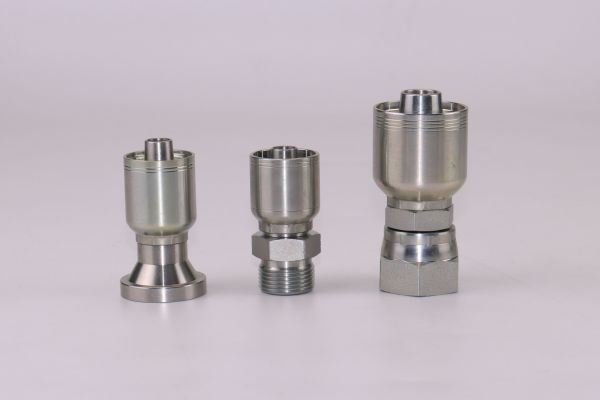
The reply may identify whether a sample is available, which exact model and revision it represents, and what documents can accompany it. Sample photographs should show complete product, connection, hose end, sealing features, markings, and protection. A physical sample should remain linked to its drawing and inspection record.
Sample approval should define what was reviewed and what remains open. Appearance cannot establish material, exact dimensions, pressure suitability, or hose and crimp compatibility. The buyer should document technical, visual, marking, protection, packaging, and evidence baselines separately before ordering a commercial batch.
Evidence options
Depending on risk and agreement, useful evidence can include product drawing, critical-dimensional report, thread inspection, material identity record, finish documentation, O-ring record, assembly observations, marking and label proof, packaging photos, and batch traceability. The response should identify whether records are generic, sample-specific, or batch-specific.
Do not reward paperwork volume. A concise record tied to the quoted SKU, revision, method, batch, result, and disposition is stronger than an unrelated certificate package. Never assume a quoted certification, standard, or test result without checking the actual document and scope.
| Response area | Useful content | What it does not prove |
| Part identification | Reference, own SKU, description, drawing revision | Complete interchangeability |
| Connection and hose side | Standard, dash sizes, angle, seal, fitting series | Valid assembly without hose and crimp data |
| Material and finish | Proposed specification and evidence scope | Suitability from appearance alone |
| Sample plan | Exact model, records, review scope | Later-batch consistency |
| Inspection evidence | Characteristics, method, sample or batch link | Capability outside recorded results |
| Commercial scope | Quantity, term, packaging, documents, exclusions | Technical acceptance |
| Clarifications | Specific unanswered questions and assumptions | Final approval before answers arrive |
Scope, Exclusions, and Assumptions Should Be Explicit
A quote is easier to evaluate when it says what is included, what is excluded, and what was assumed from incomplete data. Hidden assumptions often become disputes after samples or goods arrive.
Define delivery scope
Specify whether the line includes the fitting with retained ferrule, O-ring where applicable, protective cap or plug, marking, inner label, carton label, standard packaging, inspection documents, and any agreed special item. Confirm units and quantities by SKU. If a component is supplied separately or excluded, make that clear.
Commercial scope should include the applicable delivery term, named place, currency, quote validity, and other terms the buyer needs for comparison. Shipment documents and local import requirements must be confirmed through the responsible professionals; the quote should not be treated as customs, legal, or tax advice.
Label assumptions before acceptance
An assumption might concern material, finish, angle, hose dash, connection, O-ring, packaging, or document scope. List it beside the affected line and request confirmation. Do not bury important assumptions in a generic footer.
When the buyer accepts a clarification or controlled deviation, update the quotation or attach an approved record so the order reflects the same baseline. Verbal messages should not leave purchasing, technical review, inspection, and receiving with different versions.
Compare Supplier Replies With One Evaluation Matrix
Standardized comparison helps purchasing teams see missing information without pretending that every category has an objective score. Technical blockers should remain blockers even when the commercial offer is attractive.
Normalize the comparison first
Align supplier replies to the same reference, proposed product description, quantity, currency, Incoterm, named place, packaging, sample scope, evidence, and exclusions. Separate confirmed information from pending clarification. Do not compare one fully documented offer with a price-only reply as if the missing scope were free.
Use pass, open, concern, and not-applicable categories or another simple internal method. Avoid arbitrary weighted scores that let a low price cancel an unverified connection or hose-side requirement. A hard technical gap should require closure before approval.
Evaluate response quality, not sales style
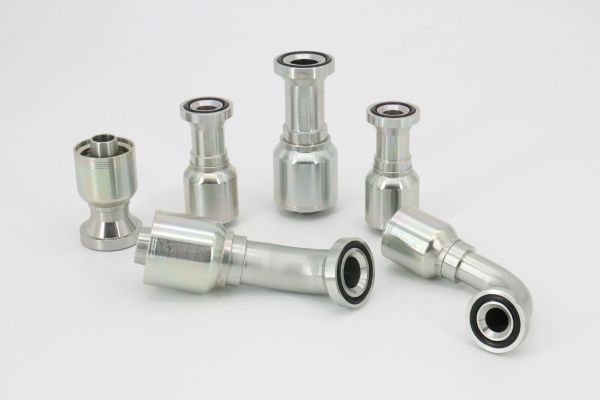
Look for accurate restatement of the request, clear product identity, appropriate technical limits, relevant clarification questions, traceable evidence options, and explicit scope. Treat claims such as “fully compatible,” “same quality,” or “no problem” as unsupported until technical evidence defines them.
A detailed response does not prove manufacturing capability or future batch consistency. Samples, batch records, incoming inspection, change control, and actual order performance still matter. The evaluation only decides whether further discussion is worth the buyer’s time.
Comparison categories may include:
- Reference and proposed SKU clarity
- Port connection, hose side, angle, and sealing details
- Material, finish, O-ring, and protection scope
- Drawing, sample, dimensional, and traceability evidence
- Quantity, term, packaging, labels, and document inclusions
- Assumptions, exclusions, deviations, and open questions
- Technical blockers versus commercially negotiable items
- Next verification step and responsible owner
Common Quotation-Screening Mistakes Waste Time
Poor screening either advances vague low-price responses or rejects useful replies because they ask necessary technical questions. A good process rewards clarity and evidence while keeping approval standards intact.
Mistakes to avoid
Do not treat a matching reference number as final cross-reference approval. Do not compare prices before aligning quantity and scope, assume a product photo proves dimensions, or accept a generic certificate as batch evidence. Avoid awarding points for confident language that does not answer the actual connection or hose-side question.
Do not penalize a supplier for flagging a genuine ambiguity. A question about port dash, hose dash, seat, O-ring, or hose series may show appropriate caution. The relevant test is whether the question closes a decision gap and whether the later answer is documented.
Neutral supplier-reply checklist
Before advancing the discussion, confirm:
- Received reference and proposed independent product identity
- Connection standard, thread, seat, seal, angle, port dash, and hose dash
- Fitting series, stem, ferrule, hose, and crimp-data limitations
- Proposed material, finish, O-ring, marking, and protection
- Quantity, currency, commercial term, packaging, and document scope
- Drawing, sample, inspection, dimension, and batch-evidence options
- Assumptions, exclusions, deviations, and clarification questions
- No unsupported interchangeability or capability claim is treated as proof
- Clear next step for closing technical and commercial gaps
Conclusion
Parker reference quote evaluation should determine whether a response is specific enough to verify, compare, and advance—not whether it offers the lowest number or the strongest sales language. Require a clear proposed product identity, separate port and hose dash information, connection and sealing details, fitting-series scope, material and finish assumptions, sample options, evidence links, commercial terms, and exclusions. Welcome focused questions that close genuine gaps, but keep every unanswered item visible. Normalize competing replies before comparing cost, and never let a scoring model offset a technical blocker. A quotation or cross-reference is not assembly approval; hose, ferrule, crimp, pressure, temperature, fluid, application, dimensions, and batch consistency still require appropriate technical verification.
FAQ
Is a Parker reference number enough to request a quote?
It can start the discussion, but it may not define every configuration or revision. Add product photos, connection and hose-side information, quantities, and required evidence where ambiguity exists.
Should a buyer reject a supplier that asks technical questions?
No, relevant questions can indicate that the reference leaves important gaps. Evaluate whether each question helps confirm identity, compatibility, scope, or evidence.
Does a dimensional report prove full interchangeability?
No, it covers only the characteristics, methods, and units recorded. Material, sealing, hose and crimp compatibility, pressure, environment, and application may still require separate evidence.
Can a detailed quotation prove supplier capability?
No, detail makes the proposal testable but does not prove manufacturing or batch performance. Use samples, records, inspections, traceability, and controlled orders for further verification.
When is a low-price quote worth further discussion?
Only when key technical and commercial assumptions can be clarified without compromising safety or identity. Price comparison becomes meaningful after the proposed products and scopes are aligned.