
Peak season demands maximum uptime for agricultural operations, yet this is precisely the window when tractor hydraulic hoses fail under the pressure of non-stop harvesting or planting. Every minute of downtime during these critical windows translates to thousands of dollars in lost revenue, spoiled crops, and emergency repair fees that far exceed standard maintenance costs. By understanding the specific environmental and mechanical stressors that cause tractor hydraulic hoses fail, operators can implement preemptive audits and selection criteria to ensure seasonal reliability.
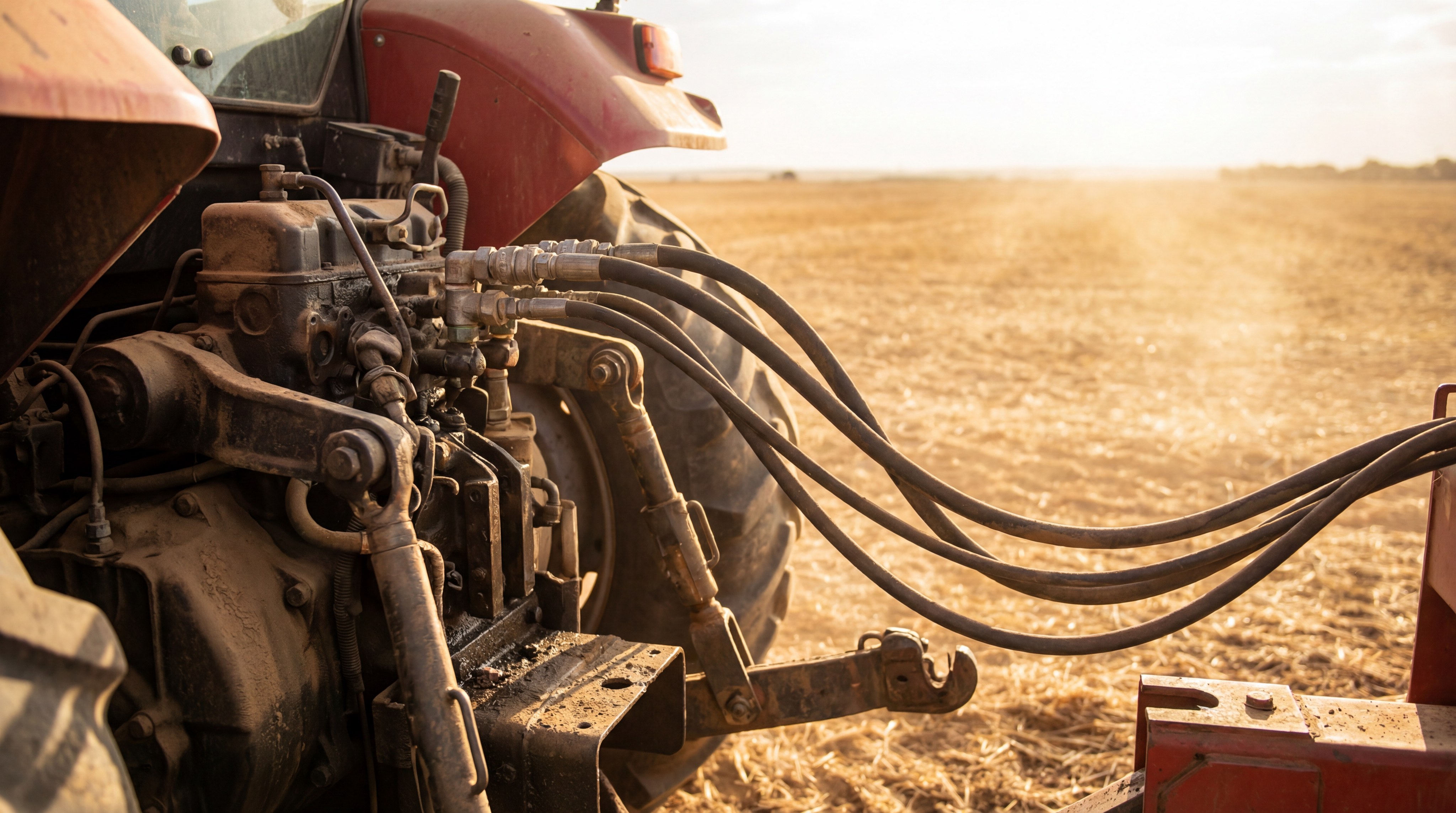
Does Extreme Summer Heat Cause Tractor Hydraulic Hoses Fail?
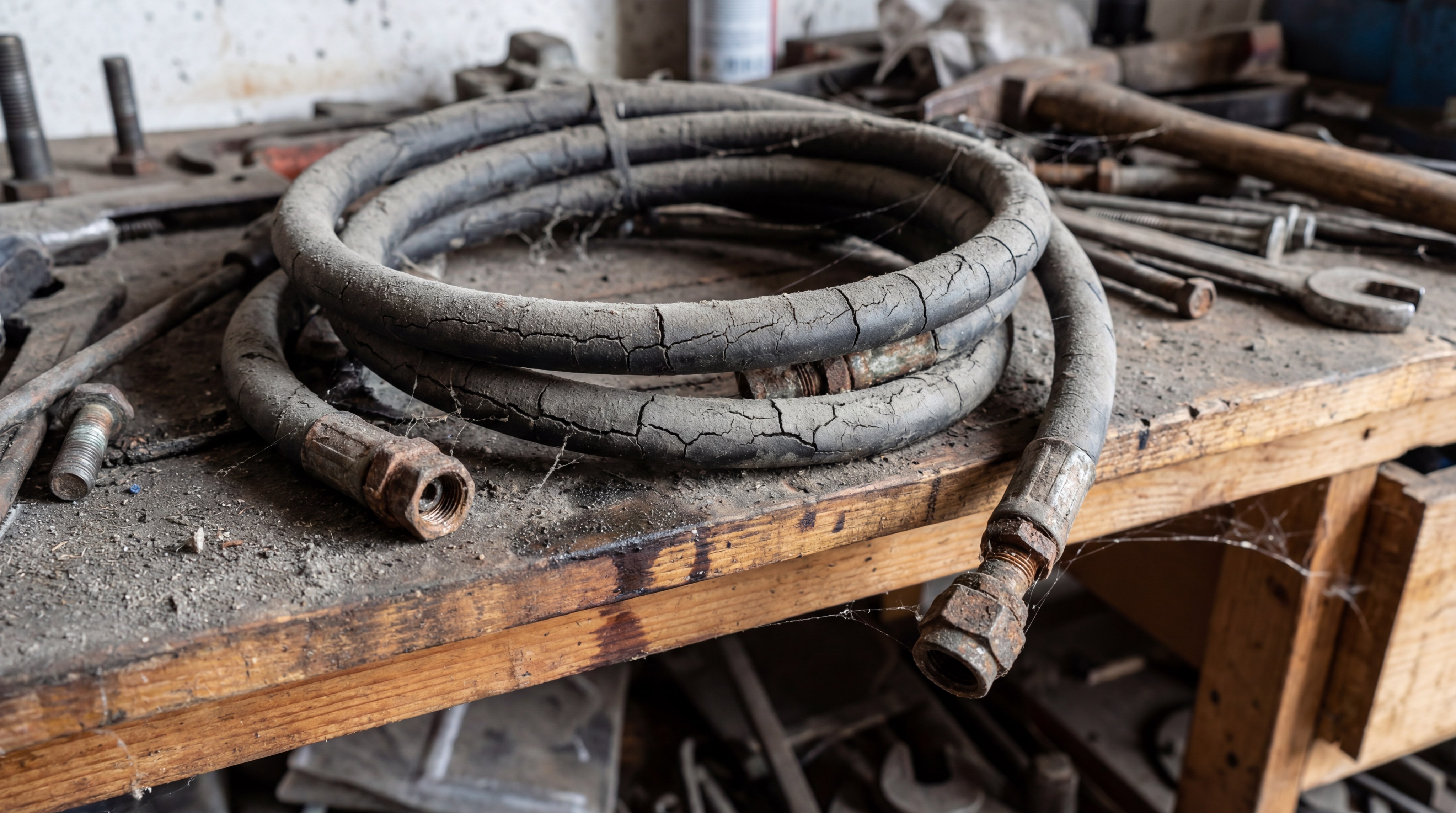
High ambient temperatures often cause tractor hydraulic hoses fail by hardening the inner tube and reducing its essential flexibility. When the elastomer reaches its thermal limit, the plasticizers within the rubber begin to migrate out, leaving the material brittle.
Think about it: The external heat from the sun combined with the internal friction of flowing oil creates a “double-burn” effect on your equipment. This leads to a condition known as “heat checking,” where tiny cracks appear on the inner and outer covers.
How do thermal cycles impact elastomer elasticity?
Thermal cycles force the rubber to expand and contract repeatedly, which eventually breaks down the molecular bonds of the material. As elasticity drops, the hose can no longer absorb the standard pressure pulses of the hydraulic pump.
- Loss of flexural strength in the outer cover.
- Increased risk of “cold set” cracking during evening temperature drops.
- Hardening of the inner tube leading to internal leakage.
- Reduced resistance to ozone and UV degradation.
Is your cooling system indirectly killing your hoses?
If your tractor’s hydraulic oil cooler is clogged with field dust, the resulting high oil temperatures will cook your hoses from the inside out. Hot oil is significantly more aggressive toward standard synthetic rubber compounds than temperate fluid.
- Accelerated oxidation of the hydraulic fluid.
- Softening of the adhesive layers between the braid and the tube.
- Increased permeability of the hose wall.
- Rapid degradation of O-ring seals at the fitting interface.
How to detect heat stress before a blowout?
You should look for a “shiny” or “parched” appearance on the hose cover, which indicates that the protective oils have evaporated. If the hose feels “crunchy” when you try to flex it by hand, the structural integrity is already compromised.
- Discoloration of the hose brand markings.
- Brittle cover that flakes off when scratched with a fingernail.
- Presence of fine radial cracks throughout the bend radius.
- Permanent deformation where the hose no longer returns to its original shape.
Seasonal maintenance relies on identifying these thermal warnings early.
| Heat Stress Indicator | Physical Symptom | Recommended Action |
| Hardened Cover | Brittle texture/Cracking | Immediate replacement with high-temp rated hose |
| Discoloration | Faded or browned jacket | Inspect cooling system and flush fluid |
| Blistering | Bubbles under the cover | Replace hose and check for chemical compatibility |
These thermal indicators serve as the primary warning signs that your elastomer has reached its end-of-life stage.
Can High-Pressure Spikes Cause Tractor Hydraulic Hoses Fail?
When heavy implements are engaged, tractor hydraulic hoses fail because of sudden pressure surges that exceed the rated working pressure. These spikes often occur during the rapid movement of control valves or when an implement hits an underground obstruction.
The reality is this: Standard working pressure is only half the story, as surge pressures can easily double the load on the wire reinforcement in a fraction of a second. Without sufficient reinforcement, the hose wall will simply burst at its weakest point.
Does your hose have the correct 4:1 safety factor?
Most agricultural hoses are designed with a 4:1 safety factor, meaning the burst pressure is four times the rated working pressure. If you are using a hose rated for 3,000 PSI on a system that regularly spikes to 4,500 PSI, you are operating dangerously close to the fatigue limit.
- Inadequate wire braid density for peak loads.
- Mismatched pressure ratings between the hose and the pump.
- Use of single-wire braid where four-spiral reinforcement is required.
- Fatigue failure of the wire reinforcement layers over time.
Are pressure relief valves calibrated for peak loads?
A malfunctioning or incorrectly set relief valve allows the system to reach pressures that the hoses were never designed to handle. During peak season, these valves must be tested to ensure they “dump” excess pressure before it reaches the delivery lines.
- Valve “chatter” leading to high-frequency pressure ripples.
- Clogged pilot lines preventing the valve from opening.
- Incorrect spring tension settings on the secondary relief.
- Wear on the valve seat allowing slow pressure buildup.
Why do spiral hoses outperform braided hoses in spikes?
Spiral-reinforced hoses are specifically engineered to handle high-impulse applications because the wire layers lay parallel to each other. This configuration prevents the “sawing” action that occurs in braided hoses when they expand under pressure.
- Better resistance to wire-on-wire friction.
- Higher burst-to-working pressure ratios.
- Increased lifespan in high-cycle implement applications.
- Reduced volumetric expansion under heavy loads.
Ensuring your pressure ratings match your implement’s demand is the best insurance against a mid-field rupture.
| Hose Type | Reinforcement Style | Recommended Peak Usage |
| 2-Wire Braid | Interwoven mesh | General purpose, lower-impulse tasks |
| 4-Wire Spiral | Parallel layers | High-pressure, heavy implement cycling |
| 6-Wire Spiral | Extra-heavy layers | Extreme duty, high-flow hydrostatic drives |
Heavy-duty spiral hoses provide the necessary structural backbone to withstand the violent surges common in modern farming.
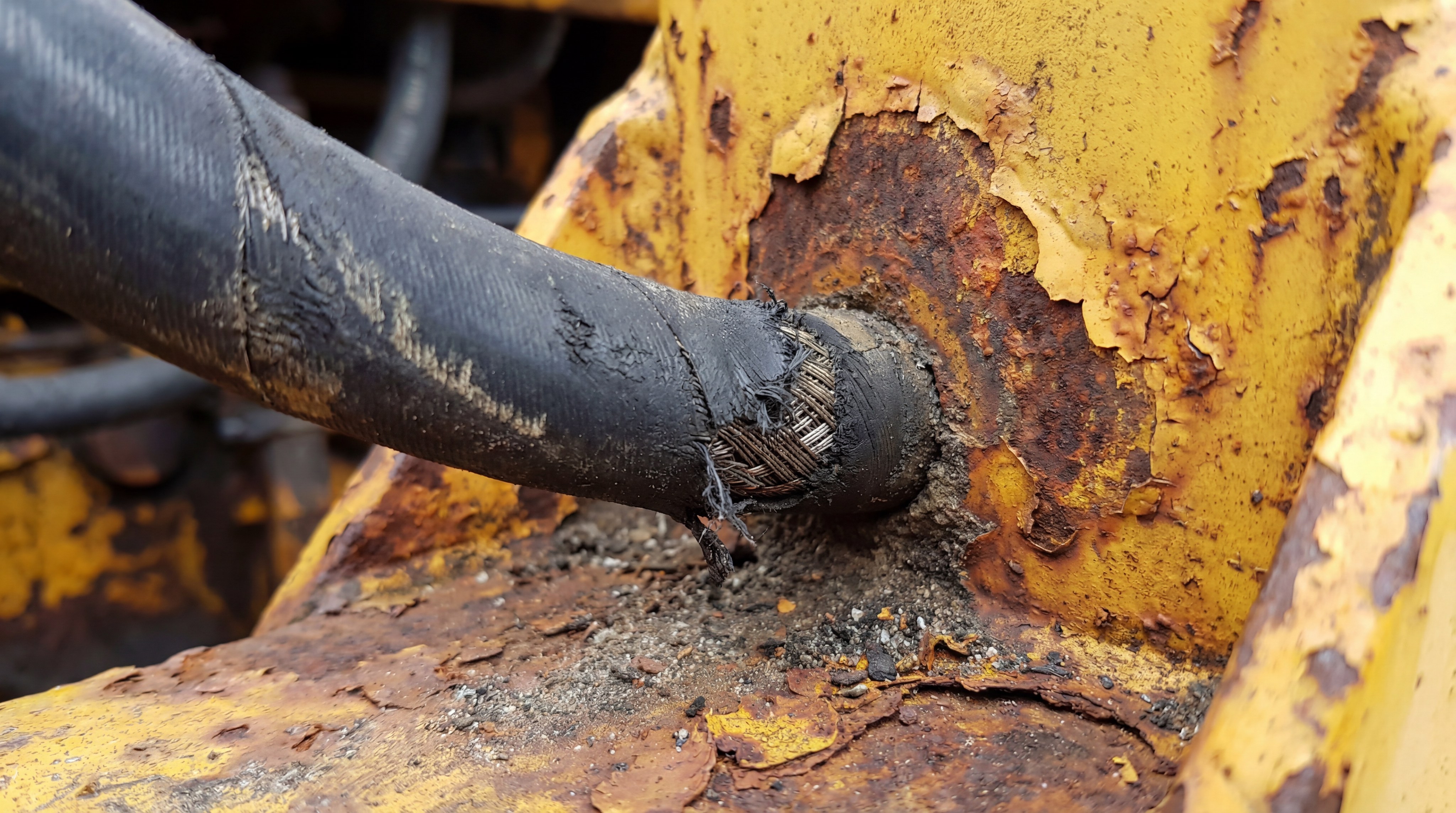
Is External Abrasion the Leading Reason Tractor Hydraulic Hoses Fail?
In the field, tractor hydraulic hoses fail due to constant rubbing against metal frames, sharp edges, or other moving components. This mechanical wear strips away the protective outer cover, exposing the steel reinforcement to the elements and friction.
Here is the deal: Once the outer cover is compromised, moisture can penetrate the wire braid, leading to rapid oxidation and structural weakening. It only takes a small spot of exposed wire to turn a high-pressure hose into a ticking time bomb.
Are you using protective sleeves in high-friction zones?
Protective textile or plastic sleeves are the simplest way to prevent abrasion from reaching the hose’s core. These sleeves act as a sacrificial barrier, taking the brunt of the rubbing so the hose jacket remains intact.
- Nylon textile sleeves for multi-hose bundles.
- Spiral plastic wraps for impact and crush protection.
- Spring guards for high-flex areas near pivot points.
- Heat shields for hoses routed near the exhaust manifold.
How does “cover wear” expose the wire reinforcement to rust?
The outer cover’s primary job is to keep the steel wires dry and free from corrosive agricultural chemicals. When the cover is rubbed thin, humidity and fertilizers react with the steel, causing it to snap under pressure.
- Pitting of the wire surface which creates stress risers.
- “Red rust” indicating deep oxidation of the reinforcement.
- Wire strands poking through the cover (a major safety hazard).
- Weakened bond between the cover and the braid.
Can hose-on-hose friction be avoided?
When multiple hoses are routed together, they often vibrate against each other, creating a “filing” effect that wears down the rubber. Proper clamping and the use of separators are essential to keep each line isolated and secure.
- Use of “twin-clamps” to keep suction and return lines apart.
- Proper spacing to allow for “hose swell” under pressure.
- Staggered routing to prevent overlapping in tight corners.
- Utilization of bulkhead plates to organize long runs.
A proactive approach to abrasion management can double the lifespan of your hydraulic assemblies.
| Protection Method | Material Type | Best Application |
| Textile Sleeve | Woven Nylon/Polyester | Bundling hoses on loaders and booms |
| Spiral Guard | Heavy-duty HDPE | Hoses exposed to debris and ground contact |
| Spring Guard | Plated Steel | High-flex areas requiring crush resistance |
Applying the right guard at the point of friction eliminates the most common cause of premature hose retirement.
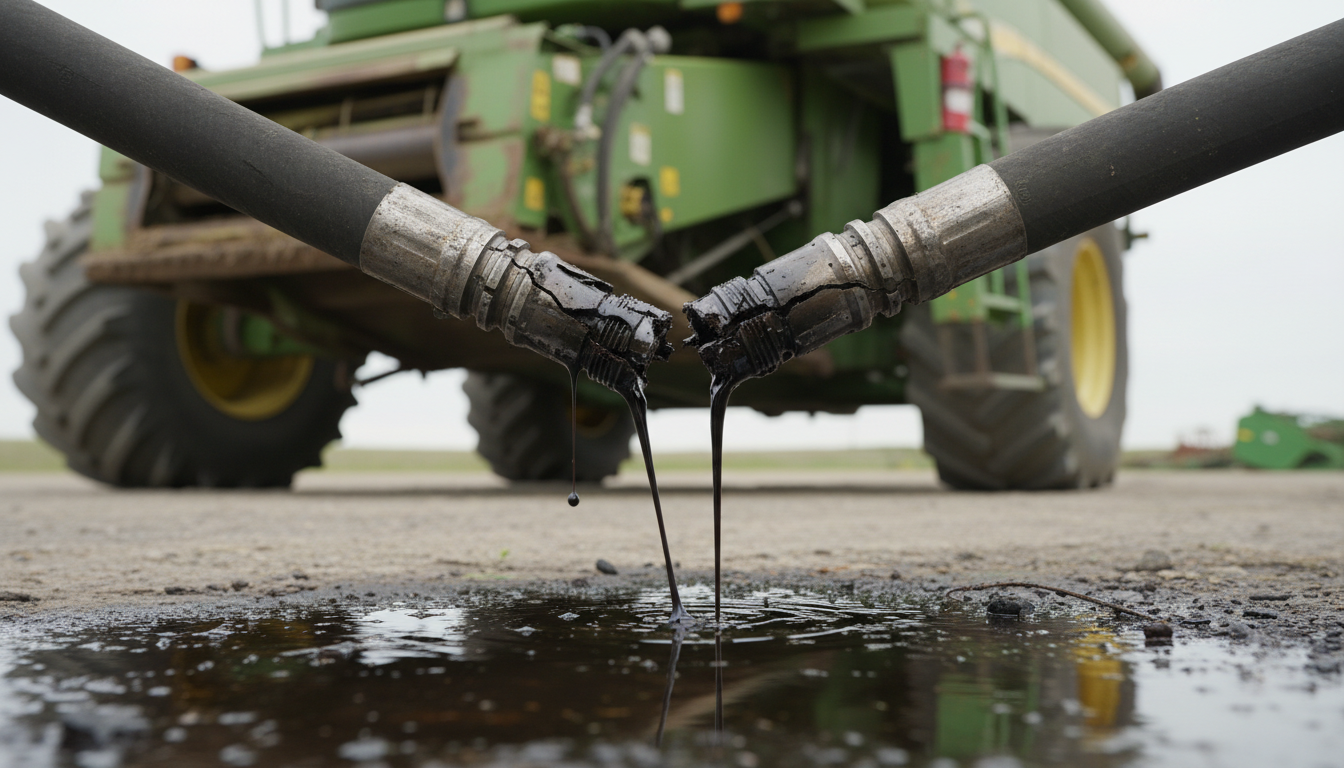
Why Do Fittings Make Tractor Hydraulic Hoses Fail?
Improperly matched couplings frequently make tractor hydraulic hoses fail , especially when mixing different manufacturer standards or using the wrong crimp specifications. A fitting that is not perfectly seated will eventually “blow off” under the intense back-pressure of a loaded implement.
Make no mistake: The connection point is the most vulnerable part of any hydraulic circuit, as it must transition fluid from a flexible hose to a rigid metal port. If the crimp is too loose, it leaks; if it’s too tight, it crushes the hose tube.
Is “mismatched” crimping causing your connection leaks?
Using a die set or a crimp diameter that isn’t specified for the specific hose and fitting combination is a recipe for disaster. Different manufacturers have slight variations in wall thickness, meaning there is no such thing as a “universal” crimp setting.
- Use of the wrong ferrule for the specific hose braid.
- Inconsistent crimp diameter leading to “weeping” leaks.
- Over-crimping which damages the inner tube’s sealing surface.
- Under-crimping which allows the fitting to migrate out under pressure.
How do vibration-induced stress cracks form in fittings?
Constant vibration from the diesel engine and rough field terrain puts immense fatigue on the metal threads of the fittings. Over time, these vibrations can cause microscopic cracks to form at the base of the threads, leading to a sudden snap.
- Stress concentrations at the JIC or NPT thread roots.
- Loosening of the jam nut due to harmonic resonance.
- Metal-to-metal galling during installation.
- Failure of the O-ring face seal (ORFS) due to excessive movement.
Why are one-piece fittings becoming the industry standard?
One-piece fittings eliminate the risk of matching the wrong ferrule to the stem, as the components are pre-assembled at the factory. This simplifies the crimping process and significantly reduces the chance of human error during assembly.
- Reduced number of leak paths in the connection.
- Faster assembly times for emergency field repairs.
- Guaranteed alignment between the ferrule and the stem.
- Improved corrosion resistance through uniform plating.
The integrity of your hydraulic system is only as strong as the fittings holding it together.
| Fitting Type | Connection Style | Reliability Factor |
| Reusable Fitting | Screw-together | Moderate (Best for emergency repairs only) |
| Permanent Crimp | Hydraulic Press | High (Standard for high-pressure systems) |
| One-Piece Crimp | Integrated Ferrule | Extreme (Highest safety and error prevention) |
Switching to factory-validated one-piece fittings is the most effective way to eliminate fitting blow-offs and seepage.
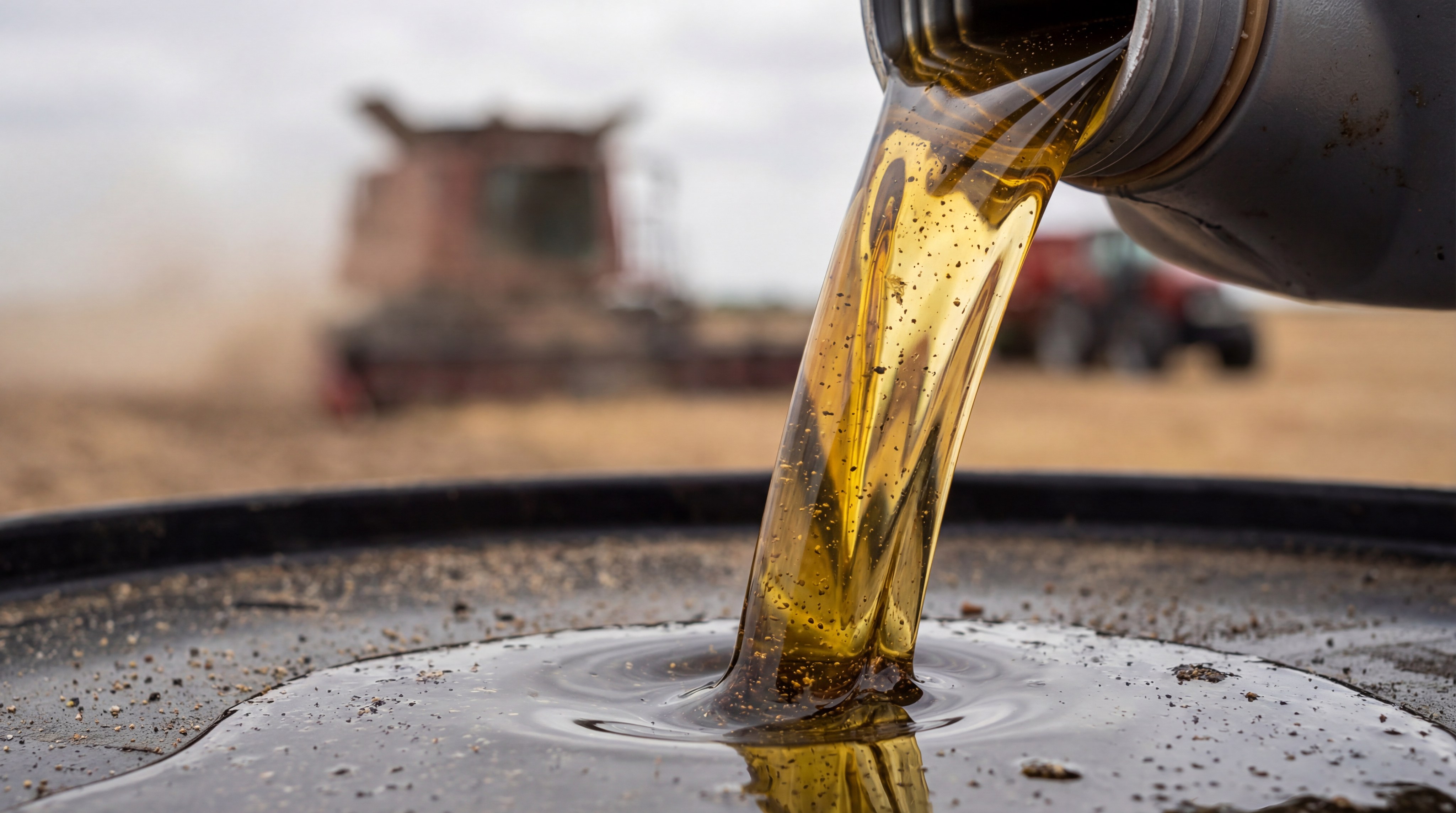
Does Contamination Make Tractor Hydraulic Hoses Fail Internally?
During dusty harvests, tractor hydraulic hoses fail as microscopic particles erode the inner lining of the hose from the inside out. This internal “sandblasting” effect eventually thins the tube until it can no longer contain the high-pressure fluid.
But wait, there’s more: Contamination doesn’t just damage the hose; it travels through the system to destroy expensive pumps and valve banks. A single teaspoon of dirt can cause more wear than a thousand hours of clean operation.
Are your quick-couplers introducing dirt into the system?
Every time you connect or disconnect an implement without cleaning the tips, you are injecting field dust directly into your oil. This grit acts as an abrasive, scouring the interior of your hoses every time the fluid cycles.
- Failure to use dust caps when couplers are disconnected.
- Worn seals on the female coupler allowing ingress.
- Wiping couplers with a dirty rag instead of a clean cloth.
- Connecting implements that have sat in the mud all winter.
When was the last time you performed a fluid “kidney loop” flush?
Standard filters often miss the smallest, most damaging particles that are suspended in the oil. A kidney loop system uses high-efficiency external filters to “polish” the oil, removing the contaminants that lead to internal hose erosion.
- Accumulation of metallic wear particles from the pump.
- Breakdown of fluid additives due to extreme heat.
- Moisture ingress causing sludge formation in the tank.
- Ineffective 25-micron standard filters allowing grit to pass.
How does “inner tube erosion” lead to catastrophic failure?
As the inner tube wears thin, the high-pressure oil begins to reach the wire reinforcement layer. Once the oil penetrates the braid, it creates a “bubble” under the outer cover, which will eventually burst without warning.
- Rough interior surface increasing fluid turbulence.
- Localized hotspots where fluid friction is highest.
- Blockage of small orifices by rubber flakes.
- Gradual loss of system responsiveness and power.
Clean oil is the lifeblood of a reliable hydraulic system, especially during the peak of the season.
| Contaminant Type | Source | Effect on Hose |
| Silica (Dust) | Field Environment | Internal tube scouring and thinning |
| Metal Shavings | Pump/Valve Wear | Pitting and potential braid damage |
| Water | Condensation | Hydrolysis and softening of the rubber |
Maintaining strict ISO cleanliness levels can extend the life of your hoses by up to 300%.
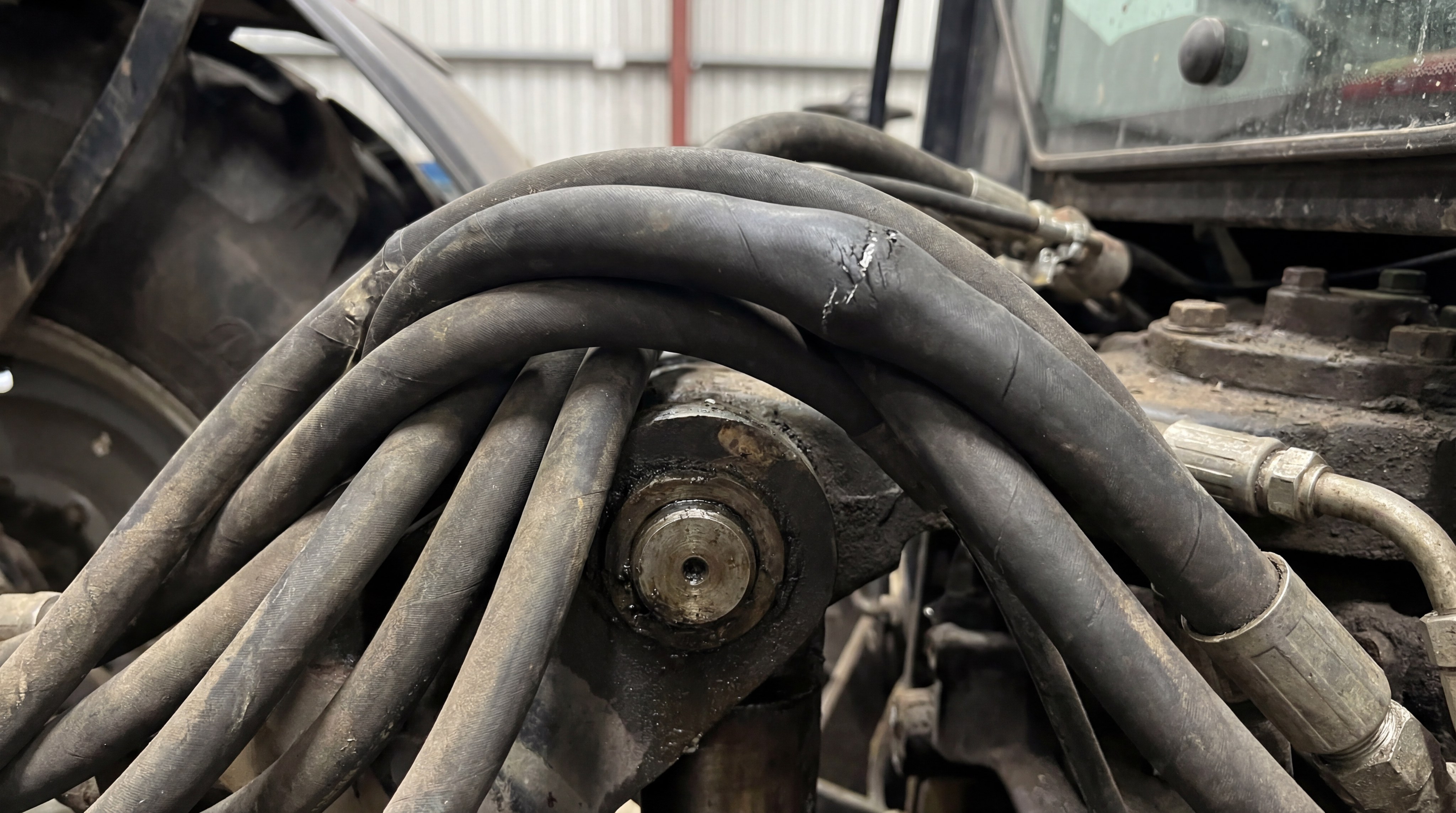
Could Incorrect Routing Cause Tractor Hydraulic Hoses Fail?
If hoses are installed with too much slack or too little, tractor hydraulic hoses fail due to excessive bending stress or tension during full-range motion. Proper routing ensures that the hose can “breathe” as pressure changes without catching on moving parts.
The truth is: A hose that is too short will pull on the fittings when the cylinder extends, while a hose that is too long will sag and potentially get pinched in the implement’s linkage. Finding the “Goldilocks” length is critical for long-term durability.
Are you respecting the minimum bend radius requirements?
Every hose has a specified minimum bend radius that must never be exceeded, even when the implement is fully flexed. Bending a hose too tightly puts immense stress on the wire reinforcement, leading to early fatigue and snapping.
- Using 90-degree elbows to reduce bend stress in tight corners.
- Measuring the radius from the center-line of the hose.
- Factoring in the additional stiffness of cold oil.
- Ensuring the hose has a straight section before entering a fitting.
Do your pivot points have enough room to breathe?
Hoses that cross a moving joint must have enough “loop” to accommodate the full range of motion without going into tension. If the hose is pulled taut, the stress is transferred directly to the crimp, often leading to a fitting failure.
- Providing extra length for the “rise and fall” of 3-point hitches.
- Using swivels to prevent hose twisting during rotation.
- Clamping the hose securely on both sides of a pivot.
- Monitoring the hose for “kinking” during the down-stroke.
Why is “twist” the most common routing error?
When a hose is twisted during installation, it loses its ability to expand and contract under pressure. A mere 7-degree twist can reduce a hydraulic hose’s service life by over 90% due to the internal torsional stress.
- Aligning the “lay line” of the hose to ensure it is straight.
- Using two wrenches during installation to prevent rotation.
- Verifying that the hose naturally follows its bend path.
- Checking for twist after the first few cycles of operation.
Strategic routing is an engineering task, not just a plumbing job, and it pays dividends in reliability.
Does Chemical Incompatibility Lead Tractor Hydraulic Hoses Fail?
If the wrong hydraulic oil or cleaning agent is used, tractor hydraulic hoses fail because the fluid chemically attacks the synthetic rubber compound. This interaction causes the rubber to either swell and soften or become hard and brittle, depending on the chemical match.
Look at it this way: Not all “rubber” is the same, and what works for standard mineral oil might dissolve quickly when exposed to modern bio-degradable fluids or high-nitrogen fertilizers. Choosing the right elastomer for your specific fluid is non-negotiable.
Are bio-degradable oils compatible with your current hoses?
Many newer eco-friendly oils are based on esters which can be very aggressive toward standard Nitrile (Buna-N) inner tubes. If you switch to these fluids without upgrading your hoses to Viton or EPDM, you can expect a system-wide failure within months.
- Chemical breakdown of the polymer chains in the rubber.
- Increased permeability leading to “weeping” through the wall.
- Sludge formation as the rubber particles dissolve into the oil.
- Hardening of the tube which causes it to crack like glass.
How does internal swelling restrict flow and increase heat?
When a chemical reaction causes the inner tube to swell, the inside diameter of the hose decreases significantly. This creates a bottleneck in the system, forcing the pump to work harder and generating massive amounts of heat.
- Reduced implement speed and lifting power.
- Cavitation in the pump due to restricted suction lines.
- Higher energy consumption and fuel usage.
- Pressure drops that prevent control valves from functioning.
Can external chemicals damage the hose from the outside?
Fertilizers, pesticides, and even heavy-duty degreasers can eat away at the outer cover of your hoses. During peak season, tractors are often exposed to these chemicals, and if not rinsed off, they can cause the jacket to peel and crack.
- Deterioration of the cover by diesel fuel spills.
- Cracking caused by exposure to high-nitrogen fertilizer spray.
- Softening of the rubber from hydraulic fluid leaks on the cover.
- Corrosion of the underlying wire braid by saltwater or road de-icers.
Chemical awareness is the silent protector of your hydraulic investments.
| Fluid Type | Common Inner Tube | Chemical Compatibility |
| Mineral Oil | Nitrile (NBR) | Excellent for standard hydraulics |
| Phosphate Ester | Viton (FKM) | Required for fire-resistant fluids |
| Bio-Oil | EPDM / CPE | Specifically matched for eco-fluids |
Is Vibrational Fatigue the Reason Tractor Hydraulic Hoses Fail?
High-RPM engine operations cause tractor hydraulic hoses fail by inducing metal fatigue in the wire reinforcement layers. These high-frequency vibrations act like a wire-cutter, slowly breaking the individual strands of steel braid until the hose can no longer hold pressure.
The kicker is: Vibration fatigue is often invisible from the outside, meaning a hose can look perfectly fine one minute and explode the next. The constant “micro-flexing” of the wire eventually leads to structural collapse.
Are your hose clamps tight enough to dampen vibration?
Loose clamps allow the hose to vibrate freely against the tractor’s chassis, which accelerates both external wear and internal wire fatigue. A well-secured hose should be firm to the touch but not crushed by the clamp’s pressure.
- Use of rubber-cushioned clamps to absorb engine harmonics.
- Ensuring clamps are placed every 18-24 inches on long runs.
- Checking for “hose whip” during high-pressure cycles.
- Replacing broken or rusted clamps immediately.
Can “hose whip” lead to catastrophic structural failure?
Hose whip occurs when a hose is not properly secured and moves violently during sudden pressure changes. This movement puts extreme stress on the fitting interface, which is the most common point for vibration-induced breaks.
- Stress cracking at the ferrule-to-hose transition.
- Loosening of the fitting from the valve port.
- Impact damage if the hose hits nearby metal components.
- Permanent stretching of the wire reinforcement layers.
How do engine harmonics affect hydrostatic drive lines?
Hydrostatic drives operate at very high pressures and are often located near the main engine and pump assembly, making them prime targets for vibration. These lines require premium spiral reinforcement to resist the constant “hum” of the system.
- Use of specialized “low-noise” hoses to reduce resonance.
- Heavy-duty mounting brackets for pump-to-motor lines.
- Isolation of the hydraulic tank from engine vibrations.
- Periodic inspection of the wire braid near the pump outlet.
Vibration management is about more than just noise; it’s about structural survival.
| Vibration Source | Damage Mechanism | Prevention Strategy |
| Engine RPM | High-frequency fatigue | Rubber-cushioned P-clamps |
| Ground Terrain | Low-frequency impact | Protective spiral wraps |
| Pump Pulsation | Harmonic resonance | Accumulators and flexible mounts |
Stabilizing your hoses with the right damping hardware prevents the “silent killer” of metal fatigue.
Conclusion
Maintaining your agricultural machinery requires more than just luck; it requires high-quality components and expert guidance. We believe that professional farmers deserve hydraulic solutions that are as hard-working and resilient as they are. If you need reliable parts to keep your fleet moving, contact us today for a custom quote or technical support.
Frequently Asked Questions
How often should I inspect tractor hoses during peak season?
Daily visual inspections are recommended before starting work to check for “weeping” at fittings or external scuffs. Catching a small leak early prevents a major blowout later.
What is the most common sign of an impending hose failure?
Look for “bubbles” or blisters on the outer cover, which indicate the inner tube has breached and fluid is trapped under the jacket. If you see a bubble, the hose must be replaced immediately.
Can I repair a burst hose in the field?
Yes, temporary field repair kits exist, but a full replacement is required to ensure the system can handle high-pressure agricultural cycles safely. Field repairs should only be used to get the equipment back to the shop.
Does cold weather storage affect hose performance in summer?
Yes, extreme cold can cause “cold set” cracks if the hose is moved while frozen, which then expand and leak once the oil heats up in summer. Always allow the hydraulic oil to warm up before operating the machine in freezing conditions.
How do I know if my hose fittings are compatible?
Always check the thread type (JIC, NPT, ORFS) and the crimp diameter specifications provided by the manufacturer. Using the wrong fitting style will lead to leaks and potential blow-offs.