Imagine you are managing a complex industrial piping system where fluid must be routed to different stations with split-second timing. You are currently using multiple gate valves and tee-junctions, creating a cluttered network that is prone to leaks and requires constant manual intervention. This setup not only wastes valuable floor space but also increases the risk of catastrophic system failure during pressure surges. You can eliminate these inefficiencies by integrating a high-performance three way ball valve work into your design. A three-way ball valve works by using a rotary ball with a specialized bore to redirect, mix, or divert fluid flow between three different ports.
How Does A Three Way Ball Valve Work In Fluid Control?
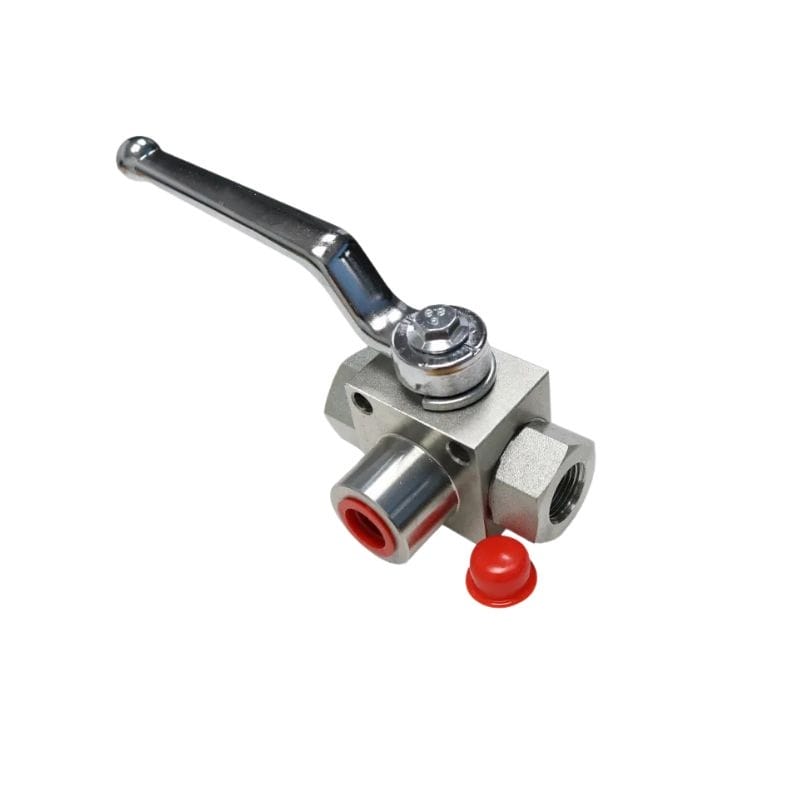
A three-way ball valve works by rotating a perforated ball inside the valve body to align its internal flow paths with three external ports. This mechanical rotation allows you to control the direction of the media with a single handle or actuator. You can use these valves to replace multiple two-way valves, which simplifies your hydraulic hose fittings layout.
What Is The Primary Function Of These Valves?
The primary function is to manage fluid distribution across three connection points within a single compact unit. This design reduces the number of potential leak points in your system.
Here is the deal:
- Diverting flow from one inlet to two different outlets.
- Mixing fluids from two inlets into one common outlet.
- Blocking flow to specific sections for maintenance.
Using one valve instead of several saves you significant installation time.
Key Components Found In The Valve Body
The valve body houses the ball, seats, and stem which work together to ensure a leak-proof seal. These components are often made from durable materials like stainless steel or brass to withstand corrosion.
Think about it:
- The ball: Features an L or T-shaped bore.
- The seats: Usually made of RPTFE for high-temperature resistance.
- The stem: Often blow-out proof for enhanced safety.
Selecting high-quality internal parts ensures your system remains operational for years without failure.
| Component | Material Example | Function |
| Ball | Stainless Steel | Controls flow direction |
| Seats | RPTFE | Provides a tight seal |
| Stem | Carbon Steel | Connects handle to ball |
This structural integrity is essential for maintaining consistent flow rates in demanding environments.
How Does A Three Way Ball Valve Work With Internal Ports?
A three way ball valve work depends on the alignment of the internal ball’s bore with the side and bottom ports of the housing. When you turn the handle, the ball rotates to connect specific ports while blocking others. This internal configuration dictates whether the valve is used for simple switching or complex blending.
Understanding The Multiport Design
The multiport design features three openings, typically arranged in a “T” or “L” shape to facilitate different flow patterns. This allows you to manage multiple flow streams without adding extra piping.
And the best part?
- Side ports: Act as primary inlets or outlets.
- Bottom port: Often serves as the common port for mixing.
- Compact footprint: Saves space in tight industrial enclosures.
A multiport layout reduces fluid turbulence by providing a more direct path for the media.
Why Is The Central Bore Shape Important?
The shape of the bore, either L-shaped or T-shaped, determines the possible flow combinations available to you. Choosing the wrong bore shape can lead to incorrect fluid routing or system backpressure.
| Bore Type | Port Connections | Common Use |
| L-Port | 2 ports at a time | Diverting flow |
| T-Port | 2 or 3 ports | Mixing fluids |
The internal geometry is the “brain” of the valve, dictating every flow possibility.
How Does A Three Way Ball Valve Work Using L-Port Designs?
An L-port three way ball valve work cycle involves a 90-degree turn that switches the flow from one outlet to another. It is specifically designed for diverting applications where you need to choose between two paths. You cannot connect all three ports simultaneously with this specific configuration.

Managing Flow At A Ninety Degree Angle
The L-shaped bore allows the fluid to enter through the common port and exit through one of the side ports at a 90-degree angle. When you rotate the handle 90 degrees, the flow switches to the opposite side port.
Think about it:
- Simple operation: Easy for manual operators to understand.
- Clear routing: No risk of accidental mixing between outlets.
- Versatility: Works well with various hydraulic hoses .
This straightforward design is perfect for systems that require frequent switching between two processes.
Can L-Port Valves Shut Off Flow Completely?
Yes, depending on the rotation range, an L-port valve can be positioned to block all flow paths. This provides an added layer of safety when you need to isolate downstream equipment.
- 180-degree rotation: Allows for a full “off” position.
- Leak prevention: Precision-machined balls ensure a tight shut-off.
- Maintenance safety: Isolates sections without draining the whole system.
The L-port configuration offers a reliable solution for alternating between two distinct fluid destinations.
How Does A Three Way Ball Valve Work With T-Port Flows?
A T-port three way ball valve work allows for the most versatile flow patterns, including the ability to mix all three streams. The T-shaped bore can connect any two ports or all three ports at the same time. This makes it the ideal choice for applications involving fluid blending or bypass loops.
Managing Three Ports Simultaneously
The T-port configuration allows fluid to flow through all three openings at once, which is essential for constant circulation systems. You can use this to ensure that a pump never dead-heads by always providing an open path.
Here is the deal:
- All-port flow: Connects the inlet to both outlets.
- Blending: Combines two different media streams.
- Continuous flow: Prevents pressure spikes during valve transition.
This simultaneous management keeps your system balanced and prevents mechanical stress on pumps.
Comparing T-Port Flexibility To L-Port
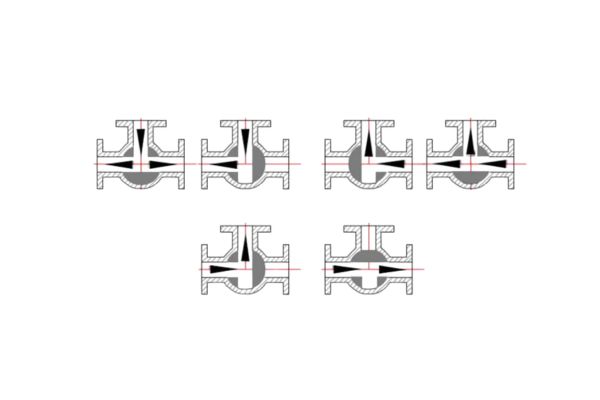
Unlike the L-port, the T-port valve offers up to four different flow configurations depending on the ball’s position. This flexibility allows you to perform mixing, diverting, and straight-through flow with one device.
Think about it:
- More options: Handles complex flow logic easily.
- Mixing capability: Essential for temperature control.
- System integration: Fits perfectly with various brass fittings .
Choosing a T-port valve gives you future-proof control over your fluid dynamics.
| Configuration | Port 1 | Port 2 | Port 3 |
| Position A | Open | Open | Open |
| Position B | Closed | Open | Open |
| Position C | Open | Open | Closed |
The T-port design maximizes your control options, making it the most adaptable valve in your inventory.
How Does A Three Way Ball Valve Work To Mix Fluids?
A three way ball valve work process for mixing involves using a T-port ball to combine two separate inlet streams into a single discharge line. This is commonly used in industrial washing or cooling systems where precise ratios are required. You can adjust the handle position to vary the concentration of the mixture.
How Are Hot And Cold Fluids Blended?
In plumbing or HVAC systems, the valve takes hot water from one port and cold water from another to reach a target temperature. As you turn the ball, the size of the openings for each inlet changes, altering the mix.
And the best part?
- Precise ratios: Achieve exact fluid temperatures.
- Stability: Maintains the mix even during pressure fluctuations.
- Efficiency: Reduces the need for complex electronic mixing skids.
Using a mechanical valve for blending is a cost-effective way to manage thermal requirements.
Precision Control For Chemical Processing
In chemical processing, these valves allow you to blend reagents in controlled proportions before they enter a reactor. This ensures that the chemical reaction proceeds safely and efficiently.
Here is the deal:
- Corrosion resistance: Use stainless steel for harsh chemicals.
- Repeatability: Achieve the same mix every time you set the handle.
- Integration: Works seamlessly with hydraulic adapters .
Precision blending prevents wasted raw materials and ensures product consistency.
| Application | Material | Mixing Goal |
| HVAC | Brass | Temperature control |
| Chemical | Stainless Steel | Concentration control |
| Irrigation | Bronze | Fertilizer blending |
The ability to mix fluids within the valve body simplifies your process and reduces equipment costs.
How Does A Three Way Ball Valve Work When Diverting Flow?
A three way ball valve work for diverting typically utilizes an L-port ball to send a single fluid source to one of two different locations. This is highly effective in manufacturing lines where a product must be routed to either a packaging station or a waste tank. You can switch the destination instantly with a quarter-turn of the actuator.
Switching Between Two Different Outlets
Diverting allows you to manage different stages of a process without stopping the main pump. You simply redirect the flow to the active part of the system while the other part is serviced.
Think about it:
- Zero downtime: Switch paths while the system is pressurized.
- Logic control: Easily automated for robotic assembly lines.
- Reliability: Rated for thousands of cycles without leakage.
Effective diverting ensures that your production line remains productive around the clock.
Managing Multiple Water Sources In Irrigation
In large-scale agriculture, these valves allow you to switch between well water and municipal supplies or between different fertilizer tanks. This flexibility is vital for protecting crops during water shortages.
And the best part?
- Resource management: Choose the most cost-effective water source.
- Scale: Available in large sizes for high-volume irrigation.
- Durability: Withstands outdoor exposure and grit.
How Does A Three Way Ball Valve Work With Manual Handles?
A three way ball valve work performed manually relies on a lever or T-handle to rotate the ball 90 or 180 degrees. This provides the operator with tactile feedback and a clear visual indication of the current flow path. You can easily adjust the system flow without needing electricity or compressed air.
Adjusting The Flow Path By Hand
Manual operation is the most reliable method for remote locations where power is unavailable. The handle is directly keyed to the ball, so the position of the lever always shows where the fluid is going.
And the best part?
- Instant control: No lag time from electronic signals.
- Vinyl sleeves: Comfortable grip for operators in cold or oily conditions.
- Simplicity: Fewer parts to break or maintain.
Manual handles are the gold standard for backup systems and simple fluid transfer stations.

Locking Handles For Secure Operations
To prevent unauthorized or accidental changes to the flow path, many three-way valves feature locking handles. You can secure the valve in a specific position using a padlock.
Here is the deal:
- Safety compliance: Meets “Lockout-Tagout” (LOTO) requirements.
- Error prevention: Stops accidental mixing of incompatible fluids.
- Peace of mind: Ensures the valve stays in the desired state during transit.
How Does A Three Way Ball Valve Work For Your Application?
Determining how a three way ball valve work cycle fits into your specific setup requires an analysis of media type, temperature, and pressure. You must choose a configuration that balances performance with cost-efficiency. By understanding these variables, you can select a valve that minimizes maintenance and maximizes uptime.
Evaluating System Design Requirements
You must first decide if your system needs to mix, divert, or select between sources. This decision dictates whether you purchase an L-port or T-port model.
Here is the deal:
- Flow rate: Ensure the valve’s port size doesn’t restrict your pump.
- Media compatibility: Match the valve material to the fluid (e.g., brass for water).
- Environment: Consider if the valve will be exposed to salt spray or extreme heat.
A well-planned design prevents expensive retrofits and system bottlenecks down the line.
How To Choose The Right Seat Material?
The seat material is what actually stops the fluid, so it must be compatible with your operating temperature. RPTFE is excellent for general industrial use, while FKM is better for high-temperature oils.
Think about it:
- PTFE: Standard for low friction and chemical resistance.
- Metal Seats: Required for abrasive slurries or extreme heat.
- Elastomer Backing: Provides extra “spring” for a better seal at low pressures.
The right seat material ensures your valve remains leak-free throughout its entire service life.
| Factor | Consideration | Recommendation |
| Media | Is it corrosive? | Use Stainless Steel |
| Temperature | Is it over 300°F? | Use RPTFE or Metal Seats |
| Frequency | How often is it turned? | Use Automated Actuators |
Selecting a valve based on data rather than guesswork is the secret to a high-performance hydraulic system.
Choosing the right fluid control solution is the difference between a high-efficiency plant and one plagued by constant downtime. We have seen how the three-way ball valve solves the problems of complex piping, high leak risks, and inefficient fluid mixing. Our vision is to provide every engineer with the precision-engineered components needed to build safer, more reliable systems. By integrating these versatile valves, you are not just buying a part; you are investing in the long-term stability of your operation. To find the perfect fit for your next project, contact us today .
Frequently Asked Questions
Can I use an L-port valve for mixing?
No, an L-port valve is not designed for mixing. Because the bore only connects two ports at a time in an “L” shape, it cannot combine two inlets into one outlet simultaneously. You must use a T-port valve if your application requires fluid blending or simultaneous flow through all ports.
What is the best material for a valve handling gasoline?
Bronze is generally considered the best material for fuel applications like gasoline or diesel. Bronze has natural properties that resist the corrosive effects of fuels and provides a spark-resistant body which is safer in flammable environments. Always ensure the internal seals are made of FKM or a similar fuel-resistant elastomer.
Will a 3-way ball valve reduce my system pressure?
Yes, but only slightly if you choose a full-bore design. Every valve creates some resistance to flow, but a full-port three-way valve has an internal opening nearly identical to the pipe diameter, minimizing the pressure drop. Avoid “reduced port” valves if maintaining maximum pressure and flow rate is critical for your machinery.
How often should I maintain my manual ball valve?
You should inspect it at least once every six months depending on the media. While ball valves are generally low-maintenance, checking the packing gland for leaks and ensuring the handle moves freely prevents the ball from seizing. In high-cycle applications, you may need to replace the seats and seals annually to maintain a bubble-tight shut-off.
Can I automate a valve that was originally manual?
Yes, provided the valve features an ISO 5211 mounting pad. This standardized pad allows you to remove the manual handle and bolt an electric or pneumatic actuator directly onto the valve body. If your valve does not have this pad, you may need a custom mounting bracket to align the actuator with the valve stem.