Leaking Hydraulic Fittings 8 Shocking Reasons

Leaking Hydraulic Fittings: 8 Shocking Reasons

Leaking Hydraulic Fittings: 8 Shocking Reasons

Table of Contents

Introduction

Understanding the root causes of leaks is critical to maintaining the efficiency and safety of your hydraulic system. Factors such as improper installation, use of inferior components, incorrect mounting, hydraulic fluid contamination, wear and tear, environmental influences, mechanical stress, and poor maintenance can all contribute to leaks. By proactively identifying and addressing these issues, companies can prevent leaks and ensure the longevity and reliability of their hydraulic systems.

Poor Installation Practices

Detailed Explanation of Common Installation Mistakes

One of the primary causes of leaks in hydraulic fittings is poor installation practices. Proper installation is critical to ensuring the integrity and performance of hydraulic systems. Unfortunately, several common mistakes during the installation process can lead to leaks, system inefficiencies, and even catastrophic failures.

Improper Tightening: This is one of the most frequent errors made during installation. Hydraulic fittings need to be tightened to specific torque values recommended by the manufacturer. Under-tightening fitting results in a loose connection, which cannot hold the hydraulic pressure and leads to leaks. Over-tightening, on the other hand, can damage threads and crush seals, compromising the fitting’s integrity and leading to failure over time.

Misalignment of Fittings: Misalignment occurs when fittings are not properly aligned during assembly. This can create uneven pressure and stress on the connections. Misalignment often happens when components are forced to fit together or when pipes and hoses are not adequately supported, causing them to pull on the fittings. This misalignment can cause leaks due to uneven pressure distribution and can also lead to mechanical failure under operational stress.

Impact of Improper Tightening and Misalignment

Improper tightening and misalignment of hydraulic fittings can have severe consequences for the overall system:

Under-Tightening: When fittings are not tightened sufficiently, the connection between components is weak. This weak connection can’t withstand the hydraulic pressure, leading to leaks. These leaks not only waste hydraulic fluid but also reduce system efficiency and can cause environmental hazards if the fluid is not contained.

Over-Tightening: Over-tightening fittings can damage threads and crush seals, leading to micro-cracks and deformities in the fittings. These micro-cracks might not cause immediate leaks but can grow over time, leading to sudden and catastrophic failures. Damaged seals lose their ability to maintain a proper seal, which leads to leaks and the need for frequent replacements.

Misalignment: Misaligned fittings are subjected to uneven pressure and stress, which can lead to leaks and mechanical failure. Misalignment puts extra strain on the hydraulic lines and connections, causing them to wear out faster. In extreme cases, this can lead to complete disconnection of the fittings under high-pressure conditions, resulting in significant fluid loss and potential equipment damage.

Inferior Quality Components

Discussion on the Use of Low-Quality Fittings and Seals

One of the key factors contributing to leaks in hydraulic systems is the use of low-quality fittings and seals. Hydraulic systems operate under extreme conditions, including high pressures and varying temperatures. Substandard components are not designed to withstand these conditions, leading to frequent failures and system inefficiencies.

Low-Quality Fittings: These are often made from inferior materials such as low-grade metals or poorly processed alloys. Such materials are prone to corrosion, cracking, and other forms of degradation when exposed to the high pressures and harsh environments typical of hydraulic systems.

Inferior Seals: Seals made from subpar materials may not have the necessary elasticity and resilience to maintain a tight seal under pressure fluctuations and temperature changes. Poorly manufactured seals can have inconsistencies in their composition, making them more susceptible to wear and tear.

hydraulic flange seal

How Inferior Materials Affect Durability and Performance

The use of inferior materials directly impacts the durability and performance of hydraulic systems:

Rapid Degradation: Low-quality seals and fittings degrade quickly under normal operating conditions. This rapid degradation leads to the loss of their ability to maintain a secure seal, resulting in leaks. For instance, a seal made from low-quality rubber may harden or crack when exposed to hydraulic fluid over time.

Frequent Leaks: As the materials degrade, the components become unable to withstand the hydraulic pressure, leading to frequent leaks. This not only causes fluid loss but also requires constant monitoring and maintenance, driving up operational costs.

Reduced System Efficiency: Leaks in hydraulic systems reduce the efficiency of the machinery, as the system cannot maintain the necessary pressure. This inefficiency can lead to increased energy consumption and reduced performance of the hydraulic equipment.

Increased Maintenance and Downtime: Systems with inferior components require more frequent maintenance and part replacements. This increases downtime and operational disruptions, negatively affecting productivity.

Tips for Selecting High-Quality Components

To ensure the reliability and longevity of hydraulic systems, it is crucial to select high-quality fittings and seals. Here are some tips to help you choose the best components:

Material Quality: Choose fittings and seals made from durable materials such as high-grade stainless steel, which is resistant to corrosion and can withstand high pressures. For seals, specialized polymers like Viton or Teflon are recommended due to their excellent chemical and thermal resistance.

Certifications and Standards: Look for components that come with certifications indicating compliance with industry standards, such as ISO 9001 for quality management systems. Certifications provide assurance that the components have been tested and meet the required performance criteria.

Performance Specifications: Ensure that the fittings and seals you select are designed for the specific pressures, temperatures, and fluids used in your hydraulic system. Review the manufacturer’s performance specifications and choose components that exceed your system’s operational requirements.

Incorrect Fitment

Importance of Using the Correct Size and Type of Fittings

Using the correct size and type of fittings is crucial for the proper functioning of hydraulic systems. Hydraulic systems are designed with specific operational parameters in mind, and each component must align with these parameters to ensure a secure and efficient connection.

Correct Sizing: The size of the fitting must match the hose or tube diameter exactly. An incorrect size can result in an imperfect seal, which cannot withstand the high pressures typical of hydraulic systems, leading to leaks.

Proper Type: Different hydraulic applications require different types of fittings. For instance, fittings can vary based on thread types, such as NPT, BSP, or metric threads. Using the wrong type can result in incompatible connections, causing operational inefficiencies and potential safety hazards.

Consequences of Mismatched Components

Mismatched components can lead to several critical issues in hydraulic systems:

Fluid Leakage: An imperfect seal caused by incorrect fittings allows the hydraulic fluid to escape. This not only wastes fluid but also reduces the system’s ability to maintain the necessary pressure for proper operation.

Excessive Strain: Incorrectly sized or typed fittings can cause undue stress on the connections. This strain can weaken the fittings over time, leading to cracks and eventual failure.

System Failure: In severe cases, the use of mismatched fittings can lead to catastrophic system failures. The hydraulic pressure can force the ill-fitting components apart, causing significant fluid loss and potential damage to other system parts.

Contaminants in the Hydraulic Fluid

Clean hydraulic fluid is critical for maintaining the integrity and performance of hydraulic systems. The fluid acts as a lubricant, coolant, and medium for power transmission. Any contamination can severely affect its functionality and, consequently, the overall system’s efficiency.

Erosion of Seals: Contaminants such as dirt and metal particles can erode seals. This erosion compromises the seals’ ability to maintain a tight connection, leading to leaks.

Abrasions on Fittings: Particulate matter in the hydraulic fluid can cause abrasions on fittings. These abrasions can weaken the fittings and create points of failure where leaks are more likely to occur.

Types of Contaminants and How They Enter the System

Several types of contaminants can infiltrate hydraulic systems, each posing specific threats to system integrity:

Dirt and Dust: These are common contaminants that can enter the system through inadequate sealing or during maintenance activities. Dust particles can be introduced from the environment, especially in outdoor or construction applications.

Metal Particles: Metal shavings and particles can be generated from internal wear and tear or can enter the system during maintenance or repairs if tools and components are not properly cleaned.

Water: Water can enter the hydraulic fluid through condensation, leaks, or when fluid is stored in unsealed or inadequately protected containers. Water contamination can lead to corrosion and reduce the lubrication properties of the hydraulic fluid.

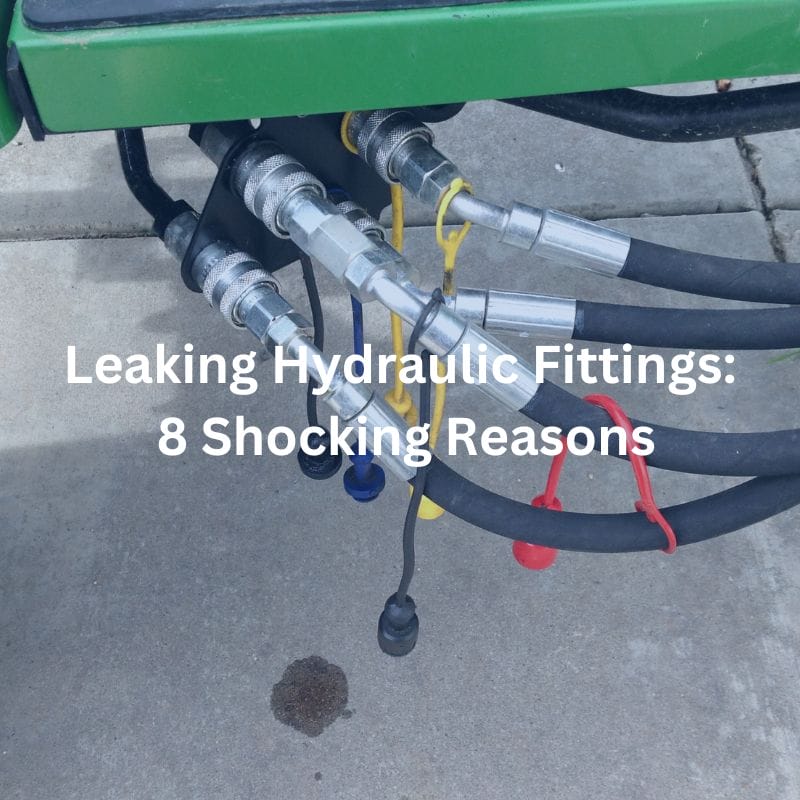
Leaking Hydraulic Fittings Topa

Effects of Contaminants on Fittings and Seals

Contaminants in the hydraulic fluid can have several detrimental effects on fittings and seals:

Rapid Wear and Tear: Abrasive particles in the fluid accelerate the wear and tear of seals and fittings. This wear reduces the lifespan of these components and increases the likelihood of leaks.

Clogging of Filters and Valves: Contaminants can clog filters and valves, creating backpressure within the system. This backpressure stresses the fittings and can lead to leaks or component failure.

Corrosion: Water and other corrosive contaminants can cause rust and corrosion on metal fittings. Corrosion weakens the structural integrity of the fittings, making them more prone to leaks and breakages.

Best Practices for Maintaining Clean Hydraulic Fluid

Maintaining clean hydraulic fluid is essential for preventing contamination-related issues. Here are some best practices to ensure fluid cleanliness:

Regular Fluid Changes: Regularly changing the hydraulic fluid is one of the most effective ways to prevent contamination. Follow the manufacturer’s recommended schedule for fluid changes to ensure optimal system performance.

Filtration: Use high-quality filtration systems to remove contaminants from the hydraulic fluid. Regularly check and replace filters according to the manufacturer’s guidelines. Consider installing inline filters to continuously remove contaminants as the system operates.

High-Quality, Sealed Containers: Store hydraulic fluid in high-quality, sealed containers to prevent contamination from dirt, dust, and moisture. Ensure that containers are properly sealed after each use.

Clean Maintenance Environment: Conduct all maintenance and fluid changes in a clean environment. Use clean tools and equipment to prevent introducing contaminants during maintenance procedures. Cover exposed components to protect them from airborne contaminants.

Sealing and Protection: Ensure that all system seals are in good condition and properly installed. Inspect seals regularly and replace any that show signs of wear or damage. Use protective covers for hoses and fittings in particularly harsh environments to minimize exposure to contaminants.

Water Control: Implement measures to control and remove water from the hydraulic fluid. Use water-absorbing filters and regularly check for the presence of water in the system. Store hydraulic fluid in dry, controlled environments to prevent moisture ingress.

Wear and Tear Over Time

Natural Degradation of Hydraulic Fittings with Usage

Broken hydraulic fitting Topa

Hydraulic components, including fittings, inevitably experience wear and tear over time due to the harsh conditions under which they operate. Constant exposure to high pressure and mechanical stress leads to material fatigue and eventual degradation. This process is accelerated by factors such as:

High Pressure: Hydraulic systems often operate at pressures that can exceed 3000 psi, subjecting fittings to intense stress.

Mechanical Stress: Repeated mechanical movements, vibrations, and shocks contribute to the gradual weakening of fittings.

Environmental Exposure: External factors like extreme temperatures, moisture, and exposure to chemicals further exacerbate the wear and tear on hydraulic fittings.

Signs of Wear and Tear to Look Out For

Regular monitoring and inspection of hydraulic fittings are crucial to identify early signs of wear and tear. Key indicators include:

Corrosion: Rust or other forms of corrosion indicate that the protective coatings or material integrity have been compromised, leading to potential leaks.

Cracking: Small cracks may appear in the fittings due to repeated stress and fatigue. Over time, these cracks can grow, leading to significant leaks or failures.

Deformation: Visible bending, bulging, or other forms of deformation suggest that the fittings are no longer capable of handling the system’s pressure requirements.

Leakage: Fluid leaks around the fittings, even minor ones, are a clear sign that the fittings or seals are worn out and need attention.

Environmental Factors

Impact of Extreme Temperatures, Humidity, and Chemical Exposure

Environmental conditions play a significant role in the wear and tear of hydraulic fittings. Extreme temperatures, high humidity, and exposure to chemicals can accelerate the degradation process and compromise the integrity of hydraulic systems.

Extreme Temperatures: High temperatures can cause thermal expansion, which may lead to deformation or weakening of fittings. Conversely, low temperatures can make materials brittle and more susceptible to cracking. Continuous cycling between high and low temperatures exacerbates this issue, leading to material fatigue and failure.

High Humidity: Humid conditions promote corrosion, especially in metal components. Moisture can infiltrate hydraulic systems, leading to rust and the breakdown of protective coatings.

Chemical Exposure: Chemicals, including acids, solvents, and industrial fluids, can be highly corrosive. Exposure to such chemicals can degrade seals, corrode metal fittings, and lead to the formation of leaks.

How Environmental Conditions Contribute to Leaks

Environmental factors contribute to hydraulic system leaks in several ways:

Thermal Expansion and Contraction: Repeated cycles of heating and cooling cause materials to expand and contract. This constant movement can create micro-cracks in fittings and seals, which eventually grow and lead to significant leaks.

Corrosion: Humidity and chemical exposure accelerate the corrosion process. The corroded metal loses its strength and integrity, making it more prone to cracking and leaking. Corrosion can also compromise the seal integrity, allowing hydraulic fluid to escape.

Material Degradation: Chemical exposure can degrade the materials used in seals and fittings. Degraded materials lose their elasticity and strength, reducing their ability to maintain a secure seal and leading to fluid leaks.

Protective Measures to Mitigate Environmental Damage

To protect hydraulic fittings from environmental damage, several protective measures can be implemented:

Use Protective Coatings: Applying protective coatings, such as anti-corrosion paints or sealants, can shield metal fittings from corrosive elements. These coatings create a barrier that prevents moisture and chemicals from directly contacting the metal surfaces.

Enclosures and Covers: Enclosing hydraulic fittings and components in protective covers or housings can protect them from direct exposure to harsh environmental conditions. These enclosures can be made from durable, non-corrosive materials that offer additional protection against moisture, chemicals, and temperature fluctuations.

Material Selection: Choose materials that are inherently resistant to the specific environmental conditions your system will face. For example, stainless steel and certain high-performance polymers are more resistant to corrosion and chemical attack than standard steel or rubber components.

Temperature Control: Implement measures to control the operating temperature of hydraulic systems. This can include using insulation to protect components from extreme temperatures or employing cooling systems to maintain a stable operating temperature.

Humidity Control: In environments with high humidity, consider using dehumidifiers or other moisture control systems to reduce the level of moisture in the air. Additionally, ensure that hydraulic systems are sealed properly to prevent moisture ingress.

Chemical Management: Limit exposure to corrosive chemicals by using containment and neutralization strategies. Ensure that hydraulic systems are designed and maintained to prevent accidental spills and leaks of corrosive substances.

Vibration and Mechanical Stress

Hydraulic systems frequently operate in environments that subject them to significant vibration and mechanical stress. This is especially true for heavy machinery, industrial equipment, and mobile applications like construction vehicles and agricultural machinery. The continuous movement, high-speed operations, and mechanical impacts these systems endure can cause considerable strain on their components.

Vibration: Constant vibration can lead to the loosening of fittings, connections, and other critical components. Over time, this can create gaps and misalignments that compromise the integrity of the system.

Mechanical Stress: Repeated mechanical stress, such as shocks and impacts, can cause physical deformation of components. This stress can result in micro-cracks, material fatigue, and eventual failure of hydraulic fittings and seals.

Methods to Reduce Vibration and Mechanical Stress

To mitigate the effects of vibration and mechanical stress on hydraulic systems, several strategies can be employed:

Install Vibration Dampers: Vibration dampers or isolators can be installed to absorb and reduce the impact of vibrations. These dampers can be placed at strategic points within the hydraulic system to protect vulnerable components from excessive movement.

Use Flexible Hoses: Incorporating flexible hoses in the hydraulic system can help absorb shocks and vibrations. Unlike rigid pipes, flexible hoses can bend and flex, reducing the strain on fittings and connections.

Shock Absorbers: For systems subject to frequent impacts, such as those in construction or mining equipment, installing shock absorbers can help cushion the blows and protect hydraulic components from sudden stress.

Improper Maintenance

Role of Regular Maintenance in Preventing Leaks

Regular maintenance is essential for ensuring the longevity and reliability of hydraulic systems. Proactive maintenance helps in identifying and addressing potential issues before they escalate into significant problems. Proper maintenance practices can prevent leaks, reduce downtime, and enhance the overall performance of the system.

Preventive Measures: Routine maintenance allows for the timely replacement of worn components, ensuring that seals and fittings remain in optimal condition. This proactive approach prevents leaks that could result from deteriorated parts.

Early Detection: Regular inspections enable the early detection of small leaks or other issues that might go unnoticed. Addressing these minor problems promptly can prevent them from developing into major failures.

System Efficiency: Well-maintained hydraulic systems operate more efficiently, reducing the strain on components and minimizing the risk of leaks caused by excessive pressure or misalignment.

Comprehensive Maintenance Checklist for Hydraulic Systems

To ensure effective maintenance, develop a comprehensive checklist that includes the following key tasks:

Regular Inspections:

Check for signs of wear and tear on seals, fittings, and hoses.

Look for any leaks or drips around connections.

Inspect for corrosion or rust on metal components.

Timely Replacement of Worn Components:

Replace seals, gaskets, and O-rings that show signs of wear or damage.

Ensure that worn hoses and fittings are replaced promptly to prevent leaks.

Proper Lubrication:

Use the correct type of lubricant as specified by the manufacturer.

Lubricate moving parts regularly to minimize friction and wear.

Adherence to Manufacturer Guidelines:

Follow the maintenance schedule provided by the manufacturer.

Ensure that all recommended checks and services are performed on time.

System Cleaning:

Regularly clean the hydraulic system to remove contaminants and debris.

Ensure that filters and strainers are clean and replaced as needed.

Pressure Checks:

Monitor and maintain system pressure within the recommended range.

Check for pressure fluctuations that could indicate potential issues.

Alignment and Fastening:

Verify that all components are properly aligned to prevent undue stress on fittings.

Ensure that all bolts and connections are securely fastened.

Conclusion

Implementing preventive measures and adhering to best practices can significantly reduce the occurrence of leaks, ensuring smooth and uninterrupted operations. Make regular inspections and proactive maintenance a priority to safeguard your hydraulic systems. By understanding and addressing these factors, you can enhance the performance and reliability of your hydraulic systems, ultimately reducing downtime and maintenance costs.

FAQ

What are the common causes of hydraulic fitting leaks?

Common causes include poor installation practices, inferior quality components, incorrect fitment, contaminants in the hydraulic fluid, wear and tear over time, and environmental factors such as extreme temperatures and chemical exposure.

How can I prevent leaks in hydraulic fittings?

Prevent leaks by ensuring proper installation, using high-quality components, maintaining clean hydraulic fluid, regularly inspecting fittings for wear and damage, and implementing protective measures against environmental factors.

What signs indicate a hydraulic fitting is leaking?

Signs of a leak include visible fluid around the fitting, reduced system pressure, unusual noises during operation, and hydraulic fluid on surrounding surfaces or components.

Why is it important to use the correct size and type of hydraulic fittings?

Using the correct size and type ensures a proper seal, prevents misalignment and excessive strain on the connections, and avoids potential system failures and leaks.

How often should hydraulic systems be inspected for leaks?

Hydraulic systems should be inspected regularly, with routine checks recommended at least once a month. More frequent inspections may be necessary for systems operating under extreme conditions.

Can environmental conditions affect hydraulic fittings?

Yes, environmental conditions such as extreme temperatures, high humidity, and exposure to chemicals can accelerate the degradation of hydraulic fittings, leading to leaks.

Hydraulic Fitting Sizes Key Factors You Must Consider

Hydraulic Fitting Sizes: Key Factors You Must Consider

Hydraulic Fitting Sizes: Key Factors You Must Consider

Table of Contents

Introduction

Hydraulic fittings are essential components in hydraulic systems, ensuring the seamless transfer of fluids and maintaining system integrity. Understanding hydraulic fitting sizes is crucial for selecting the right components, preventing leaks, and optimizing performance. This guide aims to provide a comprehensive overview of hydraulic fitting sizes, including how to read, measure, and select them effectively.

Understanding Hydraulic Fittings

Definition and Role of Hydraulic Fittings

Hydraulic fittings are critical components used to connect hoses, pipes, and tubes within a hydraulic system. Their primary function is to facilitate the seamless flow of hydraulic fluid, ensuring the system operates efficiently and effectively. Designed to withstand high pressures, these fittings provide leak-free connections that maintain the integrity and performance of the entire hydraulic system.

Common Types of Hydraulic Fittings

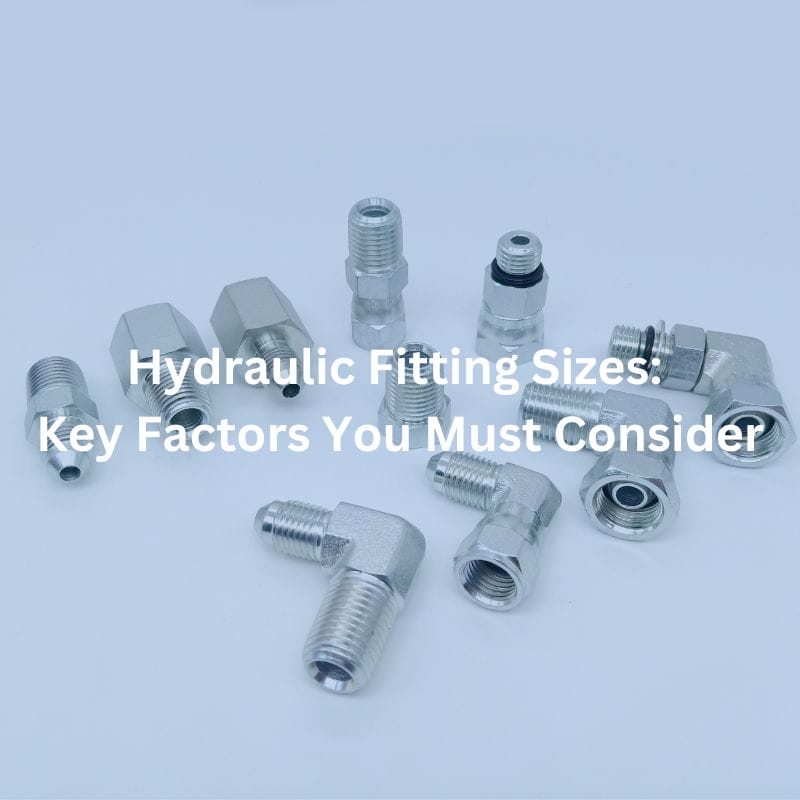
Hydraulic fittings come in various types, each serving a specific purpose. The choice of fitting depends on the system requirements and the type of connection needed. Below are some common types of hydraulic fittings:

Elbows: These fittings allow changes in the direction of the flow within the hydraulic system. They are typically available in 45-degree and 90-degree angles, making them essential for routing hoses and tubes in confined spaces.

Tees: Tees are used to distribute hydraulic fluid to multiple branches from a single source. They come in different configurations, such as equal and reducing tees, which determine the size of the outlets relative to the inlet.

Adapters: Adapters are versatile fittings that connect different types of fittings or convert one fitting type to another. They are crucial when integrating various components that may not have matching connection types or thread standards.

Couplers: Couplers enable quick and easy connection and disconnection of hydraulic lines. They are often used in applications where hoses need to be frequently connected and disconnected, such as in mobile equipment or machinery that requires regular maintenance.

The Importance of Correct Sizing

Why Proper Sizing is Critical

Ensuring the correct sizing of hydraulic fittings is fundamental for the optimal performance and safety of a hydraulic system. The consequences of incorrect sizing can be severe and multifaceted, affecting both the efficiency and reliability of the system. Here are the key reasons why proper sizing is critical:

Leaks

Incorrectly sized fittings can lead to gaps or improper sealing, which in turn result in leaks. Hydraulic systems rely on maintaining high-pressure fluid flows, and any leakage can compromise the system’s integrity. Leaks not only reduce the efficiency of the system but also pose environmental hazards and increase the risk of equipment damage and operator injury.

Pressure Drops

Using fittings that are too small for the intended flow can cause significant pressure drops within the system. Pressure drops lead to inefficient system operation, as the hydraulic components do not receive the necessary pressure to function correctly. This inefficiency can cause the system to work harder, leading to increased wear and energy consumption.

System Failures

Incorrect fitting sizes can result in system failures due to inadequate fitting strength or incompatibility with other components. For example, a fitting that cannot withstand the system’s operating pressure may burst or break under stress. In high-pressure applications, such failures can be catastrophic, causing extensive damage to equipment and posing serious safety risks to operators.

Standard Sizing Systems

Overview of Sizing Standards

Hydraulic fitting sizes are standardized to ensure compatibility, reliability, and ease of maintenance across different systems and applications. Standardized sizing allows for consistent performance and straightforward replacement or integration of components. Below are some of the most common sizing standards used in hydraulic systems:

SAE (Society of Automotive Engineers)

SAE fittings are widely used in North America, particularly in automotive and industrial applications. These fittings are designed according to the standards set by the SAE, ensuring they meet specific performance criteria. SAE fittings include straight threads with an O-ring or a 45-degree flare, which provides a reliable seal and robust connection under high pressure.

NPT (National Pipe Tapered)

NPT fittings are common in general plumbing and hydraulic systems, characterized by their tapered threads. The tapering ensures a tight, leak-free seal as the threads compress when tightened. NPT is widely used in the United States and Canada and is favored for its simplicity and effectiveness in low to moderate pressure applications.

BSP (British Standard Pipe)

BSP fittings are predominantly used in Europe and Asia. Similar to NPT, BSP fittings have tapered threads (BSPT) or parallel threads (BSPP). BSPT fittings create a seal through thread compression, while BSPP fittings typically require a sealing washer or O-ring to ensure a leak-free connection. Understanding the difference between BSPT and BSPP is crucial when working with hydraulic systems in regions that use these standards.

JIC (Joint Industry Council)

Hydraulic Fitting Sizes JIC thread

JIC fittings are known for their high-pressure capability, featuring a 37-degree flare seating surface. This design ensures a strong, leak-free connection, making JIC fittings ideal for high-pressure hydraulic applications. They are commonly used in various industries, including aerospace, agriculture, and construction, due to their reliability and ease of installation.

How to Measure Hydraulic Fittings

Accurately measuring hydraulic fittings is crucial for ensuring compatibility and preventing leaks and system failures. Here’s a detailed step-by-step guide on how to measure hydraulic fittings:

Step-by-Step Measurement Guide

Tools Required

Calipers: For measuring the outside and inside diameters accurately.

Thread Gauges: To determine the thread type and pitch.

Fitting Identification Chart: Helps in identifying the fitting type and ensuring it matches system requirements.

Measure Outside Diameter (OD)

Procedure: Place the calipers on the outer edge of the fitting and record the measurement. Ensure the calipers are perpendicular to the fitting to get an accurate reading.

Tip: Measure at several points around the circumference to ensure consistency and account for any imperfections or deformations.

Measure Inside Diameter (ID)

Procedure: Insert the calipers into the internal opening of the fitting and record the measurement. Again, make sure the calipers are perpendicular to the fitting.

Tip: Like with the OD, measure at multiple points to ensure accuracy, especially if the fitting shows signs of wear.

length measure Topa

Identify Thread Type and Pitch

Procedure: Use a thread gauge to determine the thread type and pitch. Thread gauges have multiple blades with different thread pitches; match the threads on the fitting to the corresponding gauge blade.

Thread Type: Check whether the threads are parallel or tapered. This can often be done visually or by referring to the fitting identification chart.

Pitch Measurement: For metric threads, measure the distance between threads in millimeters. For imperial threads, measure the number of threads per inch (TPI).

Tip: Ensure the gauge fits snugly into the threads without forcing it. This will give a more accurate pitch measurement.

Additional Considerations

Thread Angle: Some fittings, like JIC, have specific thread angles (e.g., 37 degrees). Verify the angle using the fitting identification chart or a protractor.

Seal Types: Identify if the fitting uses an O-ring, metal-to-metal seal, or other types of seals, as this can impact the fitting measurement and selection.

Common Measurement Mistakes

Incorrect Tool Usage: Ensure calipers and thread gauges are calibrated correctly and used as intended.

Misidentifying Threads: Some threads might look similar but have different standards (e.g., BSPT vs. NPT). Always double-check using the identification chart.

Ignoring Wear and Deformation: Old or damaged fittings may not provide accurate measurements. Consider replacing such fittings to ensure system integrity.

Visual Aids

Diagrams and images can significantly aid in understanding the measurement techniques. Consider using online resources or manuals that provide visual guidance on measuring hydraulic fittings.

Calculating Hydraulic Fitting Sizes

Calculating the correct sizes for hydraulic fittings and hoses is essential for the proper functioning of a hydraulic system. Here are some simple steps to guide you through this process:

Step 1: Determine the Hydraulic System's Working Pressure and Flow Rate

Understanding the working pressure and flow rate of your hydraulic system is fundamental to selecting the appropriate sizes for hoses and fittings. These parameters directly influence the performance, safety, and longevity of the system.

Working Pressure

The working pressure of a hydraulic system is the continuous operating pressure that the system must handle without failure. It is typically measured in pounds per square inch (PSI) or bars (1 bar = 14.5 PSI). Accurate knowledge of the working pressure is crucial because it determines the strength and durability requirements for the hoses and fittings.

Safety Margin: Always consider a safety margin when selecting hoses and fittings. The working pressure of the hose should be at least 25% higher than the system’s maximum operating pressure to ensure safety and longevity.

Flow Rate

The flow rate of the hydraulic system is the volume of hydraulic fluid that passes through a point in the system per unit of time, typically measured in gallons per minute (GPM) or liters per minute (LPM). The flow rate affects the velocity of the fluid within the hose, which in turn impacts system efficiency and heat generation.

System Efficiency: An appropriate flow rate ensures efficient operation of the hydraulic system. Too high a flow rate can cause excessive turbulence and pressure drops, leading to reduced system efficiency and potential damage.

Hose Sizing: The flow rate directly influences the size of the hose. Larger flow rates require hoses with larger inner diameters to minimize pressure loss and ensure smooth fluid movement.

Step 2: Select the Hose Inner Diameter

Choosing the correct inner diameter of the hose is critical for ensuring optimal performance and efficiency in your hydraulic system. The inner diameter of the hose must be appropriate for the system’s flow rate to prevent issues such as excessive flow velocity and pressure drop, which can negatively impact system efficiency and lead to premature wear or failure.

Importance of Proper Hose Sizing

Flow Velocity: The inner diameter of the hose affects the velocity of the hydraulic fluid. If the diameter is too small, the flow velocity will be too high, causing increased friction and heat, which can damage the hose and reduce system efficiency.

Pressure Drop: A smaller inner diameter results in higher pressure drops across the hose length, reducing the overall efficiency of the hydraulic system and requiring the pump to work harder to maintain the desired pressure level.

Empirical Formula for Calculating Hose Inner Diameter

To calculate the appropriate inner diameter of the hose, you can use the following empirical formula: Hose Inner Diameter (inches)=0.64×√Flow Rate (GPM)/4.25

Step 3: Select the Hose Outer Diameter

The outer diameter (OD) of the hose is a crucial dimension that depends on the inner diameter (ID) and the wall thickness of the hose. The wall thickness is critical as it determines the hose’s ability to withstand the working pressure of the hydraulic system. Choosing a hose with the appropriate wall thickness ensures safety, durability, and reliability.

Importance of Wall Thickness

Pressure Resistance: The wall thickness of the hose directly affects its ability to handle high pressures. A thicker wall provides better resistance to internal pressure, reducing the risk of hose failure.

Durability: Thicker walls offer enhanced durability, protecting the hose from external damages, such as abrasion, cuts, and impacts.

Flexibility: While thicker walls provide better pressure resistance and durability, they can also reduce the flexibility of the hose. It’s important to find a balance based on your specific application requirements.

Calculating the Outer Diameter

The outer diameter of the hose can be determined by adding twice the wall thickness to the inner diameter:

Hose Outer Diameter (OD)=Hose Inner Diameter (ID)+2×Wall Thickness

For example, if you have a hose with an inner diameter of 0.98 inches and a wall thickness of 0.15 inches:

Hose Outer Diameter=0.98 inches+2×0.15 inches

Hose Outer Diameter=0.98 inches+0.30 inches

Hose Outer Diameter=1.28 inches

Selecting the Appropriate Wall Thickness

Working Pressure: Choose a wall thickness that can withstand the system’s maximum working pressure with a suitable safety margin. Manufacturers provide pressure ratings for different hose sizes and wall thicknesses.

Burst Pressure: Consider the burst pressure, which is the maximum pressure the hose can handle before failure. The burst pressure is typically four times the working pressure. Ensure the wall thickness can handle this extreme condition.

Minimum Bend Radius: Thicker walls can increase the minimum bend radius of the hose. Ensure the selected hose can be bent as required for your application without kinking or damaging the hose.

Environmental Factors: Consider the operating environment. If the hose will be exposed to extreme temperatures, chemicals, or physical abrasion, select materials and wall thicknesses that provide adequate protection.


Conclusion

In this guide, we’ve explored the critical aspects of hydraulic fitting sizes, including their definitions, common types, the importance of correct sizing, standard sizing systems, measurement techniques, and calculations. Properly sizing hydraulic fittings is essential for preventing leaks, avoiding pressure drops, and ensuring the overall safety and efficiency of hydraulic systems. By understanding and applying these principles, you can optimize the performance and reliability of your hydraulic systems. Use the knowledge gained from this article to accurately measure, select, and install hydraulic fittings that meet your specific needs, ensuring long-term operational success and system integrity.

FAQ

What are hydraulic fitting sizes?

Hydraulic fitting sizes refer to the dimensions and thread types used to connect hoses, pipes, and tubes in a hydraulic system. Proper sizing ensures compatibility and prevents leaks.

Why is correct sizing important for hydraulic fittings?

Correct sizing is crucial to prevent leaks, avoid pressure drops, and ensure the system operates efficiently and safely. Incorrect sizes can lead to system failures and reduced performance.

What tools do I need to measure hydraulic fittings?

You need calipers to measure the diameters, a thread gauge to determine the thread pitch, and a fitting identification chart to verify the fitting type and compatibility.

What are the common standards for hydraulic fitting sizes?

Common standards include SAE (Society of Automotive Engineers), NPT (National Pipe Tapered), BSP (British Standard Pipe), and JIC (Joint Industry Council). Each standard has specific applications and regions of use.

How do I measure the size of a hydraulic fitting?

To measure a hydraulic fitting, use calipers to determine the outside diameter (OD) and inside diameter (ID). Use a thread gauge to identify the thread type and pitch.

How do I convert between metric and imperial fitting sizes?

To convert metric sizes to imperial, divide the measurement in millimeters by 25.4. To convert imperial sizes to metric, multiply the measurement in inches by 25.4.

Hydraulic Flange fitting size chart Topa

Hydraulic Flange Fitting Size Chart

Hydraulic Flange Fitting Size Chart: Your Ultimate Guide

Table of Contents

Introduction

Hydraulic flange fittings play a crucial role in ensuring leak-free and efficient hydraulic systems. Understanding the correct sizing of these fittings is essential for system performance and safety. This guide aims to provide a comprehensive resource on hydraulic flange fitting size charts, helping you make informed decisions for your hydraulic applications.

Understanding Hydraulic Flange Fittings

Hydraulic flange fittings are essential for connecting pipes, hoses, and tubes in hydraulic systems. They provide secure, leak-free connections that withstand high pressures. Here are the primary types:

NPT/NPTF (National Tapered Pipe/Fuel)

SAE Code 61: Used for standard pressure applications, typically up to 3000 psi.

SAE Code 62: Designed for high-pressure applications, handling pressures up to 6000 psi.

ISO 6162: An international standard covering both Code 61 and Code 62 flange fittings, ensuring global compatibility and consistency.

These fittings are widely used across various industries, including automotive, aerospace, and manufacturing, due to their reliability and robustness.

SAE Code 61: These fittings are ideal for lower to medium-pressure hydraulic systems. They have a robust design that ensures a strong, leak-free connection. Common applications include mobile equipment, agricultural machinery, and industrial hydraulic systems.

SAE Code 62: These fittings are designed for high-pressure applications, making them suitable for more demanding hydraulic systems. They are used in heavy machinery, construction equipment, and high-pressure industrial applications. Their ability to withstand higher pressures makes them indispensable in situations where system integrity and safety are critical.

ISO 6162: This standard encompasses both SAE Code 61 and Code 62 fittings, providing a unified specification that ensures compatibility across different regions and manufacturers. ISO 6162 fittings are versatile and widely accepted in international markets, facilitating global trade and system standardization.

Importance of Accurate Sizing

Selecting the correct size for hydraulic flange fittings is crucial to maintaining system integrity and efficiency. Incorrect sizing can lead to leaks, system failures, and significant safety hazards. Ensuring the right size offers several key benefits:

Optimal System Performance: Properly sized fittings maintain the desired pressure levels and fluid flow, enhancing overall system efficiency.

Extended Lifespan: Correct sizing minimizes wear and tear on components, reducing the need for frequent replacements and maintenance.

Enhanced Safety and Reliability: Accurate sizing prevents leaks and bursts, ensuring a safer working environment and reliable system operation.

Preventing System Failures

Incorrectly sized hydraulic flange fittings can compromise the entire hydraulic system. When the fitting is too small, it restricts fluid flow, leading to increased pressure and potential system overload. Conversely, an oversized fitting may cause connections to be loose, resulting in leaks. Both scenarios can cause significant operational disruptions and costly repairs.

Safety Hazards

Safety is paramount in any hydraulic system. Leaks resulting from improperly sized fittings can lead to hazardous working conditions, including the risk of hydraulic fluid exposure and potential fire hazards. Ensuring that fittings are correctly sized mitigates these risks, providing a safer environment for operators and technicians.

Tips for Ensuring Accurate Sizing

Measure Precisely: Use accurate tools like calipers to measure the diameter, bolt circle diameter, and other critical dimensions of your fittings.

Consult Size Charts: Refer to detailed hydraulic flange fitting size charts to match your measurements with the correct fitting size.

Consider Application Requirements: Ensure the fitting size matches the specific needs of your application, including pressure and flow requirements.

Verify Standards Compliance: Ensure the fittings adhere to industry standards such as SAE or ISO to guarantee compatibility and performance.

Components of a Hydraulic Flange Hose Fitting Size Chart

Flange fitting size chart Topa

A hydraulic flange hose fitting size chart is essential for ensuring the correct selection and compatibility of fittings in hydraulic systems. Here’s a detailed breakdown of the key components identified from the provided image:

Part Number:

A unique identifier for each fitting type facilitates precise selection and ordering.

Flange Size:

The nominal size of the flange, typically measured in inches, indicates the fitting’s general size category.

Hose I.D. (Inner Diameter):

The internal diameter of the hose is crucial for ensuring the hose fits properly with the fitting and maintains optimal flow capacity.

Dimensions:

Length:

The overall length of the fitting from end to end, is measured in both inches and millimeters. This measurement is crucial for determining the fitting’s reach and ensuring it fits within the system’s spatial constraints.

Flange Diameter:

The diameter of the flange face is critical for matching the fitting to the system’s flange specifications. This ensures a proper seal and secure connection.

Bolt Circle Diameter:

The distance between the centers of the bolt holes is essential for aligning the flange fitting correctly and securing it tightly to prevent leaks and maintain system integrity.

Additional Material Options:

Information indicating the availability of fittings in different materials, such as stainless steel, is important for applications requiring specific material properties for durability, corrosion resistance, and compatibility with various hydraulic fluids.

Measurement Steps

Follow these steps to measure each dimension of the hydraulic flange fitting:

Measuring Hose End Inner Diameter (Hose I.D.)

Prepare the Hose: Lay the hose flat, ensuring it is not compressed or deformed.

Measure with a Caliper: Use a vernier caliper to measure the inner diameter of the hose. Open the caliper’s jaws and insert them inside the hose. Ensure the caliper’s jaws are touching the inner walls of the hose.

Record the Measurement: Note down the measurement for future reference.

Measuring Length

Position the Flange Fitting: Place the flange fitting flat on a level surface, making sure it is fully extended.

Use a Measuring Tape or Ruler: Measure the total length of the flange fitting from one end to the other using a measuring tape or a steel ruler.

Record the Measurement: Write down the measured length accurately.

Measuring Flange Diameter

Position the Flange: Place the flange flat on a level surface.

Measure with a Caliper or Ruler: Use a vernier caliper or a steel ruler to measure the outer diameter of the flange at its widest point.

Record the Measurement: Note down the flange diameter measurement.

Measuring Bolt Circle Diameter

Position the Flange: Lay the flange flat on a level surface.

Identify Bolt Holes: Locate two opposite bolt holes on the flange.

Measure with a Measuring Tape: Use a measuring tape to measure the distance between the center points of the two opposite bolt holes.

Record the Measurement: Write down the bolt circle diameter measurement.

Practical Tips for Choosing the Right Flange Fitting

Consider Pressure Rating

Maximum Pressure

When selecting a hydraulic flange fitting, it is critical to ensure that the fitting can handle the highest pressure your system will encounter. This involves understanding the system’s maximum operating pressure and comparing it to the pressure rating of the fitting. Using a fitting that cannot withstand the required pressure can result in leaks or catastrophic failures, posing serious safety risks and potentially causing extensive damage to the system.

System Fluctuations

Hydraulic systems often experience pressure spikes and fluctuations. It is essential to account for these variations by choosing a fitting with a safety margin above the regular operating pressure. This buffer helps accommodate unexpected surges and ensures that the fitting remains secure and functional under varying pressure conditions. Selecting a fitting with a higher pressure rating than the maximum operating pressure provides an additional layer of safety and reliability, helping to prevent failures and maintain system integrity.

Detailed Considerations

Pressure Rating Labels:

Always check the manufacturer’s specifications for the pressure rating, typically labeled in psi (pounds per square inch) or bar. These ratings indicate the maximum pressure the fitting can safely withstand.

Safety Margins:

Implement a safety margin of at least 1.5 to 2 times the system’s normal operating pressure. For instance, if your system operates at 3000 psi, consider fittings rated for at least 4500 to 6000 psi.

Pressure Testing:

Regularly test your system under controlled conditions to ensure that fittings perform well within the expected pressure ranges. Periodic testing can help identify potential weaknesses before they lead to failures.

Material Compatibility

Hydraulic Fluid

When choosing fittings, ensure they are made from materials compatible with the specific type of hydraulic fluid used in your system. Different fluids can react differently with various metals. For example, some hydraulic fluids may be corrosive to aluminum but not to stainless steel. Compatibility is crucial to prevent chemical reactions that can lead to corrosion, degradation, and system failure.

Operating Environment

Consider environmental factors such as temperature, exposure to chemicals, and humidity. Material selection should account for these conditions:

Stainless Steel: Ideal for corrosive environments and high-humidity areas due to its excellent resistance to rust and chemical reactions.

Carbon Steel: Suitable for less demanding conditions where corrosion resistance is not as critical. It is often used in standard industrial applications.

Brass or Bronze: Can be used in situations where metal flexibility and corrosion resistance to specific chemicals are needed.

Installation Practices

Proper installation of hydraulic flange fittings is essential to ensure a secure and leak-free connection. Here are some best practices to follow:

Alignment

Proper Alignment: Ensure that fittings are properly aligned during installation. Misalignment can cause undue stress on the fittings and lead to potential leaks or system failures. Use alignment tools if necessary to maintain precision.

Torque Specifications

Manufacturer’s Specifications: Always adhere to the torque specifications provided by the manufacturer. Over-tightening bolts can damage fittings and threads, while under-tightening can result in insufficient sealing and leaks. Use a calibrated torque wrench to achieve the correct torque.

Even Tightening

Crisscross Pattern: Tighten bolts in a crisscross pattern to ensure even pressure distribution across the flange. This method prevents warping or uneven sealing, which can compromise the integrity of the connection. Start by tightening bolts to a fraction of the final torque, then gradually increase to the full torque in multiple passes.

Detailed Considerations

Pre-Installation Checks:

Inspect all components for damage or defects before installation.

Ensure that all surfaces are clean and free of debris to prevent contamination and ensure a proper seal.

Use of Lubricants:

Apply appropriate lubricants to bolts and threads to achieve accurate torque readings and prevent galling (seizing or sticking of metal parts).

Post-Installation Inspection:

After installation, conduct a thorough inspection to verify the correct alignment and torque. Check for any signs of leaks or misalignment and rectify them immediately.

Additional Tips

Temperature Ratings

Operating Temperatures: Ensure that the fitting material can withstand the operating temperatures of your system without degrading or losing integrity. Different materials have varying levels of temperature resistance, so select accordingly.

Maintenance and Inspection

Regular Inspections: Routinely check your fittings for signs of wear, corrosion, or damage. Early detection of issues can prevent minor problems from escalating into major failures.

Timely Maintenance: Replace worn or damaged fittings promptly to maintain the system’s performance and safety. Regular maintenance helps in extending the lifespan of the hydraulic components and ensures consistent operation.

Conclusion

In this guide, we have explored the critical aspects of hydraulic flange hose fittings, including the importance of accurate sizing, understanding key components of the size chart, adhering to common standards and specifications, practical tips for selecting the right fittings, and best practices for installation and maintenance. Apply the knowledge gained from this guide to select and maintain your hydraulic fittings effectively, enhancing your hydraulic system’s longevity and functionality.

FAQ

What are hydraulic hose flanges?

Hydraulic hose flanges are fittings used to connect hoses in hydraulic systems, ensuring a secure and leak-free connection capable of withstanding high pressures.

How do I measure a hydraulic flange?

Use calipers or a measuring tape to measure the flange diameter, bolt circle diameter (BCD), bolt size, and port size.

What is the difference between SAE Code 61 and Code 62?

SAE Code 61 is for medium-pressure applications, while Code 62 is for high-pressure applications.

What materials are hydraulic flanges made from?

Common materials include stainless steel, carbon steel, and alloy steel, chosen based on compatibility with hydraulic fluids and environmental conditions.

Why is proper alignment important during installation?

Proper alignment prevents undue stress and potential leaks, ensuring a secure and efficient connection.

How often should I inspect my hydraulic flange fittings?

Regular inspections should be conducted to check for signs of wear, corrosion, or damage, ideally during routine maintenance schedules.

More Posts

Metric Hydraulic Fitting Identification Topa

Metric Hydraulic Fitting Identification

Metric Hydraulic Fitting Identification: Step-by-Step Guide

Table of Contents

Introduction

Metric hydraulic fittings are widely used due to their standardized measurements and compatibility with international systems. Accurate identification of these fittings is essential to maintain system integrity and avoid costly downtime. This guide aims to provide a comprehensive, step-by-step process for identifying metric hydraulic fittings, ensuring that you can accurately match and replace fittings in your hydraulic systems.

Understanding Metric Hydraulic Fittings

Metric hydraulic fittings are connectors designed to join sections of hydraulic hose, pipe, and tubing in a hydraulic system. These fittings are measured using the metric system, which is based on millimeters. They play a vital role in maintaining the flow of hydraulic fluid, thereby ensuring the proper operation of machinery.

Types of Metric Hydraulic Fittings

DIN 24° Fittings

DIN 24° fittings feature a 24-degree cone seat and are a staple in European hydraulic systems. They come in both light (L) and heavy (S) series, differentiated by wall thickness and pressure capacity, ensuring a reliable metal-to-metal seal for high-pressure application

Metric Standpipe Fittings

Metric standpipe fittings are straight connectors typically used for joining two hydraulic hoses or a hose to a machine component. They are essential in systems requiring a straightforward, high-integrity connection, especially in heavy machinery and industrial applications.

Metric Flange Fittings

Metric flange fittings connect hydraulic hoses and pipes using a flange system that bolts directly to components. They are employed in high-pressure environments where a secure, rigid connection is necessary, often in industrial and mobile hydraulic systems.

Compression Fittings

Compression fittings use a ferrule to compress the pipe as the fitting is tightened, ensuring a leak-proof connection. These fittings are used in hydraulic systems where reliable, easy-to-install connections are required, often in instrumentation and low to medium-pressure applications.

Parallel Threads

Maintain a constant diameter along the thread length. They typically require an additional sealing method, such as an O-ring or bonded seal, to ensure a leak-proof connection.

Tapered Threads

Decrease in diameter along the thread length, creating a seal through thread deformation. These threads can provide a reliable seal without additional sealing components.

Step-by-Step Identification Process

Determine the Metric Thread Type

Topa metric fitting

Identifying the thread type is the first and most crucial step in the identification process. Understanding whether the thread is parallel or tapered helps determine the appropriate sealing method and fitting compatibility. Here’s a detailed guide to determine the metric thread type:

Visual Inspection

Parallel Threads:

  • Description: Parallel threads maintain a consistent diameter along their entire length. When you measure the diameter at different points along the thread, it should remain the same.
  • Identification: Visually inspect the threads to see if they appear straight and uniform without tapering. These threads typically rely on an additional sealing mechanism, such as an O-ring, to ensure a leak-free connection.

Tapered Threads:

  • Description: Tapered threads gradually decrease in diameter from the base to the tip. This tapering helps create a tight seal as the threads are screwed together.
  • Identification: Observe the threads to check if they taper. Measure the diameter at several points along the length to confirm the tapering effect. The reduction in diameter is a clear indicator of tapered threads.

Use of Thread Gauges

Parallel Threads:

  • Fit: When using a thread gauge on parallel threads, the gauge should fit uniformly without any gaps along the length of the thread.
  • Procedure: Select the appropriate gauge for the estimated pitch and insert it into the threads. If the gauge fits snugly and evenly, it confirms the presence of parallel threads.

Tapered Threads:

  • Fit: For tapered threads, the thread gauge will fit tightly at one end and loosely at the other, reflecting the gradual decrease in diameter.
  • Procedure: Choose a thread gauge corresponding to the estimated pitch and insert it into the threads. If the gauge fits tightly at the start and becomes looser as it moves along the thread, this indicates a tapered thread.
hydraulic fittings measure tools Topa

Measurement with Calipers

  • Step-by-Step: Use a caliper to measure the thread’s outside diameter. Ensure the caliper is perpendicular to the thread axis to obtain an accurate reading.
  • Multiple Points: Measure the diameter at several points along the thread to determine if the diameter remains constant or changes.

Parallel Threads:

  • Consistency: Measure the diameter at different points along the thread. If the measurements are consistent, the threads are parallel.
  • Verification: Consistent measurements indicate the thread is parallel, confirming the absence of tapering.

Tapered Threads:

  • Decrease: Measure the diameter at multiple points along the thread. A noticeable decrease in diameter confirms the presence of tapered threads.
  • Verification: The decreasing measurements at different points along the thread indicate it is tapered, confirming the tapering effect.

Thread Form and Pitch

Metric Thread Pitch:

  • Measurement: Use a pitch gauge to measure the distance between threads. Insert the pitch gauge into the threads to determine the correct pitch.
  • Common Pitches: Common metric thread pitches include 1.0mm, 1.5mm, and 2.0mm. Ensure the pitch gauge fits snugly into the threads without any gaps.

Identifying the Form:

  • Thread Profile: Examine the thread profile and angle. Metric threads typically have a 60-degree thread angle, which is standard across various types.
  • Visual and Measurement: Use both visual inspection and measurement tools to identify the thread form. Ensure the threads match the 60-degree angle typically associated with metric threads.

Measure the Thread Diameter

Accurate measurement of the thread diameter is essential for correct fitting identification. Here’s a detailed guide to measuring the thread diameter using calipers:

Preparation

Clean the Threads:

  • Importance: Ensure that the threads are clean and free of debris or damage. Dirt or damage can distort measurements, leading to incorrect identification.
  • Method: Use a brush or cloth to clean the threads thoroughly, removing any dirt, grease, or residue.

Select the Correct Calipers:

  • Type: Use digital or vernier calipers for precise measurements. Digital calipers provide easy-to-read results, while vernier calipers offer high accuracy with a manual scale.
  • Calibration: Ensure that the calipers are calibrated correctly before use to guarantee accurate measurements.

Positioning the Calipers

Perpendicular Alignment:

  • Importance: Position the calipers perpendicularly to the axis of the thread. This ensures that the measurement is taken at the correct angle and not skewed.
  • Technique: Hold the calipers steady and make sure they are aligned straight across the thread peaks (crests).

Correct Placement:

  • Placement: Place the caliper jaws on the outermost points of the thread peaks (the crests). Avoid placing the calipers on the thread roots (the valleys), as this will give an incorrect diameter reading.
  • Precision: Make sure the calipers are centered and not off to one side, which could affect the measurement accuracy.
measure metric hydraulic fitting

Taking the Measurement

Initial Measurement:

  • Procedure: Gently close the caliper jaws around the thread crests. Ensure that the calipers are not applying too much pressure, as this can compress the threads and give a false reading.
  • Care: Close the calipers slowly to avoid damaging the threads or the caliper itself.

Reading the Calipers:

  • Digital Calipers: Read the measurements displayed on the digital calipers. The digital readout will provide a precise and immediate measurement.
  • Vernier Calipers: If using vernier calipers, read the scale accurately. Align the vernier scale with the main scale to determine the precise measurement.

Double-Checking for Accuracy

Multiple Measurements:

  • Consistency: Take multiple measurements at different points along the thread length to ensure consistency. This helps to confirm that the thread diameter is uniform and the measurement is accurate.
  • Technique: Measure at the start, middle, and end of the threaded section to detect any variations.

Cross-Verification:

  • Reference Charts: Compare the measured diameter with standard thread diameter charts to verify accuracy. This step is crucial to ensure that the measured value matches standard dimensions for the specific thread type.
  • Confirmation: Use reputable sources or manufacturer specifications to cross-check the measurements.

Common Pitfalls to Avoid

Measuring at an Angle:

  • Error: Ensure that the calipers are not tilted or angled when taking the measurement. An angled measurement will give a larger or smaller diameter than the actual value.
  • Solution: Double-check the alignment of the calipers and adjust as needed to ensure they are perpendicular to the thread axis.

Damaged Threads:

  • Caution: Be cautious when measuring worn or damaged threads. In such cases, it may be necessary to take an average of multiple measurements or refer to original specifications if available.
  • Technique: Measure in several places and use the most consistent readings, or consult the fitting’s original design specifications for accurate dimensions.

Identify the Thread Pitch

Identifying the thread pitch is a critical step in the process of metric hydraulic fitting identification. The thread pitch is the distance between threads, measured in millimeters for metric threads. Here’s a detailed guide to accurately determine the thread pitch using thread gauges:

Using the Thread Gauge

Insert the Gauge:

  • Selection: Begin by selecting a thread gauge that you estimate to be close to the pitch of the thread you are measuring. This initial selection can be based on visual estimation or experience.
  • Insertion: Carefully insert the gauge into the threads of the fitting, ensuring it aligns with the thread grooves.

Check for Fit:

  • Snug Fit: Ensure the gauge fits snugly into the threads without any gaps. A proper fit means that the gauge’s teeth should align perfectly with the tread grooves.
  • Visual Inspection: Visually inspect to confirm that the gauge sits neatly in the thread grooves without any visible gaps or misalignment.
ring gauge Topa

Identifying the Correct Pitch

Trial and Error:

  • Multiple Gauges: If the first gauge does not fit correctly, try gauges with different pitches until you find one that fits snugly. This process may require several attempts with different sizes.
  • Adjustment: Slight adjustments and multiple trials help ensure the most accurate match.

Snug Fit:

  • Alignment: The correct gauge will sit neatly in the thread grooves without any play or misalignment. This indicates that the pitch of the gauge matches the pitch of the threads.
  • Verification: Confirm that the gauge fits securely along the entire length of the thread.

Verify Fit:

  • Rotation: Double-check the fit by slightly rotating the gauge in the threads. If it continues to fit snugly without slipping or binding, you have identified the correct pitch.
  • Consistency: Ensure the gauge remains aligned and fits securely through minor adjustments.

Common Metric Thread Pitches

Examples:

Common metric thread pitches include 0.5mm, 0.75mm, 1.0mm, 1.5mm, and 2.0mm. For hydraulic fittings, pitches like 1.0mm, 1.5mm, and 2.0mm are frequently encountered.

Standard Sizes:

Use reference charts to cross-check the pitch size. These charts list standard thread pitches for various fitting types and sizes, helping confirm your measurements.

Documentation

Record the Measurement:

  • Documentation: Once the correct thread pitch is identified, note it down along with the previously measured thread diameter. This documentation is crucial for cross-referencing and ensuring the accuracy of the fitting identification.
  • Accuracy: Proper documentation helps in future reference and verification, ensuring that the fitting type is accurately identified.

Common Challenges and Solutions

Incorrect Measurements

To avoid incorrect measurements, always use calibrated tools and measure multiple times. Calibrated tools ensure precision, and multiple measurements at different points along the thread help confirm consistency. Ensure the tools are properly positioned; the calipers should be perpendicular to the thread axis and placed correctly on the thread crests. Additionally, the fitting must be clean and undamaged, as dirt or deformations can lead to inaccurate readings. By maintaining clean threads and using precise, calibrated instruments, you can significantly reduce the risk of measurement errors.

Identifying Worn or Damaged Threads

Worn or damaged threads can complicate the identification process, as they may not match standard profiles. To address this, use thread repair tools to restore the thread profile to its original shape. These tools can help smooth out deformities and make the threads easier to measure accurately. If thread repair is not feasible, refer to the original equipment specifications or documentation to find the correct thread size and type. This approach ensures that even if the threads are damaged, you can still identify the fitting accurately by cross-referencing with the original specifications.

Distinguishing Similar Thread Types

Accurately identifying metric hydraulic fittings is essential for maintaining the efficiency and reliability of hydraulic systems. By following this step-by-step guide and utilizing the appropriate tools and reference materials, you can ensure precise fitting identification and avoid potential system failures. Use the steps and resources provided to enhance your maintenance practices and keep your hydraulic systems running smoothly.

If you need any kind of metric hydraulic fittings, please contact Topa and we will arrange it for you as soon as possible!

FAQ

What tools are essential for identifying metric hydraulic fittings?

Essential tools include calipers, thread gauges, a magnifying glass, and reference charts. Ensure all tools are calibrated and specifically designed for metric threads.

How can I distinguish between parallel and tapered threads?

Measure the thread diameter at multiple points along its length. Parallel threads maintain a consistent diameter, while tapered threads show a decrease in diameter from base to tip.

What should I do if the threads are worn or damaged?

Use thread repair tools to restore the thread profile. If repair is not possible, refer to the original equipment specifications to determine the correct thread size and type.

How do I accurately measure the thread pitch?

Clean the threads and use a thread gauge set with various pitch sizes. Insert the gauge into the threads and ensure it fits snugly without gaps. Double-check the fit by rotating the gauge slightly.

What are common metric thread pitches used in hydraulic fittings?

Common metric thread pitches include 0.5mm, 0.75mm, 1.0mm, 1.5mm, and 2.0mm. For hydraulic fittings, 1.0mm, 1.5mm, and 2.0mm pitches are frequently encountered.

How can I differentiate between similar metric thread types?

Utilize detailed reference charts to compare measurements. Seek expert advice or consult manufacturer documentation if needed to ensure accuracy. This helps distinguish closely related thread types accurately.

More Posts

Hydraulic Fitting Identification Everything You Need to Know

Hydraulic Fitting Identification

Hydraulic Fitting Identification: The Detail Guide

Table of Contents

Introduction

Proper identification of hydraulic fittings is crucial for ensuring the safety, efficiency, and longevity of hydraulic systems. Accurate identification helps prevent leaks, minimizes downtime, and reduces maintenance costs. Understanding the different types of hydraulic fittings and their specifications can be challenging, but it’s essential for maintaining system integrity and performance. In this post, we’ll explore the importance of correct hydraulic fitting identification and provide a comprehensive guide to help you identify threads, hose ends, and connectors accurately.

Identifying Hydraulic Threads

Identifying hydraulic threads correctly is vital to ensure compatibility and prevent leaks. Mismatched threads can lead to system failures, posing safety risks and incurring significant costs. Proper thread identification helps maintain the efficiency and reliability of hydraulic systems. Threads are the critical points where hydraulic components connect, and any inconsistency or inaccuracy in matching these threads can result in significant operational issues. For example, a mismatched thread may not form a proper seal, leading to fluid leaks that compromise system performance and safety. Moreover, using the wrong thread type can cause mechanical stress on components, leading to premature wear and tear or catastrophic failure.

Common Thread Standards

NPT: Tapered threads commonly used in North America. Identified by their conical shape and the fact that they seal by metal-to-metal wedging. NPT threads are specified by the American National Standard Pipe Thread standards and are widely used in the oil and gas industry, as well as in general industrial applications.

BSP: Includes BSPT (tapered) and BSPP (parallel) threads, commonly used in Europe and Asia. BSPT threads taper like NPT but are not interchangeable due to different thread angles and pitches. BSPP threads are parallel and rely on an O-ring or washer for sealing, making them distinct from the self-sealing NPT threads.

Metric: Straight threads measured in millimeters, prevalent in international applications. Metric threads follow the ISO standards and are commonly used in machinery and automotive industries worldwide. The thread profile is typically a 60° V-thread, which differentiates it from other thread types like BSP and NPT.

Step-by-Step Guide to Identifying Thread Types

Identifying hydraulic thread types accurately is essential for maintaining the integrity and efficiency of hydraulic systems. Here’s a detailed step-by-step guide to help you identify thread types correctly:

Visual Inspection

Begin with a thorough visual inspection to identify the general type of thread. Look for distinguishing features such as thread angle, pitch, and profile. Note whether the threads are tapered or straight:

Tapered Threads: These threads gradually decrease in diameter along their length. Examples include NPT (National Pipe Tapered) and BSPT (British Standard Pipe Tapered).

Straight Threads: These threads maintain a consistent diameter along their length. Examples include BSPP (British Standard Pipe Parallel) and metric threads.

During the visual inspection, pay attention to the thread’s appearance. Tapered threads will appear to have a conical shape, while straight threads will look cylindrical. Additionally, note the thread count (number of threads per inch or per millimeter), which can help identify the thread pitch.

hydraulic fittings measure tools Topa

Tools Needed

For precise measurements, you will need the following tools:

Calipers: Used to measure the outer diameter (OD) of male threads or the inner diameter (ID) of female threads. Digital calipers provide accurate readings and are easy to use.

Thread Pitch Gauge: Used to measure the distance between threads (pitch). A thread pitch gauge has multiple blades with different pitch measurements; matching the thread to the correct blade determines the pitch.

Measuring Thread Size

Accurate measurement of thread size is crucial for correctly identifying and matching hydraulic threads. This process involves precise measurements of both the outer diameter (OD) and the thread pitch. Here’s a detailed guide on how to measure these critical dimensions effectively:

Outer Diameter (OD)

The outer diameter measurement varies slightly depending on whether you are measuring male or female threads:

For Male Threads:

  • Positioning the Calipers: Open the calipers and place the tips on the outermost part of the male threads. Ensure the calipers are perpendicular to the thread axis to avoid skewed readings.
  • Reading the Measurement: Close the calipers gently around the threads without compressing them, and note the measurement displayed on the caliper’s scale or digital readout. This measurement represents the OD of the male thread.
  • Repeating the Measurement: For accuracy, take several measurements at different points around the thread circumference. Threads can sometimes be slightly deformed or worn, so multiple readings can help ensure precision.

For Female Threads:

  • Positioning the Calipers: Open the calipers and place the tips inside the female threads. Ensure that the calipers’ arms are aligned straight within the threads.
  • Reading the Measurement: Expand the calipers until the tips touch the inner walls of the threads. Note the measurement displayed, which represents the inner diameter (ID) of the female thread.
  • Repeating the Measurement: Just like with male threads, take multiple readings at various points around the thread’s inner circumference to ensure an accurate measurement.
Elimination Process When measure Hydraulic Hose Fittings

Thread Pitch

Measuring the thread pitch accurately requires using a thread pitch gauge. This tool is designed to match the distance between threads, providing a precise pitch measurement:

  • Selecting the Appropriate Blade: A thread pitch gauge typically consists of multiple blades, each marked with a different pitch value. Select a blade that roughly matches the spacing of the threads you are measuring.
  • Fitting the Blade into the Threads: Carefully insert the selected blade into the threads. The blade should fit snugly without any gaps or overhangs. If it doesn’t fit perfectly, try a different blade with a slightly different pitch.
  • Ensuring a Snug Fit: The correct blade will align perfectly with the threads, matching the crests and roots of the thread profile. Ensure there are no gaps between the blade and the thread.
  • Reading the Measurement: Once you have identified the correct blade, note the pitch value marked on it. This value represents the pitch of the thread, measured in threads per inch (TPI) for imperial threads or millimeters for metric threads.

Identifying Thread Standards

Once you have obtained the outer diameter (OD) and thread pitch measurements, the next step is to identify the thread standard. This involves comparing your measurements against established standards for various thread types.

NPT (National Pipe Tapered)

NPT threads are tapered threads commonly used in North America, known for their ability to form a tight seal by metal-to-metal wedging. The American National Standard Pipe Thread standards specify these threads.

Identification:

Measure the OD and Pitch: Use calipers and a thread pitch gauge to measure the pitch. NPT threads typically have a tapered design with a 1° 47′ taper angle.

Compare with NPT Standards: Refer to NPT thread charts to match your measurements. NPT threads seal by wedging the male and female threads together, which makes them suitable for high-pressure applications.

Example:

1/2″ NPT Thread:

OD: Approximately 0.84 inches.

Pitch: 14 threads per inch (TPI).

The conical shape of the threads helps create a leak-proof seal when torqued together.

BSP (British Standard Pipe)

BSP threads are widely used in Europe and Asia. They come in two main types: BSPT (British Standard Pipe Tapered) and BSPP (British Standard Pipe Parallel). BSPT threads have a tapered profile, while BSPP threads are parallel.

Identification:

Measure the OD and Pitch: Use calipers to measure the OD and a thread pitch gauge for the pitch. BSP threads typically have a 55° thread angle.

Compare with BSP Standards: Use BSP thread charts to match your measurements. Note the difference between BSPT and BSPP threads:

BSPT: Tapered threads that seal similarly to NPT but have different specifications.

BSPP: Parallel threads that usually require an O-ring or washer to form a seal.

Example:

1/2″ BSPP Thread:

OD: Approximately 0.825 inches.

Pitch: 14 threads per inch (TPI).

BSPP threads require additional sealing components such as O-rings to prevent leaks.


Topa metric hydraulic fitting various threads

Metric Threads

Metric threads are used globally and are measured in millimeters. They follow the International Organization for Standardization (ISO) standards. These threads have a 60° thread angle and are identified by their diameter and pitch.

Identification:

Measure the OD and Pitch: Use calipers to measure the OD and a thread pitch gauge for the pitch. Metric threads have a straight profile.

Compare with Metric Thread Charts: Refer to ISO metric thread charts to match your measurements. Metric threads are specified by both their diameter and pitch, which are both measured in millimeters.

Example:

M12 x 1.5 Metric Thread:

OD: 12 millimeters.

Pitch: 1.5 millimeters.

The consistent and precise measurements of metric threads make them suitable for a wide range of industrial applications.

Identifying Hose Ends and Fittings

Accurate identification of hose ends and fittings is critical to ensure proper assembly and maintenance of your hydraulic system. The following is a detailed guide to help you identify the different hose end types, fittings, and adapters.

Reusable Hose Ends

Reusable hose ends are designed with a threaded connection that allows them to be easily attached and detached from the hose. These ends feature visible threads and fittings that can be unscrewed. The fittings typically have a robust, metallic appearance, often with a hexagonal nut for tightening and loosening.

Construction:

  • Reusable hose ends usually consist of two or more removable parts. The primary parts include the socket, nipple, and securing nut.
  • The hose end screws onto the hose, with the nipple fitting inside the hose and the socket fitting over the outside. The nut is then tightened to secure the connection.
  • These components are often made from durable materials like steel or brass to withstand repeated assembly and disassembly.

Identification Tips:

  • Threads: Look for the presence of external threads on the fitting. The threaded design allows for the hose end to be screwed onto the hose and then secured with a nut.
  • Multi-Part Construction: Check if the hose end can be unscrewed and separated into multiple parts. This is a clear indicator of a reusable hose end.
  • Detachable Parts: Identify any fittings that can be detached from the hose without the need for specialized equipment. The ability to disassemble and reassemble the hose end is a hallmark of reusable hose ends.

Crimped Hose Ends

Crimped hose ends are permanently attached to the hose, creating a seamless and uniform appearance. Unlike reusable hose ends, crimped ends do not have visible threads. The crimped area appears smooth and compressed, often with a series of evenly spaced crimps or indentations where the metal sleeve has been compressed around the hose.

Construction:

  • These hose ends are attached using a crimping machine, which compresses a metal sleeve around the hose to form a permanent bond. The crimping process deforms the metal sleeve to tightly grip the hose, ensuring a leak-proof connection.
  • The components of crimped hose ends typically include a metal ferrule or sleeve and a hose barb or fitting inside the hose. Once crimped, the hose and fitting become a single, inseparable unit.

Identification Tips:

  • Seamless Appearance: Look for hose ends that appear to be a continuous part of the hose itself, with no detachable parts. The crimped connection will have a uniform, streamlined appearance.
  • Compressed Sleeve: Identify the presence of a metal sleeve that has been compressed around the hose. This sleeve will often have a smooth, consistent appearance with visible indentations from the crimping process.
30° male and Female BSP Fittings Topa

Male vs Female Connectors

Male Connectors:

  • Visual Characteristics: Male connectors have external threads that are designed to be screwed into female connectors. They appear protruding from the end of the fitting.
  • Identification Tips: Look for external threads on the connector. Male connectors will have a protruding threaded part that fits into the corresponding female connector.

Female Connectors:

  • Visual Characteristics: Female connectors have internal threads designed to receive male connectors. They appear recessed within the fitting.
  • Identification Tips: Look for internal threads inside the connector. Female connectors will have a cavity with threads on the inside to accept the male connector.

Swivel vs Non-Swivel Connectors

Swivel Connectors:

  • Visual Characteristics: Swivel connectors have a joint that allows the connected hose or fitting to rotate. They typically have a rotating collar or a visible joint.
  • Identification Tips: Look for a collar or a section that can rotate independently of the main body of the connector. Swivel connectors often have a more complex appearance due to the moving parts.

Non-Swivel Connectors:

  • Visual Characteristics: Non-swivel connectors are fixed and do not allow rotational movement. They have a solid, uniform construction without any moving parts.
  • Identification Tips: Look for a straightforward design with no rotating elements. Non-swivel connectors appear more rigid and less complex compared to swivel connectors.

Conclusion

Correct hydraulic fitting identification is essential for maintaining the safety and efficiency of hydraulic systems. By following the steps outlined in this guide, you can accurately identify threads, hose ends, and connectors, ensuring compatibility and preventing costly errors. Remember to use the appropriate tools and refer to thread standards for precise measurements. Proper identification not only enhances system performance but also contributes to overall operational safety. For ongoing learning, utilize the resources provided and stay updated with industry standards and practices.

FAQ

To determine the type of thread on your hydraulic fitting, start with a visual inspection to identify distinguishing features such as thread angle, pitch, and profile. Use calipers to measure the outer diameter (OD) of male threads or the inner diameter (ID) of female threads. Next, use a thread pitch gauge to measure the distance between threads.

To identify hydraulic fittings accurately, you will need the following tools:

Calipers: For measuring the outer diameter (OD) of male threads or the inner diameter (ID) of female threads.

Thread Pitch Gauge: This gauge is used to determine the pitch of the threads.

Reference Charts: For comparing measurements to standard thread specifications.

Reusable hose ends feature a threaded connection that can be detached and reused. They have visible threads and consist of multiple parts that can be assembled and disassembled without special tools. Crimped hose ends, on the other hand, are permanently attached to the hose using a crimping machine. They have a uniform, streamlined appearance with no visible threads and cannot be detached once installed.

Swivel connectors allow rotational movement between connected components. To identify a swivel connector, look for a joint or a rotating collar on the fitting. This collar or joint enables the connected hose or fitting to rotate independently of the main body, preventing hose twisting and improving flexibility. Swivel connectors often have a more complex appearance due to the presence of these moving parts.

The most common thread standards used in hydraulic fittings include:

NPT: Tapered threads commonly used in North America.

BSP: Includes BSPT (tapered) and BSPP (parallel) threads, commonly used in Europe and Asia.

Metric Threads: Straight threads measured in millimeters, prevalent in international applications.

Correctly identifying hydraulic fittings is crucial for ensuring compatibility, preventing leaks, and maintaining the efficiency and reliability of hydraulic systems. Mismatched fittings can lead to system failures, safety risks, and increased maintenance costs.

Metric Hydraulic Fitting Types The Ultimate Guide Topa

Metric Hydraulic Fitting Types: The Ultimate Guide

Metric Hydraulic Fitting Types: The Ultimate Guide

Table of Contents

Introduction

Did you know that hydraulic systems power more than 70% of industrial machinery worldwide? In the world of hydraulic systems, understanding the types of metric hydraulic fittings is crucial for ensuring optimal performance and reliability. This guide aims to provide comprehensive and actionable information on metric hydraulic fittings, their types, and their applications.

What is the classification of metric hydraulic fittings?

Metric hydraulic fittings are connectors used in hydraulic systems to join components, ensuring a secure and leak-free connection. They come in various types such as threaded, flanged, and quick-connect fittings, and are essential for maintaining the efficiency and safety of hydraulic machinery by providing reliable and precise connections tailored to metric measurements.

Understanding Metric Hydraulic Fittings

Metric hydraulic fittings are components specifically designed to connect various parts of a hydraulic system, ensuring a secure and leak-proof assembly. These fittings are measured in metric units (millimeters), aligning with the international standard of measurement used in many countries, especially across Europe and Asia. The primary purpose of these fittings is to maintain the integrity and efficiency of hydraulic systems by providing reliable connections that can withstand high pressure and adverse environmental conditions.

Hydraulic systems rely heavily on these fittings to function correctly. Without proper fittings, the hydraulic fluid could leak, leading to a loss in pressure and efficiency, and potentially causing system failure. Therefore, choosing the right type of hydraulic fitting is crucial for the overall performance and longevity of the system.

Metric vs Imperial Fittings

The primary difference between metric and imperial fittings lies in their measurement units. Metric fittings are measured in millimeters, while imperial fittings are measured in inches. This distinction is significant because it affects the compatibility of components within a hydraulic system.

Metric Fittings: Metric fittings are commonly used in systems designed and manufactured in countries that follow the metric system, such as those in Europe and Asia. These fittings are preferred for their precision and compatibility with international standards. They are often used in applications that require high accuracy and consistency in measurements.

Imperial Fittings: Imperial fittings are prevalent in the United States and other regions that use the imperial system. These fittings are measured in inches and fractions of inches, making them compatible with equipment and systems designed to imperial specifications. Imperial fittings are commonly found in North American industries, including automotive and aerospace.

Metric standard threads fitting Chart Topa

Common Types of Metric Hydraulic Fittings

DIN (Deutsches Institut für Normung) Fittings

DIN fittings are standardized by the German Institute for Standardization (Deutsches Institut für Normung), ensuring a high level of precision and reliability. These fittings are widely utilized in European hydraulic systems due to their robust design and adherence to strict engineering standards. DIN fittings come in various styles, the most common being DIN 2353 and DIN 24°, each designed for specific applications and performance requirements.

DIN 2353 Fittings

DIN 2353 fittings are compression fittings designed for connecting hydraulic tubes. They are highly regarded for their ability to create leak-proof connections, even under high pressure. These fittings consist of a body, a ferrule, and a nut, which work together to form a secure connection. DIN 2353 fittings are available in three series, each defined by the tube’s outer diameter and wall thickness:

LL (Light Series): Suitable for low-pressure applications, often used in general industrial systems.

L (Light Series): Designed for medium-pressure applications, commonly found in automotive and industrial machinery.

S (Heavy Series): Built for high-pressure applications, typically used in heavy-duty industrial and mobile equipment.

DIN 24° Fittings

DIN 24° fittings, also known as flare fittings, are used extensively in hydraulic systems for their ability to handle high pressure and provide a secure, leak-free connection. These fittings feature a 24° cone and a sealing ring that ensures a tight seal. They are particularly valued for their robustness and are often used in critical applications where system integrity is paramount.

Key Characteristics

Precision Engineering: DIN fittings are manufactured with high precision, ensuring consistent quality and performance across different applications. The stringent manufacturing standards ensure that each fitting meets the exact specifications required for safe and efficient hydraulic system operation.

Versatility: DIN fittings are available in various configurations, including straight, elbow, tee, and cross fittings, catering to a wide range of hydraulic applications. This versatility makes them suitable for complex hydraulic circuits where multiple connections are needed.

High Pressure Capability: DIN fittings are designed to withstand high pressure, making them ideal for demanding hydraulic applications. Their robust construction ensures that they can handle the extreme conditions often encountered in industrial and mobile hydraulic systems.

Corrosion Resistance: Many DIN fittings are made from materials like stainless steel, providing excellent resistance to corrosion and extending the lifespan of the fittings in harsh environments.

Metric Parallel Thread (M Thread)

Metric Parallel Threads, also known as M Threads, have a constant diameter throughout the threaded portion, making them simple to manufacture and use. These threads are standardized and widely used in various applications, particularly where low-pressure and ease of manufacturing are key considerations.

International Standards

ISO 724:

This standard specifies the basic dimensions and tolerances for metric threads, ensuring consistency and interchangeability across different applications and manufacturers. ISO 724 outlines the thread profiles, including major and minor diameters, pitch, and thread angle, which are essential for proper mating and performance.

ISO 261:

ISO 261 covers the standard pitch and diameter combinations for metric threads, providing a comprehensive framework for selecting the appropriate thread size for various applications. This standard helps in maintaining uniformity and compatibility, crucial for the widespread use of M Threads in international markets.

Metric Tapered Threads

Metric Tapered Threads are conical in shape, designed to provide a tightening fit that enhances sealing capability. The tapering of the threads ensures that as the connection is tightened, the threads wedge together, creating a seal that becomes tighter with increased torque. This characteristic makes them particularly suited for high-pressure applications where robust and reliable sealing is critical.

Key Characteristics

Conical Shape:

The threads are designed with a taper, meaning the diameter of the thread decreases from one end to the other. This conical shape allows the threads to form a tight, pressure-resistant seal as they are screwed together​

High-Pressure Capability:

Tapered threads are ideally suited for systems operating under high pressure. The design eliminates the need for secondary sealing methods, such as O-rings, by ensuring that the metal-to-metal contact is sufficient to prevent leaks even under high stress​.

Excellent Sealing:

The self-sealing nature of tapered threads provides robust sealing without the need for additional components. This inherent sealing capability makes them highly reliable in applications where preventing leaks is paramount.

International Standards

ISO 7-1:

This standard specifies the dimensions and requirements for pipe threads where pressure-tight joints are made on the threads. ISO 7-1 ensures that metric tapered threads are manufactured to a consistent specification, facilitating their reliable use in high-pressure applications globally.

Metric O-Ring Face Seal

Metric O-Ring Face Seal fittings are designed with a flat face and an O-ring on the end. This design enhances the sealing capabilities of the fittings, making them highly reliable in preventing leaks. ORFS fittings are particularly known for their ability to handle high-pressure environments, ensuring zero-leakage performance even under extreme conditions.

International Standards

ISO 8434-3:

ISO 8434-3 specifies the dimensions, performance requirements, and testing methods for O-Ring Face Seal (ORFS) fittings. This standard ensures that ORFS fittings meet stringent quality and performance criteria, providing confidence in their use across different applications and industries.

Komatsu Metric Threads

Komatsu metric threads are specialized thread types used exclusively in Komatsu machinery. These threads differ slightly from standard metric threads and are designed to meet the unique hydraulic system requirements of Komatsu equipment. This specialization ensures optimal performance and compatibility with Komatsu’s construction and mining machinery.

Komatsu-Specific Standards

Komatsu uses proprietary standards for its metric threads to ensure high performance and reliability. These standards are tailored to meet the specific needs of Komatsu machinery, ensuring that all hydraulic components work together seamlessly. While these standards are proprietary, they align with general industry practices to ensure quality and reliability

Japanese Industrial Standard (JIS)

Topa 28611 Metric JIS Fittings

JIS metric threads, while not technically metric, share many similarities with metric threads and are often used in conjunction with standard metric fittings. They are primarily utilized in Japanese-made equipment, ensuring compatibility and performance in various industrial applications.

International Standards

JIS B 0203:

This standard covers the specifications for tapered threads used in hydraulic fittings, ensuring that JIS threads meet specific dimensional and performance criteria. It guarantees the reliability and compatibility of these threads in hydraulic applications.

JIS B 8363:

Specifies the requirements for hydraulic hose fittings, including dimensions, materials, and performance standards. This ensures that JIS hydraulic hose fittings provide reliable and efficient connections in various hydraulic systems.​

Selecting the Right Metric Hydraulic Fittings

Selecting the appropriate metric hydraulic fittings is crucial for the efficient and safe operation of hydraulic systems. Here are the key factors to consider and guidance on application-based selection.

Factors to Consider

Pressure Ratings

Ensure that the fitting can withstand the maximum operating pressure of the hydraulic system. Using fittings with inadequate pressure ratings can lead to leaks or system failure under high-pressure conditions.

For example, DIN 2353 fittings are suitable for high-pressure applications, while M Threads are more appropriate for low-pressure systems.

Temperature Compatibility

Select fittings that can operate effectively within the temperature range of the system. High temperatures can affect the material properties and sealing capabilities of the fittings​.

Stainless steel fittings are often preferred for high-temperature environments due to their superior thermal resistance.

Material Selection

Choose fittings made from materials that suit the application’s requirements. Common materials include:

Steel: High strength, suitable for high-pressure applications but prone to corrosion if not treated.

Stainless Steel: Offers high strength and excellent corrosion resistance, suitable for both high-pressure and corrosive environments.

Brass: Good corrosion resistance and easier to work with, but not suitable for high-pressure, high-temperature environments.

material Topa China factory

Sizing and Thread Type

Match the fitting size and thread type to the system specifications. Incorrect sizing or thread type can lead to leaks and mechanical failures.

Ensure compatibility with the system’s metric threads (e.g., DIN, JIS, Komatsu) to maintain the integrity of the hydraulic connections.

Application-Based Selection

Selecting the right fittings also depends on the specific hydraulic application. Here are some examples to illustrate how to choose appropriate fittings for different scenarios:

High-Pressure Applications:

For applications such as hydraulic presses or heavy machinery, use fittings with high-pressure ratings like DIN 2353 flareless fittings or Metric O-Ring Face Seal (ORFS) fittings. These fittings provide secure and leak-proof connections even under high stress.

Corrosive Environments:

In environments exposed to corrosive substances, such as marine or chemical processing industries, stainless steel fittings are ideal due to their excellent corrosion resistance. ORFS fittings in stainless steel provide a robust solution for leak-free performance.

General Industrial Use:

For general industrial machinery that operates under moderate pressure and temperature conditions, brass fittings can be an economical and effective choice. Metric Parallel Threads (M Threads) are suitable for these applications due to their simplicity and ease of use.

Automotive Systems:

In automotive applications, particularly in Japanese vehicles and machinery, JIS fittings are often required. These fittings ensure compatibility with Japanese standards and provide reliable performance in automotive hydraulic systems.

Conclusion

Choosing the right metric hydraulic fittings is fundamental for maintaining the efficiency, safety, and reliability of hydraulic systems. Understanding the specific requirements of pressure ratings, temperature compatibility, material selection, and correct sizing/thread types is essential. Proper installation and regular maintenance further enhance system longevity and prevent costly downtime and repairs, ensuring optimal performance across various applications. By adhering to these best practices, you can achieve robust and leak-free hydraulic connections, supporting seamless operations and minimizing operational disruptions.

FAQ

What are the main types of metric hydraulic fittings?

The main types include Metric Parallel Thread (M Thread), Metric Tapered Threads, Metric O-Ring Face Seal (ORFS), Flareless Threads (DIN 2353), Komatsu Metric Threads, and Japanese Industrial Standard (JIS) fittings. Each type has specific characteristics suited for different applications.

How do Metric Tapered Threads provide sealing?

Metric Tapered Threads have a conical shape that ensures a secure, tight fit, which improves sealing as the connection is tightened. This design eliminates the need for additional sealing methods such as O-rings, making them ideal for high-pressure applications.

What is the primary use of Metric O-Ring Face Seal fittings?

ORFS fittings are used for their high-pressure capability and zero-leakage performance. They feature a flat face with an O-ring that provides a leak-proof seal, making them ideal for hydraulic systems in heavy machinery and high-pressure fluid transfer applications.

Why are Flareless Threads (DIN 2353) fittings suitable for high-pressure applications?

DIN 2353 fittings use a metal-to-metal bite mechanism that creates a strong, leak-proof seal, making them excellent for medium to high-pressure applications. Their design eliminates the need for flaring the tubing, simplifying installation and enhancing reliability.

What distinguishes Komatsu Metric Threads from standard metric threads?

Komatsu Metric Threads are specifically designed for Komatsu machinery, ensuring compatibility and optimal performance with Komatsu’s hydraulic systems. They differ slightly from standard metric threads to meet the unique requirements of Komatsu’s equipment.

How do JIS metric threads differ from other metric threads?

JIS metric threads, while similar to standard metric threads, are primarily used in Japanese-made equipment. They offer compatibility with many standard metric fittings and are known for their durable design and excellent sealing properties, making them ideal for hydraulic systems in Japanese automotive and industrial machinery.

More Posts

JIC Hydraulic Fitting Identification Tips and Tricks

JIC Hydraulic Fitting Identification

JIC Hydraulic Fitting Identification: Tips and Tricks

Table of Contents

Introduction

Hydraulic fittings play a pivotal role in various industries, ensuring the secure and efficient transfer of fluids under pressure. Among these, JIC (Joint Industry Council) fittings are particularly notable for their widespread use and reliable performance. Correctly identifying JIC hydraulic fittings is crucial to maintaining system integrity and preventing leaks. This guide aims to provide practical tips and tricks for accurately identifying JIC hydraulic fittings, enhancing your efficiency and accuracy in handling these components.

Basic Components and Features of JIC Fittings

JIC hydraulic fittings are distinguished by their unique design and components, each playing a vital role in their functionality and ensuring secure and efficient fluid transfer. Here’s a detailed breakdown of the key components:

Nuts

Nuts are the outer parts that secure the fitting connection. In JIC fittings, the nuts are hexagonal and are specifically designed to fit standard wrenches. These nuts are typically made from high-strength materials such as stainless steel or brass, providing durability and resistance to high pressures and corrosive environments. The nuts are threaded internally to screw onto the body of the fitting, ensuring a tight and secure connection. The number of flats on the hexagonal nuts is standardized, making it easy to find compatible tools for assembly and disassembly.

Bodies

The body is the main component of the fitting and serves as the connection point between the hose or tube and the hydraulic system. The body includes external threading that matches the corresponding nut, allowing for a secure and reliable connection. JIC fitting bodies are designed to meet specific hydraulic system requirements and are often made from high-quality metals that can endure harsh operational conditions. The body houses the 37-degree flare, which is a critical feature for creating a strong metal-to-metal seal.

The 37-degree Flare Design

A defining feature of JIC fittings is the 37-degree flare design at the end of the fitting. This flare plays a crucial role in creating a leak-free seal. When the nut is tightened, the 37-degree flare of the fitting makes contact with the corresponding flare on the hose or tube, forming a metal-to-metal seal. This design is highly effective in preventing leaks, even under high pressure and dynamic condition

The 37-degree flare design of JIC fittings contrasts sharply with other fitting types, such as:

NPT Thread: NPT fittings rely on a tapered thread for sealing. The tapering allows the threads to compress and form a seal as they are tightened. However, this design can be less reliable under high-pressure conditions compared to the metal-to-metal seal of JIC fittings.

BSP Thread: BSP fittings use either a 55-degree flare or a parallel thread. The 55-degree flare is similar in concept to the JIC flare but has a different angle, which can affect the sealing efficiency. The parallel threads in BSP fittings do not taper, relying instead on other methods, such as O-rings, to achieve a seal.

Step-by-Step Identification Process

Step 1: Visual Inspection

The initial step in identifying JIC fittings involves a thorough visual inspection. This step is crucial as it helps distinguish JIC fittings from other types of hydraulic fittings at a glance.

37-Degree Flare: The most distinctive feature of JIC fittings is the 37-degree flare at the end. This flare is integral to creating a metal-to-metal seal. To identify it, look for a conical shape at the end of the fitting. The flare should be smooth and free of any damage or deformities.

Step 2: Measuring Fitting Sizes

JIC Hydraulic Fitting Identification Topa

Accurate measurement is essential for correctly identifying JIC fittings. Precise tools, such as a caliper and a thread gauge, are necessary to ensure the measurements are accurate and reliable. Below is a detailed guide on how to proceed with measuring the fitting sizes:

Tools Needed

Caliper: This tool is used to measure the outside diameter (OD) of the fitting’s male threads. It is crucial for obtaining precise measurements.

Thread Gauge: This tool helps measure the thread pitch, which is the distance between threads. It is typically measured in threads per inch (TPI) for JIC fittings.

Measuring the Outside Diameter (OD)

Prepare the Caliper: Before you start measuring, make sure the caliper is calibrated correctly. Calibration ensures that the measurements are accurate. Most calipers come with a calibration feature or a reference block for this purpose.

Open the Caliper Jaws: Adjust the caliper jaws to fit around the fitting. Open the jaws wide enough to fit over the male threads of the fitting without forcing them.

Measure the OD: Place the caliper on the widest part of the fitting’s male threads. Ensure the caliper fits snugly around the threads without compressing the fitting. The caliper should be perpendicular to the fitting to avoid any angular measurement errors.

Record the Measurement: Note the OD measurement displayed on the caliper. This measurement is critical for matching the fitting to standard sizes and for further identification steps. Write down or digitally record the OD measurement to avoid any potential errors.

Measuring the Thread Pitch

Select the Thread Gauge: Choose a thread gauge that covers the expected range of thread pitches for JIC fittings. Thread gauges often come in sets with multiple gauges to cover a wide range of TPI.

Measure the Thread Pitch: Match the thread gauge to the threads of the fitting. The correct gauge will fit snugly between the threads without any gaps or overlaps. Move the gauge across the threads to ensure it matches uniformly. The thread pitch is typically measured in TPI (threads per inch) for JIC fittings.

Record the Thread Pitch: Once you have identified the correct thread gauge, record the thread pitch measurement. Accurate measurement of the thread pitch is crucial for proper identification and ensuring compatibility with other components in the hydraulic system. Write down the TPI value or record it digitally.

Detailed Instructions for Accurate Measurement

Ensure Proper Alignment: While measuring, make sure the caliper and thread gauge are aligned correctly with the fitting. Misalignment can lead to incorrect measurements.

Double-Check Measurements: For critical fittings, it is advisable to double-check the measurements. Repeat the process to confirm the OD and thread pitch values.

Use Quality Tools: High-quality, calibrated tools are essential for obtaining precise measurements. Invest in reliable calipers and thread gauges from reputable manufacturers.

Environmental Considerations: Perform measurements in a controlled environment to avoid temperature fluctuations and vibrations that might affect the accuracy.

Thread Identification

Identifying the thread type is a crucial step after measuring the outside diameter (OD) and thread pitch of the JIC fitting. This process involves using specific tools and reference materials to ensure that your measurements match the standard JIC specifications.

Use Thread Identification Tools

Thread Pitch Gauge: Confirm the thread pitch measurement by rechecking it with a thread pitch gauge. Ensure that the gauge fits perfectly within the threads without any gaps or overlaps.

Caliper: Reaffirm the outside diameter (OD) measurement using the caliper. It’s important to ensure that the caliper’s jaws are snug and that the reading is taken at the widest point of the male threads.

Cross-Reference Measurements

Consult Reference Guides: Use physical or digital reference guides that detail the standard dimensions for JIC fittings. These guides typically include charts with OD and thread pitch values for various sizes of JIC fittings.

Compare OD and Thread Pitch: Match your measurements with the values listed in the JIC standards. For example, if your fitting has an OD of 9/16 inch and a thread pitch of 18 TPI, cross-reference these measurements with the JIC charts to confirm that they correspond to a specific size, such as a 9/16-18 JIC fitting.

Common Mistakes to Avoid

Misreading the Thread Pitch: Ensure the thread pitch gauge fits perfectly and recheck if necessary. A common mistake is to misread the thread pitch, leading to incorrect identification.

Incorrect OD Measurement: Make sure the caliper is correctly calibrated and positioned. An inaccurate OD measurement can result in selecting the wrong fitting size.

Overlooking Wear and Tear: Used or worn fittings may have distorted threads, which can affect measurement accuracy. Always inspect the threads for wear or damage before taking measurements.

Common Mistakes in Identifying JIC Hydraulic Fittings

Accurate identification of JIC hydraulic fittings is crucial for maintaining the integrity of hydraulic systems. However, several common mistakes can lead to incorrect identification. Here are some of the most frequent errors and how to avoid them:

Confusing JIC with SAE 45-Degree Flare

One of the most common mistakes when working with hydraulic fittings is confusing JIC fittings, which have a 37-degree flare, with SAE fittings, which have a 45-degree flare. This confusion can lead to improper sealing and potential leaks in the hydraulic system, compromising the system’s performance and safety.

SAE Fittings: SAE fittings have a 45-degree flare angle. This flare is designed to create a tight seal with a corresponding 45-degree flare fitting. The angle is steeper compared to JIC fittings and is a key distinguishing feature.

JIC Fittings: JIC fittings have a 37-degree flare angle. This more shallow angle allows for a different type of seal, typically stronger and more leak-resistant under high-pressure conditions. The 37-degree flare is the primary characteristic that differentiates JIC from SAE fittings.

How to Avoid

To avoid confusing JIC fittings with SAE fittings, follow these detailed steps:

Measure the Flare Angle

Use a Protractor or Flare Gauge: To measure the flare angle accurately, use a specialized protractor or flare gauge designed for hydraulic fittings. These tools are calibrated to measure specific angles and can help you determine if the fitting is a 37-degree (JIC) or a 45-degree (SAE) flare.

Procedure: Place the fitting on a flat surface and align the protractor or flare gauge with the flare. Ensure that the gauge is seated properly against the flare surface. Read the angle measurement displayed on the tool. Confirm that the flare matches the 37-degree specification for JIC fittings or the 45-degree specification for SAE fittings.

AN SAE JIC Topa

Distinguishing AN and JIC Threads

AN (Army-Navy) and JIC fittings share a 37-degree flare and appear very similar, which can make distinguishing between them challenging. However, they are not identical. AN fittings are manufactured to tighter tolerances and are commonly used in aerospace applications, while JIC fittings are typically used in industrial and hydraulic applications. Confusing these fittings can lead to mismatched tolerances, resulting in potential failure and safety hazards.

Thread Quality

AN Fittings: The threads on AN fittings are manufactured to higher precision to ensure perfect alignment and sealing in critical applications. The superior thread quality helps prevent leaks and ensures long-term reliability under high pressure and vibration.

JIC Fittings: The threads on JIC fittings are designed for general industrial use. While still reliable and effective, they do not have the same level of precision as AN threads, making them more suitable for less demanding applications.

Visual Inspection and Identification

AN Fittings: AN fittings often have colored anodizing to indicate their aerospace-grade quality. They may also have markings such as part numbers and specification codes that adhere to military standards.

JIC Fittings: JIC fittings are usually plain or zinc-plated for corrosion resistance. They do not typically have the colored anodizing or the same level of detailed markings as AN fittings. JIC fittings are generally identified by their size and thread type, marked more straightforwardly.

Confusing JIC with JIS Threads

JIC (Joint Industry Council) and JIS (Japanese Industrial Standard) threads can easily be mistaken for one another due to their similar appearance. However, they have distinct threading profiles and dimensions, which, if confused, can lead to incorrect fittings and leaks in hydraulic systems.

The main issue lies in the different threading profiles and dimensions of JIC and JIS fittings. JIC fittings use UNF (Unified National Fine) threads, whereas JIS fittings follow a different standard. This difference can result in improper fitting connections, leading to leaks and potential system failures.

Precision Engineering JIS

How to Avoid

To avoid confusing JIC with JIS threads, follow these steps:

JIC Threads:

Profile: JIC fittings use Unified National Fine (UNF) threads. These threads have a specific pitch and profile that are standardized in the United States.

Identification: Use a thread gauge to identify the thread profile. JIC threads are finely threaded and typically have a 37-degree flare angle.

Visual Differences: JIC threads are more closely spaced (finer pitch) compared to many other thread types.

JIS Threads:

Profile: JIS fittings use a different threading standard, often BSP (British Standard Pipe) or metric threads, depending on the specific JIS designation.

Identification: Use a thread gauge suitable for BSP or metric threads to check the thread profile. JIS threads might have a different angle and spacing compared to JIC threads.

Visual Differences: JIS threads may appear coarser or have a different thread angle and depth compared to JIC threads.

Conclusion

Cross-referencing your OD and thread pitch measurements with standard JIC specifications is essential for confirming the fitting type. By using comprehensive reference guides, verifying alignment with standards, and being aware of common mistakes, you can ensure accurate identification of JIC fittings. This meticulous approach enhances the reliability and performance of hydraulic systems, ensuring that all components are correctly identified and compatible.

FAQ

What is a JIC hydraulic fitting, and how is it used?

A JIC (Joint Industry Council) hydraulic fitting is a type of fitting that creates a leak-proof seal using a 37-degree flare at the end of the fitting. It is widely used in various industries, including industrial machinery, agricultural equipment, and heavy machinery, due to its ability to handle high pressure and provide reliable connections. The metal-to-metal seal formed by the 37-degree flare ensures that the fitting remains leak-free even under high-stress conditions.

How can I differentiate between JIC and SAE fittings?

JIC fittings have a 37-degree flare, while SAE fittings have a 45-degree flare. To accurately differentiate between them, use a protractor or a specialized flare gauge to measure the angle of the flare. 

What tools are essential for identifying JIC fittings?

Identifying JIC fittings accurately requires several essential tools, including a caliper for measuring the outside diameter (OD) of the threads, a thread gauge to determine the thread pitch, and a protractor or flare gauge to measure the flare angle.

Why is it important to measure both the outside diameter and thread pitch of a JIC fitting?

Measuring both the outside diameter (OD) and the thread pitch is critical for proper identification of a JIC fitting because these dimensions ensure compatibility with other components in the hydraulic system. The OD measurement helps determine the fitting size, while the thread pitch measurement ensures that the fitting will mate correctly with corresponding components.

What are common mistakes to avoid when identifying JIC fittings?

Common mistakes when identifying JIC fittings include confusing them with SAE fittings due to their similar appearance, misreading the thread pitch by not using the thread gauge correctly, and obtaining inaccurate OD measurements by not properly calibrating the caliper.

How can I ensure the accuracy of my JIC fitting identification?

To ensure the accuracy of JIC fitting identification, use high-quality, calibrated tools for all measurements, including calipers and thread gauges. Always double-check your measurements to confirm their accuracy and consult detailed reference guides to cross-reference your findings.

hydraulic fitting types jic Topa

Hydraulic Fittings Types JIC: A Comprehensive Guide

Hydraulic Fittings Types JIC: A Comprehensive Guide

Table of Contents

Hydraulic systems are the lifeblood of many industrial and mechanical operations, providing the power needed to move heavy loads, control machinery, and execute precise movements. The efficiency and reliability of these systems hinge on the quality and compatibility of their components, with hydraulic fittings playing a crucial role. One of the most popular types of hydraulic fittings is the JIC fitting, known for its versatility and robust performance. This overview delves into the specifics of JIC fittings, exploring their unique features and advantages.

What are JIC Hydraulic Fittings?

Definition and Full Form of JIC Thread

JIC stands for Joint Industry Council, which refers to a type of hydraulic fitting standardized by the SAE (Society of Automotive Engineers). These fittings are recognized for their reliability and versatility in various hydraulic systems.

Historical Background and Development

The development of JIC fittings dates back to the mid-20th century. During this period, there was a growing need for a standardized hydraulic fitting that could provide reliable connections across different industries. The Joint Industry Council, a coalition of major industries, collaborated to develop a fitting that would meet these needs. The result was the JIC fitting, which became widely adopted due to its standardized specifications and dependable performance.

Key Characteristics and Features of JIC Fittings

Feature

Description

Why It Matters for Buyers

37° Flare Seat

Uses a 37-degree flare sealing surface to connect fittings and tubes

Provides a tight mechanical seal, reduces leakage under high pressure

Material Options

Available in stainless steel, carbon steel, and brass

Helps match different environments (corrosion, cost, strength)

Standard (SAE J514)

Follows SAE J514 specification

Ensures consistent size, quality, and interchangeability

Leak Prevention

Flare design creates metal-to-metal sealing

Reduces fluid loss and system downtime

Size Range

Typically from 1/8″ to 2″

Fits most hydraulic systems and hose sizes

Thread Standardization

Unified thread specs under SAE J514

Easy replacement and sourcing from different suppliers

Types of JIC Hydraulic Fittings

JIC hydraulic hose fitting China manufacturer

Hose Fittings

JIC hose fittings are specifically engineered to connect hydraulic hoses to various components within a hydraulic system. These fittings typically feature a 37-degree flare at one end, which mates with a corresponding flare on the hose, ensuring a leak-proof connection. The flare creates a metal-to-metal seal that is highly resistant to high pressures and vibrations. These fittings are available in various sizes and materials to accommodate different hose diameters and fluid types, ensuring a versatile and reliable connection in diverse hydraulic applications.

Hose fittings are widely used in mobile and industrial hydraulic systems, agricultural machinery, and construction equipment. They are essential in equipment such as tractors, loaders, excavators, and industrial hydraulic presses.

Reusable Fittings

Reusable JIC fittings are designed for applications where the hose connections may need to be frequently assembled and disassembled. Unlike crimp fittings, which are permanently attached to the hose, reusable fittings can be easily removed and reattached without the need for specialized crimping equipment. This design allows for the hose to be replaced without discarding the fitting, making it a cost-effective and convenient option for field repairs and maintenance. The reusable nature of these fittings also reduces downtime, as hoses can be quickly and easily replaced on-site.

Reusable fittings are commonly used in maintenance and repair operations where hose replacement is frequent, such as in mobile repair units and field service trucks. In remote areas where the use of specialized equipment is limited, it ensures that the hydraulic system can be brought back into operation quickly and with minimal disruption.

Crimp Fittings

Crimp JIC fittings are permanently attached to the hydraulic hose using a crimping machine. This process involves deforming a metal sleeve around the hose and fitting, creating a strong and secure connection that is capable of withstanding high pressures and harsh operating conditions. The crimping process ensures a precise and consistent connection, reducing the risk of leaks and ensuring the integrity of the hydraulic system. Crimp fittings are available in a variety of materials and sizes, making them suitable for a wide range of hydraulic applications.

Crimp fittings are extensively used in industrial machinery, high-pressure hydraulic systems, and permanent installations. They are ideal for applications that require robust and durable connections, such as in manufacturing equipment, construction machinery, and aerospace systems.

JIC Hydraulic Adapters

JIC hydraulic adapters come in various types to facilitate the connection between different hydraulic components and systems. These adapters include straight adapters, elbow adapters, tee adapters, and cross adapters. Straight adapters are used for direct connections between hoses and components, maintaining a linear flow path. Elbow adapters provide a 45-degree or 90-degree change in direction, which is essential for routing hoses and tubes in confined spaces. Tee and cross adapters enable the branching of fluid lines, allowing for the distribution of hydraulic fluid to multiple components from a single source.

These adapters are made from high-quality materials such as stainless steel, carbon steel, and brass to ensure durability and resistance to corrosion. They are available in a range of sizes and thread types to match the specific requirements of various hydraulic systems. JIC adapters are designed to provide leak-proof connections, withstand high pressures, and ensure reliable performance in demanding applications such as agriculture, construction, and industrial machinery.

Type

Function

Straight

Direct connection

Elbow (45° / 90°)

Change direction

Tee

Split into two lines

Cross

Split into multiple lines

Material

Steel / stainless steel / brass

Application

Agriculture, construction, industrial systems

Comparison with Different Threads

JIC vs SAE

JIC fittings use a 37-degree flare seating surface and are primarily used in hydraulic systems, known for their high-pressure capability and robust mechanical performance, governed by the SAE J514 standard. In contrast, SAE (Society of Automotive Engineers) fittings include various standards such as straight threads and 45-degree flare fittings, used in both automotive and hydraulic applications. SAE standards cover a wide range of fittings, including the 45-degree flare fittings (SAE J512), which differ significantly from the 37-degree JIC fittings.

JIC vs SAE

JIC vs JIS

JIC hydraulic fittings feature a 37-degree flare seating surface, standardized primarily in North America and widely used globally, offering a secure, leak-proof connection suitable for high-pressure hydraulic systems, and adhering to the SAE J514 standard. In contrast, JIS (Japanese Industrial Standard) fittings often utilize 30-degree flare or metric threads, commonly used in Japanese-manufactured hydraulic equipment. The 30-degree flare angle and metric threads make JIS fittings unique and not directly interchangeable with JIC fittings, and they are governed by JIS B 0207 and other relevant JIS standards.

JIC vs An

JIC fittings employ a 37-degree flare seating surface and are designed for industrial and commercial hydraulic systems. They are compatible with various hydraulic fluids and high-pressure systems, providing a reliable and versatile connection, and conforming to the SAE J514 standard for widespread compatibility and performance. In contrast, AN (Army-Navy) fittings also use a 37-degree flare seating surface but have tighter manufacturing tolerances, originally designed for aerospace and military applications. AN fittings are of higher quality and more expensive due to stringent specifications, ensuring superior performance in critical applications, and are governed by the MIL-F-5509 standard for precision and reliability in aerospace and military contexts.

Standard

Sealing Type

Thread Type

Typical Use

Key Difference

JIC

37° flare

Unified thread

Hydraulic systems

High pressure, widely interchangeable

SAE (45°)

45° flare

Unified thread

Automotive + low/medium pressure

Different flare angle, not interchangeable with JIC

JIS

30° flare

Metric thread

Japanese equipment

Different angle + metric, not compatible with JIC

AN

37° flare

Unified thread

Aerospace, military

Same angle as JIC but tighter tolerance, higher cost

Applications of JIC Fittings

Agriculture

JIC fittings are integral to the hydraulic systems used in agricultural machinery such as tractors, combines, and sprayers. These fittings ensure reliable and leak-proof connections that can withstand the high pressures and harsh operating conditions commonly encountered in farming operations. Their durability and resistance to corrosion make them ideal for use in equipment that operates in dusty, dirty, and wet environments, ensuring consistent performance and reducing downtime.

Construction

In the construction industry, JIC fittings are essential components of the hydraulic systems in heavy equipment such as excavators, bulldozers, and cranes. These machines rely on robust hydraulic systems to perform demanding tasks like digging, lifting, and grading. JIC fittings provide the high-pressure capability and mechanical strength required for these applications, ensuring that hydraulic lines remain secure and leak-free under intense conditions, thereby enhancing the safety and efficiency of construction operations.

Topa hydraulic fittings construction

Marine

JIC fittings are employed in the hydraulic systems of boats and ships, where they provide durable and corrosion-resistant connections. Marine environments are particularly challenging due to exposure to saltwater and varying temperatures, which can lead to corrosion and degradation of materials. The use of JIC fittings, especially those made from stainless steel, ensures that hydraulic systems in marine vessels maintain their integrity and functionality. These fittings help in critical applications such as steering systems, winches, and stabilizers, ensuring reliable operation and safety at sea.

Industrial Manufacturing

In industrial manufacturing, JIC fittings are used to connect hydraulic components in various machinery and production lines. These fittings are crucial for maintaining the efficiency and reliability of hydraulic systems that drive automation and precision machinery. The ability to withstand high pressures and provide leak-proof connections ensures that manufacturing processes run smoothly without interruptions, thereby optimizing productivity and reducing maintenance costs.

Installation and Maintenance of JIC Fittings

Gather Necessary Tools and Components

Before beginning the installation of JIC fittings, ensure you have all the necessary tools and components. This includes the correct size JIC fittings, hydraulic hose or tubing, two adjustable wrenches, a pipe cutter (if cutting is needed), a deburring tool, and thread sealant if required. Having all these tools and components ready will streamline the installation process and prevent unnecessary delays.

Cut the Hydraulic Hose to Length

If the hydraulic hose needs to be cut to a specific length, use a pipe cutter to make a clean, straight cut. Ensure the cut is perpendicular to the hose axis to avoid any misalignment during installation. After cutting, use a deburring tool to remove any burrs or sharp edges from the cut end of the hose. This step is crucial to ensure a smooth and secure fit of the JIC fitting.

Install the Nut and Sleeve onto the Hose

Slide the nut onto the hose followed by the sleeve. The sleeve helps to reinforce the hose end and provide a better grip for the fitting. Ensure the sleeve is positioned correctly and the hose end is free from any contaminants or debris. Proper positioning of the nut and sleeve is essential for achieving a secure and leak-proof connection.

Flare the Hose End

Using a flaring tool, flare the end of the hydraulic hose to a 37-degree angle. This angle matches the flare angle of the JIC fitting, ensuring a tight seal. The flaring process involves placing the hose end into the flaring tool and applying pressure to create the flare. It is important to achieve a uniform flare to prevent leaks and ensure a reliable connection.

Insert the Fitting into the Hose

Insert the JIC fitting into the flared end of the hose. Make sure the fitting’s flare and the hose’s flare are properly aligned. Push the fitting in until it sits snugly against the flared end of the hose. Proper alignment and insertion are critical for the integrity of the connection.

Tighten the Nut

Slide the nut forward and thread it onto the fitting by hand. Once hand-tight, use two adjustable wrenches to further tighten the nut. Hold the fitting steady with one wrench while turning the nut with the other. Tighten until you feel a significant increase in resistance, indicating a secure fit. Avoid over-tightening as it may damage the fitting or the hose.

Check for Leaks

After tightening the fitting, check for leaks by pressurizing the hydraulic system. Gradually increase the pressure and inspect the connection for any signs of fluid leakage. If leaks are detected, release the pressure, and re-tighten the fitting as needed. Ensuring no leaks at this stage is crucial for the safe and efficient operation of the hydraulic system.

In summary, the installation of JIC fittings involves several crucial steps, from preparing the hose to tightening the fitting and checking for leaks. Following this step-by-step guide ensures a secure, leak-proof connection that is essential for the reliable performance of hydraulic systems. Regular maintenance and inspection further ensure the longevity and efficiency of the fittings and the overall hydraulic system.

Conclusion

In conclusion, JIC hydraulic fittings are a critical component in maintaining the integrity and efficiency of hydraulic systems across diverse applications. Their standardized design, durable construction, and ease of use make them an indispensable choice for ensuring reliable hydraulic connections in various industries. Understanding their applications, comparisons, and proper installation techniques provides a comprehensive overview of why JIC fittings are widely favored in the hydraulic world.

FAQ

What are the common types of JIC fittings?

The common types of JIC fittings include hose fittings, reusable fittings, crimp fittings, and transition fittings. Each type is designed for specific applications and offers unique advantages in hydraulic systems.

Why are crimp JIC fittings preferred for high-pressure applications?

Crimp JIC fittings are permanently attached to the hose using a crimping machine, creating a strong and secure connection capable of withstanding high pressures. They are extensively used in industrial machinery, high-pressure hydraulic systems, and permanent installations due to their robust and durable connections.

What are transition JIC fittings and when are they used?

Transition JIC fittings are used to connect JIC fittings to other types of fittings or threaded connections, such as NPT, BSP, or metric threads. These fittings are essential for integrating different types of systems and components, ensuring compatibility and seamless fluid transfer in custom hydraulic assemblies.

What are JIC hose fittings used for?

JIC hose fittings are used to connect hydraulic hoses to various components within a hydraulic system. They feature a 37-degree flare at one end, ensuring a leak-proof connection. These fittings are commonly used in mobile and industrial hydraulic systems, agricultural machinery, and construction equipment.

What materials are commonly used to make JIC fittings, and why?

JIC fittings are typically made from high-quality materials such as stainless steel and brass. Stainless steel is favored for its durability and resistance to corrosion, making it ideal for harsh environments. Brass is also used due to its good corrosion resistance and ease of machining.

How do reusable JIC fittings differ from other types?

Reusable JIC fittings are designed to be assembled and disassembled multiple times without the need for specialized crimping equipment. They are ideal for applications where hoses may need to be replaced frequently, such as in maintenance and repair operations and field repairs.

Types of Hydraulic Fittings with O ring

Types of Hydraulic Fittings with O Ring: A Detail Guide

Types of Hydraulic Fittings with O Ring: A Detail Guide

Table of Contents

Introduction

O-ring fittings are designed to create a secure seal at the connection points in hydraulic systems. They are essential for preventing fluid leaks and ensuring the system operates efficiently. This guide provides an in-depth look at the different types of hydraulic fittings with O-rings, their construction, international standards, and tips for selection, installation, and maintenance.

Understanding O-Ring Hydraulic Fittings

O-ring hydraulic fittings are specially designed components that play a crucial role in maintaining the integrity and efficiency of hydraulic systems. These fittings are engineered to create a secure and tight seal between the fitting and the port or hose, preventing any fluid leaks that could compromise system performance. The sealing mechanism primarily relies on an O-ring, which is a small, flexible elastomeric ring. When the fitting is assembled, the O-ring is compressed into a groove, forming a leak-proof barrier capable of withstanding high pressures and significant temperature variations.

Key Points

Purpose

The primary purpose of O-ring hydraulic fittings is to prevent fluid leaks within hydraulic systems. Leaks can lead to a range of issues, including reduced system efficiency, potential equipment damage, environmental hazards, and increased operational costs. By ensuring a secure seal, O-ring fittings help maintain the integrity of the hydraulic system, thereby enhancing its overall performance and reliability.

Function

The O-ring functions by compressing to fill the gap between the fitting and the port or hose, creating a robust seal. When the fitting is tightened, the O-ring deforms slightly, expanding to conform to the shape of the groove and the mating surfaces. This deformation creates a continuous barrier that prevents hydraulic fluid from escaping, even under high pressure. The elasticity of the O-ring allows it to accommodate minor surface imperfections and thermal expansions, ensuring a consistent seal throughout the system’s operational range.

O-ring hydraulic adapter supplier

Importance

Ensuring system efficiency and preventing fluid loss are critical aspects of hydraulic system performance. O-ring hydraulic fittings are essential for several reasons:

Leak Prevention: By providing a reliable seal, these fittings prevent hydraulic fluid from leaking out of the system. Fluid leaks not only reduce the efficiency of the hydraulic system but can also lead to significant downtime and maintenance costs.

System Efficiency: A leak-free hydraulic system operates more efficiently, as the fluid pressure is maintained within the desired range.

Durability and Longevity: O-ring fittings contribute to the durability and longevity of hydraulic systems by minimizing wear and tear caused by fluid leaks.

Safety and Environmental Protection: Preventing hydraulic fluid leaks is crucial for safety and environmental protection. Leaked hydraulic fluid can create slippery surfaces, posing safety hazards, and can contaminate the environment.

Adaptability: The versatility of O-ring hydraulic fittings makes them suitable for a wide range of applications across various industries, including manufacturing, construction, automotive, and aerospace.

Hydraulic Fitting Types with O-Rings

Hydraulic fittings with O-rings are designed to ensure a secure and leak-proof connection within hydraulic systems. Various types of these fittings are tailored to specific applications and standards, each offering unique features to suit different needs. Below are the main types of hydraulic fittings with O-rings:

O-ring Boss (ORB) Fittings

Design Features and Construction

O-ring Boss (ORB) fittings are widely used in hydraulic systems due to their robust design and reliable sealing capabilities. These fittings are characterized by their straight-threaded connection, which differs from tapered thread designs. The key feature of ORB fittings is the O-ring, which is positioned in a groove at the base of the threads.

When the fitting is assembled, the straight threads align the fitting and the port, ensuring precise engagement. As the fitting is tightened, the O-ring is compressed against the flat face of the port or the mating surface. This compression forces the O-ring to expand and conform to the groove and mating surfaces, effectively creating a tight, leak-proof seal.

International Standards

ORB fittings conform to several international standards, which ensures their compatibility and reliability in various hydraulic applications. The primary standards include:

SAE J1926: This standard specifies the dimensions and performance requirements for O-ring boss fittings. It ensures that ORB fittings meet the necessary criteria for pressure, temperature, and compatibility with hydraulic fluids.

ISO 11926: This international standard provides specifications for straight-thread O-ring fittings used in hydraulic systems. It covers dimensions, materials, and performance requirements, ensuring that ORB fittings can be used globally with confidence in their quality and performance.

By adhering to these standards, ORB fittings provide a consistent and reliable solution for hydraulic systems. The standardized dimensions and performance criteria ensure that fittings from different manufacturers are interchangeable, offering flexibility and convenience in system design and maintenance.

O-ring Face Seal (ORFS) Fittings

Construction

O-ring Face Seal (ORFS) fittings are specifically designed to provide a high-integrity seal in hydraulic systems, especially in applications where leak prevention is critical. The construction of ORFS fittings involves several key elements that contribute to their effectiveness:

Flat Face: ORFS fittings feature a flat face design on the end of the fitting. This flat face is crucial as it provides a solid, even surface against which the O-ring can seal.

O-ring Groove: An O-ring is seated in a groove on the flat face of the fitting. This groove is precisely machined to hold the O-ring in place and ensure that it remains correctly positioned during the assembly process.

Sealing Mechanism: When the fitting is tightened, the O-ring is compressed between the flat face of the fitting and the corresponding flat face of the mating component (such as a port or another fitting). This compression causes the O-ring to deform slightly, filling any micro-gaps between the mating surfaces and creating a secure, leak-proof seal.

International Standard

ORFS fittings are manufactured in compliance with stringent international standards to ensure their reliability and compatibility in various hydraulic applications. The primary standards governing ORFS fittings include:

SAE J1453: This standard specifies the dimensions, performance requirements, and testing procedures for O-ring face seal fittings. It ensures that ORFS fittings meet the necessary criteria for high-pressure hydraulic systems, providing assurance of their quality and performance.

ISO 8434-3: This international standard provides detailed specifications for O-ring face seal fittings used in hydraulic fluid power applications. It covers aspects such as dimensions, materials, and performance tests, ensuring that ORFS fittings are suitable for global use and can be reliably used across different hydraulic systems.

SAE Straight Thread O-ring (STOR) Fittings

Construction

SAE Straight Thread O-ring (STOR) fittings are a type of hydraulic fitting that combines the sealing reliability of an O-ring with the strength and precision of straight threading. These fittings are similar to O-ring Boss (ORB) fittings but are distinguished by their specific threading designed to meet SAE standards.

Threading: STOR fittings feature straight threads, which differ from tapered threads in that they do not taper but maintain a consistent diameter along their length. This threading provides a precise and robust connection that can withstand high pressures without deforming.

O-ring Groove: The O-ring in STOR fittings is seated in a groove located at the base of the threads. This groove is carefully machined to ensure that the O-ring stays in place and is compressed evenly when the fitting is tightened.

Sealing Mechanism: When the fitting is tightened, the straight threads align the fitting accurately, and the O-ring is compressed against the flat face of the mating component. This compression forms a secure seal that prevents hydraulic fluid from leaking, even under high pressure.

International Standard

STOR fittings are manufactured to comply with international standards, ensuring their reliability and compatibility in various hydraulic applications. The primary standards for STOR fittings include:

SAE J514: This standard specifies the dimensions, performance requirements, and testing procedures for SAE straight-thread fittings. It ensures that STOR fittings meet the necessary criteria for high-pressure hydraulic systems, providing assurance of their quality and performance.

ISO 11926: This international standard provides specifications for straight-thread O-ring fittings used in hydraulic systems. It covers dimensions, materials, and performance requirements, ensuring that STOR fittings can be used globally with confidence in their compatibility and reliability.

JIC 37° Flare Fittings with O-Rings

Construction

JIC 37° flare fittings are widely recognized for their robust and reliable sealing capabilities in hydraulic systems. These fittings combine the strength of a metal-to-metal seal with the enhanced sealing properties of an O-ring.

37-Degree Flared Seating Surface: The primary sealing mechanism of JIC fittings is the 37-degree flare on the fitting’s end. This flare creates a metal-to-metal seal when the fitting is tightened against the mating surface, providing a strong, durable connection.

O-ring for Enhanced Sealing: In addition to the metal-to-metal seal, JIC 37° flare fittings incorporate an O-ring. The O-ring is positioned at the base of the flare and provides an additional layer of sealing. This dual-seal design ensures that even if the metal-to-metal seal is not perfectly tight, the O-ring will prevent any hydraulic fluid from leaking.

Sealing Mechanism: When the fitting is assembled, the 37-degree flared end of the fitting mates with the corresponding flare on the tube or hose. As the fitting is tightened, the O-ring is compressed, filling any micro-gaps between the flared surfaces and creating a secondary seal. This dual-seal approach significantly reduces the likelihood of leaks, even under high pressure and vibration conditions.

International Standard

JIC 37° flare fittings are manufactured to comply with international standards, ensuring their reliability and compatibility in various hydraulic applications. The primary standards governing these fittings include:

SAE J514: This standard specifies the dimensions, performance requirements, and testing procedures for JIC 37° flare fittings. It ensures that these fittings meet the necessary criteria for high-pressure hydraulic systems, assuring their quality and performance.

ISO 8434-2: This international standard provides detailed specifications for 37-degree flare fittings used in hydraulic fluid power applications. It covers aspects such as dimensions, materials, and performance tests, ensuring that JIC 37° flare fittings are suitable for global use and can be reliably used across different hydraulic systems.

By conforming to these standards, JIC 37° flare fittings provide a consistent and reliable solution for hydraulic systems. The standardized dimensions and performance criteria ensure that fittings from different manufacturers are interchangeable, offering flexibility and convenience in system design and maintenance.

Metric O-Ring Fittings

Construction

Metric O-ring fittings are specifically designed to fit hydraulic systems that utilize metric threads. The construction of metric O-ring fittings includes several key elements:

Metric Threads: These fittings feature metric threads, which differ from standard SAE threads. Metric threads have specific pitch and diameter measurements that comply with international metric standards. This ensures compatibility with metric-threaded parts and components.

O-ring Groove: An O-ring is seated in a groove located at the base of the threads. The groove is precisely machined to hold the O-ring securely in place, allowing it to form an effective seal when the fitting is tightened.

Sealing Mechanism: When the fitting is assembled, the O-ring is compressed between the fitting and the mating surface. This compression causes the O-ring to deform slightly, filling any gaps and creating a leak-proof seal. The O-ring’s elasticity accommodates minor imperfections in the mating surfaces, ensuring a reliable seal even under high pressure and varying temperatures.

1CO9 Topa Metric O-ring Fittings

International Standard

Metric O-ring fittings are manufactured to comply with international standards, ensuring their reliability and compatibility in various hydraulic applications. The primary standards governing metric O-ring fittings include:

ISO 6149: This international standard specifies the dimensions, performance requirements, and testing procedures for metric threaded ports and fittings with O-ring seals. It ensures that metric O-ring fittings meet the necessary criteria for hydraulic systems, providing assurance of their quality and performance.

DIN 3852-2: This standard provides detailed specifications for fittings with metric threads and O-ring seals. It covers aspects such as dimensions, materials, and performance tests, ensuring that metric O-ring fittings are suitable for use in hydraulic systems worldwide.

By adhering to these standards, metric O-ring fittings provide a consistent and reliable solution for hydraulic systems. The standardized dimensions and performance criteria ensure that fittings from different manufacturers are interchangeable, offering flexibility and convenience in system design and maintenance.

O-Ring Materials and Types

The material composition of O-rings is critical in determining their suitability for different hydraulic applications. The most commonly used materials include:

Nitrile (Buna-N)

Properties: Nitrile O-rings offer excellent resistance to petroleum-based oils and fuels, making them ideal for hydraulic systems. They also have good abrasion resistance and tensile strength.

Temperature Range: Typically, -40°C to +120°C (-40°F to +248°F).

Applications: Commonly used in automotive, aerospace, and oil and gas industries due to their durability and resistance to oil and fuel.

Viton (FKM)

Properties: Viton O-rings are known for their exceptional resistance to high temperatures, chemicals, and solvents. They are also resistant to ozone and weathering.

Temperature Range: Typically, -20°C to +200°C (-4°F to +392°F), and in some formulations, up to +250°C (+482°F).

Applications: Suitable for high-temperature and chemically aggressive environments, such as chemical processing, automotive, and aerospace industries.

EPDM (Ethylene Propylene Diene Monomer)

Properties: EPDM O-rings offer excellent resistance to weathering, ozone, water, and steam. They are also resistant to many chemicals, acids, and alkalis.

Temperature Range: Typically, -50°C to +150°C (-58°F to +302°F).

Applications:  Water systems, automotive cooling systems, and food processing industries due to their resistance to water and steam.

Silicone

Properties: Silicone O-rings have excellent temperature resistance and flexibility at low temperatures. They also offer good resistance to ozone and weathering.

Temperature Range: Typically, -60°C to +200°C (-76°F to +392°F).

Applications: Due to their wide temperature range and non-reactivity, food and beverage, medical devices, and low-temperature applications.

Types

Different types of O-rings are designed to meet specific sealing requirements and conditions:

Standard O-rings:

Description: Standard O-rings are the most commonly used type and are circular in cross-section. They provide a reliable seal in static and dynamic applications.

Applications: Including hydraulic systems, pumps, valves, and cylinders.

Backup Rings:

Description: Backup rings are not seals themselves but are used in conjunction with O-rings. They are typically made from harder materials and are placed on the low-pressure side of the O-ring to prevent extrusion under high pressure.

Applications: Used in high-pressure hydraulic systems to extend the life of the O-ring by preventing extrusion and maintaining the seal.

Quad Rings (X-rings):

Description: Quad rings, also known as X-rings, have a four-lobed design that provides twice the sealing surface compared to standard O-rings. This design helps reduce friction and wear, making them suitable for dynamic applications.

Applications: Used in applications where reduced friction and improved sealing are required, such as in rotary and reciprocating motion systems.

Conclusion

The importance of hydraulic fittings with o-rings cannot be overemphasized. These components are critical to achieving a leak-free, efficient and long-lasting hydraulic system. By following the best practices outlined in this guide, you can ensure that your hydraulic system performs at its best, delivering reliable, consistent results in a variety of industrial applications.

FAQ

There are several types of hydraulic fittings with O-rings, including:

O-ring Boss (ORB) fittings

O-ring Face Seal (ORFS) fittings

SAE Straight Thread O-ring (STOR) fittings

JIC 37° Flare fittings with O-rings

Metric O-ring fittings


The primary function of an O-ring in hydraulic fittings is to create a secure and leak-proof seal between the fitting and the mating surface. This seal prevents hydraulic fluid from escaping, ensuring the efficiency and reliability of the hydraulic system.

Selecting the correct type of hydraulic fitting with an O-ring is crucial for ensuring system compatibility, preventing leaks, and maintaining the overall efficiency and reliability of the hydraulic system. The right fitting type and O-ring material ensure the fittings can withstand specific operating conditions, such as pressure, temperature, and fluid type, reducing the risk of system failures.

ORB fittings feature straight-threaded connections with an O-ring in a groove at the base of the threads, ensuring a reliable seal. STOR fittings are similar but have specific threading designed to match SAE standards. Both types provide robust sealing but are tailored to different standard specifications.

JIC 37° Flare fittings with O-rings offer enhanced sealing by combining a metal-to-metal seal created by the 37-degree flare with the additional sealing capability of an O-ring. This dual-seal design provides superior leak prevention, making these fittings ideal for high-pressure hydraulic systems.

Common materials used for O-rings in hydraulic fittings include:

Nitrile (Buna-N)

Viton (FKM)

EPDM (Ethylene Propylene Diene Monomer)

Silicone

BSPP vs BSPT threads Topa

BSPT vs BSPP Threads: Everything You Need to Know

BSPT vs BSPP Threads: Everything You Need to Know

Table of Contents

Introduction

BSPT (British Standard Pipe Tapered) and BSPP (British Standard Parallel Pipe) threads are two distinct types of thread profiles used in various industries, particularly in plumbing and hydraulic systems. Both thread types play a vital role in ensuring the integrity and reliability of fluid and gas transfer systems.

BSPP vs BSPT: What's the Difference?

BSPT (British Standard Pipe Tapered) threads are tapered, meaning they get narrower towards the end. This tapering creates a tight seal as the threads wedge together. BSPP (British Standard Parallel Pipe) threads, in contrast, are parallel and require an additional sealing element, such as an O-ring or gasket, to achieve a leak-proof connection. The primary difference between BSPT and BSPP threads lies in their sealing mechanisms and thread profiles: BSPT uses a tapered thread for sealing, while BSPP relies on a parallel thread with a separate seal.

For a deeper understanding of BSPT and BSPP threads, including detailed comparisons, practical applications, and selection tips, continue reading the following sections. This comprehensive guide will provide you with all the information you need to make informed decisions about which thread type to use in your specific applications.

Characterization

BSPP

BSPT

NPT

Thread Angle

55°

55°

60°

Standard

ISO 228

ISO 7

ANSI B1.20.1

Region

UK, EU, Asia

UK, EU, Asia

USA, Canada

Interchangeable?

No

No

No

Understanding BSPT Threads

What BSPT Stands For

The R thread (R series) is an abbreviation for British Standard Pipe Taper, also known as BSPT thread. It is one of the thread types standardized under the British Standard Pipe (BSP) system, primarily used for creating pressure-tight joints in pipe systems.

Description of Tapered Threads and Their Sealing Mechanism

BSPT threads are designed with a taper, meaning the diameter of the threads decreases gradually towards the end of the fitting. This tapering is typically at a 1:16 angle (or 55 degrees). The primary sealing mechanism of BSPT threads is through the wedging action of the threads as they are tightened, which creates a metal-to-metal seal. The threads deform slightly under pressure, filling any gaps and ensuring a tight, leak-proof connection without the need for additional sealing materials, although thread sealants like PTFE tape are often used for extra security.

The primary sealing mechanism of BSPT threads is through the wedging action of the threads as they are tightened. When the male and female threads are screwed together, the tapered shape causes the threads to deform slightly under pressure. This deformation helps to fill any gaps between the threads, creating a metal-to-metal seal. The sealing effectiveness increases as the threads are tightened, ensuring a leak-proof connection.

Industries and Systems Where BSPT Threads Are Commonly Used

While the metal-to-metal contact often provides sufficient sealing, additional thread sealants like PTFE (Polytetrafluoroethylene) tape, commonly known as Teflon tape, or pipe dope (thread sealing compound) are frequently used. These sealants add an extra layer of security by filling in any microscopic gaps that might still exist, further preventing leaks. PTFE tape, for instance, is wrapped around the male thread before assembly, providing lubrication during threading and a barrier that enhances the seal.

BSPT threads are known for their robustness and reliability, especially in high-pressure applications. The tapering design not only aids in sealing but also ensures that the connection can withstand significant mechanical stresses and vibrations, making BSPT threads highly dependable for critical applications.

Typical Materials and Manufacturing Standards

BSPT threads are typically manufactured from materials such as stainless steel, brass, and carbon steel. These materials are chosen for their durability, resistance to corrosion, and ability to withstand high pressures. The manufacturing standards for BSPT threads are defined by international standards such as ISO 7-1, BS 21, and DIN 2999, which specify the dimensions, tolerances, and other technical requirements to ensure compatibility and performance across different manufacturers and applications.

Understanding BSPP Threads

What BSPP Stands For

BSPP stands for British Standard Pipe Parallel. BSPP thread female thread abbreviation is Rc thread. It is another thread type standardized under the British Standard Pipe (BSP) system BSPP threads are designed for use in situations where a reliable, non-leak connection is required, and they are especially common in hydraulic and pneumatic systems.

BSPT threads are widely used in various industries due to their reliable sealing capabilities. Common applications include:

  • Plumbing: Used extensively in water supply and distribution systems where a tight seal is essential to prevent leaks.
  • Gas Distribution: Employed in gas lines and fittings, ensuring safe and leak-proof connections in both residential and commercial gas installations.
  • Hydraulics and Pneumatics: Found in hydraulic and pneumatic systems where high-pressure fluids are conveyed, requiring secure and reliable joints.
  • Industrial Machinery: Utilized in various industrial machines and equipment that operate under high pressure and require robust pipe connections.

BSPT threads’ ability to form pressure-tight seals makes them a preferred choice in these and other applications where safety and efficiency are paramount.

BSPP to NPT hydraullic fitting

Description of Parallel Threads and Their Sealing Mechanism

BSPP threads are characterized by their parallel design, meaning the diameter of the threads remains constant along the length of the fitting. Unlike tapered threads, parallel threads do not create a seal through the wedging action of the threads themselves. Instead, BSPP threads rely on an additional sealing element, such as an O-ring, washer, or gasket, to create a leak-proof connection. This sealing element is typically placed at the interface where the threads meet, ensuring that the connection remains secure and leak-free even under pressure.

The parallel thread design of BSPP offers several advantages:

  • Consistent Thread Engagement: Because the thread diameter does not change, BSPP threads provide a consistent fit along the entire length of the thread engagement. This can make assembly easier and more predictable.
  • Reduced Stress on Threads: The use of an additional sealing element means that the threads themselves are not solely responsible for creating a seal. This can reduce the stress on the threads and potentially extend the lifespan of the fittings.
  • Versatility: BSPP threads can be used in a wide range of applications, especially where high reliability and repeated assembly and disassembly are required.

Typical Materials and Manufacturing Standards

BSPP threads are commonly manufactured from materials such as stainless steel, brass, and carbon steel, chosen for their durability, resistance to corrosion, and ability to withstand various environmental conditions. These materials ensure that BSPP fittings can perform reliably in a wide range of applications, from industrial machinery to hydraulic systems.

The manufacturing standards for BSPP threads ensure compatibility and performance across different industries and applications. Key standards include:

  • ISO 228-1: This international standard specifies the dimensions and tolerances for parallel pipe threads where a pressure-tight joint is not made on the threads.
  • BS 2779: A British Standard that provides specifications for pipe threads for use where the pressure-tight joint is not made on the threads.

These standards ensure that BSPP threads meet the necessary quality and performance criteria, making them suitable for a wide range of applications.

BSPP Threads Are Commonly Used

BSPP threads are widely used in various industries due to their reliable sealing capabilities and ease of assembly. Some common applications include:

  • Hydraulics: BSPP threads are extensively used in hydraulic systems, where the reliability and strength of the fittings are critical. The use of O-rings or washers ensures leak-proof connections even under high pressure.
  • Pneumatics: In pneumatic systems, BSPP threads are preferred for their ability to create secure connections without the risk of leaks. Their parallel design and additional sealing elements make them ideal for applications where air pressure needs to be maintained consistently.
  • Plumbing: BSPP threads are used in plumbing applications where a reliable and reusable connection is needed. The use of washers or gaskets helps ensure that connections can be assembled and disassembled without compromising the seal.
  • Industrial Equipment: BSPP threads are found in various types of industrial equipment, including machinery and processing systems, where durable and leak-proof connections are essential.
  • Automotive: In the automotive industry, BSPP threads are used in systems where reliability and ease of maintenance are important, such as in fuel and hydraulic systems.

Understanding GAS Threads

What GAS Stands For

GAS threads refer to a type of thread standard used primarily in Europe, which is derived from the German term “Gewinde für das Gas” meaning “threads for gas.” These threads are standardized under the DIN (Deutsches Institut für Normung) system, particularly DIN 259 and DIN 2999. They are designed for use in gas and water pipe systems, ensuring safe and secure connections in various applications.

Description of GAS Threads and Their Sealing Mechanism

GAS threads can be either parallel (G thread) or tapered (R thread), similar to the BSP thread system. The key characteristics include:

Parallel GAS Threads (G):

These are similar to BSPP (British Standard Pipe Parallel) threads.

The thread diameter remains constant along the length of the fitting.

Sealing is achieved using a gasket, O-ring, or washer placed at the interface where the threads meet.

Commonly used in applications where frequent disassembly and reassembly are required, as the sealing element can be easily replaced.

Tapered GAS Threads (R):

These are similar to BSPT (British Standard Pipe Tapered) threads.

The thread diameter decreases towards the end of the fitting.

Sealing is accomplished through the wedging action of the threads, which creates a metal-to-metal seal.

Often used in high-pressure applications where a secure and leak-proof connection is essential.

The primary difference between the parallel and tapered GAS threads lies in their sealing mechanisms. Parallel threads rely on additional sealing elements, while tapered threads create a seal through the deformation and wedging of the threads.

Item

G Thread (BSPP)

R Thread (BSPT)

Full Name (Standard)

GAS Parallel Thread (ISO 228)

GAS Tapered Thread (ISO 7 / EN 10226)

Thread Type

Parallel

Tapered

Sealing Method

Requires gasket or O-ring

Seals via thread interference

Common Designations

G 1/4″, G 1/2″, G 3/4″

R 1/4″, R 1/2″, R 3/4″

Thread Angle

55° Whitworth

55° Whitworth

Common Applications

Pressure gauges, valves, instrumentation

Water pipes, fuel lines, compressed air

Visual Identification

Same diameter from top to bottom

Tapered profile, gets wider toward base

Standard Code

ISO 228, DIN 259

ISO 7-1, EN 10226, DIN 2999

Typical Materials and Manufacturing Standards

GAS threads are typically manufactured from materials such as brass, stainless steel, and carbon steel, selected for their durability, corrosion resistance, and suitability for various environmental conditions. The manufacturing standards for GAS threads ensure compatibility and performance across different applications. Key standards include:

  • DIN 259: Specifies the dimensions and tolerances for pipe threads where a pressure-tight joint is not made on the threads.
  • DIN 2999: Details the requirements for pipe threads with pressure-tight joints, similar to ISO 7-1 for BSP threads.

These standards ensure that GAS threads meet the necessary quality and performance criteria, making them suitable for a wide range of applications.

Practical Considerations for Selection

BSPT vs BSPP

When selecting between BSPT (British Standard Pipe Tapered) and BSPP (British Standard Pipe Parallel) threads, several factors should be considered to ensure optimal performance and reliability.

Factors to Consider

Pressure Requirements

BSPT: Ideal for high-pressure applications due to its tapered design that provides a robust metal-to-metal seal.

BSPP: Suitable for lower to medium pressure applications where a gasket or O-ring can be used to achieve a seal.

Frequency of Disassembly

BSPT: Less suitable for frequent disassembly due to potential thread damage when re-tightened.

BSPP: Better for applications requiring regular maintenance, as replaceable components like gaskets or O-rings provide the seal.

Application-Specific Recommendations

Hydraulic Systems: BSPP threads are often preferred due to their ability to maintain a reliable seal with an O-ring, making them suitable for systems requiring frequent maintenance.

Gas Lines: BSPT threads are recommended for gas lines due to their ability to create a pressure-tight seal without additional components.

Water Supply: Both BSPT and BSPP can be used, but BSPT is typically chosen for higher-pressure water systems, while BSPP is used for systems requiring ease of maintenance.

Industrial Machinery: Choose BSPT for high-pressure fluid transfer and BSPP for systems with routine maintenance needs.

Conclusion

In summary, BSPT and BSPP threads are distinct in their design and sealing mechanisms. BSPT threads taper to create a metal-to-metal seal ideal for high-pressure applications, while BSPP threads remain parallel, relying on gaskets or O-rings for sealing, making them suitable for systems requiring frequent maintenance. Choosing the correct thread type is crucial for ensuring system integrity, reliability, and safety. By understanding the specific needs of your application and the characteristics of each thread type, you can make informed decisions that enhance the performance and longevity of your installations.

FAQ

What is the difference between BSPP and BSPT threads?

BSPP (British Standard Pipe Parallel) threads have a constant diameter along their length and are sealed using a washer or O-ring. BSPT (British Standard Pipe Tapered) threads, on the other hand, taper along their length, creating a seal through the threads themselves as they tighten.

Which one is better for hydraulic applications, BSPP or BSPT?

Both BSPP and BSPT threads are commonly used in hydraulic applications, but BSPP threads are generally preferred due to their parallel design, which allows for a reliable seal with a washer or O-ring, reducing the risk of leaks.

Can BSPP and BSPT threads be used together?

BSPP and BSPT threads should not be used together because they have different sealing methods and thread profiles. Combining them can result in poor sealing and potential leaks.

How can I identify BSPP and BSPT threads?

BSPP threads are parallel and maintain the same diameter throughout their length. BSPT threads are tapered, meaning the diameter decreases along the thread. You can measure the diameter at different points along the thread to identify them.

What are the common applications for BSPP and BSPT threads?

BSPP threads are commonly used in applications where a reliable, leak-proof connection is needed with a washer or O-ring, such as in hydraulic systems and fluid transfer. BSPT threads are often used in piping systems where a tight seal is achieved by the taper of the threads.

Are BSPP and BSPT threads interchangeable with other thread standards?

BSPP and BSPT threads are not interchangeable with other thread standards like NPT (National Pipe Thread) because they have different thread profiles and sealing methods. Using them interchangeably can lead to improper sealing and potential system failure.

More Posts

Contact Topa

Save 30% on maintenance costs with our easy-install hydraulic fittings. Contact Now!