JIC vs NPT

JIC vs NPT Fittings: The Ultimate Guide

JIC vs NPT Fittings The Ultimate Guide

JIC vs NPT Fittings: The Ultimate Guide

Hydraulic systems are the lifeblood of many industrial applications, from manufacturing to construction and beyond. At the heart of these systems are hydraulic fittings, which serve as the critical links ensuring the safe and efficient flow of hydraulic fluid. This comprehensive guide aims to provide an in-depth understanding of JIC and NPT hydraulic fittings—two of the most commonly used types of hydraulic fittings. From their origins and design features to installation procedures and maintenance tips, this guide covers everything you need to know to make informed decisions for your hydraulic needs.

What is a Hydraulic Fitting?

Hydraulic fittings are critical components in a hydraulic system, serving as connections between hoses, pipes, and other components. These fittings ensure the safe flow of hydraulic fluid, which is critical to the overall function of the system.

Understanding JIC Fittings

Origins and Standards

JIC (Joint Industry Council) fittings have their roots in AN (Army-Navy) fittings developed during World War II for aviation applications. The JIC standard was later established to simplify manufacturing processes and reduce costs. These fittings conform to SAE J514 and ISO 8434-2 standards, making them a reliable choice for various industries.

Design Features

37-degree flare: The hallmark of JIC fittings is the 37-degree flare, which provides a strong mechanical connection.

Thread Size: JIC fittings come in various sizes, adhering to the 2A/2B thread fit standard.

Sealing Method: These fittings employ a metal-to-metal sealing mechanism, eliminating the need for additional sealants.

JIC fitting guide Topa

Advantages

High-Pressure Resistance: JIC fittings are designed to withstand high pressures, making them ideal for demanding hydraulic applications.

Reusability: One of the standout features is their reusability, offering long-term value.

Leak Resistance: The 37-degree flare design minimizes the risk of leaks, ensuring a secure connection.

Disadvantages

Cost Considerations: While JIC fittings offer numerous advantages, they can be more expensive than other types of fittings.

Limited Compatibility: These fittings are not universally compatible with other thread types, which may limit their application in some systems.

Dash
Size

Thread
size

Threads Pre
lnch

Female Thread
l.D.(mm)

Male Thread
O.D.(mm)

-2

5/16

24

6.7

7.9

-3

3/8

24

8.3

9.5

-4

7/16

20

9.9

11.1

-5

12

20

11.5

12.7

-6

9/16

18

12.7

14.3

8

3/4

16

17.5

19.1

-10

7/8

14

20.6

22.2

-12

1-1/16

12

24.6

27.0

-14

1-3/16

12

28.2

30.2

-16

1-5/16

12

31.4

33.3

-20

1-5/8

12

39.3

41.3

-24

1-7/8

12

45.6

47.6

-32

2-1/2

12

61.5

63.5

JIC hydraulic fittings size chart

Understanding NPT Fittings

● Origins and Standards

NPT, or National Pipe Thread Taper, is a standard that originated in North America and is widely used in various industries. Governed by the American National Standard for Tapered Pipe Threads (ANSI/ASME B1.20.1), NPT hydraulic fittings are designed for consistency, ensuring reliable and leak-free connections.

● Typical Applications

NPT hose fittings are commonly used in industries such as plumbing, HVAC, and pharmaceutical manufacturing. Their versatility extends to oil and gas, chemical processing, and water treatment systems.

● Design Features

Tapered Threads: The unique tapered design creates a tighter seal as the fitting is threaded deeper into the pipe.

NPT fitting guide Topa

Sealing Method: NPT pipe fittings usually require a thread sealant to ensure a leak-free connection.

Thread Size: NPT threads are standardized and measured according to ANSI/ASME B1.20.1, which specifies pitch diameter, major diameter, and minor diameter.

● Advantages

Versatility: NPT hydraulic fittings are suitable for a wide range of applications and industries.

Cost-effectiveness: These fittings are generally less expensive than other types, offering a cost-efficient solution.

Wide Availability: NPT adapter fittings are readily available in various sizes and materials, making them a convenient choice.

● Disadvantages

Risk of Over-tightening: The tapered design can lead to over-tightening, which may damage the threads.

Thread Sealant Required: Unlike some other types of fittings, NPT usually requires a thread sealant, adding an extra step to the installation process.

DASH

SIZE

THREAD

Male Thread
O.D.(mm)

Female Thread
l.D.(mm)

02

1/8″

1/8-27

10.32

9.12

04

1/4″

1/4-18

13.89

11.90

06

3/8″

3/8- 18

17.06

15.08

08

1/2″

1/2-14

21.43

19.05

12

3/4″

3/4-14

26.98

24.20

16

1″

1-11.1/2

33.33

30.56

20

1-1/4″

1-1/4-11.1/2

42.46

38.89

24

1-1/2″

1-1/2-11.1/2

48.41

45.24

32

2″

2-11.1/2

60.32

57.15

NPT hydraulic fittings size chart

Comparison of JIC and NPT

Thread Type

JIC hydraulic fittings feature a 37-degree flare, while NPT pipe fittings have tapered threads. The former offers a metal-to-metal seal, whereas the latter relies on the taper to create a tight fit.

Sealing Mechanism

JIC’s 37-degree flare provides a robust mechanical seal, eliminating the need for additional sealants. On the other hand, NPT hose fittings usually require a thread sealant to ensure a leak-free connection.

Degree of Pressure Resistance

JIC fittings are designed to withstand high pressures, making them ideal for demanding hydraulic applications. hydraulic NPT fittings are versatile but may not offer the same level of pressure resistance as JIC fittings.

Cost Effectiveness

NPT fittings are generally more cost-effective and widely available. However, JIC fittings, while more expensive, offer long-term value due to their reusability and high-pressure resistance.

Which is Best?

The choice between JIC and NPT depends on various factors like application requirements, budget, and availability. JIC is often the go-to for high-pressure systems, while NPT is a versatile choice for less demanding applications.

Are JIC and NPT Fittings Interchangeable?

Discussion of Compatibility and Adapters

They are not interchangeable. JIC and NPT hydraulic fittings are very different in appearance and are fundamentally different in design and function; JIC fittings rely on a 37-degree flare for sealing, while NPT uses tapered threads. While there are adapters available to connect JIC fittings to NPT hydraulic fittings, these adapters are specialized parts and are not a standard feature of either fitting type.

Risks and Precautions

Thread Mismatch: Attempting to interchange JIC and NPT hydraulic fittings without an adapter can result in thread wear and leakage. The threads are not designed to match, and forcing them to do so can compromise the integrity of the hydraulic system.

Pressure resistance: JIC fittings are generally better suited for high-pressure applications, while NPT hydraulic fittings may not have the same pressure resistance. Using NPT pipe fittings in a high-pressure system designed for JICs can lead to failure.

Sealant requirements: NPT hydraulic fittings typically require the use of thread sealant. If you are converting from a JIC that does not require sealant, you will need to add this extra step to your process.

Cost: Adapters can be expensive and may make NPT hose fittings less cost-effective. In addition, using an adapter creates another potential point of failure in the system.

JIC and NPT Fitting Selection

Application Requirements

The first factor to consider is the specific needs of your hydraulic system. JIC fittings are generally better suited for high-pressure applications, while NPT hydraulic fittings are more versatile and can be used in a variety of settings. Understanding the pressure requirements, fluid type, and operating conditions is crucial for making an informed decision.

Budgetary Constraints

Cost is always a significant factor in any decision-making process. NPT adapters are generally more budget-friendly but may require additional components like thread sealants. JIC fittings, although more expensive upfront, offer long-term value due to their reusability and high-pressure resistance.

Component Availability

Lastly, consider the availability of the components you need. NPT pipe fittings are widely available and come in various materials and sizes. JIC fittings, while also available in different sizes, may not be as readily accessible, depending on your location and the specific requirements of your hydraulic system.

How to Install JIC and NPT Fittings

Tools Required

Adjustable wrench

Thread sealant (optional, but recommended for added safety)

Safety Precautions:

Always wear safety goggles to protect your eyes from any debris.

Use gloves to protect your hands.

Ensure the hydraulic system is depressurized to avoid sudden bursts of fluid.

JIC Fitting Step-by-Step Guide

Preparation: Before you begin, clean the work area to avoid contamination. Make sure you have all the necessary tools and parts on hand.

safety protection Topasafety protection Topa

Thread inspection: Inspect the threads on the fitting and hose or pipe. Look for any signs of wear, corrosion, or damage that could affect the connection.

Insertion: Align the JIC fitting with the hose or pipe and insert carefully. Make sure it is properly aligned with the flare or base.

Tighten: Use an adjustable wrench to tighten the fitting until snug. Then tighten another quarter turn to ensure a secure connection.

NPT Fitting Step-by-Step Guide

Preparation: As with the JIC fittings, begin by cleaning the work area. Prepare all tools required for installation.

Thread Sealant: Apply thread sealant to the male threads of the NPT fitting. This is critical for a leak-tight seal.

Insertion: Carefully align the NPT fitting with the appropriate female threads. Insert the fitting, making sure it is inserted straight in to avoid cross-threading.

Tighten: Use an adjustable wrench to tighten the fitting. Because the NPT threads are tapered, be careful not to over-tighten or the threads may strip.

Maintenance Tips for JIC and NPT Hydraulic Fittings

Maintaining hydraulic fittings is just as important as selecting the correct fitting. Proper maintenance ensures longevity, efficiency, and safety. Below are some tips for keeping JIC and NPT adapters in top condition.

Leak Detection and Prevention

Periodic Inspection: Periodically check for signs of leakage around the fitting. Look for wet spots, drips, or puddles.

Pressure Test: Perform a pressure test to identify any weaknesses in the hydraulic system.

Sealant: For NPT fitting, consider reapplying thread sealant during maintenance checks to ensure a leak-free connection.

When to Replace Fittings

Visual Inspection: Look for signs of wear, corrosion, or damage. If there are any visible signs, the fitting should be replaced.

Performance Problems: Consider replacing fittings if you notice a drop in system performance, such as reduced pressure or fluid leaks.

Regular Maintenance: Replace fittings at specific intervals according to the manufacturer’s guidelines to ensure optimum performance.

Whether you’re dealing with high-pressure requirements or looking for a cost-effective, versatile solution, this guide provides all the information you need to navigate the complex landscape of hydraulic fittings. Armed with this knowledge, you can make choices that are not just good but optimal for your specific hydraulic needs.

FAQ

What are JIC fittings used for?

JIC fittings are commonly used in high-pressure hydraulic applications due to their 37-degree flare design, which offers a robust mechanical seal.

How do NPT differ from JIC?

NPT hydraulic fittings have tapered threads and usually require a thread sealant, whereas JIC fittings have a 37-degree flare and generally do not require additional sealants.

Can JIC and NPT be interchanged?

While there are adaptors that can connect JIC to NPT, it’s generally not advisable due to the risks involved, such as thread mismatch and varying pressure resistance.

How do I prevent leaks in NPT hydraulic fittings?

Applying a thread sealant to the male threads before insertion can help prevent leaks.

What tools are required for installing JIC and NPT fitting?

An adjustable wrench is essential for both, and thread sealant is usually required for NPT fitting.

How often should I inspect my hydraulic fittings?

Regular inspection intervals depend on the system’s usage and the manufacturer’s guidelines, but a monthly check is generally a good practice.

When should I replace my hydraulic fittings?

Replace fittings if you notice signs of wear, or corrosion, or if there are performance issues like reduced pressure or fluid leaks.

Are JIC fittings reusable?

Yes, one of the advantages of JIC fittings is their reusability, offering long-term value.

What safety precautions should I take when installing fittings?

Always wear safety goggles and gloves, and ensure the hydraulic system is depressurized before starting any installation or maintenance work.

Which is more cost-effective: JIC or NPT?

NPT pipe  fittings are generally more budget-friendly, but JIC fittings offer long-term value due to their high-pressure resistance and reusability.

Why Choose Topa Fittings?

When it comes to hydraulic fittings, quality and reliability are paramount. That’s where Topa hydraulic fittings comes into play. Here’s why you should choose Topa JIC and NPT tube fittings for your hydraulic systems:

Unmatched Quality

Our fittings are manufactured to meet the highest industry standards. Whether it’s JIC’s 37-degree flare or NPT’s tapered threads, you can count on Topa for a leak-free, secure connection.

High-Pressure Resistance

Especially with our JIC fittings, you’ll find exceptional resistance to high pressures, making them ideal for demanding hydraulic applications.

Cost-Effectiveness

Our NPT hydraulic fittings offer a budget-friendly yet highly reliable option. Plus, our JIC fittings, while more expensive upfront, provide long-term value due to their durability and reusability.

JIC hydraulic fitting China factory Size Inspection

Versatility

Whether you need fittings for high-pressure applications or something more versatile for various uses, Topa has you covered with both JIC and NPT options.

Easy Installation

Our fittings are designed for easy installation, reducing downtime and increasing efficiency. Plus, we offer all the necessary accessories like thread sealants for NPT pipe fittings.

Safety First

We prioritize your safety. Our fittings are rigorously tested to ensure they meet all safety standards, giving you peace of mind during installation and operation.

Expert Support

Our team of skilled professionals is always ready to assist you, whether you need help selecting the right fitting or troubleshooting an issue.

One-Stop Solution

From JIC to NPT, we offer a comprehensive range of hydraulic fittings, making Topa your one-stop solution for all your hydraulic needs.

Brass Fitting comprehensive guide Topa

Brass Fittings: The Comprehensive Guide

Brass Fitting guide Topa

Brass Fittings: The Comprehensive Guide

This guide is designed to give you an in-depth look at brass fitting, from their basic definition to their material composition and even how they compare to other materials like stainless steel. We’ll delve into the various types of brass fitting on the market, their suitability for different hydraulic pressure ranges, and the quality considerations you should keep in mind. This guide will provide you with valuable information. Let’s dive in.

What are Brass Fittings?

Brass pipe fittings are specialized connectors made of brass, a copper-zinc alloy. These components play a key role in connecting pipes or tubes in various systems including, but not limited to, plumbing, heating, and hydraulic systems. The main function of these fittings is to ensure a safe and leak-free connection that allows efficient flow of fluids or gases.

Basic Description

Brass fitting comes in a variety of shapes and sizes. The most commonly used types include elbows, tees, coupling, and threaded fittings. We’ll describe them in more detail below:

Elbows: These fittings are used to change the direction of water flow. They are available in 45-degree and 90-degree angles and are suitable for a variety of applications.

Tees: These are used to divert or merge the flow of water. They are available in both equal and reduced sizes, providing flexibility in system design.

Couplings: Used to connect two similar pipes. Fittings can be permanent or temporary as required.

Nipples: These are short lengths of pipe used to connect two other fittings. They are particularly common in plumbing systems.

industrial brass fitting Topa

Material Composition

Materials of brass

Brass is basically an alloy of copper and zinc. The ratio between these two elements varies, but a typical modern brass composition may include 67% copper and 33% zinc.

Material Classification

There are different grades of brass, each with its own unique composition and properties. The copper content ranges from 55% to 95% and the zinc content ranges from 5% to 45%. Other elements, such as lead, are sometimes added to improve processability. Different grades of brass have different properties, so there is a big difference in their prices, so when buying brass products, you need to inform the supplier of the grade of brass you need.

Brass vs Stainless Steel

Advantages of Using Brass

Corrosion Resistance: Brass has excellent corrosion resistance, especially in highly corrosive environments. This makes it ideal for applications involving water, chemicals and even the outside atmosphere.

Machinability: One of the outstanding features of brass is its ductility. It is easy to shape and mold, which simplifies the assembly process and reduces labor costs.

Temperature Resistance: Brass can withstand a wide range of temperatures. It is 15 times more thermally and electrically conductive than stainless steel, making it suitable for both hot and cold systems.

Cost-effective: While the initial cost may be higher than other materials, the long-term value and low maintenance of brass make it a cost-effective choice.

Advantages of using stainless steel

Chemical resistance: Stainless steel inherently has greater chemical and acid resistance. This makes it ideal for managing petroleum and highly acidic liquid applications. Its resistance to a wide range of chemicals gives it a versatility that is hard to match.

Durability and Strength: Stainless steel is known for its strength, especially under high-pressure conditions. Some stainless steel fittings are rated up to 10,000 psi, making them suitable for demanding industrial applications. This strength does not compromise durability; stainless steel fittings are built to last.

Saltwater Resistance: Stainless steel is often the material of choice in harsh saltwater environments, such as offshore oil rigs or marine applications. Stainless steel’s resistance to salt water corrosion makes it essential in these environments, ensuring long-term reliability.

raw brass
raw stainless steel

Which is better?

The answer to this question depends largely on the specific application. Brass is generally better for soldering and has excellent machinability and corrosion resistance. Brass is also more cost-effective in low-budget situations where good corrosion resistance is needed but at lower pressures. On the other hand, stainless steel is the material of choice for extremely harsh environments and high pressure applications.

In short, both materials have their unique advantages and disadvantages. Your choice between brass and stainless steel depends on the specific requirements of your application, including factors such as corrosion resistance, temperature range and pressure rating.

Copper and Brass: What is the difference?

Material Composition

Copper is a purely natural metal known for its excellent thermal and electrical conductivity. It is inherently corrosion-resistant and is commonly used in water supply, heating systems, and gas piping. Brass, on the other hand, is an alloy made from copper and zinc. It has many of the benefits of copper but also has its unique advantages.

Manufacturing Complexity

Copper is often more challenging to manufacture in complex shapes. You often see copper fittings in simple shapes like elbows, tees, and couplings. Brass is more malleable and can be manufactured in complex shapes, making it the preferred choice for complex parts like adapter fittings and valve bodies.

Applications

Copper raw material

Both copper fittings and brass adapters can be used in a variety of applications such as water, heating, and gas piping. However, brass is more versatile and has a wider range of applications due to its ductility and corrosion resistance.

Compatibility

Brass hose fittings are usually used with copper pipes, but can also be used with plastic pipes with the appropriate fittings. Brass connectors are much more versatile and can be used with a wide range of materials including copper, plastic, and even steel pipes without the risk of galvanic corrosion.

Both copper and brass have their unique benefits and are suitable for different applications. Choosing copper or brass depends on your specific needs.

Brass Fittings Types

Compression Fittings

These fittings are usually cylindrical in shape and consist of an external compression nut and an internal compression ring. Compression fittings are widely used for connecting two pipes or a pipe to a fixture. They are ideal for applications where disassembly is not frequent and provide a reliable, leak-proof seal.

Flare Fittings

Consists of a flare nut and a flared tube end. Flare fittings are designed for high-pressure applications and are commonly used in gas and oil systems. They provide a secure connection and are known for their durability.

SAE 37/45-degree Fittings

SAE 37/45-degree fittings are compatible with a wide range of tubing materials, including steel, aluminum, and certain types of plastic. Always ensure that the tubing material is compatible with the fitting to prevent issues like galvanic corrosion.

Garden Hose Fitting

Garden hose fittings usually come with a hex or octagonal nut and a spigot end. Consists of a hose end, a coupling nut, and a washer. These fittings are specifically designed for garden hoses and are generally used for low-pressure water systems. They are easy to install and remove, making them convenient for home use.

compression brass fittings blog Topa

Barbed Hose Fitting

Barbed hose couplings Have one or more barbs and a threaded end. Barbed fittings are used for connecting hoses to various types of equipment. The barbs provide a secure grip on the inside of the hose, ensuring a leak-free connection.

Brass Swivel Hose Barb Fittings

Brass Swivel Hose Barb Fittings Features a swivel and barb end. These fittings allow for a 360-degree rotation, providing flexibility in hose direction and reducing the risk of hose kinking.

DOT Air Brake fittings

DOT air fittings typically have DOT tubing inside. These fittings are designed to meet U.S. Department of Transportation (DOT) specifications for use in air brake systems and are known for their high quality and safety standards.DOT fittings also come in many different varieties, such as push-to-connect DOT fittings, DOT compression fittings, and DOT reusable fittings.

DOT push to connect air fittings Topa

Can Brass Fittings be Used in Hydraulic Systems?

Of course, you can use brass adapter fittings in hydraulic systems.

Pressure range

Appearance: Brass connectors designed for use in hydraulic systems are robust and usually have threaded ends for a secure connection.

Components: These fittings usually consist of a body, a seal, and a threaded end.

Benefits: Brass fitting is suitable for medium to high-pressure hydraulic systems, providing a reliable, leak-proof connection.

Acid and alkaline environments

Appearance: These brass pipe fittings are usually coated or treated to resist corrosive environments.

Components: Core components remain the same, but may include additional coatings or treatments.

Benefits: Known for its corrosion resistance, brass is an excellent choice for both acidic and alkaline conditions.

What tubes can brass pipe fittings be used with?

Brass pipe fittings are known for their versatility and can be used with a wide range of piping materials. The following are common materials that are compatible with brass adapter fittings:

Cooper pipe

Appearance: Brass adapters are often colored to work with copper pipe.

Components: A simple threaded connection is usually all that is required.

PVC and CPVC Piping

Appearance: Brass fitting is used with white or gray PVC pipe. Special threaded or push-on adapters may be required.

Components: Special adapters may be required when connecting brass couplings to PVC or CPVC pipes. These could be threaded or push-on adapters, depending on the specific application and the type of connection required.

Stainless Steel Tubing

Appearance: The gold color of brass pipe fittings visually contrasts with the silver color of stainless steel fittings.

Components: Threaded connections are common, but ensure compatibility to avoid galvanic corrosion.

copper Tube Topa

PEX Piping

Appearance: Brass adapters are often used with colored PEX pipes.

Components: Expansion fittings or crimp rings are often used to secure connections.

Galvanized Steel Tubing

Appearance: Shiny brass couplings stand out against the matte finish of the galvanized steel pipe.

Components: Threaded connections are standard, but dielectric fittings may be required to prevent corrosion.

Cast Iron Pipe

Appearance: Brass pipe fittings have a polished appearance compared to the rough surface of cast iron.

Components: Rubber or neoprene gaskets are often used to ensure a tight seal.

How to Choose Brass Fittings

Understanding your application

Before entering the selection process, it is vital to understand the specific requirements of the application. Do you need to cope with high pressures, corrosive environments, or extreme temperatures? Understanding these factors will guide your selection.

The importance of material grade

Different grades of brass offer different strengths, corrosion resistance, and workability. Be sure to check the grade that is right for your application. For example, lead-free brass is ideal for potable water systems.

Check Quality Standards

Look for fittings that meet recognized industry standards such as ASTM, ISO, or other certifications. This ensures that the product has been rigorously tested to meet specific quality and safety standards.

Fitting Types

Brass hose fittings come in a variety of types, such as compression, flare, and barb. Each type has a specific purpose and is suitable for a particular application. Be sure to select the type that meets your needs.

Compatibility

Whether it’s copper, plastic, or steel tubing, make sure that the fittings you choose are compatible with the materials to be connected. Incompatibility can lead to leaks and system failure.

Size and dimensions

Incorrect sizing can lead to leaks and reduced system efficiency. Always measure the size of the pipe or hose to be connected to ensure a tight fit.

Size

Pipa Size


37°flare

Flareless

Straight Thread
O-Ring

45°
flare

inverted
Flare

Compression

1/16

1/16-27


1/8

1/8-27

5/16-24

5/16-24

5/16-24

5/16-24

5/16-28

5/16-24

3/16

3/8-24

3/8-24

3/8-24

3/8-24

3/8-24

3/8-24

1/4

11-18

7/16-20

7/16-20

7/16-20

7/16-20

7/16-24

7/16-24

5/16

1/2-20

112-20

1/2-20

1/2-20

1/2-20

1/2-24

3/8

3/8-18

9/16-18

9/16-18

9/16-18

5/8-18

5/8-18

9/16-24

7/16

11/16-16

11/16-18

5/8-24

1/2

1/2-14

3/4-16

3/4-16

3/4-16

3/4-16

3/4-18

11/16-20

5/8

7/8-14

7/8-14

7/8-14

7/8-14

7/8-18

13/16-18

3/4

3/4-14

1 1/16-12

1 1/16-12

1 1/16-12

1 1/16-14

1-16

1-18

7/8

1 3/16-12

1 3/16-12

1 3/16 -12

1 3/16-16

1

1-11 1/2

1 5/16-12

1 5/16-12

1 5/16-12

1 5/16-16

1 1/4-18

1 1/4

1 1/4-11 1/2

1 5/8-12

1 5/8-12

1 5/8-12

1 1/2

1 1/2-11 1/2

1 7/8-12

1 7/8-12

1 7/8-12

2

2-2 1/2

2 1/2-12

2 1/2-12

2 1/2-12

Brass fitting size chart

Supplier Reputation

Choose a reputable supplier who can provide material certificates and has a track record of delivering quality products. This adds an extra layer of assurance.

Budget constraints

While prioritizing quality, it is also important to consider the budget. Brass pipe fittings vary in price, and it’s possible to find high-quality options that won’t break the bank.

Ask the Experts

When in doubt, consult professionals or experts in the relevant field. Their insights are invaluable in making the right choice.

Summary

Choosing the right brass adapters requires careful consideration of your specific needs, quality standards, and budgetary constraints. However, with the comprehensive insights provided in this guide, you can make the right choice to ensure system efficiency, reliability, and long-term value.

Thank you for taking the time to read this guide. We hope this guide has provided you with useful information to help you understand the complexities of brass pipe fittings. For further advice or assistance, please feel free to contact us.

FAQ

Brass fittings are plumbing and hydraulic components made from brass, commonly used to connect pipes and tubes in various systems.

Brass fittings are widely used because of their corrosion resistance, strength, and durability in both low and high-pressure systems.

Brass fittings are ideal for water, gas, and oil systems, but may not be suitable for highly acidic or alkaline fluids.

Brass fittings require minimal maintenance, but it’s essential to inspect them regularly for corrosion or wear, especially in harsh environments.

Yes, brass fittings are generally easy to install with basic tools, though some may require sealing compounds to ensure leak-free connections.

Brass fittings are compatible with many materials like copper, steel, and plastic, but care should be taken to avoid galvanic corrosion when combining dissimilar metals.

Topa Blog

Find out more about Topa Blog and learn more about specialized hydraulic fittings.

UNF vs UNC

UNC vs UNF Fittings: What is the Difference?

UNC vs UNF Fittings What is the Difference

UNC vs UNF Fittings: What is the Difference?

Understanding the intricacies of Unified Fine Threads (UNF) and Unified Coarse Threads (UNC) is critical to the hydraulic fittings industry. UNF threads offer high tensile strength and excellent sealing capabilities, making them ideal for high-pressure and vibration-sensitive applications. On the other hand, UNC threads are easier to assemble and often more cost-effective, making them suitable for general-purpose and maintenance-intensive systems. If you would like more detailed information, please continue reading the article.

Understanding Thread Terminology

Before delving into the nuances of Unified Fine Threads (UNF) and Unified Coarse Threads (UNC), it is important to understand the basic thread terminology used to support hydraulic fittings. With this basic knowledge, you will be able to make more informed decisions and better understand the specific properties of UNF and UNC threads.

Thread angle
Pitch

The term “pitch” refers to the distance between corresponding points on adjacent threads, usually measured in millimeters or threads per inch (TPI). In hydraulic fittings, pitch plays a critical role in the gripping power of the threads and the likelihood of fluid leakage. The finer the pitch, the better the sealing performance, but the ease of assembly may be sacrificed.

Diameter

“Diameter” is another key metric and is generally categorized as large, small, and pitch diameters. The major diameter is the maximum diameter of the thread, and the minor diameter is the minimum diameter. The pitch diameter is in between and is the diameter where the opposing thread sides intersect. In hydraulic applications, understanding diameter is critical to ensure compatibility between threaded components and to minimize mechanical stress.

Thread Form

“Thread Form” describes the cross-sectional profile of a thread, including angle, depth, and width. For example, UNF and UNC threads follow a specific thread form, the Unified Thread Standard (UTS). The form of a thread affects its load-carrying capacity, durability, and suitability for specific hydraulic tasks. The selection of an inappropriate thread form can lead to inefficiencies and safety risks, so careful selection is required.

Lead

“lead” refers to the axial travel distance of a threaded part in a 360-degree rotation. In multi-start threads, this value is a multiple of the number of starts. In hydraulics, the lead determines the speed of assembly and disassembly, as well as the thread’s resistance to loosening under vibration stress.

What is a UNF Thread?

UNF threads are characterized by a fine pitch and a smaller helix angle. Essentially, a fine pitch means more threads per unit length than a thread with a coarser pitch. The fine pitch gives UNF threads excellent vibration resistance and high tensile strength. In terms of thread form, UNF conforms to the Unified Thread Standard (UTS) and is characterized by a side angle of 60 degrees.

Unified inch screw Fine Threads

Major Diameter
(in)

Threads per inch
(TPI)

Major Diameter

Tap Drill size
(mm)

Pitch
(mm)

(In)

(mm)

#0- 80

80

0.060

1.524

1.25

0.317

#1-72

72

0.073

1.854

1.55

0.353

#2-64

64

0.086

2.184

1.90

0.397

#3- 56

56

0.099

2.515

2.15

0.453

#4- 48

48

0.112

2.845

2.40

0.529

#5- 44

44

0.125

3.175

2.70

0.577

#6- 40

40

0.138

3.505

2.95

0.635

#8- 36

36

0.164

4.166

3.50

0.705

#10- 32

32

0.190

4.826

4.10

0.794

#12-28

28

0.216

5.486

4.70

0.907

1/4” – 28

28

0.250

6.350

5.50

0.907

5/16”- 24

24

0.313

7.938

6.90

1.058

3/8″- 24

24

0.375

9.525

8.50

1.058

7/16″- 20

20

0.438

11.112

9.9o

1.270

1/2″- 20

20

0.500

12.700

11.50

1.270

9/16″-18

18

0.563

14.288

12.90

1.411

5/8”-18

18

0.625

15.875

14.50

1.411

3/4”-16

16

0.750

19.050

17.50

1.587

7/8″-14

14

0.875

22.225

20.40

1.814

1″-12

12

1.000

25.400

23.25

2.117

1 1/8″-12

12

1.125

28.575

26.50

2.117

1 1/4″ -12

12

1.250

31.750

29.50

2.117

1 3/8″ -12

12

1.375

34.925

32.75

2.117

1 1/2″-12

12

1.500

38.100

36.00

2.117

UNF hydraulic fittings chart

Applications 

UNF threads are typically used in applications requiring high precision and high load capacity. Due to their vibration resistance, UNF threads are often used in dynamic hydraulic systems such as mobile equipment and aviation hydraulics. In addition, their high tensile strength makes them suitable for high-pressure systems. Another common application is in miniature components where space is limited but performance cannot be compromised.

Advantages of UNF threads

High tensile strength: The fine pitch and robust thread form contribute to high tensile strength, making UNF threads popular for applications requiring ruggedness.

Vibration resistance: UNF threads offer better resistance to vibration loosening than coarser threads, which is very desirable in dynamic hydraulic systems.

Precision: Fine pitch allows for more precise adjustments, which is critical in applications where precise tolerances are required.

Excellent sealing capability: The design features of UNF threads contribute to excellent sealing, minimizing the chance of leakage in hydraulic systems.

Limitations of UNF threads

Complicated assembly: Due to their fine pitch, they must be assembled carefully to avoid the risk of cross-threading or over-tightening.

Cost: Higher manufacturing accuracy results in higher costs, an important consideration for applications with lower budgets.

Limited availability: Not all hydraulic components are available with UNF threads, sometimes they need to be used in conjunction with adapters or other components.

UNF and UNC

What is a UNC Thread?

UNC threads are characterized by a coarse pitch and are the most common threads for general-purpose fasteners.UNC threads are characterized by a low number of threads per unit length, which facilitates assembly and disassembly.UNC threads conform to the Unified Thread Standard (UTS) and have a 60-degree flank angle like their UNF counterparts. UNC threads have been developed to meet the requirements of the Unified Thread Standard (UTS) and have a 60-degree flank angle.

Unified Inch Coarse Screw Threads

Major Diameter
(in)

Threads per inch
(TPI)

Major Diameter

Tap Drill size
(mm)

Pitch
(mm)

(inch)

(mm)

#1-64

64

0.073

1.854

1.50

0.397

#2- 56

56

0.086

2.184

1.80

0.453

#3- 48

48

0.099

2.515

2.10

0.529

#4- 40

40

0.112

2.845

2.35

0.635

#5-40

40

0.125

3.175

2.65

0.635

#6- 32

32

0.138

3.505

2.85

0.794

#8- 32

32

0.164

4.166

3.50

0.794

#10-24

24

0.190

4.826

4.00

1.058

#12-24

24

0.216

5.486

4.65

1.058

1/4″- 20

20

0.250

6.350

5.35

1.270

5/16”-18

18

0.313

7.938

6.80

1.411

3/8″- 16

16

0.375

9.525

8.25

1.587

7/16″-14

14

0.438

11.112

9.65

1.814

1/2”-13

13

0.500

12.700

11.15

1.954

9/16″-12

12

0.563

14.288

12.60

2.117

5/8”-11

11

0.625

15.875

14.05

2.309

3/4″ -10

10

0.750

19.050

17.00

2.540

7/8″-8

g

0.875

22.225

20.00

2.822

1″-8

8

1.000

25.400

22.85

3.175

1 1/8”-7

7

1.125

28.575

25.65

3.628

1 1/4″-7

7

1.250

31.750

28.85

3.628

1 3/8″-6

6

1.375

34.925

31.55

4.233

1 1/2″-6

6

1.500

38.100

34.70

4.233

1 3/4″-5

5

1.750

44.450

40.40

5.080

2″-4″1/2

4 1/2

2.000

50.800

46.30

5.644

2 1/4″-4 1/2

4 1/2

2.250

57.150

52.65

5.644

2 1/2″- 4

4

2.500

63.500

58.50

6.350

2 3/4″- 4

4

2.750

69.850

64.75

6.350

3″-4

4

3.000

76.200

71.10

6.350

3 1/4″- 4

4

3.250

82.550

77.45

6.350

3 1/2″- 4

4

3.500

88.900

83.80

6.350

3 3/4″-4

4

3.750

95.250

90.15

6.350

4″-4

4

4.000

101.600

96.50

6.350

UNC hydraulic fittings chart

Applications 

UNC threads are used in a wide range of applications where quick assembly and disassembly is required. This includes maintenance-intensive hydraulic systems and general-purpose applications in industrial machinery. Due to their design, UNC threads are often used in larger-sized hydraulic components. In addition, UNC threads are often used in systems where vibration is not a concern, but where assembly is simple.

Advantages of UNC Threads

Ease of assembly and disassembly: The thicker pitch simplifies assembly, making it faster and less likely to cross-thread.

Cost-effective: UNC threads are generally less expensive to manufacture than fine threads.

Availability: Because UNC threads are so widely used, they are readily available, which reduces lead time for parts procurement.

Versatility: UNC threads are versatile in both general and specialized hydraulic applications.

Limitations of UNC threads

Lower vibration resistance: A thicker pitch reduces vibration resistance, making UNC threads less suitable for dynamic hydraulic systems.

Poor sealing ability: Coarse threads may not seal as well as fine threads, increasing the potential for leaks in high-pressure systems.

Lower load capacity: While thicker threads are easier to assemble, they do not have the same load capacity as fine threads, which may limit their use in high-pressure environments.

UNF vs. UNC: the Main Differences

Pitch differences

The core difference between UNF and UNC threads is the pitch; UNF threads have a finer pitch and more threads per length. On the contrary, UNF threads have a coarser pitch and fewer threads per length. The implications are manifold: UNF threads typically have better sealing ability and higher tensile strength, while UNC threads make assembly and disassembly easier and faster.

Strength Considerations

Strength remains the primary consideration in hydraulic applications. UNF threads are ideal for high loads and high pressures because of their higher tensile strength due to the fine pitch, while UNC threads, while easier to assemble, typically have lower load-carrying capacity. Therefore, UNF threads are a more suitable choice for applications that require ruggedness and the ability to withstand extreme pressures.

Application-specific suitability

Dynamic systems: UNF threads are suitable for dynamic hydraulic systems, such as mobile equipment or aerospace systems, where vibration resistance is critical.

Heavy maintenance environments: UNC threads excel in systems that require frequent maintenance because they are easy to assemble and disassemble.

High-pressure systems: If the application involves high-pressure hydraulic systems, UNF threads are often preferred because of their excellent sealing capabilities and higher tensile strength.

General Industrial Use: UNC threads are more versatile and are often used in general industrial machinery where fine pitch threads offer no significant advantage.

Cost Sensitivity: For budget-conscious projects, UNC threads offer a more economical option due to their lower manufacturing cost, without significantly affecting performance.

UNF thread application

Choosing the Right Thread

Understand the application: Before determining the thread type, it is important to fully understand the application of the hydraulic system. This includes the level of pressure the system will be subjected to, the type of fluid used, and the frequency of maintenance.

Review material compatibility: Threads can be made from a variety of materials. Make sure the material is compatible with hydraulic fluids to avoid corrosion or wear.

Refer to standards and regulations: Always check your selection against industry standards and local regulations to ensure you are in compliance.

Evaluate Life Cycle Costs: In addition to the initial purchase price, consider the long-term costs associated with maintenance, replacement, and potential system downtime.

Pilot test: Where possible, conduct a small-scale test to evaluate the thread’s performance under real-world conditions before full-scale implementation.

When to Choose UNF Threads

High-pressure environments: UNF threads are ideal for high-pressure applications due to better sealing and higher tensile strength.

Vibration Resistance: If the hydraulic system is subjected to high levels of vibration, UNF threads have a finer pitch, providing better locking and vibration resistance.

Longer service life: The higher cost of UNF threads can be justified in applications where long service life is required and frequent replacement is not possible.

Specialty applications: In aerospace, military or other specialty hydraulic applications, UNF threads are often preferred for their superior performance characteristics.

When to Choose UNC Threads

Ease of assembly: UNC threads are easier and faster to assemble and disassemble, making them ideal for systems that require frequent maintenance.

Lower initial cost: If budget constraints are an important consideration and the application does not involve high pressure or vibration, UNC threads are a more economical choice.

Versatility: For mechanical and hydraulic systems where a fine pitch does not provide substantial benefits, UNC threads offer versatility without sacrificing performance.

How to Identify UNF and UNC Threads

thread gauge Topa

Visual Inspection

Thread count: Generally, UNF threads have more threads per inch than UNC threads. An initial visual inspection is sometimes sufficient to distinguish between the two.

Thread Profile: A closer look at the thread profile can also provide some clues; UNF threads have a narrower thread profile due to the finer pitch, while UNC threads appear thicker and wider.

Physical Measurements

Thread Pitch Gauge: One of the clearest methods is to use a thread pitch gauge. By placing the gauge on the thread, the correct pitch will fit perfectly.

Thread Counting: As an alternative, you can count the number of threads on a bolt or screw in one inch of length. A higher number of threads is usually referred to as UNF, while a lower number of threads is referred to as UNC.

Diameter Measurement: It is also possible to measure the diameter of a thread, but this alone may not be conclusive. In general, you can cross-reference the diameter with the number of threads for a more accurate identification.

Consult the documentation

Manufacturing specifications: Always refer to the product manual or technical data sheet that came with the hardware, which should specify the thread type.

Industry Standards: Thread standards (SAE, ASTM, etc.) often reveal the thread type. For example, SAE bolts with fine threads are typically UNF threads.

Manufacturer Markings

Some manufacturers stamp markings on the surface of bolts and screws, which can be decoded to determine the thread type. Although this method is not universal, it can quickly identify UNF and UNC threads.

Understanding the nuances of thread terminology, such as pitch, diameter, and thread form, is critical to making an informed choice. These parameters affect everything from sealing ability and mechanical stress to assembly and disassembly speed. By carefully considering the unique requirements of your system, referencing industry standards, and even conducting pilot tests where possible, you can optimize the selection process to ensure the most efficient and cost-effective operation. Proper thread selection is the foundation of any hydraulic system’s long-term reliability and effectiveness.

Why Choose Topa?

At Topa, we understand that the right type of thread can make all the difference in the effectiveness and efficiency of a hydraulic system. That’s why we’re proud to introduce the UNF (Uniform Fine Thread) and UNC (Uniform Coarse Thread) line of threaded fittings to meet the rigorous demands of a wide variety of hydraulic applications. Our products offer the perfect balance between economy and quality, with optimal performance, service life and safety.

Choose Topa for all your hydraulic fittings needs and experience unrivaled quality and affordability. For advice or to discuss specific requirements for hydraulic applications, please feel free to contact us.

FAQ

UNC stands for Unified National Coarse, which refers to a thread type with a larger pitch and fewer threads per inch.

UNF stands for Unified National Fine, which refers to a thread type with a finer pitch and more threads per inch.

UNC fittings are ideal for applications requiring quick assembly or for materials that are softer and prone to damage from fine threads.

UNF fittings are preferred when a tighter seal and greater strength are needed, especially in high-pressure applications

No, UNC and UNF fittings are not directly compatible due to their different thread profiles and pitches.

You can distinguish between UNC and UNF fittings by counting the threads per inch (TPI); UNC has fewer threads, while UNF has more threads per inch.

Topa Blog

Find out more about Topa Blog and learn more about specialized hydraulic fittings.

Topa choosing between crimped and Reusable fittings

Crimped vs Reusable Hydraulic Fittings

Choosing Between Crimped and Reusable Hydraulic Fittings Topa

Crimped vs Reusable Hydraulic Fittings: Which is Better?

Navigating the complex environment of hydraulic fittings can be a daunting task, especially when considering factors such as performance, longevity and cost effectiveness. This guide aims to provide a comprehensive introduction to the complexities of hydraulic fittings, with a focus on crimp and reusable types. Here we will delve into the advantages and disadvantages of both types and consider how best to apply them in practical applications. We will also provide you with the tools and knowledge you need to install these fittings and guide you in choosing the right Chinese manufacturer.

What are Hydraulic Fittings?

Hydraulic fittings are the key connecting components in a hydraulic system. These small, indispensable parts help hydraulic fluids flow safely through the system, connecting tubing, pipes, and hoses to different components such as pumps, valves, and actuators. The integrity of the entire hydraulic system depends on the quality and reliability of these fittings.

Why are hydraulic fittings so important? The answer lies in the performance of the system itself. Hydraulic systems operate at high pressures, sometimes up to thousands of pounds per square inch. Under these conditions, even minor leaks or flow obstructions can lead to severe performance degradation and even catastrophic system failure. Essentially, hydraulic fittings are the guardians of system integrity, ensuring safe and efficient fluid passage.

Crimped Fitting vs Reusable Fitting

Crimp fittings

Crimp fittings are advanced hydraulic fittings designed to form a durable, leak-proof connection with hoses. The fitting itself is mechanically interlocked by means of a crimping machine. The device creates an impermeable seal by pressing a metal sleeve (also known as a ferrule) tightly onto the hose, where it cannot be removed.

Advantages

Robust connection strength

The first advantage of crimp fittings is their high connection strength. The mechanical crimping process ensures that these fittings provide a strong, leak-proof connection that minimizes the risk of accidental disconnection or fluid leakage.

Safety

Secondly, the robust construction and precision engineering of crimp fittings contributes to operational safety. Their high reliability reduces the likelihood of hazardous situations such as hydraulic fluid leaks that would otherwise pose serious risks.

Long service life

Crimp Hydraulic Fitting Topa

In addition, crimp fittings are constructed to be extremely durable. The durability of the materials and the strength of the crimped connection give them a long service life, making them a cost-effective option for a long time.

Suitable for high-pressure applications

Finally, crimp joints exhibit excellent performance in high-pressure applications. The mechanical locking coupled with the quality of the materials used allows these joints to withstand extremely high hydraulic pressures, making them indispensable in demanding applications.

Disadvantages

Non-reusable

In terms of disadvantages, crimp fittings are generally not reusable. Once crimped onto a hose, they form a permanent connection that is difficult to remove without damaging the fitting or hose.

Specialized Equipment Required

In addition, installing crimp fittings requires the use of specialized crimping machines. This adds to the initial cost and complexity and requires trained personnel to install it correctly.

Ideal applications

Crimp fittings are used most effectively in a variety of practical applications where their unique advantages outweigh their limitations. Some of these applications include

Industrial manufacturing: High-pressure hydraulics typically drive assembly lines and heavy machinery, making crimp fittings the best choice.

Construction equipment: In machinery such as hydraulic excavators and bulldozers, the need for robust and reliable fittings is paramount. Crimp fittings fulfill these requirements perfectly.

Oil and gas operations: Crimp fittings are the preferred choice due to the high-pressure requirements and the dangerous nature of the fluids involved.

Marine applications: Corrosive marine environments require fittings that can withstand harsh conditions while maintaining integrity at high pressures, making compression fittings the natural choice.

Reusable Fittings

Reusable fittings, unlike crimped fittings, can be used multiple times. These hydraulic fittings can be disassembled and reassembled so that modifications or repairs can be made to the hydraulic system without replacing the entire fitting. Their main features are their simple design and ease of installation or disassembly.

Advantages

Reusability

First and foremost, the primary advantage of reusable fittings lies in their name—they can be reused. This attribute makes them an economical choice for applications where frequent changes are anticipated.

Quick Installation

Moreover, their simple design facilitates quick installation and dismantling, saving both time and labor costs.

Flexibility

Furthermore, the reusability factor offers greater flexibility in system design and modifications. This enables quick adaptations to meet changing operational requirements.

Reusable hydraulic fitting Topa China

Disadvantages

Unsuitability for High-Pressure Applications

One major drawback is their general unsuitability for high-pressure applications. The absence of a mechanical lock as found in crimp fittings reduces their overall pressure tolerance.

Potential Leak Risks

Although these fittings are generally reliable, improper installation or extended wear and tear can increase the potential for leaks, posing operational risks.

Ideal Applications

Reusable fittings are especially beneficial in scenarios where adaptability and flexibility are more critical than high-pressure performance. These include:

Prototyping: For hydraulic systems still in the testing phase, where frequent modifications are expected.

Agricultural Equipment: In less critical systems like sprayers or other low-pressure hydraulic machinery.

Light Industrial Uses: In operations where pressure requirements are moderate and the costs of frequent fitting replacement are a concern.

DIY Projects: For home-based or smaller-scale hydraulic applications where the simplicity of design and ease of installation are key.

Comparative Analysis of Crimped and Reusable Fittings

In this section, we will conduct a more specialized comparative analysis focusing on the external characteristics, pressure ranges, countries of use, common applications, and inherent advantages of crimped and reusable hydraulic fittings.

External Characteristics

● Crimped Fittings

Appearance: Fittings are not removable and are one-piece fittings. Robust, well-designed, and highly accurate.

Material: Usually made of durable materials such as steel or stainless steel to withstand high pressures.

● Reusable Fittings

Appearance: It is a split fitting and can be divided into two parts. The design is generally simple and easy to operate.

Materials: Available in stainless and carbon steel, aluminum, and other materials with varying degrees of durability and corrosion resistance.

Pressure Range

● Crimp Fittings

These are preferred for high-pressure applications. Designed for secure, leak-proof connections, they can withstand pressures up to 5,000 psi.

● Reusable Fittings

Reusable fittings are primarily suited for low to medium-pressure applications and are typically rated for pressures up to 3000 psi.

Reusable vs Crimp Fitting Topa

Countries of Use

Both types of fittings are used around the globe, but preferences may vary depending on local industry codes and regulations but are not absolute.

U.S. and Canada: High-pressure applications in these countries typically use crimp fittings because of their ruggedness and long-term reliability.

Asian Markets: Reusable fittings are used more frequently because of the higher frequency of system modifications and cost sensitivity in these markets.

Common Applications

● Crimp fittings

Offshore drilling rigs: due to their high-pressure tolerance.

Heavy machinery: Used in industries such as construction and mining.

● Reusable fittings

Agricultural equipment: mainly sprayers and other low-pressure equipment.

Light industrial applications: such as conveyor systems and automated production lines.

Advantages

● Crimp fittings

Reliability: excellent performance in high-pressure environments.

Low maintenance: due to their robustness and durability, they require little intervention.

● Reusable fittings

Flexibility: easy to install or remove, highly adaptable.

Cost-effective: especially in the short term, thanks to their reusability.

Considerations When Selecting Fittings

When choosing between crimped or reusable hydraulic fittings, several factors can have a significant impact on the effectiveness and longevity of a hydraulic system. This section will shed light on the key considerations, focusing on application requirements and the all-important aspect of cost versus value.

Application Requirements

Pressure Requirements

High-Pressure Systems: Crimp fittings are preferred for their ruggedness and ability to withstand high pressures.

Low to medium pressure: Reusable fittings may be more appropriate, especially if the system is subject to frequent changes.

Environmental conditions

Corrosive environments: Materials such as stainless steel or brass are available in both crimp and reusable types.

Standard conditions: Carbon steel fittings are economical and durable.

Replacement Frequency

Static systems: Crimp fittings are suitable for systems that require very little modification.

Dynamic Systems: If your system requires frequent changes, reusable fittings provide the flexibility you need.

Cost and Value

Initial investment

Crimp Fittings: Upfront costs are generally higher due to the need for specialized crimping equipment.

Reusable fittings: Initial investment is lower because no special tools are required for installation.

Long-term maintenance

Crimp fittings: Long-term maintenance costs are usually low and can offset the initial investment.

Reusable fittings: Long-term maintenance costs may be higher due to the possibility of leaks or the need for replacement parts.

Value Proposition

Crimp fittings: Ideal for long-term, high-pressure applications where reliability and durability are critical.

Reusable fittings: Ideal for systems that require flexibility and frequent modifications; good for short-term applications or projects with tight budgets.

How to Install Crimped and Reusable Fittings

Accurate installation of hydraulic fittings is critical to the operational integrity of your hydraulic system. Below, we provide a step-by-step guide to installing crimped and reusable fittings, detailing basic tools, and outlining best practices.

Crimped Fittings

Tools Required

Hydraulic hose crimper

Calipers or hose measuring tool

Hose cutting tool

Lubricant

Safety gloves and goggles

Installation Procedure

Cut the hose: Using the hose-cutting tool cut the hose to the desired length.

Measure and Mark: Use calipers to measure the depth of the fitting and mark the hose accordingly.

Lubricate: Apply lubricant to the inside of the hose and fitting.

Insert Fitting: Place fitting into hose until depth mark is reached.

Set Crimp: Configure hydraulic hose crimp to manufacturer’s specifications.

Swage: Place the hose in the swage machine and start the machine to swage fitting onto the hose.

Inspect: Inspect the crimp to ensure that it is even and secure and meets specifications.

Reusable Fittings

install Reusable hose fitting

Required Tools

Wrench

Thread sealant

Hose clamp

Safety gloves and goggles

Installation Procedure

Cut Hose: Use a hose-cutting tool to cut the hose to the desired length.

Apply thread sealant: Apply thread sealant to the threads of the reusable fitting as recommended.

Hand Tighten: Insert the reusable fitting into the hose and hand tighten it as much as possible.

Use wrenches: Use two wrenches to fully tighten the fitting, one to hold the hose and one to tighten the fitting.

Secure with Hose Clamps: For added safety, use hose clamps, especially in low and medium-pressure applications.

Inspect: Inspect fittings to ensure they are securely connected and properly aligned.

Choosing Chinese Reusable Hydraulic Fittings Manufacturer

Choosing a reliable hydraulic fitting manufacturer is a critical decision that can have a significant impact on the performance and reliability of your hydraulic system. Given the wide range of options, focusing on a Chinese manufacturer can offer unique advantages in terms of quality and cost-effectiveness. Here are some key criteria and aspects to consider.

Quality Certification

Look for manufacturers that hold internationally recognized quality certifications such as ISO 9001. These certificates are proof of the quality of the product and the production process.

Production capacity

Evaluate the volume of production the manufacturer can handle, especially if your demand is high. Make sure they can meet your quantity requirements without compromising on quality.

Range of materials

The quality of the material is critical to the longevity and functionality of the fittings. Choose a manufacturer that offers a wide range of materials such as steel, stainless steel, and brass to suit different environmental conditions.

reusable fitting manufacturer process

Technical Support

Professional technical support can guide you in selecting the right fittings for your specific application needs. Therefore, a manufacturer with a skilled technical team is always a valuable asset.

Delivery time

Consider the manufacturer’s ability to deliver the product within the time you require. Delays can have a serious impact on operational efficiency.

Customization

If your hydraulic system has special needs, the ability to customize parts will be a valuable feature of the manufacturer.

Pricing

While cost should not be the sole determining factor, it is critical to consider it in conjunction with the value provided. Choose a manufacturer that offers a reasonable price/performance ratio.

Why choose a Chinese manufacturer?

Cost Effectiveness

Chinese manufacturers typically have lower operating costs, which means more competitive pricing and does not necessarily compromise on quality.

Rapid Scalability

Chinese factories are known for their rapid scalability, which means they can quickly adapt to increases in demand to ensure a stable supply.

Technology integration

Advanced technology and automation are increasingly being integrated into Chinese production processes to ensure that high-precision and high-quality parts are produced.

By considering the above criteria and focusing on Chinese manufacturers, you can make more informed decisions, ensuring a balance between quality and cost-effectiveness.

Conclusion

In this comprehensive guide, we explore the critical role that hydraulic fittings, particularly crimp and reusable types, play in the functionality and reliability of hydraulic systems. We outline their advantages, disadvantages, and ideal applications, providing a comprehensive view of your decision-making process. A comparative analysis also helps weigh these fitting types’ long-term costs and performance. If you have questions about reusable or crimp fittings, contact Topa and we’ll do our best to help you.

FAQ

Crimped fittings are permanently attached using a crimping tool, while reusable fittings can be removed and reused multiple times.

Reusable hydraulic fittings tend to be more cost-effective in the long run, as they can be reused, whereas crimped fittings are single-use.

Crimped fittings generally offer a stronger and more secure connection due to the permanent crimping process.

Reusable fittings are easier to install and remove because they don’t require crimping tools, while crimped fittings require special equipment.

Crimped fittings typically require less maintenance, but reusable fittings need periodic checks to ensure their seals and connections remain intact.

Yes, reusable hydraulic fittings can handle high-pressure systems if they are designed and properly maintained for such applications.


Topa Blog

Find out more about Topa Blog and learn more about specialized hydraulic fittings.

What are Reusable Hydraulic Fittings

What are Reusable Hydraulic Fittings

What are Reusable Hydraulic Fittings Topa

What are Reusable Hydraulic Fittings: The Ultimate Guide

Reusable hydraulic fittings are the cornerstone of the hydraulic engineering field. These fittings are designed for quick installation and removal without the need for specialized tools and are highly versatile. Importantly, they can be used multiple times and are indispensable tools for a variety of hydraulic applications. Specifically, they are suitable for both building new hydraulic systems and for quick repair applications in the field.

Reusable Fitting Components

Standard reusable fittings generally consist of two components: the hose ferrule and the coupling. Specifically, the ferrule plays a key securing role. Designed as a conical or cylindrical shape with internal threads, the geometry of the ferrule allows for a very tight connection to the hydraulic hose. Fittings have a hose end and a threaded end. The hose end allows for a tight fit to the inside diameter of the hose for a gas-tight seal. The threaded end allows for the connection of various hydraulic components. Fittings are usually made of sturdy materials such as carbon steel or stainless steel to ensure long-lasting performance. In short, hose ferrules and couplings can be designed to harmoniously combine the two components in a way that meets stringent industry requirements while saving cost and time.

Reusable Fitting Components Topa

Classification of Reusable Fittings

They are categorized differently depending on the design, application, and regional standards. Let’s delve into these categories to understand their unique benefits and appropriate use cases.

JIC Reusable Fittings

Joint Industry Council (JIC) removable fittings stand out for their high-pressure retention capabilities. Primarily used in fluid power applications, these fittings feature a 37-degree flared seating surface that ensures a reliable, durable connection. Their high-pressure retention makes them the couplings of choice for industries that require fluid power control, such as manufacturing and construction.

NPT Reusable Fittings

National Pipe Thread (NPT) removable fittings are widely used in the petrochemical and natural gas industries. The tapered threads of these fittings create a safety seal, which is useful in applications where volatile or hazardous substances need to be transported. The robust sealing action of NPT fittings virtually eliminates the risk of leakage, even under extreme conditions.

ORFS Reusable Fittings

The O-Ring Face Seal (ORFS) removable fitting is the pinnacle of leak-free connections. They are fitted with an O-ring on the end face and offer unrivaled sealing capability. For this reason, they are often chosen for high-pressure hydraulic systems where leaks can lead to catastrophic failure. Their effectiveness is particularly evident in areas such as aerospace and automotive hydraulics.

BSP Reusable Fittings

British Standard Pipe (BSP) reusable fittings are ubiquitous in the UK and Europe. They are available in a range of threaded forms and work well with a wide range of applications. Versatile and reliable, these couplings are the preferred choice for fluid transfer systems in Europe.

SAE Inverted Flare Reusable Fittings

The Society of Automotive Engineers (SAE) inverted flare fitting is the gold standard for automotive braking systems. Its design features a flare at the end of the pipe that perfectly meets the stringent requirements of automotive safety. This flare ensures a tight, secure fit, which improves the efficiency and safety of the braking system.

Reusable hydraulic fitting Topa China

Different hydraulic fitting manufacturers have different thread standards and models, with the most common benchmarks in the industry being Parker field removable couplings and Eaton standard reusable couplings. But Topa can provide these types of fittings that are compatible with Parker and Eaton.

International Standards for Reusable Couplings

ISO: International Organization for Standardization

The International Organization for Standardization has a reputation for developing comprehensive, globally recognized standards in a variety of fields. In the case of reusable hydraulic fittings, ISO guidelines are rigorous, focusing on areas such as dimensional accuracy, pressure ratings, and material properties.

SAE: Society of Automotive Engineers

Centered on the automotive industry, including its complex hydraulic systems, SAE standards are uniquely specialized but equally critical.SAE standards for reusable fittings are rigorously developed to address the unique challenges and requirements of automotive applications. This requires the specification of pressure handling capabilities, leak prevention, and even corrosion resistance.

Materials Commonly Used in Reusable Fittings

Material selection is a key factor in the performance and service life of reusable hydraulic fittings. Material selection can have a significant impact on attributes such as corrosion resistance, pressure capacity, and overall system reliability.

Stainless Steel

Stainless steel is the material of choice for applications requiring high corrosion resistance. Due to its unique alloy composition, stainless steel has unrivaled corrosion resistance, making it ideal for use in harsh environments such as marine applications or chemical processing plants. In addition, its robust structural integrity allows for high-pressure capacity. So if your hydraulic system operates under harsh conditions, stainless steel reusable fittings offer the best solution.

Brass

Brass is a great choice for those looking for a balance between cost-effectiveness and performance. While brass is not as robust as stainless steel when it comes to pressure resistance, it is quite resistant to corrosion. Brass is highly resistant to rust, which is why it is widely used in applications such as water-based hydraulic systems. Brass fittings are also easier to work with, resulting in greater cost savings for mass production.

Carbon Steel

Carbon steel fittings offer excellent strength and are often used in high-pressure hydraulic systems. However, it is important to note that carbon steel is susceptible to corrosion, especially when exposed to moisture and oxidizing agents. Despite its susceptibility to corrosion, carbon steel is still a popular choice due to its excellent strength-to-cost ratio, especially when corrosion can be controlled by additional protective measures such as galvanizing or painting.

Adapted Hoses

different types of hydraulic hoses Topa

Combining the right hose with reusable hydraulic fittings is critical to system performance and safety. Hoses are categorized according to their design, material, and application suitability. Here, we present a selection of SAE-compliant hoses that work well with reusable fittings.

● SAE 100R1AT: High-strength steel wire braided medium-pressure hose

Suitable for medium-pressure applications, the SAE 100R1AT hose is made of high-strength steel wire braid for excellent flexibility and durability. It works seamlessly with reusable fittings to form a safe, leak-proof system.

● SAE 100R2AT: Double Steel Wire Braided High-Pressure Hose

SAE 100R2AT features a double braid design to withstand higher pressure ranges. This hose is typically used with reusable fittings in applications such as industrial hydraulics where excellent pressure resistance is a must.

● SAE 100R5: Medium-Pressure Hydraulic Hose for Air Brake Systems

Designed for air brake systems, the SAE 100R5 hose offers medium-pressure capability and rugged construction. Its design ensures an effective connection to reusable fittings to provide reliable brake fluid delivery.

● SAE100R6: Hydraulic Hose for Tight Wiring

This type of hose is designed for installations requiring tight wiring configurations. Known for its flexibility, SAE100R6 is an excellent choice for compact hydraulic systems using reusable fittings.

● SAE100R7: Medium-Pressure Thermoplastic Hydraulic Hose

SAE100R7 hose is made of thermoplastic material and is ideal for medium-pressure applications. Its material compatibility makes it ideal for connection to reusable fittings in less abrasive environments.

● SAE100R14: PTFE-Lined Stainless Steel Wire Reinforced Hydraulic Hose

For systems operating in extreme conditions, the SAE100R14 hose offers PTFE lining and stainless steel wire reinforcement. Highly compatible with reusable fittings, this hose is highly resistant to temperature and corrosion.

● Automotive Air Brake System Hose

Special hoses designed for automotive air brake systems are also compatible with reusable fittings. These hoses are manufactured to meet stringent safety requirements to ensure a foolproof braking mechanism.

Applications and Industries

Topa hydraulic fittings agriculture
Agricultural machinery

In agriculture, durable and cost-effective solutions are indispensable. Reusable couplings for farm machinery such as tractors and harvesters provide fail-safe, high-pressure connections that are both reliable and easy to service in the field.

Heavy Equipment

The construction industry relies on heavy machinery such as bulldozers, excavators and cranes. Reusable couplings with high tensile strength can withstand the rigors of the construction site, ensuring equipment longevity and operational safety.

Production lines

Manufacturing units place a high value on efficiency and uptime. Reusable hydraulic fittings fit seamlessly into the production line for quick assembly and disassembly during maintenance cycles. This helps to reduce downtime and increase productivity.

Braking systems

In automotive applications, safety is of paramount importance. Reusable fittings are often used in braking systems, where they must meet strict specifications for pressure retention and leakage prevention. Their ease of installation and removal also simplifies maintenance of the braking system.

Installation Process

The installation of reusable hydraulic fittings is straightforward but requires meticulous attention for optimum performance and safety.

Tools Required

Wrench

Lubricant

General Installation Step-by-Step Guide

Determine Hose and Fitting Type: Before proceeding with installation, make sure the hose and fittings are the correct type. Mismatches can cause leaks and compromise system integrity.

Lubricate: Apply an appropriate amount of lubricant to the threads of the hose and couplings. This will simplify the installation process and help extend the life of your hydraulic system.

Tighten: Use a wrench to secure fittings in place. Be sure to achieve the manufacturer’s specified torque level for an airtight seal.

Safety Procedures

Always wear protective equipment: Gloves and goggles must be worn during installation. Accidental hydraulic fluid leakage can cause serious skin and eye injury.

Maintenance and Troubleshooting

An effective maintenance and troubleshooting strategy is critical to maximizing the life cycle of your reusable hydraulic fittings. The following is a comprehensive guide to ensure that your fittings are always in optimum condition.

Routine Inspections

Visual Inspection: Periodically inspect fittings for visible damage, including cracks, rust or deformation.

Pressure Test: Perform a pressure test to verify that the fitting can withstand the specified pressure range.

Leak Check: Look carefully for signs of fluid leakage, which may indicate a damaged seal.

Signs of Wear

Thread Wear: Look for signs of thread stripping on fittings, as this can lead to leaks.

Corrosion: A telltale sign of wear is the beginning of rust or corrosion, especially in carbon steel fittings.

Deformation: Any noticeable change in the shape or size of the fitting may indicate mechanical wear.

Troubleshooting Common Problems

Leakage: If leakage occurs, first try tightening the fitting; if the problem persists, the fitting may need to be replaced.

Pressure Drop: Unexplained pressure drops may require rechecking the type of fitting being used and making possible adjustments.

When to Replace

Frequent tightening required: If you find yourself having to tighten a fitting frequently, this is a clear sign that it needs to be replaced.

Persistent Leakage: Persistent leakage, even after tightening and resealing, is an indication that the fitting has reached the end of its useful life.

Visible Damage: Any form of visible damage, such as cracks or deformation, is a sign that it needs to be replaced immediately to avoid system failure.

Topa's Reusable Fitting Advantages

When choosing a manufacturer for reusable hydraulic couplings, it is often necessary to strike a balance between quality and economy. As the market leader in hydraulic components, Topa offers convincing solutions for both criteria.

Topa Hydraulic’s state-of-the-art production facilities in China ensure that every reusable coupling meets the highest quality standards. At the same time, our strategic location allows us to pass on the cost advantages to you, providing you with an excellent price/performance ratio that is hard to beat.

Our quality assurance process includes rigorous testing and inspection to verify that each product meets global standards such as ISO or SAE. In addition, our team of technical professionals oversees every stage of production to ensure that every reusable fitting is designed for durability, performance, and ease of use.

When quality and economy are your top priorities, the choice is clear: Topa is your preferred supplier for high-quality, competitively-priced reusable fittings. Contact us today and take advantage of our unrivaled expertise and comprehensive solutions for all your hydraulic component needs.

By making an informed decision and choosing Topa, you’re not just buying a product; you’re investing in reliability, innovation, and performance that only an experienced manufacturer can provide.

CNC machines Topa

FAQ

The life expectancy of reusable hydraulic couplings can vary greatly depending on factors such as material quality, operating conditions, and maintenance frequency. However, if properly maintained and used within design specifications, these couplings can last for several years.

Generally, reusable hydraulic couplings are compatible with a wide range of hoses, but it is critical to refer to the manufacturer’s guidelines to ensure a proper fit.

The “better” choice between reusable fittings and crimp fittings depends on your specific needs. The advantage of reusable fittings is that they are quick to assemble in the field and require no special tools. Whereas crimp fittings are often considered a more rugged and permanent solution. You should consider factors such as application, frequency of replacement and budgetary constraints when making your selection.

Compression fittings are typically single-use, as the ferrule forms a permanent connection once it is compressed. While some special types are designed to be reusable, it is recommended that the ferrules be replaced with each new installation to ensure a secure fit.

Most reusable hydraulic fittings do not require a sealant because they are designed to mechanically form a tight, leak-proof connection. However, sealants may be required in certain applications or under extreme conditions. Always refer to the manufacturer’s instructions for specific recommendations.

How to choose Reusable Hydraulic Fittings Manufacturer Topa

How to Choose Reusable Hydraulic Fittings Manufacturer

Reusable Hydraulic fitting Manufacturer Topa

How to Choose Reusable Hydraulic Fittings Manufacturer

In the field of hydraulic systems, reusable hydraulic fittings are a rather specialized product. These specialized components quickly connect hydraulic hoses to a variety of other components such as valves, pumps, and cylinders, providing the flexibility of repeated installation and disconnection. This feature offers significant long-term cost savings, ease of maintenance, and the flexibility to make system adjustments. And choosing a suitable manufacturer is no simple matter. This guide details how to choose the most appropriate reusable fitting manufacturer, so follow along and learn to pick a supplier!

What is Reusable Hydraulic Fitting?

Hydraulic reusable fittings are critical components in a hydraulic system. These fittings securely connect hydraulic hoses to valves, pumps, or cylinders. They can be removed and installed repeatedly, so they offer greater flexibility than their traditional crimped counterparts.

Advantages

● Long-term cost-effectiveness

Reusable fittings reduce long-term costs. While the initial investment may be high, their reusability makes them a smart choice for the budget-conscious.

● Easy maintenance and replacement

Their design allows for quick disconnections and reconnections. This feature dramatically facilitates maintenance or system upgrades.

● Flexibility for system adjustments and upgrades

These connectors are reusable, which means you can make adjustments to your system without buying new parts, providing unrivaled flexibility.

The Importance of Choosing a Reliable Manufacturer

Choosing a reliable manufacturer is crucial. The market is saturated with options, but not all options are equal. A reliable manufacturer will offer a quality product at a low price that directly addresses common customer pain points. Next, stay with me to learn how to choose the reusable hydraulic hose fittings manufacturer that does what’s right for you!

♦ ISO Certification

ISO certification is more than just a label; it’s a globally recognized standard. Reusable fitting manufacturers with this certification have passed stringent international standards for quality, safety, and efficiency. When you see the ISO logo, you know you’re buying a product that meets globally recognized standards.

♦ Material Specifications

The materials used in hydraulic fittings play an important role in their overall performance. Materials like stainless steel and brass are not only resistant to wear and tear but also to corrosion. High-quality materials mean longer service life and fewer replacements, saving you money in the long run. So, when choosing a supplier, you can find out more about the raw materials they use for their fittings.

♦ Quality Control Processes

Even if the best materials are used and ISO certified, a product is not truly reliable unless it undergoes rigorous quality control tests. These tests should cover all stages, from the raw material stage to the final product. Manufacturers who invest in rigorous testing protocols are more likely to produce reliable, high-performance hydraulic components.

Reusable Fittings Types

In hydraulic systems, reusable fittings play an important role by saving costs and increasing operational flexibility. With every industry, from construction to manufacturing to agriculture, relying on hydraulic systems, having a variety of fitting types is essential.
JIC Reusable Fittings

JIC reusable couplings feature a 37-degree flared seating surface for applications involving high vibration.

ORFS Reusable Fittings

O-Ring Face Seal (ORFS) fittings provide excellent leak-tight performance. Their O-rings provide a strong seal, making them ideal for high-pressure and high-vibration environments.

BSP Reusable Fittings

British Standard Pipe (BSP) fittings are another versatile option, especially for low-pressure systems. They are used in a wide range of applications, including plumbing and gas connections.

NPT Reusable Fittings

National Pipe Thread (NPT) fittings are versatile, with tapered threads that provide a good seal. They are typically used in low-pressure applications such as water and fuel transportation but are not suitable for high-vibration environments.

Reusable hydraulic fitting Topa China

SAE Inverted Fittings

Society of Automotive Engineers (SAE) inverted fittings are designed for braking systems and other applications that require reliable, compact connections.

Customization

Standard fittings are great for common applications, but what about specialized needs? That’s where customization comes in. Whether you’re dealing with unique pressure requirements, a specific thread type, or a special material such as high-grade stainless steel or brass, customized fittings can meet your needs. Manufacturers that offer customization services demonstrate their willingness and ability to meet complex, individualized needs, making them a valued partner in your hydraulic operation. That’s why the ability to offer customization is a key point to look for when judging a manufacturer.

Evaluating a Manufacturer's Technical Capabilities

When selecting a reusable hydraulics manufacturer, technical capabilities should be your primary criterion. Choosing a manufacturer with strong technical capabilities will provide you with high quality, innovative and cost-effective reusable hydraulic products. This will be a rewarding decision in the long run, ensuring the efficiency and reliability of your hydraulic system. Below is a concise guide to help you gauge a manufacturer’s strength in three key areas: research and development, production facilities and industry adaptability.

R&D Focus

Good manufacturers invest heavily in research and development. These investments lead to new product development and system innovation, ultimately providing you with advanced solutions. R&D is an indicator of a manufacturer’s commitment to quality and long-term growth. Look for companies that highlight their R&D programs and showcase their patents or technological breakthroughs.

reusable fitting china manufacturer CNC machine Topa

Modern Manufacturing Facilities

Manufacturing facilities for hydraulic reusable fittings speak volumes about the products you’ll receive. State-of-the-art machinery and equipment coupled with automated systems ensure greater efficiency and lower production costs, advantages that can be passed on to you. Make sure that the manufacturer you choose has equipment that is equipped with the latest technology. This not only ensures product quality, but also shortens product delivery cycles.

Adaptability to industry trends

The hydraulics industry is constantly evolving, and manufacturers should adapt to current trends and future needs. Whether it’s complying with new environmental regulations or adopting smart technology in hydraulic systems, proactive manufacturers are always ahead of the curve. They evolve their product lines in response to market needs and emerging trends, giving your operation an edge.

Geographic Factors

Geography plays a critical role when you are in the market for a reusable hydraulic products manufacturer. Geography not only affects cost, but also compliance, shipping time and reliability. Here are the key points you need to consider when choosing between local and international manufacturers.

Local vs. International Manufacturers

Local Manufacturers: Local suppliers deliver faster and have lower transportation costs. They also offer the convenience of face-to-face interaction and are more likely to comply with local regulations. However, local manufacturers may charge higher prices due to higher operating costs in some areas.

International manufacturers: Overseas manufacturers, especially those located in areas with lower production costs such as China, often offer better value for money. The downside, however, is longer lead times and potentially more complex logistics.

Transportation

Transportation costs for international manufacturers can be high. Be sure to get a full picture of the logistics costs, not just the unit price of the goods. In addition, take into account delivery times; longer transportation times can disrupt your supply chain if not planned properly. On the other hand, local manufacturers offer shorter lead times, but the product may cost more.

Regulatory Compliance by Country

Different countries have different standards and regulations for hydraulic products. Out of necessity, local manufacturers are more likely to adhere to domestic compliance standards. International manufacturers may offer products that meet multiple international standards, but make sure you meet local requirements. To gauge product quality, always look for universally recognized certifications such as ISO.

Competitive Pricing

In an industry as specialized as hydraulics, attention tends to shift to quality and performance. However, cost remains a key factor for most buyers. When choosing a manufacturer of reusable hose fittings, there are several aspects of pricing that you should weigh to ensure that you are buying a product that not only meets your needs but also adds value to your investment.

Value for money

The initial cost of a hydraulic fitting may appeal to you, but it’s the long-term value that counts. Look for manufacturers that offer durable, high-performance products made from quality materials like stainless steel or brass. The higher upfront cost may be compensated for by longer product life and less frequent replacement, providing better value for money.

Volume Discounts

Bulk purchasing can often result in unit cost savings. This is particularly important for businesses that operate on a large scale and require a continuous supply of hydraulic parts. Ask for volume discounts when contacting potential manufacturers. Companies that are willing to negotiate prices for bulk orders are often more considerate of your business needs.

Payment terms

Flexible payment options can greatly influence your purchasing decision. Whether it’s a down payment, installment payments, or other financial arrangements, manufacturers that offer a variety of payment options allow you to manage your finances more flexibly and efficiently.

Evaluating a Manufacturer's Reputation

When you’re in the market for a hydraulic detachable, choosing a reputable manufacturer can make or break your experience.

◆ Customer Testimonials

Trusted manufacturers usually have a strong base of satisfied customers. Check out reviews or testimonials on the company’s website and other platforms. This is an easy and effective way to gauge your expectations. Be sure to look for reviews that mention specific details such as product durability or customer service responsiveness, as this provides more insight than general praise.

◆ Years in Business

Years in business usually indicate reliability and specialization. Manufacturers that have been in business for many years are more likely to have the experience needed to produce high-quality hydraulic products. However, don’t dismiss newer manufacturers right away, but weigh their years in business against other factors.

◆ Attend trade shows

Active participation in trade shows or industry events demonstrates that manufacturers are committed to staying current with market trends. It also provides them with a platform to showcase innovations and interact with professionals in the field, including potential customers like you. Attending a trade show can be a good indicator of a manufacturer’s reach and reputation within the industry.

After-sales upport

Warranty Policy: A sound warranty policy is a clear sign of a manufacturer’s confidence in its products. Be sure to read the terms of the warranty carefully to understand what is and is not covered. Products with longer warranty periods indicate that you are investing in a durable product.

Customer service responsiveness: Time is money, especially when it comes to industrial parts. Evaluate how quickly the manufacturer’s customer service department responds to inquiries or questions. Prompt response is a strong indicator of customer centricity.

Spare parts availability: Easy access to spare parts saves time and money in the long run. Check whether the manufacturer offers an adequate selection of spare parts and their availability. Manufacturers who are committed to providing long-term support to their customers usually maintain a sufficient stock of spare parts.

Making the Final Decision

Create a shortlist: After considering all factors, narrow down the choice to two or three manufacturers. This makes the decision more focused and reduces the chance of decision fatigue.

Site visit or virtual tour: Observing a manufacturer’s operations provides insight into their quality control and production processes. If a site visit is not possible, many manufacturers also offer virtual tours.

Request Samples: Before placing a large order, request samples of the products you are interested in. This way you can get a real feel for the quality of the product.

Top 5 Reusable Hydraulic Fittings Manufacturers

The hydraulic fittings market is highly competitive, with multiple manufacturers vying for your attention. How do you determine which manufacturer is right for your needs? Here are the top five manufacturers of reusable fittings that you can compare and choose from.

parker

Parker

Reputation: A top industry veteran with decades of experience in hydraulics.

Product range: Wide range of products, including reusable, one-piece, hose couplings, and hoses.

Quality: ISO certified, with a focus on innovation.

Pricing: Expensive, but reliable.

Support: Full warranty and responsive customer service.

eaton

Eaton

Reputation: Known for high-quality engineering and reliability.

Product Range: Wide range of products, including reusable, one-piece, hose couplings, and all types of hoses.

Quality: Has a number of certifications and prioritizes R&D.

Pricing: Medium priced, good value for money.

After-sales support: Adequate, with a standard warranty.

Topa

Topa

Reputation: A start-up in China, but with a lot of experience in hydraulic products.

Product Range: Wide range of Hydraulic products from JIC to ORFS reusable fitting and more.

Quality: ISO certified and committed to providing quality products at reasonable prices.

Pricing: Competitive and value for money.

After-Sales Support: Excellent and responsive.

swagelok

Swagelok

Reputation: Elite, especially in high-pressure applications.

Product Range: A wide range of hydraulic fittings.

Quality: First-rate, with strong R&D.

Pricing: Premium; branded to meet specialized needs.

After-sales service: Efficient and detail-oriented.

RYCO

RYCO Hydraulics

Reputation: Reliable, with a focus on customer service.

Product range: hose fittings, adapters, detachable and one-piece fittings.

Quality: Consistently excellent, with a focus on sustainability.

Pricing: Competitive, with several affordable options.

After-sales support: Comprehensive and customer-friendly.

Conclusion

After delving into the specifics of reusable fittings and evaluating what it takes to be a reliable manufacturer, your choice will have an impact on your operational efficiency and budget. By following this comprehensive guide, you’ll be better equipped to choose a manufacturer that can meet your unique needs over time. If you’re tired of searching for a detachable supplier, contact Topa and we can provide you with the best quality products and services!

FAQ

Reusable hydraulic fittings are components designed to be removed, reinstalled, and reused in hydraulic systems.

Choosing a reusable hydraulic fittings manufacturer helps ensure long-term savings and environmental benefits.

Consider factors like product quality, certifications, experience, customer support, and manufacturing capacity.

Look for manufacturers that provide certifications such as ISO, CE, or other relevant industry standards.

Reusable hydraulic fittings are typically made from stainless steel, carbon steel, or brass.

Before choosing a manufacturer, communicate your timeline and order size. A reliable manufacturer should be able to provide clear lead times and consistently meet delivery deadlines.

Topa Blog

Find out more about Topa Blog and learn more about specialized hydraulic fittings.

Definition of Hydraulic Adapters The Ultimate Guide

Definition of Hydraulic Adapters

Definition of Hydraulic Adapters: The Ultimate Guide

In a hydraulic system, adapters are important components that connect the various hoses, tubes and pipes in the hydraulic system. They are critical to the smooth, efficient flow of hydraulic fluid and the overall performance of the system. Whether you’re a seasoned professional in the hydraulics industry or a zero-seller looking to break into the business, understanding the nuances of adapters can add tremendous value. This comprehensive guide will take you through everything you need to know about hydraulic adapter.

Definition of a Hydraulic Adapters

Adapters are specialized connectors that are used to seamlessly join various types of hoses, tubes and pipes in a hydraulic system. This type of connector plays a vital role in ensuring that the different components in the system can work together and facilitate the efficient flow of hydraulic fluids. The adapter acts as a bridge, both to allow fluid to flow between different components and to change the direction of fluid flow. It is an indispensable component that simplifies connections and improves the overall performance of a hydraulic system.

Components of Adapters

Main Body: It is the backbone for the adapter. The dimensions of standard adapters are fixed, but they can also be tailored to the components you want to connect. Whether you are connecting a hose to a tube or a tube to another tube, the shape of the main body adapts perfectly to these components.

Threads: The threads on the adapter are spiral ridges that, when twisted into place, ensure that the adapter locks securely in place. That way, it won’t wobble or pop off under pressure.  

Sealing Surface: This is the safety guard of the adapter. It prevents leaks by forming a tight seal when you connect it to another component. The sealing surface is critical to maintaining a high-performance, leak-free system.

Components of an adapter Topa

Hydraulic Adapter Types

Hydraulic systems are like jigsaw puzzles. Let’s say you have different hydraulic components that all need to fit together just right. But what happens when two parts don’t match? That’s where hydraulic adapter fittings come in. So let’s take a deeper look at the types of adapters and how they build high-performance hydraulic systems.

Couplings

First up is the coupling. Imagine there are two pipes, how do you connect them? The coupling is the answer. Couplings have female threads at both ends and can connect two identical male parts so that fluid can flow smoothly from one to the other. A coupling with different sizes at each end can be called a reduction coupling, which connects two fittings of different sizes. Standard couplings have stop zones inside, called internal stops, which prevent the pipe from being inserted too deeply and affecting the function of the connection.

Bushings

A bushing is similar to a close nipple fitting, but it has threads on both ends. Bushings have larger male threads and relatively small female threads. Let’s say you have a large opening but need to fit a smaller part into it. A bushing will help you with this.

Nipple

Sometimes you need to connect two fittings together. This is easily accomplished by using a fitting. It is a short piece with threads on both ends. By screwing one end into the first fitting and the other end into the second fitting, the fittings can be connected! If it has continuous uninterrupted threads, it is a close nipple.

Hydraulic bushing adapter Topa

Union

Now, what if you have different parts that may need to be taken apart later? The union is the perfect adapter for you. A union is similar to a coupler, but with differences. It allows you to connect different parts, but also allows for easy disassembly. So if you need to replace or maintain a part, you can easily remove it without disassembling the entire system.

Reducer

Reducing couplings have two ends: a larger one for larger pipes and a smaller one for smaller pipes. When these two ends are inserted into their respective pipes and tightened, hydraulic fluid can flow seamlessly between the two differently sized components.

Elbow adapters

Sometimes you need to change the direction of flow in your hydraulic system. Maybe you want to make a 90-degree or 45-degree bend. An elbow adapter can help you do just that. It allows you to change the direction of fluid flow, making your system more flexible. If the two ends of the fitting are different sizes, it is a reducer elbow fitting.

tee and Cross adapter Topa

Tee Adapters

Tee adapters allow fluid flow to be split into two directions, or the two directions can be combined. Common tee ports have the same size threads, but of course, there are tees with different thread sizes. And the types of threaded ports of tees can also be different types.

Cross Adapters

Cross adapters are also called four-way fittings. That is, a cross fitting has four ports, each of which is threaded. Cross adapters allow fluid to be split into three different directions.

Material Selection

When it comes to adapters, materials are more than just a minor detail; they change the rules of hydraulic system use. The material you choose affects the longevity, rust resistance, and strength of your adapter.

Carbon Steel

Carbon steel is strong, which means it can withstand a lot of pressure. But beware of rust. Over time, carbon steel can corrode, especially when exposed to moisture.

Stainless Steel

Next up is stainless steel. This material is a champion of corrosion resistance. If you’re worried about rust, it’s your go-to choice. The downside is that it is more expensive than carbon steel.

Brass

Brass material is resistant to heat and corrosion. If you want both strength and rust resistance, brass is a good middle ground.

International Standards

Let’s talk about international standards for hydraulic fitting adapters. You may ask, what does this have to do with anything? These standards for hydraulic adapters are what various countries have developed to ensure that hydraulic systems function properly. Here, we will broadly analyze the three main standards: ISO, SAE, and EN standards.

ISO (International Organization for Standardization)

First of all, there is ISO, a standard that is important on a global scale. It sets high requirements for quality and safety. When you see “ISO certified” you know you have a quality product. The fittings will be rugged, durable and fit perfectly to keep your hydraulic system in top shape.

SAE (Society of Automotive Engineers)

The SAE standards come from the United States and are aimed at mobile machinery such as automobiles and tractors. If you work in the automotive field, SAE is your standard of choice. It ensures that your adapter is as rugged as your machine.

EN (European Standard)

Finally, there’s EN. It’s a European standard that focuses on consistency. en ensures that every adapter is built the same way every time. This means there is less chance of a fault that could damage the hydraulic system.

ISO and SAE and EN

Connection Methods

When you’re setting up or maintaining a hydraulic system, different hydraulic equipment requires different kinds of connections, and how you connect adapters can make or break an operation. Let’s take an in-depth look at the main connection methods for hydraulic adapter and learn about their advantages and disadvantages.

Threaded Connections

Threaded connections are the most common type of connection. Common adapters are available with different types of threads, such as JIC, SAE, JIS, BSP, NPT, and ORFS. because the threaded connection is the most common connection, it is usually the most cost-effective and easy to install. Installation is simply a matter of screwing the adapter into place. But remember, torque is key. If it’s tightened too tightly or too loosely, it can lead to leaks. Therefore, it is important to torque it just right so that leak-free operation goes smoothly.

Compression Connections

Compression Connections Topa

Compression fittings consist of a fitting body, ferrule, and crimp nut, and include double and single ferrule fittings. Compression fittings are preferred for high-pressure applications. These fittings utilize force to hold the connection in place and are therefore very reliable under pressure. Therefore, if you work in an environment that involves the movement of high-pressure fluids, compression fittings are the best choice for you.

Push-to-connect

Push-in connections are the best choice for quick and easy assembly. You simply push the adapter into the receiving end and secure it with the appropriate clamp. However, they are not suitable for all situations, especially high pressures or temperatures. They are best suited for light to medium-duty applications.

Welded connections

Welded connections Topa

Welded connections are the use of different solder to fix the adapter to the hydraulic application. They are permanent and therefore very robust and reliable. Once soldered, these adapters will not come off or move easily. What are the disadvantages of soldered connections? They are difficult to remove, so you want to make sure that the hydraulic system doesn’t need to be disassembled later.

Sealing Methods

You have found the right adapter and chosen the best connection method. The next thing to do is to understand the hydraulic fitting sealing method. A solid seal is the final step in ensuring a safe and efficient hydraulic system. Let’s take a look at the common sealing methods – O-rings, washers, and thread sealants.

O-Rings

First, there are O-rings. These round rubber seals fit snugly into grooves and prevent leaks. They come in a variety of materials such as NBR, EPDM, and PU. o-rings are inexpensive, easy to install, and work well under pressure. You’ll often find O-rings in high-pressure environments where a good seal is essential.

Gaskets

Next, let’s talk about washers. These flat seals sit between two surfaces and prevent fluid leakage. They come in various materials such as rubber, metal, or a mix of both, each with advantages and disadvantages. For example, metal washers are durable, but may not be the best choice for uneven surfaces. And some products are available in gasket sets. Therefore, you’ll want to choose a gasket based on your specific needs.

Sealing methods

Thread Sealants

Thread sealant can be considered the “glue” of threaded connections. Apply it to the threads before screwing the components together. The sealant will fill the gap, making it difficult for liquid to escape. They are perfect for jobs that require a quick and secure seal. They make up for the lack of sealing in some threads, making them a relatively used hydraulic fitting sealant.

The Difference Between Hose Fittings and Adapters

When working with hydraulic systems, you will encounter various types of fittings. Two of the most common are hose fittings and adapters. While they may seem similar, they serve different purposes.

Hose Fittings

Simply put, hose couplings serve one purpose: to connect hoses. Whether it’s to extend the length of a hose or to connect a hose to a machine, these fittings are specialized for hose-to-hose or hose-to-machine connections. They are usually used for specific sizes and types of hoses and are therefore less flexible.

hose Fitting and adapter Topa

Adapters

On the other hand, adapters are the jack of all trades in the connector world. They can connect different types of components such as fitting to fitting, hose to tube or tube to tube. The design of adapters allows for more versatility, making them invaluable in complex hydraulic systems.

Dimensioning and Measurement

Sizing a hydraulic system is critical. Choosing the wrong fitting size can lead to a variety of problems ranging from small leaks to complete system failure. Let’s take an in-depth look at why accurate sizing is so important and how you can ensure proper sizing.

Selecting the Correct Size

Refer to the manufacturer’s guide: Always check the manufacturer’s specifications for each part first.

Understand system requirements: Different systems have different pressure and flow requirements. Make sure the dimensions meet these requirements.

Double-check measurements: It’s a good idea to double-check dimensions before finalizing an order.

Consult a professional: If you’re not sure, consult a professional or customer support. It’s better to take more time to confirm than to deal with the problem later.

Use calipers for accuracy: When measuring parts, using calipers can provide more accurate dimensions than a regular tape measure.

Metric standard(60°)

Americal standard(60°)

British standard(55°)

Thread No.

External

Thread No.

External

Thread No.

External

Max

Min

Max

Min

Max

Min

M10*1

9.97

9.79


G1/8″*28

9.73

9.51


7/6”-20 UNF

11.08

10.87


M12″1.5

11.97

11.73


1/2″–20 UNF

12.67

12.46


G1/4″-19


M14*1.5

13.97

13.73

9/16″-18 UNF

14.25

14.03


M16*1.5

15.97

15.73


G3/8″-19

16.66

16.41


11/16″-16 UN

17.43

17.19


M18*1.5

17.97

17.73


3/4″–16UNF

19.01

18.77


M20*1.5

19.97

19.73


13/16″-16UN

20.60

20.35

G1/2″-14

20.96

20.67

M22*1.5

21.97

21.73

7/8″–14UNF

22.18

21.92


G5/8″-14

22.91

22.63

M24*1.5

23.97

23.73


1″-14UNS

25.35

25.10


G3/4″-14

26.44

26.16

M27*1.5

26.97

26.73

1 1/16″-12 UN

26.94

26.65


M27*2

26.96

26.68


M30*1.5

29.97

29.73

1 3/16″–12 UN

30.12

29.83


M30*2

29.96

29.68


hydraulic adapters size chart

Application

automotive application Topa

Automotive

In cars and trucks, adapters are essential. They help connect various components such as brake lines and power steering systems.

Industrial

In factories and production lines, adapters help connect mechanical and hydraulic lines. They play an important role in automating processes, making work easier and more efficient.

Agriculture

In agricultural equipment such as tractors and harvesters, adapters are invaluable. They facilitate fluid flow, making machinery more efficient and less likely to break down.

Aerospace

The safety of airplanes and spacecraft is of paramount importance. Adapters here must meet stringent standards. They play a role in systems from hydraulics to fuel lines, ensuring that everything runs smoothly.


Marine

Boats and ships also rely on hydraulic adapter connectors. They are commonly used in steering systems and to operate winches. Due to the harsh saltwater environment, quality adapters are usually corrosion resistant.

Conclusion

Hydraulic pipe adapters are more than just connectors; they are key components that hold hydraulic systems together. Understanding the types, materials and connection methods of adapters is critical for a salesperson, maintenance professional, or distributor in the hydraulics industry. Accurate sizing and material selection are also critical to system longevity and efficiency. With the right knowledge and proper selection, hydraulic adapters can truly be the unsung heroes of hydraulic operations. As your trusted supplier, Topa Hydraulics is your one-stop solution for all your hydraulic product and component needs, ensuring quality and affordability every step of the way.

FAQ

A hydraulic adapter is a component used to connect two different types of hydraulic fittings or hoses, allowing for a secure and leak-free connection.

They are crucial for enabling compatibility between different sizes, threads, or materials in hydraulic systems, ensuring smooth and efficient operation.

Common types include straight, elbow, tee, and swivel adapters, each designed for specific connection needs.

Hydraulic adapters are typically made from steel, stainless steel, brass, or aluminum, depending on the application requirements.

Choose an adapter based on the fitting size, thread type, material compatibility, and pressure rating to match your system’s needs.

Hydraulic adapters can be reused as long as they are in good condition, without damaged threads or seals that could cause leaks.

understanding BSP hydraulic fittings

Understanding BSP Hydraulic Fittings

Understanding BSP Hydraulic Fittings: The Final Guide

This guide takes an in-depth look at the world of BSP, from its historical background to the various types such as BSPP and BSPT, each of which offers unique benefits. Whether you’re a seasoned maintenance professional or a distributor looking for a reliable product, understanding the ins and outs of BSP is invaluable. We’ll also explore the importance of ISO standards in ensuring the safety and efficiency of these fittings, and guide you through how to effectively measure and install them. So if you’re looking for a comprehensive resource that covers everything you need to know about inch threads, read on.

History of British Standard Pipe

The history of British Standard Pipe (BSP) can be traced back to early 20th century England. Designed as a comprehensive set of threading standards, typically used for joining pipes and fittings, British Standard Pipe (BSP) emerged to simplify and standardize the various thread types available in the UK. As technology advances, BSP threads are becoming progressively more global.

BSP Thread Types

Parallel Thread: BSPP

BSPP stands for British Standard Parallel Pipe. These fittings come with either parallel or straight threads.The pitch angle of a BSPP fitting is always 55 degrees. The number of threads varies depending on the size of the fitting.

BSPP Advantages

The parallel threads of BSPP fittings make them easy to install and replace, reducing downtime during maintenance. In addition, because the threads are parallel, BSPP fittings typically use a bonded seal or o-ring for a leak-tight connection. This additional seal adds another layer of security to your piping system.

BSPT vs BSPP

Tapered Thread: BSPT

BSPT is British Standard Tapered Pipe Thread. These fittings look a lot like BSPP but with one key difference – BSPT threads are tapered. This tapered thread provides a more secure fit and better sealing. Like BSPP fittings, BSPT fittings have a standard pitch angle of 55 degrees.

Advantages of BSPT

Because the threads are tapered, BSPT fittings form their own seal. This makes them very effective in applications where leakage is absolutely essential, such as in gas lines or high-pressure hydraulic systems. Often no additional sealant is required, but if you do, then the addition of a sealant can provide additional security.

Which better?

Whether you choose BSPP or BSPT depends largely on your specific needs. If you are looking for a system that is easy to maintain, then BSPP is the way to go. But if you need a safer connection, especially in high-pressure or high-vibration environments, BSPT fittings provide an extra level of safety.

Sealing Methods

BSPP (British Standard Parallel Pipe) and BSPT (British Standard Tapered Pipe) fittings both rely on different sealing mechanisms to ensure a leak-tight connection. While the sealing methods differ, both types of fittings are designed to provide secure, durable, and efficient connections in various applications.

Sealing with BSPP Fittings

BSPP fittings use bonded seals or O-rings to create a leak-proof connection. The key to this sealing method lies in the flat face of the BSPP fitting, which is designed to make direct contact with a sealing element such as an O-ring or bonded seal.

Bonded Seals: A bonded seal consists of a metal core with a rubber gasket, providing an extra layer of sealing power. When the BSPP fitting is tightened, the flat surface of the fitting compresses the bonded seal, creating a tight, reliable seal that prevents fluid leakage. This type of seal is commonly used in fluid systems requiring a high reliability level, like hydraulic systems, where leakage can cause operational issues or safety risks.

O-Rings: O-rings, often made from elastomeric materials, fit into grooves in the BSPP fitting and are compressed when the fitting is tightened. This compression forces the O-ring to expand against the fitting and the corresponding surface, creating a strong seal. O-rings are often used in lower-pressure applications but are equally effective in higher-pressure situations when paired with the appropriate materials.

Both methods are widely used and offer flexibility depending on the system’s pressure, material, and environment. These seals are particularly effective in preventing leaks in applications where fittings need to be installed or removed frequently.

Sealing with BSPT Fittings

BSPT fittings rely on the tapered thread design for sealing, which is fundamentally different from the sealing approach used in BSPP fittings. The BSPT threads have a 1:16 taper, meaning that the threads gradually become wider as they approach the end of the fitting. This tapered design allows the threads to create their own seal as they are tightened.

When a BSPT fitting is installed, the threads deform slightly, pressing against each other and forming a tight seal. This method of sealing is highly effective because it provides a self-contained seal without the need for additional sealing materials in many cases. The tighter the threads are engaged, the more effective the seal becomes, making it an ideal choice for high-pressure systems.

In some cases, thread sealant or Teflon tape may be applied to the threads to ensure an extra level of sealing, particularly in high-pressure or critical applications. These materials help fill any minor gaps in the thread connections, ensuring a completely leak-proof seal.

BSP International Standards

ISO stands for International Organization for Standardization. These are the people who make sure that products and systems conform to specific standards, making it easier for companies around the world to understand what they’re buying. For now, let’s focus on the two main ISO standards for BSP fittings: ISO 7 and ISO 228.

ISO 7

ISO 7 focuses on tapered threads, such as those found in BSPT fittings. The standard defines the dimensional rules and how the taper works. Its purpose is to ensure that tapered fittings have a good seal, especially in high-pressure systems.

For example, you are installing a gas line or a high-pressure hydraulic system. You need to make sure that the fittings don’t leak. By insisting on ISO 7-compliant BSPT fittings, you are essentially ensuring a safe and reliable system.

ISO BSP standard

ISO 228

ISO 228, the standard for parallel threads in BSPP fittings, specifies dimensions, tolerances, and more. Basically, it ensures a good fit and proper functioning of parallel threaded fittings.

If you’re dealing with water or hydraulic systems that don’t require an extremely high level of leak-proof safety, then ISO 228 is the standard of choice. When you buy a fitting that complies with ISO 228, you buy reliability and performance.

Multiple Standards Compliance

Many BSP fittings are compliant with both ISO 228 and ISO 7. This means they conform to both parallel and tapered thread rules. So if you see a fitting labeled with both ISO 7 and ISO 228, it’s a double guarantee that you’re buying a quality product.

Choosing fittings that comply with international standards isn’t just about complying with the rules. In the long run, it’s about ensuring that your system is safe, efficient and economical. In addition, because standardized fittings are more widely available, it’s easier to replace or upgrade them.

BSP Fitting Benefits

Versatility

First up is versatility. One of the greatest advantages of BSP fittings is that they are suitable for a wide range of applications. From water supply systems to industrial hydraulic lines, these fittings can do it all. Whether you’re a seasoned maintenance professional or just setting up your first hydraulic system, they’re designed to meet your needs.

Specialized seals

Fractional pipe fittings are great at sealing against leaks. Both the parallel-threaded BSPP and the threaded BSPT seal well. while the BSPP typically uses adhesive seals or O-rings, the BSPT relies on its tapered threads to do the sealing job.

Durability

These fittings are extremely robust. They are designed to withstand high pressures and resist wear and tear. Their durability saves money in the long run. Quality BSP fittings may cost a little more upfront. However, when you consider their longevity and lower maintenance requirements, the overall price/performance ratio is high.

What is BSP Thread used for?

marine application hose clamps

Water Supply Systems

One of the most common uses for BSP threads is in water supply systems. These pipes carry clean water to your home or business. A BSP tapered thread ensures a secure, leak-proof connection, which is essential for a system as important as a water supply.

Hydraulic Systems

Next up is the hydraulic system. If you’re working with machinery that uses fluids to transmit power, such as excavators or hydraulic presses, imperial threads are often the preferred choice. They can withstand high pressures and provide a solid seal, making them ideal for these setups.

Gas Piping

Gas piping is another great application for inch-tapered threads. Examples include gas piping for home heating and even larger installations such as industrial gas supplies. The excellent sealing ability of the inch thread makes it a safe choice for gas applications.

Marine applications

Inch threads are also used in boats and ships, where they are commonly used in marine hydraulic systems and even bilge pumps.BSP fittings are reliable and made of high-quality materials to resist the corrosive effects of salt water.

Compatibility and Interchangeability

BSP vs JIC

BSP threads stand for British Standard Pipe and are widely recognized for their strong sealing ability. the JIC or Joint Industrial Council thread originated in the United States. These fittings usually have a 37-degree flare at the end and are specifically designed for high-pressure conditions.

BSP and JIC differ in sealing mechanisms and pitch angles; JIC uses a flared sealing surface, while BSP may use a bonded seal or o-ring. Because of these differences, they are not directly interchangeable, and you typically need an adapter to connect the BSP fitting to the JIC system.

JIC vs NPT vs BSP

BSP vs NPT

NPT, or National Pipe Thread, is widely used in the United States, especially for low-pressure applications. The threads are tapered and are usually sealed by thread engagement. BSPP, on the other hand, typically uses a bonded seal or O-ring and has parallel threads. Although the two fittings are used for similar purposes, they have different thread forms and sealing mechanisms, which means they are not directly interchangeable. If you need to switch from one system to the other, you’ll likely need an adapter to secure the connection.

How to Measure BSP Hydraulic Fittings

Prepare your tools

First, grab your calipers and thread gauge. These tools are crucial for accurate measurements.

Measure the Outside Diameter

Start by measuring the outside diameter of your male threads. Simply open the caliper and gently place it over the widest part of the thread. Make a note of this number and you can use a table to count it.

Counting Threads

Next, count the number of thread crests within a given distance (usually one inch).

Pitch Angle

For inch-threaded fittings, the standard pitch angle is 55 degrees. You may find this information in the manufacturer’s specification sheet, but you can also measure it if desired.

Parallel or tapered?

Is the fitting BSPP (parallel) or BSPT (tapered)? For BSPP, the thread diameter remains the same. With BSPT, you will notice that the diameter decreases as the threads move downward.

Check for add-ons

Some fittings may have o-rings or adhesive seals. These features also need to be taken into account when measuring, as they can affect how the fitting interacts with its mating parts.

Double-check your work

After you’ve written down all your measurements, it’s a good idea to double-check them. Mistakes can and do happen. Checking again now will save you a lot of trouble later.

G / R
size

Thread
density
(TPl)

Thread
pitch

Major
diameter

Minor
diameter

Gauge
length

In

In

mm

in

mm

in

mm

In

mm

1/6

28

0.907

0.3041

7.723

0.2583

6.561

5/32

4

1/8

28

0.907

0.3830

9.728

0.3372

8.566

5/32

4

1/4

19

1.337

0.518

13.157

0.4506

11.445

0.2367

6

3/8

19

1.337

0.656

16.662

0.5886

14.95

1/4

6.4

1/2

14

1.814

0.825

20.955

0.7335

18.631

0.3214

8.2

5/8

14

1.814

0.902

22.911

0.8105

20.587

0.3214

8.2

3/4

14

1.814

1.041

26.441

0.9495

24.117

3/8

9.5

7/8

14

1.814

1.189

30.201

1.0975

27.877

3/8

9.5

1

11

2.309

1.309

33.249

1.1926

30.291

0.4091

10.4

1 1/8

11

2.309

1.492

37.897

1.3756

34.939

0.4091

10.4

1 1/4

11

2.309

1.65

41.91

1.5335

38.952

1/2

12.7

1 3/8

11

2.309

1.745

44.323

1.6285

41.365

1/2

12.7

1 1/2

11

2.309

1.882

47.803

1.7656

44.845

1/2

12.7

1 5/8

11

2.309

2.082

52.883

1.9656

49.926

5/8

15.9

1 3/4

11

2.309

2.116

53.746

1.9995

50.788

5/8

15.9

1 7/8

11

2.309

2.244

56.998

2.1276

54.041

5/8

15.9

2

11

2.309

2.347

59.614

2.2306

56.656

11/16

15.9

BSP hydraulic fittings size chart

How to Install BSP Hydraulic Fittings

Step 1: Prepare Butt Threads

Clean any dirt, debris or old sealant from the male and female threads. A wire brush is usually sufficient. This helps ensure a good, clean fit.

Step 2: Select the correct sealing mechanism

For BSPP (parallel): Use o-rings or bonded seals.

For BSPT (tapered): thread sealant or PTFE tape works best.

Step 3: Apply Sealant

If using a thread sealant, apply a small amount of sealant evenly around the male threads, avoiding the first thread, to prevent sealant from entering the system. For O-rings, make sure they are firmly seated in the groove.

Step 4: Hand Tightening

Begin by hand tightening the fitting. Turn the fitting until you feel the threads engage firmly. This will prevent cross-threading, which can be a difficult problem to solve.

Step 5: Use a Torque Wrench

Now it’s time to use the torque wrench. Tighten the fitting to the manufacturer’s torque specifications. Over-tightening is just as bad as over-loosening, so keep it precise!

Step 6: Double Check Your Work

After tightening, check over all the components. Look for any signs of cross-threading or over-tightening that could lead to leaks or failure. Now is the time to spot problems.

Step 7: Test the System

Before the system is fully operational, perform a pressure test to ensure there are no leaks. If leaks are found, it may be necessary to retighten fittings or reapply sealant.


fix hydraulic fitting Topa

Step 8: Keep Records

Record the date of installation, torque settings, and any other pertinent information. This will make the job easier when fittings need to be inspected or replaced.

Conclusion

In the world of hydraulic systems and components, British Standard Pipe (BSP) threads stand out for their quality, reliability and versatility. Whether you’re an experienced salesperson in the hydraulics industry or a retailer trying to understand the right type of fitting, this guide will give you an insight into the benefits and applications of BSPP and BSPT threads. In addition, understanding international standards such as ISO 7 and ISO 228 will save you time and money by ensuring that the couplings you choose operate safely and efficiently. And don’t forget the meticulous steps involved in measuring and installing these fittings, which ensure that your hydraulic system operates at peak efficiency. In the future, the knowledge you’ve gained here will enable you to make smarter, more informed decisions when selecting and using fittings for fiat tubing to meet a variety of needs.

Choose Topa-BSP Hydraulic Fitting Supplier

We know you’re always looking for reliable, economical hydraulic components. That’s why we’re pleased to introduce you to Topa’s line of BSP (British Standard Pipe) fittings.

So, why should you choose our BSP fittings? Firstly, every fitting we produce meets strict international standards such as ISO 7 and ISO 228. This ensures you get a product you can trust.

Whether you need a parallel fitting (BSPP) or a tapered fitting (BSPT), we’ve got you covered. Our BSPP fittings are interchangeable with Parker hydraulic fittings, Eaton standard.

Cost matters, and we understand that. Our direct factory setup allows us to offer you great prices without sacrificing quality. We provide you with a cost-effective solution that ensures you get what you pay for.

What sets us apart is our service. Our team of 20 skilled professionals is ready to help you.

So when you think of BSP fittings, think Topa, your one-stop solution for all your hydraulic needs, with the quality and price you deserve.

FAQ

BSP stands for British Standard Pipe, a type of thread used for hydraulic fittings to ensure secure and leak-free connections.

The two main types are BSPP (parallel) and BSPT (tapered), each designed for different sealing methods.

BSP hydraulic fittings are typically made from steel, stainless steel, brass, or aluminum.

Choose a BSP fitting based on the hose size, system pressure, and the specific sealing method required (parallel or tapered).

BSP fittings are not directly interchangeable with other fitting types, such as NPT or JIC, due to differences in thread design and sealing methods.

BSPP fittings seal using an O-ring or gasket, while BSPT fittings use the tapered threads to create a tight seal as they are tightened.

Topa Blog

Find out more about Topa Blog and learn more about specialized hydraulic fittings.

Metric hydraulic fittings:The comprehensive guide

What are Metric Hydraulic Fittings

Metric Hydraulic Fittings: The Comprehensive Guide

Navigating the complex landscape of hydraulic fittings can be overwhelming. Yet, when it comes to repairs and upgrades, every detail matters, especially thread type and international standards. From ISO guidelines that assure quality to the advantages of using metric threads, understanding these elements can significantly impact the efficiency and longevity of your hydraulic systems. This guide will delve into the intricacies, from materials and manufacturing standards to applications and buying options. All aimed to empower you to make informed decisions for your specific hydraulic needs.

Table of Contents

Basic of Metric Fittings

In the world of hydraulics, metric hydraulic fittings are critical accessories that connect components to ensure the smooth and efficient flow of fluids. They keep hoses, pipes, and tubing securely connected, minimizing leaks and improving performance.

Metric Hydraulic Fitting Types

Metric threads in hydraulic fittings have been standardized to ensure optimal performance, efficiency, and safety in hydraulic systems. Below are some of the most common metric thread types found in hydraulic fittings:

● Metric Parallel Thread (M Thread): This is the standard metric thread type with a constant diameter throughout the threaded portion. This thread is ideal for low-pressure applications, is simple to manufacture, and is widely available.

● Metric Tapered Threads: Tapered threads are conical in shape and are ideal for high-pressure applications. They provide excellent sealing capability and eliminate the need for secondary sealing methods such as O-rings.

Metric O-Ring Face Seal (ORFS): These fittings have a flat face with an O-ring on the end to enhance sealing. ORFS fittings are known for their high-pressure capability and zero-leakage performance.

● Flareless Threads (DIN 2353): These metric threads have a metal-to-metal bite for effective pipe sealing and are excellent in medium to high-pressure applications.

● Komatsu Metric Threads: These are metric threads specific to Komatsu machinery and differ slightly from standard metric threads.

● Japanese Industrial Standard (JIS): Although they are not technically metric threads, they are similar in many ways and are often used with standard metric fittings in machinery. They are primarily used in Japanese-made equipment.

● Metric 24 Degree Tapered (DIN 3901/3902): These fittings are commonly used in European hydraulic systems to provide a reliable high-pressure connection.

International Standards

DIN Standards

When it comes to metric hydraulic fittings, DIN (Deutsche Institut für Normung) standards are a key factor. These German-originated standards provide a clear roadmap for quality and compatibility. They cover aspects such as dimensions, material types, and performance benchmarks. As a leading manufacturer, we always adhere to these guidelines to ensure that you get reliable, efficient products. For example, the DIN 2353 standard focuses on flareless bite fittings, which are critical for high-pressure systems. In short, if a product is DIN certified, it is a sign of quality and international recognition.

ISO Standards

Understanding ISO standards may seem complicated, but they are essential guidelines to ensure that hydraulic fittings are consistent, durable, and compatible. When it comes to metric fittings, there are several ISO standards that come into play. We’ll break them down below.

DIN

♦ ISO 6149: This standard specializes in metric o-ring face seals, which ensure high-pressure capability and reliable sealing. ISO 9974: This standard covers metric ports and stud ends. It is critical to ensure proper fit and high performance.

♦ ISO 8434: This is another standard for metric fittings related to 24-degree taper fittings. It is a standard commonly used in European hydraulic systems.

♦ ISO 12151: This standard focuses on hose fittings with ISO 8434-1 and ISO 8434-4 24° taper fitting ends. It ensures that the hose fits correctly with other components in the hydraulic system.

♦ ISO 16028: This standard deals with quick-connect couplings, which are essential for the rapid assembly and disassembly of hydraulic lines.

The Advantages of Metric Threads

When it comes to hydraulic fittings, it’s the details that make the difference. Metric threads are one such detail that brings a host of advantages. Let’s explain why it’s important to focus on metric threads, especially regarding repairs or upgrades.

◆ High compatibility in international markets

First, let’s talk about compatibility. Metric threads are like the “universal remote control” of the hydraulic world, working in almost any environment. This standardization is crucial if you operate in the international market or use machines from different countries. Need to replace a fitting? With metric threads, you’re less likely to run into compatibility issues, making repairs a breeze.

◆ Better sealing capabilities

The next consideration is sealing. The strength of a hydraulic system depends on its weakest seal. Metric threads typically have better sealing compared to other thread types. Better sealing means fewer leaks, which in turn means less downtime and fewer maintenance items.

◆ Efficiency of hydraulic systems

At the end of the day, efficiency matters, especially in hydraulic systems where pressure and flow are king. Metric threads handle these pressures efficiently. This reduces wear and tear on the system and extends the life of the machine. In short, choosing metric threaded fittings can make your hydraulic system more efficient and economical in the long run.

The Importance of Quality

Material Selection:

Steel: Known for its high strength and durability, steel is often the material of choice for high-pressure applications. However, it is prone to rust and therefore may not be ideal for corrosive environments.

Brass: This material offers excellent corrosion resistance and is easier to work with than steel. However, it is not well suited for high-pressure, high-temperature environments.

Stainless Steel: Stainless steel is a “best of both worlds” material, offering high strength and excellent corrosion resistance, but at a higher cost.

Comparison of Durability, Applications, and Cost

Durability: Stainless steel wins. But if rust isn’t an issue, regular steel will serve your needs just fine.

Applications: Steel is great for industrial and heavy machinery. Brass is good for less demanding applications such as plumbing or low-pressure hydraulic systems. Stainless steel is the best choice for corrosive or sanitary environments.

Cost: In general, steel is the most affordable, followed by brass. Stainless steel costs more, but remember, you get what you pay for. If you need to use fittings in more demanding environments, be sure to choose the finest material available.

Manufacturing Standards.

Adhering to recognized manufacturing standards is like buying insurance; it’s a safeguard against defects and ensures reliability. Whether it’s ISO standards or other well-known standards, these guidelines are a symbol of quality. They ensure that the parts you buy will do the job, and do it well.

Simple Thread
Designation

Thread
Designation

Pitch
(MM)

Basic Major
Diameter
(internal)

Basic Minor
Diameter
(external)

M1

M1x0.25

0.25

0.982

0.729

M2

M2x0.4

0.4

1.981

1.567

M3

M3x0.5

0.5

2.980

2.459

M4

M4x0.7

0.7

3.978

3.242

M5

M5x0.8

0.8

4.976

4.134

M6

M6x1

1

5.974

4.917

M7

M7x1

1

6.974

5.917

M8

M8x1.25

1.25

7.972

6.647

M9

M9x1.25

1.25

8.972

7.647

M10

M10x1.5

1.5

9.968

8.376

M12

M12x1.75

1.75

11.970

10.106

M14

M14x2

2

13.960

11.835

M16

M16x2

2

15.960

13.835

M18

M18x2.5

2.5

17.960

15.294

M20

M20x2.5

2.5

19.960

17.294

M22

M22x2.5

2.5

21.960

19.294

M24

M24x3

3

23.950

20.752

Metric Hydraulic Fittings Size Chart

Application

Okay, so you’ve learned about metric hydraulic fittings’ types, benefits, and quality considerations. Now, let’s get down to business: Where do these metric fittings work best?

Industry

First up, industrial applications. Factories and manufacturing plants often use hydraulic systems for heavy lifting and precision movement. In this regard, the strength and durability of quality metric fittings is critical. If a fitting is not selected correctly, it can lead to inefficiencies in production or even mechanical failure, causing even more damage.

Automotive

From power steering to braking systems, metric fittings ensure seamless operation. If you are an automotive mechanic, then quality metric fittings are essential.

Mining, Agriculture

Specialized applications in mining and agriculture. Here, your equipment is often exposed to harsh conditions such as mud, dust and even corrosive chemicals. A quality metric fitting can reduce the risk of equipment failure.

Metric vs Imperial vs American threads

Choosing the correct thread type for a hydraulic system can sometimes be like navigating a maze. Let’s clear up the maze by analyzing the differences and applications of metric, fractional and American threads.

Metric v American Threads

Size: Metric threads have thread pitches measured in millimeters, while American threads are measured in inches. This means that metric threads offer finer adjustments, especially for high-precision applications.

Compatibility: Metric threads are recognized worldwide, making them a more versatile choice. American threads, while popular in the United States, may require an adapter for use in international environments.

Applications: Generally, US threads can be found in older equipment and in US infrastructure. However, metric threads dominate automotive and industrial applications worldwide.

Metric vs Imperial Threads

Difference: Inch threads typically use the Whitworth thread form, which is characterized by a 55-degree thread angle. Metric threads typically have a thread angle of 60 degrees. This affects sealing and strength, so they are not interchangeable.

Advantages and disadvantages: Inch threads are strong but uncommon and therefore difficult to source. Metric threads are universally recognized, easier to find, and have advantages in terms of availability and cost.

Usage: Imperial threads are common in the UK and Commonwealth countries. Metric threads are more commonly used, especially in Europe and Asia.

Choosing the Right Metric Pipe Fittings

Choosing the right metric fittings is no easy task; it’s not just about compatibility, it’s about quality, safety, and efficiency. So let’s talk next about how to choose the right metric fittings for your specific needs.

Specifications and Measurements

Know the Diameter: The first thing you need to know is the diameter of the hose or pipe. This ensures that the fit you choose is not too loose or too tight.

Length: Especially in narrow or complex systems, the length of the fitting can have a significant impact on ease of installation and operation.

Check the threads: Make sure the thread type matches your application. If you are unsure, use a thread gauge.

Pressure Ratings

Understanding Pressure Ratings: Every fitting has a certain pressure rating range. Exceeding these ranges can lead to failure, or worse, an accident.

Match the system: Make sure the coupling you choose can withstand the pressure of the hydraulic system you are using. If in doubt, choose a fitting with a higher rating to ensure a margin of safety.

Thread

Metric male ORFS (Heavy)

Metric male ORFS Adjustable End (Heavy)

Metric male ORFS (Light)

Metric male ORFS Adjustable End (Light)

E Type

(Light)

E Type

(Heavy)

M8×1

63

40

40

31.5

M10X1

63

40

40

31.5

25

M12x1.5

63

40

40

31.5

25

63

M14X1.5

63

40

40

31.5

25

63

M16X1.5

63

40

31.5

25

25

63

M18X1.5

63

40

31.5

25

25

63

M20X1.5

63

M22x1.5

16

40

M22x1.5

63

40

31.5

25

M26x1.5

16

M27x2

40

40

20

16

40

M30x2

40

40

20

16

M33x2

10

40

M33x2

40

31.5

20

16

M42x2

25

25

20

16

M42x2

10

25

M48x2

25

20

20

16

10

25

M60x2

25

16

16

10

Thread type and sealing

Thread Compatibility: Mismatched threads can lead to leaks or even catastrophic failure.

Sealing solutions: In addition to the thread, consider the type of seal – o-ring, cone or metal-to-metal. Your application may require one type and not the other.

Practical selection steps

Check Inventory: Before you buy, see what you have on hand. This avoids duplicate purchases and helps determine what is actually needed.

Quality Assurance: This should come as no surprise, but make sure the accessories meet industry standards. Poor-quality fittings will cost you more in the long run.

Test run: After installation, always perform a pressure test to ensure that there are no leaks and that the fitting is performing to its specifications.

Conclusion

The world of hydraulic fittings is full of choices. While ISO standards set the benchmark for quality, thread type – Metric or American threads – can also make a significant difference in performance and compatibility. Knowing which material is best suited for your application and how to choose based on durability and cost informs your decision. With suppliers like Topa, you can enjoy the convenience of one-stop shopping, quality assurance, and competitive pricing. Armed with this knowledge, you’re not just buying a product, you’re buying efficiency, reliability,y and peace of mind.

Why Topa

Finally, let’s talk about where to buy these metric fittings and how to make the best buying decision. Choosing to buy from a reputable supplier such as Topa ensures that you get a high quality product that meets your needs.

One-stop shopping: At Topa, we offer a wide range of hydraulic products and components. No need to jump around from supplier to supplier or worry about compatibility issues. Our products are compatible with Parker, Eaton, and gates products.

Competitive Pricing: Everyone loves a good deal, but what if you could get a quality product at an affordable price? That’s exactly what we offer. Our factory offers the best value for money, saving you money.

Quality assurance: Our products meet strict manufacturing standards, ensuring that your investment is built to last.

Expert Support: Have operational and detail questions? We have the answers. Our experienced professionals are standing by to guide you through the selection and purchasing process.

Metric fitting guide manufacturer China Workshop

Determine your needs: First, make a note of the specifications and quantities you need, as discussed earlier in this guide.

Visit the website: Visit our page. Use the search and filtering options to find the accessories you need.

Send Inquiry: You can contact us on Contact Us page or use WhatsApp to send your requirement and our salesperson will reply you.

By choosing a streamlined process, you’re not just buying a product, you’re buying a worry-free experience, quality assurance and unrivaled customer service. That’s the Topa promise, and we’ll honor every one of our commitments.

six steps to replace hydraulic hoses

Six Steps to Replace Hydraulic Hoses

Six Steps to Replace Hydraulic Hoses

Hydraulic hoses are the lifeblood of many mechanical systems and are critical to the transfer of fluids at high pressures. Knowing when and how to replace them is critical. In this guide, you will find valuable tips and step-by-step instructions for replacing hydraulic hoses effectively and safely.

Why Hose Needs to Be Replaced

Regular checks for visible wear, leaks, and system performance are essential. If you notice any of these warning signs, it’s time to replace the hose.

First, look for cracks, abrasions or any visible wear on the hose. These signs are early indications of hose deterioration. Ignore these signs at your own peril. A deteriorating hose can rupture, causing unnecessary downtime or, worse, a dangerous work environment.

Next, look out for leaks and spills. If you notice hydraulic fluid seeping out of a hose or its connections, this is a red flag. Leaks can affect the performance of your hydraulic system and lead to costly repairs. In addition, hydraulic fluid is often flammable and can pose a serious safety hazard. Therefore, hose leaks are not just a performance issue, but a safety issue that requires immediate action.

Broken hydraulic hoses Topa

Finally, monitor machine performance. If you’re experiencing slower cycle times or reduced efficiency, a damaged hose may be the culprit. Reduced performance often leads to increased operating costs and decreased productivity. So, if you notice that your machine isn’t running as well as it used to, check the hoses.

In conclusion, replacing hoses as part of routine maintenance can save time and money and ensure the longevity of your hydraulic system. So, always be alert to these signs and take prompt action.

Safety Precautions

In the hydraulic maintenance industry, safety is more than just a word; it is the most important cornerstone of any operation. As a seasoned professional, I cannot emphasize enough the importance of observing safety precautions before performing any maintenance or repair work. Let’s focus on three basic safety measures that should never be overlooked.

First, have the right protective equipment. Safety goggles can protect your eyes from flying debris, and gloves can protect your hands from sharp edges or hot surfaces. This equipment is your first line of defense against accidents, which can happen even to seasoned professionals.

Next, make sure the machine is completely shut down and depressurized. Think of it this way: a charged hydraulic system is like a loaded gun. It is unpredictable and dangerous. Always turn off the machine and relieve any built-up pressure before touching a hose or fitting. This simple step could be the difference between a routine repair and an emergency room visit.

Lastly, and most critically, never perform maintenance on a pressurized system. I’ve seen people try to take shortcuts, thinking they can quickly replace hoses or tighten fittings while the system is pressurized. You should never do this. If disconnected, a pressurized hose can swing violently, posing a serious danger to you and those around you.

safety protection Topasafety protection Topa

In conclusion, when servicing hydraulic systems, always wear protective gear, make sure the system is shut down and depressurized, and never attempt to work on an energized system. These are not only best practices, but also essential to ensure the safety of you and those around you. So the next time you perform hydraulic repair work, remember these three pillars of safety. They could save your life.

Tools and Hoses

When it comes to replacing hydraulic hoses, the right tools and knowledge about the type of hose are your best friends. Let’s go over the essential tools so you can confidently and safely solve any hose-related problems.
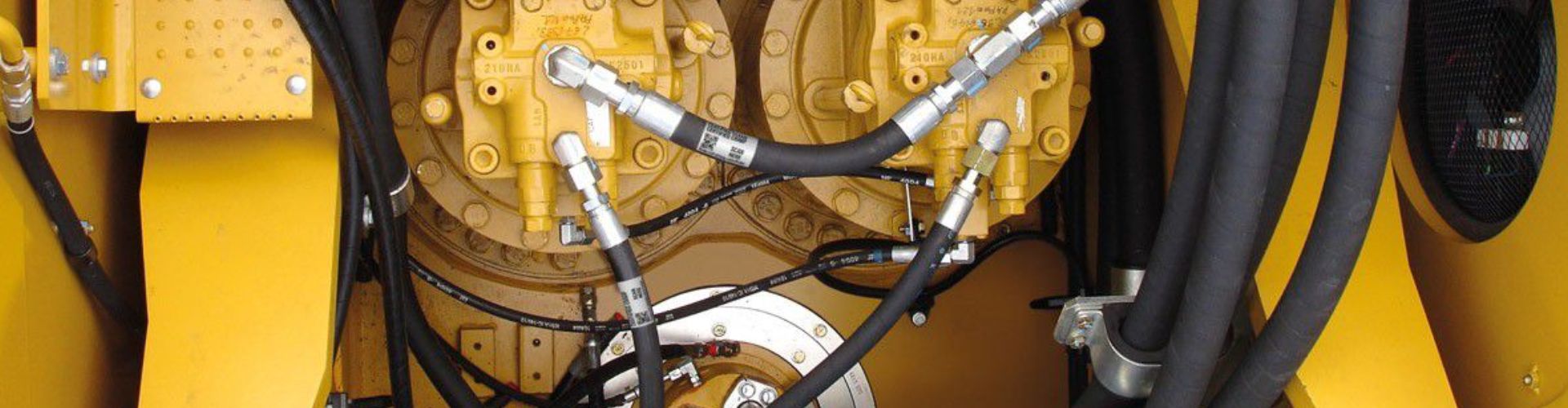
Tools

● Adjustable wrench

You will need an adjustable wrench. This is a versatile tool that is indispensable when loosening and tightening fittings. You want to ensure a good grip, so choose a high-quality, ergonomically designed wrench. An ill-fitting wrench may break the edges of the fitting, making the job more difficult.

● Hose cutter

A hose cutter is also a must-have. You cannot use ordinary scissors or utility knives here. Hose cutters are designed to make clean cuts without abrading the hose material. Worn edges can affect the connection and lead to leaks or bursts. Always make sure your cutter is sharp and well-maintained for optimal performance.

● Hose crimper machine

The third essential tool is a crimper. It is used to securely fasten the fitting to the hose. It is a specialized tool that applies precise force to crimp the fitting onto the hose to create a leak-proof seal. A poorly crimped hose can lead to leaks or even worse, complete failure under pressure.

different types of hydraulic hoses Topa

Hose Type

As professionals in hydraulic repair, let’s take an in-depth look at the characteristics and ideal applications of three common hydraulic hoses: steel wire braided hose, spiral wound hose, and thermoplastic hose.

● Braided hoses

Starting with wire braided hoses, these hoses are the workhorses of the hydraulics world. Made from one or more layers of braided steel wire, these hoses offer a good balance of strength and flexibility. This makes them suitable for a wide range of applications from mobile machinery to industrial hydraulics. Their sturdy construction ensures that they can withstand moderate pressure, making them an excellent choice for most standard operations.

● Spiral hoses

Next, let’s talk about spiral-wound hoses. This hose is reinforced with a spiral layer of steel wire and is capable of withstanding extremely high pressures. If you’re operating heavy machinery like excavators, loaders, or hydraulic presses, spiral-wound hoses are the way to go. Their ability to handle ultra-high pressures makes them indispensable in these applications, ensuring that these large machines operate safely and efficiently.

● Thermoplastic hoses

Finally, thermoplastic hoses are another option. They are lighter in weight and highly flexible. This flexibility makes them ideal for applications that require tight wiring. However, they are best suited for less demanding tasks. Think of them as the flexible and agile players in the hydraulic hose lineup. While they can withstand pressure to a certain extent, they are not suitable for heavy-duty, high-pressure environments.

Preliminary Preparation Steps

A clear understanding of the task at hand is the key to successfully and safely completing the job. Proper preparation is your best aid in any hose replacement job. As an experienced hydraulic parts repairer, allow me to introduce you to the critical preliminary steps that should never be omitted.

The first step is to identify the problem hose. Take the time to thoroughly inspect each hose. Look for obvious signs such as cracks, fraying, or any other wear and tear. These imperfections can evolve into bigger problems such as leaks or complete failure. If a hose doesn’t pass a visual inspection, it should be replaced.

Once you’ve identified the problematic hose, it’s time to focus on safety measures. Before you consider disassembling anything, consult the machine’s owner’s manual. This is your roadmap to understanding the device’s specific safety protocols. Trust me, the last thing you want to do is skip this step and end up facing an avoidable safety hazard.

Finally, it’s time for the important step of shutting down and depressurizing the machine. Shutting down the machine releases all the pressure built up in the hydraulic system. If not properly depressurized, a pressurized hydraulic system can become a ticking time bomb, posing a risk of injury or death.

Step-by-Step Guide

Replacing hydraulic hoses may seem like a daunting task, but with the right tools and a systematic approach, it can be done efficiently and safely. The following is a step-by-step guide based on years of professional experience in hydraulic repair.

Identification of Hose Types and Sizes

You need to determine the type and size of hose that needs to be replaced. You can usually find this information in your system’s technical documentation or find a manufacturer’s technician to ask to make sure you purchase the correct type and size. The wrong choice can lead to inadequate pressure distribution and possible leaks, which can lead to system inefficiency or failure.

Drill Hydraulic Fluid

Once we have found the right hose, we can start draining the hydraulic fluid. Place a drain pan underneath the hose you are replacing and put on goggles as well as gloves to prevent the hydraulic fluid from hurting you. The drain pan catches any hydraulic fluid that may spill when you disconnect the hose. Draining the fluid minimizes mess and is environmentally friendly.

hydraulic hose measure Topa

Disconnect the Broken Hose

Now you are ready to disconnect the old hose. Use an adjustable wrench to loosen the fitting. Use even pressure so that the fitting doesn’t come off. Once loosened, you can remove the hose. Now, this may sound simple, but it is critical. Stripped or damaged fittings can lead to leaks, so proceed with caution.

Inspect Old Hose

Once the hose is removed, it’s time to inspect it. Check the hose and fittings for visible signs of wear or damage. Look out for cracks, corrosion, or any other signs that these parts have reached the end of their useful life. Keeping track of the parts that need to be replaced will help avoid unexpected repairs down the road.

Install New Hose

The next step is to install the new hose. Before installing, carefully measure the hose and cut it to your system’s specifications. Incorrect measurements can lead to stress and premature failure, so measure correctly. Once cut, it’s time to install the fittings. Use a crimper to secure these fittings, making sure to ensure that the fittings are stable; poorly secured fittings can pose a safety hazard.

Post-Replacement Steps

Great, you’ve successfully installed a new hydraulic hose. However, before you call it a day and start your machine, there are some critical post-replacement steps that should not be skipped. As a hydraulic repair professional, I can tell you that these steps are just as important as the installation itself.

pressure test Topa

Repressurize the System

The first step is to repressurize the system. Do not rush this. Refer to the manufacturer’s guidelines and re-pressurize slowly and carefully. Sudden pressurization can damage the new hose or even cause the entire system to fail.

Test

Next, we move on to the testing phase. Now is the time to scrutinize the hoses and fittings. Turn the system on and look closely for any leaks or abnormalities. If you find even a small drip, shut down the system and double-check the fittings. Never ignore that a small leak today could lead to a big problem tomorrow. While checking, evaluate the efficiency of the system. Listen for strange noises and note the performance of the machine.

Safety Checks

Finally, perform a thorough safety check. In addition to the hose you just replaced, make sure that all safety measures are in place for the entire system. Ensuring that everything is working properly is not only good practice, but also vital to the safe operation of the machine.

☆ Tips and Warnings

Replacing a hose is more than just unscrewing one part and screwing on another. It’s a multi-step process that requires focus, precision, and most importantly, respect for the complexity of the hydraulic system.

Tips for Choosing the Right Hose

First, let’s talk about choosing the right hose. One word: quality. Sure, you may find a cheaper hose, but will it last? More importantly, will it jeopardize your system or even your safety? You want a hose that is cost-effective. This means that it may not be the cheapest, but it excels in terms of durability and reliability.

Safety Precautions

Next is safety precautions. I’ve seen too many people ignore basic safety protocols, and this never ends well. Always wear safety goggles and gloves. Make sure the machine is turned off and depressurized before starting any work. This is not just a suggestion, but a must-do.

Troubleshooting Advice

Now, let’s say you’ve replaced the hose and you still find a leak. First, don’t panic. Shut down the system and recheck the connections to make sure all of them are a tight fit. If the leak persists, it’s time to call a professional. There’s no shame in asking for help, especially with a critical piece of equipment like a hydraulic system.

Conclusion

Replacing hydraulic hoses isn’t just about swapping parts; it’s about understanding the intricacies of your hydraulic system to ensure it functions safely and efficiently. By paying close attention to signs of wear, using quality hoses, adhering to safety protocols, and employing a systematic replacement process, you can prolong the life of your hydraulic system while ensuring a safer work environment. If you have any questions, please contact Topa!

FAQ

The first step is to turn off the hydraulic system and relieve the pressure to ensure safety.

Loosen the fittings and carefully remove the old hose, checking for any damage to the system components.

Measure the length, diameter, and pressure rating of the new hose to ensure it matches the system requirements.

Select the appropriate fittings based on the hose size, type, and pressure specifications, ensuring compatibility with the system.

Attach the new hose to the system, making sure the fittings are securely tightened without over-torquing.

After installation, start the hydraulic system and check all connections for leaks, ensuring the hose is properly seated and secure.

Topa Blog

Find out more about Topa Blog and learn more about specialized hydraulic fittings.

Contact Topa

Save 30% on maintenance costs with our easy-install hydraulic fittings. Contact Now!