Hydraulic Hose Reinforcement Choosing the Right One

Hydraulic Hose Reinforcement: Choosing the Right One

Hydraulic Hose Reinforcement: Choosing the Right One

Table of Contents

Introduction

Hydraulic hoses play a crucial role in a variety of industries, including construction, manufacturing, agriculture, and automotive sectors. These hoses are essential for transmitting fluid power, allowing machinery and equipment to operate efficiently and effectively. The reinforcement within hydraulic hoses is a key factor in ensuring their durability and performance. Reinforcement materials, such as steel wire, textile, and thermoplastic, provide the necessary strength to withstand high pressures, resist abrasion, and endure harsh environmental conditions. The purpose of this post is to guide readers through the process of choosing the right hydraulic hose reinforcement for their specific needs.

What is Hydraulic Hose Reinforcement?

Hydraulic hose reinforcement refers to the additional layers or materials embedded within a hydraulic hose to provide strength, support, and durability. These reinforcements are crucial for maintaining the hose’s structural integrity under high-pressure conditions. They help the hose withstand the physical stresses and strains encountered during its operation, preventing issues such as bursting, kinking, or collapsing.

How reinforcement impacts hose performance and longevity

The reinforcement in a hydraulic hose significantly impacts its performance and longevity. By providing extra support, the reinforcement ensures that the hose can handle high-pressure fluid transfer without failure. It also enhances the hose’s resistance to abrasion, environmental factors, and mechanical wear. Properly reinforced hoses maintain their shape and functionality over extended periods, reducing the need for frequent replacements and minimizing downtime in critical operations.

Hydraulic Hose Reinforcement Types

Types of Reinforcement Materials

Steel wire

Steel wire is one of the most common reinforcement materials used in hydraulic hoses. It is known for its exceptional strength and ability to withstand high pressures. Steel wire-reinforced hoses can come in various configurations, including single-wire braid, double-wire braid, and multi-layered steel wire. These hoses are ideal for applications requiring high-pressure tolerance and durability, such as heavy machinery and industrial equipment.

Textile (fiber)

Textile or fiber reinforcement involves using synthetic fibers, such as polyester or aramid, to reinforce hydraulic hoses. This type of reinforcement offers flexibility and is generally lighter than steel wire reinforcement. Textile-reinforced hoses are suitable for applications where flexibility and ease of handling are more critical than extremely high-pressure tolerance. They are often used in agricultural machinery, low-pressure industrial applications, and automotive systems.

Thermoplastic

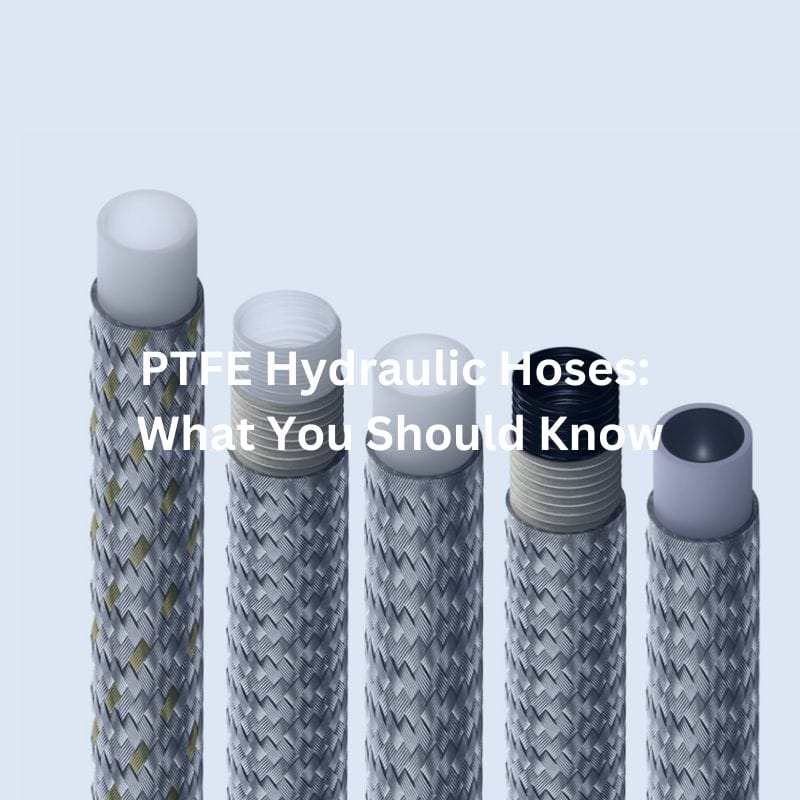
Thermoplastic reinforcement uses layers of thermoplastic material to provide strength and flexibility to hydraulic hoses. Thermoplastic-reinforced hoses are highly resistant to abrasion, chemicals, and environmental factors like UV rays. They are lightweight and can be used in various applications, including mobile equipment, material handling, and hydraulic systems exposed to harsh environments. The unique properties of thermoplastic materials make these hoses versatile and reliable in many scenarios.

Common Applications

Construction: Reinforced hoses are used in excavators, bulldozers, and cranes to handle high-pressure hydraulic fluids.

Agriculture: Tractors, harvesters, and sprayers rely on flexible, textile-reinforced hoses for fluid transfer and control.

Manufacturing: Industrial machinery and robotic arms use steel wire-reinforced hoses for precise and reliable hydraulic operations.

Mining: Heavy-duty mining equipment, such as drills and loaders, require robust, steel wire-reinforced hoses to withstand extreme conditions.

Automotive: Hydraulic systems in vehicles, including brakes and power steering, use reinforced hoses to ensure safety and performance.

Marine: Ships and offshore platforms use reinforced hoses for hydraulic systems in winches, steering, and other critical functions.

Types of Hydraulic Hose Reinforcements

Steel Wire Reinforcement

Single wire braid

A single wire braid reinforcement consists of one layer of braided steel wire. This type of reinforcement offers a good balance between strength and flexibility, making it suitable for medium-pressure applications. Single wire braid hoses are commonly used in general hydraulic systems, automotive systems, and certain industrial applications where moderate pressure is required.

Double wire braid

Double wire braid reinforcement involves two layers of braided steel wire. This configuration provides enhanced strength and pressure resistance compared to single wire braid hoses. Double wire braid hoses are ideal for high-pressure applications where durability and reliability are crucial, such as in construction equipment, heavy machinery, and hydraulic systems in industrial settings.

Multi-layered steel wire

Multi-layered steel wire reinforcement includes multiple layers of braided or spiral steel wires, offering superior strength and pressure tolerance. These hoses are designed for the most demanding applications, including ultra-high-pressure hydraulic systems. They are used in environments where maximum durability is essential, such as in mining operations, oil and gas extraction, and large-scale industrial machinery.

Textile (Fiber) Reinforcement

Single and multiple layers of textile

Textile-reinforced hoses can have single or multiple layers of synthetic fibers, such as polyester or aramid. Single-layer textile reinforcement provides flexibility and moderate pressure resistance, making it suitable for low to medium-pressure applications. Multiple layers of textile reinforcement enhance the hose’s strength and pressure tolerance, allowing it to be used in more demanding environments. These hoses are commonly found in agricultural machinery, light industrial equipment, and fluid transfer systems where flexibility and ease of handling are essential.

High-tensile synthetic fibers

High-tensile synthetic fibers, such as aramid, provide exceptional strength and durability. Hoses reinforced with these fibers can handle higher pressures and more demanding applications compared to standard textile-reinforced hoses. They offer a lightweight and flexible alternative to steel wire reinforcement, making them suitable for applications where both high strength and flexibility are required, such as in aerospace, automotive, and certain industrial hydraulic systems.

Thermoplastic Reinforcement

Thermoplastic-reinforced hydraulic hoses are designed to offer a combination of flexibility, lightweight construction, and resistance to environmental factors. The design typically involves multiple layers, each contributing to the hose’s overall strength and durability. These layers generally include an inner tube, one or more reinforcement layers, and an outer cover.

Inner Tube: The inner tube is made from a thermoplastic material that is compatible with the hydraulic fluid being used. It is designed to provide a smooth, non-reactive surface for efficient fluid flow.

Reinforcement Layers: These layers are made from thermoplastic materials, sometimes combined with high-tensile synthetic fibers. The reinforcement provides the necessary strength to withstand high pressures and resist kinking.

Outer Cover: The outer cover protects the hose from external environmental factors such as abrasion, UV radiation, ozone, and chemicals. It is also typically made from a durable thermoplastic material.

thermoplastic hose

Types of Thermoplastic Reinforcement

Standard Thermoplastic Hoses

Single-Layer Reinforcement: These hoses have one layer of thermoplastic material for reinforcement, making them suitable for low to medium-pressure applications. They are lightweight, flexible, and easy to handle.

Multi-Layer Reinforcement: Hoses with multiple layers of thermoplastic reinforcement provide higher pressure ratings and greater durability. They are used in more demanding applications where additional strength is required.

High-Pressure Thermoplastic Hoses

High-Pressure Spiral Reinforced: These hoses feature spiral layers of thermoplastic material, often combined with high-tensile synthetic fibers. The spiral design enhances the hose’s ability to handle very high pressures, making it ideal for industrial and heavy-duty applications.

Braided Reinforcement: Braided thermoplastic hoses use layers of braided synthetic fibers or thermoplastic materials to provide high pressure resistance while maintaining flexibility. They are commonly used in hydraulic systems that require both strength and maneuverability.

Specialized Thermoplastic Hoses

Abrasion-Resistant Hoses: Designed with a tough outer cover to withstand abrasive conditions, these hoses are ideal for environments where mechanical wear and tear are significant.

Chemical-Resistant Hoses: Made from thermoplastic materials that resist a wide range of chemicals, these hoses are suitable for use in chemical processing plants and other environments where exposure to corrosive substances is common.

High-Temperature Hoses: These hoses are constructed from thermoplastic materials that can withstand extreme temperatures, both hot and cold, making them suitable for applications with significant temperature variations.

Benefits of thermoplastic materials

Thermoplastic reinforcement in hydraulic hoses offers several advantages, including:

Lightweight: Thermoplastic materials are lighter than steel or textile reinforcements, reducing the overall weight of the hose.

Flexibility: These hoses are highly flexible, making them easy to handle and install in tight spaces.

Abrasion Resistance: Thermoplastic materials have excellent abrasion resistance, prolonging the hose’s lifespan in harsh conditions.

Chemical Resistance: Thermoplastic hoses are resistant to a wide range of chemicals, making them suitable for use in environments with exposure to corrosive substances.

Environmental Durability: These hoses can withstand UV radiation, ozone, and extreme temperatures, ensuring reliable performance in outdoor and harsh environments.

Factors to Consider When Choosing Reinforcement

Pressure Requirements

How to determine the pressure needs of your system

Understanding the pressure requirements of your hydraulic system is critical for selecting the right hose reinforcement. This involves identifying the maximum operating pressure and any potential pressure spikes or surges. Consulting the equipment specifications and conducting pressure tests can provide accurate pressure data.

Matching hose reinforcement to pressure ratings

Once the pressure requirements are known, choose a hose with reinforcement that meets or exceeds these ratings. Steel wire reinforcement is ideal for high-pressure applications, while textile and thermoplastic reinforcements are suitable for medium to low-pressure needs. Ensure that the chosen hose can handle both the steady-state and peak pressures to prevent failures.

Flexibility and Bend Radius

Importance of hose flexibility

Flexibility in hydraulic hoses allows for easier routing, installation, and operation, especially in confined spaces. Flexible hoses can accommodate movement and vibration, reducing the risk of damage.

Choosing reinforcement for applications with tight bends

In applications with tight bends, selecting a hose with appropriate reinforcement is essential. Textile and thermoplastic reinforcements offer greater flexibility compared to steel wire. Hoses with single wire braid or textile layers can bend more easily, making them suitable for complex routing without compromising performance.

Abrasion Resistance

Environmental factors affecting hose wear

Environmental conditions, such as the presence of abrasive materials, harsh weather, and rough surfaces, can significantly impact hose wear. Abrasion resistance is crucial in environments where the hose is exposed to mechanical wear and tear.

Selecting reinforcement for abrasive conditions

For applications in abrasive conditions, hoses with robust reinforcement materials like steel wire or high-tensile synthetic fibers are ideal. Thermoplastic hoses also offer good abrasion resistance. Choosing a hose with an outer cover designed to withstand abrasion can further enhance durability.

Temperature Tolerance

Operating temperature ranges

Hydraulic hoses must perform reliably within specific temperature ranges. Exceeding these ranges can cause the hose materials to degrade, leading to failures.

Impact of temperature on different reinforcement materials

Steel wire reinforcement typically performs well across a broad temperature range, while textile and thermoplastic materials may have more limited temperature tolerances. Thermoplastic hoses are particularly resistant to temperature extremes, making them suitable for both hot and cold environments. Always verify the temperature ratings of the hose and its reinforcement materials to ensure compatibility with your operating conditions.

Chemical Compatibility

Assessing chemical exposure risks

Hydraulic systems may come into contact with various chemicals, including hydraulic fluids, cleaning agents, and process chemicals. Assessing the types and concentrations of these chemicals is essential for choosing a compatible hose.

Choosing materials resistant to specific chemicals

Different reinforcement materials offer varying levels of chemical resistance. Thermoplastic hoses generally provide excellent chemical resistance, making them suitable for use in chemically aggressive environments. When selecting a hose, consult compatibility charts and consider the specific chemicals your system will encounter to ensure long-term reliability.

Environmental Considerations

Outdoor vs. indoor use

The operating environment plays a significant role in determining the suitable hose reinforcement. Outdoor applications require hoses that can withstand exposure to weather elements, while indoor use may have different demands.

Resistance to UV, ozone, and other environmental factors

For outdoor applications, selecting hoses with reinforcements resistant to UV radiation, ozone, and other environmental factors is crucial. Thermoplastic and steel wire reinforcements often provide good resistance to these elements. Ensure the hose cover and reinforcement materials can endure the specific environmental conditions to prevent premature degradation and extend the hose’s service life.

Conclusion

Choosing the right hydraulic hose reinforcement is crucial for ensuring the durability, performance, and safety of hydraulic systems across various industries. Proper reinforcement helps hoses withstand high pressures, resist abrasion, and endure harsh environmental conditions, thereby extending their lifespan and reducing maintenance costs. To select and maintain reinforced hoses effectively, it is essential to assess your specific operational needs and environmental conditions carefully. By following these guidelines, you can enhance the reliability and efficiency of your hydraulic systems.

FAQ

Hydraulic hose reinforcement involves additional layers of materials within the hose to provide strength, support, and durability, helping it withstand high pressures and harsh conditions.

Selecting the appropriate reinforcement ensures the hose can handle the required pressure, resist wear and tear, and operate efficiently in specific environmental conditions, prolonging its lifespan and preventing failures.

The three main types are steel wire, textile (fiber), and thermoplastic reinforcements. Each type offers different benefits and is suited to various pressure ratings and applications.

Identify the maximum operating pressure and potential pressure spikes in your system by consulting equipment specifications and conducting pressure tests. Choose a hose with reinforcement that meets or exceeds these ratings.

Key factors include pressure requirements, flexibility, abrasion resistance, temperature tolerance, chemical compatibility, and environmental conditions. Assessing these factors ensures you choose the right hose for your needs.

Regular maintenance and inspection should be conducted periodically to check for signs of wear, damage, or reinforcement failure. Following best practices in hose maintenance helps prevent unexpected failures and extends the hose’s service life.

Braided vs Spiral vs Helical Hydraulic Hose Reinforcement Guide

Braided vs Spiral vs Helical: Hydraulic Hose Reinforcement Guide

Braided vs Spiral vs Helical: Hydraulic Hose Reinforcement Guide

Table of Contents

Introduction

Hydraulic hoses are critical components in hydraulic systems, designed to transmit fluid power between various parts of machinery. These hoses are essential in numerous industries, including construction, manufacturing, and agriculture, providing flexibility and strength to handle high-pressure fluids. Reinforcement within hydraulic hoses is vital as it significantly enhances the hose’s ability to withstand high pressures and harsh operating conditions. It provides the necessary strength and durability, preventing hose failure and ensuring the smooth operation of hydraulic systems.

Understanding Hydraulic Hose Reinforcement

Definition and Role of Reinforcement

Reinforcement in hydraulic hoses is a critical component designed to enhance the hose’s strength, flexibility, and durability. This reinforcement typically consists of multiple layers of materials such as steel wire or synthetic fibers, which are embedded within the hose structure. The primary function of the reinforcement is to support the hose against the internal pressures exerted by the hydraulic fluid as well as external forces and environmental conditions the hose may encounter.

hydraulic hose material Topa

Purpose and Function

Internal Pressure Resistance: The reinforcement layer helps the hose withstand high internal pressures without bursting or deforming. This is crucial for maintaining the integrity and efficiency of hydraulic systems that operate under varying pressure levels.

Flexibility and Bend Radius: While providing strength, the reinforcement also allows the hose to remain flexible, facilitating easier installation and maneuverability in tight spaces. Different reinforcement patterns can influence the bend radius and flexibility of the hose.

External Force Resistance: In addition to internal pressures, hydraulic hoses may be subjected to external forces such as abrasion, impact, and environmental stressors. The reinforcement layer protects the hose from these external threats, extending its lifespan and reliability.

Structural Support: The reinforcement maintains the structural integrity of the hose, preventing it from collapsing under vacuum conditions or kinking during operation.

Material Composition

Steel Wire: Commonly used for its high tensile strength and durability, steel wire reinforcement is often found in spiral and braided patterns. It provides excellent pressure resistance and is suitable for high-pressure applications.

Synthetic Fibers: Materials such as polyester, aramid, and nylon are used for their lightweight, flexibility, and resistance to corrosion and chemicals. These fibers are typically used in braided reinforcement, offering a balance of strength and flexibility.

Factors Influencing Reinforcement Choice

Selecting the appropriate reinforcement for hydraulic hoses involves considering various factors to ensure optimal performance and longevity of the hose in its specific application. Key factors include:

Operating Pressure

System Pressure Requirements: The maximum and average operating pressures of the hydraulic system dictate the type of reinforcement needed. Higher pressures generally require stronger reinforcement, such as spiral steel wire.

Pressure Surges: Systems with frequent pressure spikes or surges may necessitate more robust reinforcement to handle these sudden increases without compromising the hose.

Flexibility Requirements

Bend Radius: The required bend radius, or the minimum radius a hose can bend without kinking, influences the choice of reinforcement. Braided hoses offer greater flexibility and a tighter bend radius compared to spiral hoses.

Installation Space: In applications with limited space, flexible hoses with braided reinforcement may be preferred for easier routing and installation.

Environmental Conditions

Temperature Range: The operating temperature of the hydraulic system and the surrounding environment affect the material choice for reinforcement. Some materials perform better under extreme temperatures, while others may degrade.

Chemical Exposure: The presence of chemicals, oils, and other fluids can impact the durability of the reinforcement materials. Synthetic fibers often provide better resistance to chemical exposure compared to steel wire.

Abrasive Conditions: Environments with high abrasion risk require reinforcement materials that can withstand wear and tear, such as steel wire.

Application Specifics

Industry Standards: Different industries have specific standards and requirements for hydraulic hoses. Understanding these standards helps in selecting the appropriate reinforcement.

Dynamic vs. Static Applications: Dynamic applications, involving constant movement and flexing, require more flexible reinforcement compared to static applications where the hose remains stationary.

Braided Reinforcement

Description and Structure

Braided reinforcement is a type of hydraulic hose construction that involves interweaving strands of material, such as stainless steel or synthetic fibers, to create a strong yet flexible reinforcement layer. This braiding technique enhances the hose’s ability to withstand internal pressures and external forces while maintaining flexibility.

Materials Used

Stainless Steel: Known for its high tensile strength and resistance to corrosion, stainless steel is a popular choice for braided reinforcement, particularly in high-performance and demanding environments.

Synthetic Fibers: Materials like polyester and aramid fibers (e.g., Kevlar) are used for their lightweight properties, flexibility, and resistance to chemicals and abrasion. These fibers offer a good balance of strength and flexibility, making them suitable for a variety of applications.

braided hoses Topa

Braiding Patterns

Single Braid: A single layer of braided material provides moderate strength and flexibility, suitable for low to medium pressure applications.

Double Braid: Two layers of braided reinforcement enhance the hose’s strength and pressure capacity while maintaining flexibility. This pattern is used in applications requiring higher pressure resistance.

Multiple Layers: For even greater strength and durability, multiple layers of braiding can be employed. This configuration is used in more demanding applications where both high pressure and flexibility are required.

Advantages

Flexibility: One of the primary advantages of braided hoses is their superior flexibility. The interwoven structure allows the hose to bend and flex easily, making it ideal for applications where tight bends and maneuverability are required.

Cost-Effectiveness: Braided hoses are generally less expensive to manufacture compared to spiral hoses. The materials used in braiding, such as synthetic fibers, are often cheaper than high-tensile steel wires used in spiral reinforcement.

Ease of Manufacturing: The braiding process is relatively straightforward, contributing to lower production costs and faster manufacturing times. This makes braided hoses an economical choice for many applications.

Limitations

While braided hoses offer many advantages, they also have some limitations that must be considered when selecting the appropriate reinforcement type.

Lower Pressure Capacity Compared to Spiral: Although flexible, braided hoses cannot withstand as high pressures as spiral-reinforced hoses. For high-pressure applications, spiral reinforcement may be necessary to ensure safety and performance.

Potential for Kinking: Under certain conditions, braided hoses may be more prone to kinking compared to spiral or helical hoses. This can occur if the hose is bent too sharply or if it is used in an application where it is repeatedly flexed or twisted. Kinking can compromise the hose’s performance and lead to premature failure.

Spiral Reinforcement

Description and Structure

Spiral reinforcement is a method used in hydraulic hoses that involves wrapping high-tensile steel wire around the hose core in a helical pattern. This construction method provides exceptional strength and enables the hose to withstand extremely high pressures, making it ideal for demanding applications.

Materials Used

High-Tensile Steel Wire: The most common material for spiral reinforcement is high-tensile steel wire due to its superior strength and durability. The high tensile strength ensures that the hose can handle extreme pressures without bursting or deforming.

Spiral Patterns

braided vs spiral hose

Layered Construction: The steel wires are wound in multiple layers around the hose, with each layer typically alternating in direction. This alternating pattern maximizes the hose’s strength and prevents it from expanding under pressure. The number of layers can vary depending on the required pressure rating and the application. Common configurations include four-layer and six-layer constructions.

Helical Winding: The helical winding of the steel wires provides a continuous reinforcement structure that distributes pressure evenly along the length of the hose. This design helps to prevent localized stress points and enhances the hose’s overall durability.

Advantages

Superior Pressure Handling: One of the primary advantages of spiral-reinforced hoses is their ability to handle very high pressures. The robust construction allows these hoses to operate reliably in high-pressure environments, making them suitable for applications where braided hoses might fail.

Consistent Performance: Spiral hoses maintain their performance under high pressure conditions, ensuring consistent and reliable operation in demanding systems.

Limitations

While spiral-reinforced hoses offer significant advantages, they also come with some limitations that must be considered.

Stiffness: The primary drawback of spiral hoses is their reduced flexibility compared to braided hoses. The rigid structure of the spiral reinforcement makes these hoses less suitable for applications requiring tight bends or frequent movement.

Installation Challenges: The reduced flexibility can make installation more challenging, especially in confined spaces where the hose needs to navigate around obstacles.

Helical Reinforcement

Description and Structure

Helical reinforcement is a construction technique for hydraulic hoses that involves winding steel wire in a helical (spiral) pattern around the hose. This type of reinforcement provides a balance of strength and flexibility, tailored for specific applications where resistance to kinking and crushing is crucial.

Materials Used

Steel Wire: The primary material used in helical reinforcement is steel wire. Steel wire offers significant tensile strength and durability, ensuring the hose can withstand external pressures and physical impacts.

Helical Patterns

Helical Winding: The steel wire is wound in a continuous helical pattern around the hose core. This helical winding helps distribute forces evenly along the hose’s length, enhancing its resistance to kinking and crushing while maintaining adequate flexibility.

Layer Configuration: Helical hoses can have single or multiple layers of helical reinforcement, depending on the required strength and application. Multiple layers increase the hose’s durability and pressure-handling capability within its specific use cases.

Advantages

Resistance to Crushing and Kinking:

Crush Resistance: Helical reinforcement prevents the hose from collapsing under external pressure, making it ideal for applications where the hose might be subjected to physical compression.

Kink Resistance: The helical pattern ensures that the hose maintains its structural integrity even when bent, reducing the risk of kinking, which can obstruct fluid flow and damage the hose.

Good Flexibility in Certain Applications:

Moderate Flexibility: While not as flexible as braided hoses, helical hoses offer sufficient flexibility for many applications. This flexibility allows for easier installation and routing in systems where the hose needs to navigate around obstacles.

Application Versatility: The balance of flexibility and strength makes helical hoses suitable for applications such as suction and return lines, where moderate flexibility and resistance to external pressures are required.

Limitations

While helical-reinforced hoses offer distinct advantages, they also have limitations that restrict their use to specific applications.

Pressure Limitations: Helical hoses are not designed to withstand high internal pressures. Their construction focuses on flexibility and resistance to external pressures rather than handling extreme internal forces. For high-pressure applications, spiral or braided reinforcement is typically required.

Comparative Analysis

Pressure Ratings

When selecting hydraulic hoses, understanding the pressure ratings of different reinforcement types is crucial for ensuring system safety and efficiency.

Spiral-Reinforced Hoses:

Highest Pressure Capacity: Spiral-reinforced hoses are designed to handle extremely high pressures, making them suitable for the most demanding hydraulic applications. The multi-layered construction of high-tensile steel wire in a helical pattern provides the necessary strength to withstand internal pressures without bursting or deforming.

Consistent Performance Under Pressure: These hoses maintain their integrity and performance even under frequent and significant pressure spikes, ensuring reliable operation in high-stress environments.

Braided Hoses:

Moderate to High Pressure Capacity: Braided hoses offer a good balance between flexibility and pressure resistance. They can handle moderate to high pressures, making them versatile for a wide range of applications.

Single and Double Braiding Options: Depending on the specific pressure requirements, braided hoses can be constructed with single or double layers of reinforcement. Double-braided hoses offer higher pressure ratings compared to single-braided ones.

Helical Hoses:

Lowest Pressure Capacity: Helical-reinforced hoses have the lowest pressure ratings among the three types. They are designed for applications where high pressure is not a primary concern but resistance to kinking and crushing is essential.

Suitable for Low-Pressure Systems: These hoses are ideal for low-pressure systems, such as suction and return lines, where maintaining structural integrity under external compression is more important than withstanding high internal pressures.

Selecting the Right Reinforcement

Assessing System Requirements

Selecting the appropriate reinforcement for hydraulic hoses begins with a thorough evaluation of the system requirements. This involves understanding the specific demands and conditions under which the hose will operate to ensure optimal performance and longevity.

Operating Pressure:

Pressure Levels: Identify the maximum and average operating pressures of the hydraulic system. High-pressure systems require stronger reinforcement, such as spiral hoses, while lower-pressure systems can utilize braided or helical hoses.

Pressure Surges: Consider the frequency and magnitude of pressure surges or spikes. Systems with frequent or significant pressure variations need hoses with higher pressure ratings to prevent failures.

Flexibility Needs:

Bend Radius: Determine the required bend radius, or the minimum radius the hose can bend without kinking. Applications with tight bends or complex routing may benefit from the flexibility of braided hoses.

Movement and Vibration: Assess the extent of movement and vibration in the system. Dynamic applications, where hoses move frequently, require flexible reinforcement to avoid fatigue and failure.

Environmental Conditions:

Temperature Range: Identify the operating temperature range. Some materials perform better in extreme temperatures, influencing the choice of reinforcement. For example, certain synthetic fibers are more resistant to high temperatures than others.

Exposure to Elements: Evaluate exposure to elements such as sunlight, moisture, and chemicals. These factors can affect the durability and performance of the hose reinforcement. Materials like stainless steel offer good resistance to environmental degradation.

Evaluating Environmental Factors

The environment in which the hydraulic hose will operate plays a crucial role in determining the suitable reinforcement type. Environmental factors can significantly impact the hose’s durability and performance.

Temperature:

Operating Temperature: The hose material must withstand the temperature of the hydraulic fluid as well as the ambient temperature. For high-temperature applications, materials like aramid fibers or special synthetic compounds may be preferred.

Thermal Cycling: Consider the effects of thermal cycling, where the hose undergoes repeated heating and cooling. This can cause expansion and contraction, affecting the hose’s integrity. Materials that can tolerate thermal cycling without degradation should be chosen.

Chemical Exposure:

Chemical Compatibility: The hose reinforcement must be compatible with the hydraulic fluid and any other chemicals it might encounter. Synthetic fibers like polyester and aramid offer good resistance to many chemicals, while certain metals may corrode or degrade.

Contaminants: In environments where the hose may come into contact with oils, solvents, or other contaminants, selecting reinforcement materials that are resistant to chemical damage is critical.

Physical Wear and Tear:

Abrasion Resistance: In applications where the hose may rub against surfaces or be exposed to abrasive materials, choosing reinforcement with high abrasion resistance is important. Steel wire reinforcement offers excellent abrasion resistance.

Impact Resistance: Consider the likelihood of physical impacts or crushing forces. Helical reinforcement provides good resistance to external pressures and impacts, making it suitable for environments where the hose might be physically compressed.

UV and Ozone Exposure:

Sunlight and UV Rays: Hoses exposed to direct sunlight and UV rays need reinforcement materials that can withstand UV degradation. UV-resistant coatings or materials can extend the hose’s lifespan in outdoor applications.

Ozone Resistance: In areas with high ozone levels, materials that resist ozone cracking should be selected to prevent premature failure.

Conclusion

Braided, spiral, and helical reinforcements each have unique characteristics, advantages, and limitations. Understanding these differences is crucial for selecting the right reinforcement for any hydraulic system. Selecting the appropriate reinforcement type is essential for ensuring the safety, efficiency, and longevity of hydraulic systems. The right choice can prevent failures, reduce downtime, and enhance overall performance.

FAQ

Reinforcement in hydraulic hoses provides additional strength and support, allowing the hose to withstand high internal pressures and external forces. It also helps maintain flexibility and prevent kinking or collapsing.

Common materials used for hose reinforcement include high-tensile steel wire for spiral and helical reinforcement, and synthetic fibers such as polyester and aramid for braided reinforcement.

To choose the right reinforcement, evaluate your system’s operating pressure, flexibility needs, environmental conditions, and exposure to chemicals or physical wear. Consulting with a hydraulic hose expert can also help you make an informed decision.

Braided reinforcement offers high flexibility and is suitable for moderate pressure systems. Spiral reinforcement provides high pressure capacity and durability but is less flexible. Helical reinforcement offers resistance to kinking and crushing, making it ideal for suction and vacuum systems.

While braided hoses can handle moderate to high pressures, they are generally not suitable for extremely high pressure applications. For very high pressure systems, spiral-reinforced hoses are recommended.

Consider the operating temperature range, chemical exposure, physical wear and tear, and UV or ozone exposure. These factors can affect the hose’s durability and performance, so choosing materials that withstand these conditions is essential.

Hydraulic Hose Specifications SAE vs ISO Explained

Hydraulic Hose Specifications: SAE vs ISO Explained

Hydraulic Hose Specifications: SAE vs ISO Explained

Table of Contents

Introduction

Selecting the right hydraulic hose is vital for system efficiency and safety. The wrong choice can lead to system failures, increased downtime, and costly repairs. This article will delve into the specifics of SAE and ISO hydraulic hose standards, helping you understand their differences and importance. SAE and ISO standards provide guidelines that ensure hoses meet certain performance and safety criteria. Understanding these standards is crucial for making informed decisions in hydraulic system design and maintenance.

Overview of Hydraulic Hose Specifications

Definition of Hydraulic Hoses

Hydraulic hoses are essential components in hydraulic systems, designed to transport fluid between various parts of the system to transmit force. These hoses are flexible tubes made of synthetic rubber, thermoplastic, or reinforced with braided steel wires, ensuring they can withstand high pressure and temperature variations. The primary function of hydraulic hoses is to convey hydraulic fluid, typically oil, to different components like valves, actuators, and tools, facilitating the movement and operation of machinery.

Hydraulic hoses are used in a wide range of applications across various industries, including construction, agriculture, manufacturing, and automotive. They play a crucial role in machinery such as excavators, tractors, industrial presses, and braking systems, ensuring these machines operate smoothly and efficiently.

Key Components of Hydraulic Hoses

Inner Tube: The inner tube is the core component of a hydraulic hose, responsible for directly carrying the hydraulic fluid. It is typically made from synthetic rubber, thermoplastic, or PTFE (Teflon) to provide flexibility and chemical resistance. The material of the inner tube is chosen based on the type of fluid it will carry and the operating temperature range.

Reinforcement Layer: Surrounding the inner tube is the reinforcement layer, which gives the hose its strength and ability to withstand high pressures. This layer can be made of braided or spiraled wire, textile yarn, or other high-strength materials. The reinforcement layer ensures the hose can handle the internal pressure of the hydraulic system without bursting.

Outer Cover: The outer cover is the protective layer of the hose, shielding the inner components from external damage, such as abrasion, chemicals, weather, and environmental factors. It is usually made from synthetic rubber or thermoplastic materials designed to be durable and resistant to harsh conditions.

hydraulic hose material Topa

Importance of Specifications

Hydraulic hose specifications are critical in maintaining the performance, safety, and reliability of hydraulic systems. Specifications provide detailed guidelines on the design, construction, and testing of hydraulic hoses to ensure they meet industry standards and can perform effectively under specific conditions. By adhering to these specifications, manufacturers can guarantee that their hoses will function correctly, providing optimal fluid conveyance and force transmission.

Specifications also play a crucial role in ensuring safety. Hydraulic systems operate under high pressures, and any failure in the hose can lead to serious accidents, including fluid leaks, bursts, and potential harm to operators. By following stringent specifications, the risk of hose failure is minimized, ensuring the safety of both the machinery and the personnel operating it.

Limitations of SAE Standards

While SAE standards have long served as the benchmark for hydraulic hose classification in North America, they come with certain limitations, particularly when viewed from a global and performance-based perspective.

Key limitations of SAE standards include:

  • Construction-Based Classification: SAE specifications, such as SAE 100R1 or 100R2, categorize hoses primarily by construction (e.g., number of wire braid layers) rather than performance characteristics like pressure consistency or environmental endurance.
  • Lack of Constant Pressure Designation: Unlike ISO 18752, SAE hoses do not follow a constant pressure rating system across all sizes. This means pressure capabilities often decrease as hose diameter increases, which complicates system design and stocking.
  • Limited Global Applicability: SAE is widely recognized in North America but less so in other markets where ISO standards dominate. For multinational operations or global OEMs, SAE specifications may lack the universal acceptance needed for standardized manufacturing.
  • Outdated in High-Performance Applications: As modern hydraulic systems demand higher pressures, tighter bend radii, and improved impulse life, many engineers are shifting toward ISO standards that provide performance-based classifications more aligned with current needs.

Transition Tip: Companies operating globally or managing diverse machinery fleets may benefit from gradually transitioning to ISO 18752 hoses, which offer streamlined classification, broader temperature tolerance, and greater consistency across sizes.

Common Issues Arising from Non-Compliance with Standards

Non-compliance with hydraulic hose specifications can lead to several problems, affecting both the performance and safety of hydraulic systems:

  • Premature Hose Failure: Hoses that do not meet specified standards may not withstand the required pressure or temperature ranges, leading to early wear and tear, leaks, or bursts. This can result in costly downtime and repairs.
  • Safety Hazards: Using non-compliant hoses increases the risk of accidents and injuries. Burst hoses can release high-pressure fluid, posing a danger to operators and causing damage to surrounding equipment.
  • Inefficient System Performance: Hydraulic systems rely on precise fluid transmission. Non-compliant hoses may not provide the necessary fluid flow, pressure, or flexibility, leading to inefficient operation and reduced productivity.
  • Increased Maintenance Costs: Hoses that do not adhere to standards may require more frequent replacements and maintenance, driving up operational costs and reducing the overall efficiency of the hydraulic system.

Understanding SAE Hydraulic Hose Specifications

History and Background of SAE Standards

The Society of Automotive Engineers (SAE) originated in the early 20th century to establish standards for the burgeoning automotive industry. Over the years, SAE has expanded its scope to encompass various sectors, including aerospace, commercial vehicles, and hydraulics. SAE’s role in the industry is to develop and maintain technical standards that ensure the quality, safety, and interoperability of products and systems. These standards provide guidelines for materials, design, manufacturing, and testing.

Key SAE Specifications

Common SAE hydraulic hose specifications include SAE 100R1, SAE 100R2, among others. Each specification outlines the hose’s construction, performance parameters, and suitable applications. For example, SAE 100R1 specifies a single steel wire braided hose suitable for medium pressure applications, with a detailed breakdown of pressure ratings, temperature ranges, and fluid compatibility. SAE 100R2, on the other hand, describes a double steel wire braided hose for higher pressure

SAE Standard Hydraulic Hose

Limitations of SAE Standards

While SAE standards have long served as the benchmark for hydraulic hose classification in North America, they come with certain limitations, particularly when viewed from a global and performance-based perspective.

Key limitations of SAE standards include:

  • Construction-Based Classification: SAE specifications, such as SAE 100R1 or 100R2, categorize hoses primarily by construction (e.g., number of wire braid layers) rather than performance characteristics like pressure consistency or environmental endurance.
  • Lack of Constant Pressure Designation: Unlike ISO 18752, SAE hoses do not follow a constant pressure rating system across all sizes. This means pressure capabilities often decrease as hose diameter increases, which complicates system design and stocking.
  • Limited Global Applicability: SAE is widely recognized in North America but less so in other markets where ISO standards dominate. For multinational operations or global OEMs, SAE specifications may lack the universal acceptance needed for standardized manufacturing.
  • Outdated in High-Performance Applications: As modern hydraulic systems demand higher pressures, tighter bend radii, and improved impulse life, many engineers are shifting toward ISO standards that provide performance-based classifications more aligned with current needs.

Transition Tip: Companies operating globally or managing diverse machinery fleets may benefit from gradually transitioning to ISO 18752 hoses, which offer streamlined classification, broader temperature tolerance, and greater consistency across sizes.

Understanding ISO Hydraulic Hose Specifications

History and Background of ISO Standards

The International Organization for Standardization (ISO) was established in 1947 to create international standards across various industries, promoting global trade and ensuring product quality and safety. ISO plays a pivotal role in the industry by developing and publishing consensus-based standards that provide specifications for products, services, and systems, facilitating international compatibility and interoperability.

Key ISO Specifications

Common ISO hydraulic hose specifications include ISO 18752 and ISO 1436. ISO 18752 outlines performance-based criteria, classifying hoses by their pressure levels and defining parameters like pressure ratings, temperature ranges, and durability for high-pressure applications. ISO 1436 specifies the construction and performance of hoses, detailing single and double wire braided hoses’ pressure ratings, temperature capabilities, and suitable applications.

Global Standardization and Inventory Simplification with ISO

 One of the key advantages of ISO 18752 lies in its ability to streamline global procurement and simplify inventory management, especially for multinational OEMs and engineering teams.

Benefits of ISO 18752 for supply chain efficiency include:

  • Global Consistency: ISO 18752 is internationally recognized, allowing companies to use the same hose specifications across global operations, ensuring performance uniformity and simplifying documentation.
  • Reduced SKU Complexity: Because ISO 18752 uses a constant pressure classification system across all hose sizes, it reduces the need for multiple hose types to meet different pressure levels. This means fewer product variations need to be stocked.
  • Improved Engineering Alignment: Standardizing on ISO enables global engineering teams to collaborate seamlessly, using a common set of hose definitions and performance expectations—eliminating the confusion of varying regional standards like SAE.
  • Easier Vendor Coordination: International sourcing and vendor alignment become more efficient when ISO-compliant hoses are used, particularly when managing global production sites or field service operations.
  • Regulatory Compatibility: ISO 18752 is often better aligned with international certifications and regulatory requirements in markets outside North America.

Bottom Line: ISO 18752 doesn’t just provide high-performance hose options—it also offers significant logistical and operational efficiencies that translate to cost savings and improved supply chain agility.

ISO Standard Hydraulic Hose

ISO Classification System

The ISO classification system categorizes hydraulic hoses based on performance and construction attributes. ISO codes, such as ISO 18752 and ISO 1436, provide detailed information on hose construction, pressure limits, and temperature tolerances. To interpret ISO codes, understanding the structure and performance criteria embedded in these numbers is crucial, ensuring users select the right hose for their specific operational needs.

Key Differences Between SAE and ISO Specifications

Pressure Ratings

Comparison of Pressure Ratings Between SAE and ISO Specifications

Both SAE and ISO specifications provide guidelines for pressure ratings, but they approach it differently. SAE standards often categorize hoses based on the number of reinforcement layers, such as single or double steel wire braid, which directly influences the pressure rating. For instance, SAE 100R1 is rated for lower pressures compared to SAE 100R2, which is designed for higher pressures due to its additional reinforcement layer.

In contrast, ISO specifications, such as ISO 18752, classify hoses into performance classes based on their constant pressure rating regardless of the construction. ISO 18752 includes several classes (A through D), each designed for different pressure levels, where Class D hoses can handle the highest pressures.

Examples of Different Pressure Ratings for Similar Hose Types

For example, an SAE 100R1 hose might have a working pressure rating of around 1,500 psi, while an ISO 18752 Class A hose, which might be similar in construction, could be rated for a higher or lower pressure based on its class designation. An ISO 18752 Class D hose, designed for more demanding applications, can handle pressures upwards of 6,000 psi, which typically exceeds the pressure ratings for similar SAE hoses.

braided hoses Topa

Temperature Ranges

Comparison of Temperature Ranges Covered by SAE and ISO Standards

SAE and ISO standards both specify temperature ranges for hydraulic hoses, but the ranges and testing methods can vary. SAE hoses generally operate within a temperature range of -40°F to 212°F (-40°C to 100°C) for petroleum-based hydraulic fluids. Some high-temperature hoses, such as those meeting SAE 100R12, can withstand temperatures up to 250°F (121°C).

ISO standards also cover a broad temperature range, often tailored to specific classes and types of hoses. For instance, ISO 18752 hoses can operate in temperature ranges from -40°C to 100°C for standard classes, with certain classes designed to withstand even higher temperatures.

Impact of Temperature Specifications on Hose Performance

Temperature specifications significantly impact hose performance, as extreme temperatures can affect the hose material’s flexibility, durability, and lifespan. Hoses that meet higher temperature ratings are typically constructed with special materials to resist heat-induced degradation. This ensures that they maintain their integrity and performance in demanding environments.

Material and Construction

Differences in Material and Construction Requirements

SAE and ISO standards prescribe different materials and construction methods to meet their respective specifications. SAE hoses often use synthetic rubber for the inner tube and reinforcement layers made of braided or spiraled steel wire. The outer cover is typically designed to resist abrasion, weather, and oil.

ISO standards, like ISO 18752, also specify synthetic rubber for the inner tube but place a stronger emphasis on performance across various reinforcement and cover materials. For example, ISO hoses may incorporate advanced synthetic materials or thermoplastics for enhanced flexibility, durability, and resistance to chemicals and extreme temperatures.

Specific Construction Features Unique to SAE and ISO Standards

SAE hoses often feature a uniform construction method with variations primarily in the number and type of reinforcement layers. ISO hoses, however, may include additional construction features like multiple performance classes within a single standard, offering more options for different application requirements. This can include variations in reinforcement materials and cover compounds to enhance specific performance attributes like flexibility or abrasion resistance.

Feature

SAE 100R12

ISO 18752 Class D

Pressure Rating

3,000 – 4,000 psi

Up to 6,000 psi

Temperature Range

-40°C to 121°C

-40°C to 125°C

Impulse Life

≥ 1 million cycles

≥ 1 million cycles

Applicability

Primarily North America

Globally standardized

Testing and Performance Requirements

Overview of Testing Methods Used by SAE and ISO

SAE and ISO standards both include rigorous testing methods to ensure hose quality and performance. SAE testing typically involves burst pressure tests, impulse tests, and temperature resistance tests to verify that hoses can withstand specified pressures and operating conditions.

ISO testing methods are similarly stringent but may include additional performance benchmarks. For instance, ISO 18752 includes tests for constant pressure performance, ensuring that hoses can maintain their rated pressure across a range of operating conditions and temperatures.

Comparison of Performance Benchmarks and Testing Criteria

SAE performance benchmarks focus on pressure ratings and impulse cycles, which are the number of pressure cycles a hose can endure before failure. SAE standards often specify a minimum number of impulse cycles based on the hose’s construction.

ISO performance benchmarks are more comprehensive, often requiring hoses to meet or exceed specific pressure, temperature, and impulse criteria. For example, ISO 18752 hoses must undergo extensive testing for pressure retention, flexibility under high temperatures, and resistance to environmental factors like ozone and UV exposure.

How to Choose the Right Standard for Your Needs

When selecting the appropriate hydraulic hose standard for your needs, it’s essential to evaluate several key factors to ensure optimal performance, safety, and longevity of your hydraulic system. Here are the primary considerations:

Operating Pressure Requirements

Determine the maximum pressure the hose will need to withstand. SAE and ISO standards have different classifications for pressure ratings. For example, if your application requires extremely high pressure, you might consider an ISO 18752 Class D hose, which can handle higher pressures compared to some SAE equivalents.

Temperature Range

Consider the range of temperatures the hose will be exposed to during operation. If the application involves high-temperature environments, it’s critical to choose a hose that can maintain its integrity under such conditions. Both SAE and ISO offer hoses with varying temperature tolerances, but specific ISO classes may provide better options for extreme temperatures.

Fluid Compatibility

Ensure the hose material is compatible with the hydraulic fluid used in your system. Different specifications may have recommendations or restrictions regarding fluid compatibility. For instance, some hoses are better suited for petroleum-based fluids, while others may be designed for synthetic or biodegradable fluids.

Flexibility and Bend Radius

Evaluate the required flexibility of the hose and its bend radius. Certain applications, such as those involving tight spaces or frequent movements, may require hoses with superior flexibility. ISO standards, with their performance-based classifications, might offer hoses with enhanced flexibility for such needs.

Abrasion and Environmental Resistance

Consider the external conditions the hose will face, such as exposure to abrasion, UV radiation, chemicals, and weather. Hoses with robust outer covers and specific ISO or SAE ratings for abrasion resistance may be necessary for harsh environments.

Impulse Life and Durability

Assess the hose’s expected lifespan and its ability to withstand repeated pressure cycles, known as impulse life. Both SAE and ISO standards include impulse testing, but the requirements can vary. ISO standards like ISO 18752 may provide more detailed classifications for impulse performance.

Transition Strategies and Cross-Reference Tools

For organizations looking to modernize their hydraulic systems or operate globally, transitioning from SAE to ISO hose standards is a practical move—but it requires a structured approach. Simply replacing hoses without considering compatibility, performance classes, or regulatory differences can result in mismatched components or safety issues.

Recommended transition strategies include:

  • Use Cross-Reference Charts: Most major manufacturers, such as Parker, Gates, and Eaton, offer cross-reference tools that match SAE hose types with equivalent ISO options. These charts help identify ISO classes (e.g., ISO 18752 Class D) that meet or exceed the performance of SAE hoses like 100R12 or 100R15.
  • Evaluate System Requirements: During the transition, assess your equipment’s working pressure, temperature range, impulse cycles, and environmental exposure to ensure the ISO alternative fully aligns.
  • Update Documentation and Training: Engineers, technicians, and maintenance teams should be trained on the new specifications and part numbers. Update design documents, service manuals, and parts lists accordingly.
  • Consult with Manufacturers or Distributors: When in doubt, work directly with hose vendors or certified distributors. They can provide migration guides tailored to your industry or equipment type.

Conclusion

In summary, both SAE and ISO standards play crucial roles in defining the specifications for hydraulic hoses, ensuring their performance, safety, and reliability across various applications. Understanding these differences and similarities is vital for selecting the right hose for your specific application, as each standard has unique strengths tailored to different operational needs. If you have any uncertainties or require assistance in choosing the right hoses, don’t hesitate to reach out for expert consultation.


FAQ

SAE standards are traditionally used in the automotive industry and classify hoses based on construction and reinforcement, while ISO standards use a performance-based classification, focusing on pressure and durability across various applications.

SAE standards are commonly preferred in the automotive, construction, and agricultural industries due to their historical significance and straightforward classification system.

Yes, ISO hydraulic hoses, especially those classified under ISO 18752 Class D, are designed to handle extremely high-pressure applications, making them suitable for demanding environments.

Evaluate factors such as operating pressure, temperature range, fluid compatibility, flexibility, and environmental conditions. Consulting with experts and referencing specific SAE or ISO standards can help ensure you select the appropriate hose.

Yes, some hydraulic hoses are designed to meet both SAE and ISO standards, offering versatility and compliance with multiple industry requirements. Always check the manufacturer’s specifications to confirm compatibility.

Adhering to specifications ensures the hose can withstand the operational conditions, maintaining safety, efficiency, and longevity. Non-compliance can lead to hose failure, safety hazards, and increased maintenance costs.

Custom Hydraulic Hose Assemblies for Your Needs

Custom Hydraulic Hose Assemblies for Your Needs

Custom Hydraulic Hose Assemblies for Your Needs

Table of Contents

Introduction

Hydraulic assemblies play a pivotal role across diverse industries by enabling the seamless transfer of fluid power in machinery and equipment. Custom hose assemblies take this fundamental utility a step further, offering tailored solutions designed to meet specific operational requirements and environmental conditions. In this comprehensive post, we will explore the significance of hydraulic hose assemblies in modern industrial applications, delve into the intricacies of customizing these assemblies to optimize performance and provide insights into choosing the right solutions for various industry needs.

Understanding Hydraulic Hose Assemblies

Hose assemblies serve as indispensable components within fluid power systems, facilitating the efficient transmission of hydraulic fluid under high pressures. These assemblies are meticulously engineered and typically comprise several key components:

Components

Inner Tube:

The inner tube is crafted to endure the pressures exerted by hydraulic fluids. It is commonly constructed from synthetic rubber or thermoplastic materials, chosen for their resilience and compatibility with various hydraulic fluids.

Reinforcement Layer:

Designed to provide structural integrity, the reinforcement layer reinforces the hose against internal pressures. It often consists of high-strength materials such as steel wire, textile braids, or synthetic fibers, tailored to withstand the rigors of high-pressure applications.

Outer Cover:

The outer cover shields the inner components from external elements, including abrasion, corrosion, and environmental factors. Typically composed of synthetic rubber, thermoplastic materials, or a hybrid blend, the outer cover enhances the assembly’s durability and longevity.

Fittings:

Hose assemblies are completed with fittings that ensure secure connections to other hydraulic components, such as pumps, cylinders, and valves. Fittings are crucial for maintaining the integrity of the hydraulic system, minimizing leakage, and facilitating efficient fluid transfer.

thermoplastic hose

Importance of Quality and Reliability

Quality and reliability are non-negotiable in hydraulic systems, given their critical role across various industrial applications. Well-constructed hose assemblies offer several benefits:

Efficient Transmission: They enable seamless and efficient transmission of hydraulic power, ensuring optimal performance of machinery and equipment.

Durability: High-quality assemblies exhibit robustness and longevity, capable of withstanding harsh operational environments and frequent usage without compromising performance.

Reduced Downtime: By minimizing the risk of leaks and failures, reliable hose assemblies contribute to reduced downtime and lower maintenance costs, thereby enhancing overall operational efficiency and productivity.

Types of Hydraulic Hose Assembly

Hose assemblies vary widely based on their construction materials, pressure ratings, and applications. They can be categorized into different types based on the type of hose and the fittings used:

Types Based on Hydraulic Hose Material

Rubber Hydraulic Hoses

Synthetic Rubber Hoses: These hoses are commonly used due to their flexibility, durability, and compatibility with various hydraulic fluids. They are suitable for a wide range of industrial applications.

Thermoplastic Hydraulic Hoses: These hoses offer enhanced chemical resistance and are lighter in weight compared to rubber hoses. They are often used in applications requiring flexibility and resistance to abrasion.

Metal Hydraulic Hoses

Stainless Steel Hoses: These hoses are highly resistant to corrosion and high temperatures, making them ideal for applications in harsh environments such as marine, offshore, and chemical industries.

Corrugated Metal Hoses: Known for their flexibility and durability, corrugated metal hoses are used in applications where high pressure and temperature fluctuations are common.

Types Based on Fittings

Threaded Fittings:

Threaded fittings are characterized by their threaded connections that create a secure seal between components.

Crimp Fittings:

Crimp fittings utilize a crimping tool to compress a metal ferrule around the hose, ensuring a tight connection.

Push-to-Connect Fittings: These fittings allow hoses to be quickly connected by simply pushing the hose into the fitting, where internal gripping teeth hold it securely in place. They are ideal for applications requiring rapid assembly and disassembly.

Quick Coupler:

Quick couplers facilitate rapid connection and disconnection of hydraulic lines without fluid loss. They are essential for applications requiring frequent changes of hydraulic attachments or tools, enabling efficient equipment operation and maintenance.

Design and Engineering Considerations

Designing custom hose assemblies involves meticulous attention to several critical factors to ensure optimal performance, reliability, and safety in hydraulic systems.

Factors Influencing the Design of Custom Hose Assemblies

Pressure Rating:

The design of a hose assembly must consider the maximum operating pressure it will endure. Factors such as hydraulic system pressure peaks and surges dictate the selection of hose materials and reinforcement layers to withstand these pressures without failure.

Temperature Range:

Temperature variations affect hose performance and longevity. Designers must select materials that maintain flexibility and integrity across the operating temperature range of the hydraulic system, ensuring consistent performance in both extreme heat and cold conditions.

Fluid Compatibility:

Compatibility with the hydraulic fluid being used is crucial to prevent chemical reactions that could degrade the hose material or compromise fluid integrity. Different hydraulic fluids, such as oils, water-based fluids, and synthetic fluids, require hoses made from compatible materials to ensure long-term reliability.

reusable Hydraulic Hose Assemblies

Importance of Material Selection

Rubber Types:

Choosing the right rubber compound is essential to ensure compatibility with the hydraulic fluid and environmental conditions. Synthetic rubbers offer varying degrees of resistance to abrasion, chemicals, and temperature extremes, allowing for customized hose solutions tailored to specific operational requirements.

Reinforcement Layers:

The reinforcement layer provides structural strength to withstand internal pressures and external forces. Options include high-tensile steel wire braids, textile braids, or synthetic fibers, each offering distinct advantages in terms of flexibility, durability, and resistance to fatigue.

Engineering Principles Behind Custom Hose Assembly Design

Flexibility and Bend Radius:

Design engineers calculate the minimum bend radius and flexibility requirements based on the hose’s intended application. Flexible hoses reduce stress on fittings and minimize space requirements, crucial in confined or complex machinery layouts.

Assembly Integrity:

Ensuring proper assembly techniques, such as crimping or fitting installation, is critical to maintaining hose integrity. Properly crimped fittings create a secure, leak-free connection that withstands high pressures and mechanical stress.

Testing and Validation:

Custom hose assemblies undergo rigorous testing to validate performance under simulated operating conditions. Pressure testing, temperature cycling, and impulse testing verify the assembly’s durability, ensuring it meets or exceeds industry standards and regulatory requirements.

Common Mistakes and Troubleshooting

Custom hose assemblies offer versatile options tailored to specific operational requirements and industry applications, providing flexibility and enhanced performance.

Types of Customization Available

Length:

Custom hoses can be manufactured to precise lengths, optimizing installation and minimizing excess hose, which reduces potential wear and improves system efficiency.

Fittings:

Various fittings are available to accommodate specific connection requirements, including threaded fittings (BSP, NPT), crimp fittings (JIC, SAE), and push-lock fittings, ensuring compatibility with different hydraulic components and systems.

Colors:

Hoses can be customized in different colors to distinguish between different lines or match specific branding requirements, enhancing organization and aesthetics in industrial settings.

Overview of Bespoke Solutions for Unique Industry Needs

Custom hose assemblies are designed to address unique challenges across diverse industries:

Automotive and Transportation: Tailored hoses for engine coolant systems, brake systems, and hydraulic steering.

Construction and Heavy Machinery: Custom assemblies for hydraulic excavators, loaders, and cranes, ensuring optimal performance under heavy loads and harsh conditions.

Agriculture and Forestry: Specialized hoses for irrigation systems, forestry equipment, and agricultural machinery, resistant to abrasion and environmental elements.

Manufacturing and Industrial Equipment: Custom solutions for hydraulic presses, injection molding machines, and conveyor systems, optimizing efficiency and productivity.

Applications Across Industries

Hydraulic hose assemblies find extensive use across various industries due to their critical role in transmitting fluid power efficiently and reliably. Here are some key applications across different sectors:

Automotive and Transportation

In the automotive industry, hose assemblies are vital for:

Braking Systems: Hydraulic hoses facilitate the transfer of brake fluid, ensuring responsive braking performance and safety.

Power Steering: Custom hose assemblies enable smooth operation of power steering systems, enhancing vehicle handling and driver comfort.

Engine Cooling Systems: Hoses transport coolant to maintain optimal engine temperature, crucial for engine performance and longevity.

Construction and Heavy Machinery

Hydraulic systems in construction and heavy machinery rely on robust hose assemblies for:

Excavators and Loaders: Custom hoses endure high pressures and heavy loads, powering hydraulic cylinders and controlling movements with precision.

Cranes and Lifts: Hydraulic hoses enable the lifting and positioning of heavy materials and structures, ensuring stability and safety on construction sites.

Earthmoving Equipment: Hoses withstand rugged terrain and abrasive materials, powering hydraulic attachments like bulldozer blades and hydraulic hammers.

Agriculture Hydraulics Topa

Agriculture and Forestry

In agricultural and forestry applications, hose assemblies are essential for:

Tractors and Harvesters: Custom hoses support hydraulic systems for steering, lifting implements, and operating machinery attachments.

Irrigation Systems: Hoses transport water and fertilizers efficiently across fields, optimizing crop yield and resource management.

Forestry Equipment: Hydraulic hoses power logging machinery, handling tree felling, processing, and loading operations with reliability and efficiency.

Manufacturing and Industrial Equipment

Hydraulic systems in manufacturing and industrial settings benefit from hose assemblies in:

Injection Molding Machines: Custom hoses facilitate precise control of hydraulic pressure for molding processes, ensuring product consistency and quality.

Hydraulic Presses: Hoses endure high pressures to drive operations in metal forming, forging, and stamping processes.

Conveyor Systems: Hoses power hydraulic conveyors, transporting materials smoothly and efficiently across production lines.

Marine and Offshore Applications

In marine and offshore environments, hose assemblies are crucial for:

Offshore Oil and Gas Platforms: Custom hoses withstand corrosive seawater and extreme weather conditions, powering hydraulic machinery for drilling, extraction, and processing.

Shipboard Equipment: Hoses support hydraulic systems in ship steering, winches, and cargo handling, ensuring safe and efficient maritime operations.

Marine Construction: Hoses facilitate underwater construction activities, supporting hydraulic tools and dredging equipment with durability and reliability.

Quality Assurance and Testing

Ensuring the quality and reliability of hose assemblies is paramount to their performance and safety in industrial applications. Rigorous testing and adherence to standards play a crucial role in achieving these objectives.

Standards and Certifications

ISO Standards:

ISO 18752: Specifies the requirements for hoses and hose assemblies, categorizing them by their pressure ratings and offering guidance on their selection for different applications.

ISO 1436: Defines standard hydraulic hose dimensions, construction, and performance criteria, ensuring compatibility and reliability across various hydraulic systems.

SAE Standards:

SAE J517: Establishes performance requirements and test procedures for hydraulic hoses, ensuring consistency in performance and durability under specified conditions.

SAE J343: Provides guidelines for conducting hydraulic hose impulse testing to assess hose integrity and performance under pressure cycles.

Importance of Rigorous Testing for Safety and Reliability

Pressure Testing:

Hydraulic assemblies undergo pressure testing to validate their ability to withstand specified pressure ratings without leakage or failure. Testing includes static pressure tests to evaluate long-term performance and impulse testing to simulate dynamic pressure cycles.

Temperature Cycling:

Thermal cycling tests assess hose performance across temperature ranges, ensuring flexibility and integrity in extreme heat and cold conditions typical of industrial environments.

Burst and Proof Pressure Tests:

These tests determine the maximum pressure a hose assembly can withstand before failure (burst pressure) and the pressure it can endure without permanent deformation (proof pressure), crucial for ensuring safety and reliability in operation.

Custom hydraulic hose assemblies offer significant advantages in industrial applications, ensuring precise fitment, optimal performance, and enhanced durability tailored to specific operational needs. Businesses benefit from reduced downtime, minimized maintenance costs, and improved overall efficiency, thanks to these specialized solutions. Embracing custom hose assemblies empowers industries to optimize their hydraulic systems for maximum productivity and reliability. Explore the possibilities of custom solutions today to elevate your operational capabilities and ensure long-term success in diverse industrial sectors.

Contact Topa to Order Hose Assemblies

For customized hose assemblies that meet your exact specifications and industry requirements, contact Topa today. Benefit from our expertise in delivering high-quality, reliable solutions tailored to enhance your operational efficiency. Whether you need custom lengths, specific fittings, or specialized materials, Topa ensures superior products and exceptional service. Connect with us now to discuss your hydraulic system needs and discover how our custom hose assemblies can optimize your industrial processes.

FAQ

Hydraulic hose assemblies are flexible conduits used to transmit hydraulic fluid between components in a hydraulic system. They typically consist of an inner tube, reinforcement layer, and outer cover.

Custom hose assemblies are tailored to meet specific operational requirements, ensuring optimal performance, durability, and compatibility with various hydraulic fluids and applications.

Consider factors such as pressure rating, temperature range, fluid compatibility, and environmental conditions to select hose assemblies that best suit your application needs.

Common fittings include threaded (BSP, NPT), crimp (JIC, SAE), and push-lock fittings, each offering different advantages in terms of ease of installation and secure connections.

Hose assemblies undergo rigorous tests such as pressure testing, temperature cycling, and burst tests to ensure they meet industry standards and can withstand operational stresses.

You can order custom hose assemblies from manufacturers like Topa, who specialize in providing tailored solutions to meet specific industrial requirements. Contact us to discuss your needs and place an order today.

Hydraulic Hose Assembly Detailed Description

Hydraulic Hose Assembly: Detailed Description

Hydraulic Hose Assembly: Detailed Description

Table of Contents

Introduction

At its core, this assembly integrates crucial components such as the inner tube, reinforcement layers, and outer cover, each meticulously designed to withstand high pressures, extreme temperatures, and rigorous operational conditions. The significance of employing precise assembly techniques cannot be overstated, as it directly impacts operational safety, system reliability, and overall efficiency. Properly assembled hoses ensure leak-free connections, optimal performance, and prolonged service life, underscoring the critical need for adherence to industry standards and best practices.

Understanding Hydraulic Hoses

Hydraulic hoses are diverse in their construction and materials, tailored to meet specific operational demands across industries worldwide. They are primarily categorized into various types based on their materials, such as rubber and thermoplastic, each offering unique characteristics and benefits. Rubber hoses, for instance, are renowned for their durability and flexibility, making them ideal for applications requiring resilience against abrasion and vibration. In contrast, thermoplastic hoses excel in environments demanding lightweight solutions with enhanced chemical resistance.

Overview of Hose Specifications

The specifications of hydraulic hoses encompass critical parameters essential for their reliable performance. These include pressure ratings, which dictate the maximum pressure the hose can withstand without failure. Temperature limits define the range within which hoses maintain structural integrity and fluid transmission efficiency. Flexibility, another key specification, ensures hoses can bend and maneuver smoothly without compromising their operational effectiveness.

Common Applications and Industries Using Hydraulic Hoses

Hydraulic hoses find extensive use across a spectrum of industries, from heavy machinery and construction equipment to agricultural machinery and automotive systems. They are integral components in hydraulic systems that power cranes, loaders, forklifts, and agricultural machinery, facilitating precise control and efficient power transmission. In manufacturing environments, hydraulic hoses enable the operation of hydraulic presses, molding machines, and robotics, underscoring their versatility and indispensable role in modern industrial applications.

Components of a Hose Assembly

A hydraulic hose assembly is composed of critical elements that ensure its functionality and reliability in various industrial applications:

High Pressure Hose Assembly Failure

Hose Structure

The hydraulic hose’s structure is designed to withstand high-pressure environments and transmit fluid power efficiently. It typically consists of:

Inner Tube: The innermost layer in direct contact with the fluid being transmitted. It is engineered to resist chemical reactions with hydraulic fluids and maintain structural integrity under pressure.

Reinforcement Layers: These layers provide the hose with strength and durability. Common reinforcement materials include braided steel wire, spiral-wound wire, or textile yarns. They prevent the hose from expanding under pressure and help maintain its shape.

Outer Cover: A protective layer surrounding the hose, designed to shield it from abrasion, UV radiation, and other environmental factors. The outer cover also contributes to the hose’s flexibility and longevity, ensuring it can withstand harsh operating conditions.

Fittings and Connectors

Fittings and connectors are crucial components that facilitate the connection between the hydraulic hose and other system components:

Types: Fittings are available in crimped and reusable configurations. Crimped fittings provide a permanent, leak-free connection by mechanically deforming the fitting onto the hose using a hydraulic crimper. Reusable fittings allow for repeated assembly and disassembly without compromising sealing integrity, ideal for applications requiring flexibility.

Materials: Fittings are commonly made from robust materials such as steel or brass, chosen for their strength and corrosion resistance. The selection of fitting material depends on the application’s operating conditions, compatibility with hydraulic fluids, and environmental factors.

Importance: Proper fitting selection is critical to prevent leaks, which can compromise system performance, safety, and environmental compliance. The fittings must match the hose’s specifications and operational requirements to ensure reliable fluid transmission and system integrity.

Preparation for Hose Assembly

Before proceeding with the assembly of hydraulic hoses, thorough preparation is essential to ensure the precision, safety, and longevity of the assembly:

Tools and Equipment

Hose Cutters: Specialized tools designed to make clean, straight cuts through hydraulic hoses without causing fraying or deformation.

Crimpers: Hydraulic or manual tools used to securely attach fittings to the hose ends. Crimpers ensure a tight seal between the hose and fitting, crucial for preventing leaks.

Measuring Devices: Instruments for accurately measuring and marking hose lengths according to system requirements and specifications.

Cleaning Supplies: Solvents and brushes are used to clean the inner surface of hoses and remove contaminants that could compromise fluid flow or damage system components.

Hydraulic Hose cut machine

Safety Precautions

Protective Gear: Operators should wear appropriate personal protective equipment (PPE), including gloves, safety glasses, and protective clothing, to shield against exposure to hydraulic fluids and potential injuries during handling and assembly.

Workspace Safety: Ensure the workspace is well-ventilated and free of clutter. Follow safety protocols to prevent slips, trips, and falls, and to maintain a safe environment for all personnel involved in the assembly process.

Step-by-Step Assembly Process

The assembly of hydraulic hoses requires a systematic approach to ensure precision and reliability:

Measurement and Cutting

Accurate Measurement: Utilize measuring devices to determine the exact length of hoses needed, considering factors like hose routing and system layout. Accurate measurements are crucial for ensuring proper fit and functionality within your hydraulic system.

Cutting: Use hose cutters designed for clean, perpendicular cuts. Ensure cuts are made at marked points on the hose to prevent fraying or uneven edges that could compromise the integrity of fittings and connections.

Hydraulic Hose Assembly cut hose

Preparation of Hose Ends

Cleaning: Thoroughly clean the inner surface of the hose to remove contaminants such as dirt, oil, and debris. Use appropriate cleaning solutions and brushes to ensure the inner tube is free from any particles that could obstruct fluid flow or cause damage to system components.

Deburring: After cutting, smooth out any rough or sharp edges on the hose ends using deburring tools. This step is essential to prevent abrasion or cutting of sealing surfaces during fitting installation and operation.

Inspection: Carefully inspect both the interior and exterior surfaces of the hose ends. Check for cleanliness, smoothness, and any signs of damage that could affect assembly or performance. Address any issues identified during inspection before proceeding to fitting installation.

Fitting Selection and Assembly

Choosing Fittings: Select fittings that match the specifications and requirements of your hydraulic application. Consider factors such as pressure ratings, hose material compatibility, and environmental conditions (e.g., temperature, chemical exposure). Ensure fittings are compatible with both the hose and the hydraulic fluid being used.

Assembly Techniques: Follow manufacturer guidelines and best practices for fitting assembly. Depending on the chosen fittings (crimped or reusable), ensure proper alignment and orientation with the hose ends. This step is critical for achieving a secure, leak-free connection that maintains system integrity under operating conditions.

Crimping Process: If using crimped fittings, position the fitting securely in the crimper jaws. Apply the recommended amount of crimping force evenly around the fitting to create a permanent seal. Verify proper crimping by checking for visual indicators or using calibrated measuring tools as per manufacturer specifications.

Troubleshooting and Maintenance

To ensure the reliability and longevity of hydraulic hose assemblies, it’s crucial to address common issues through effective troubleshooting and proactive maintenance practices:

Assembly Mistakes

Proper Fitting Selection: Avoid using fittings that do not match the hose specifications or application requirements. Incorrect fittings can lead to leaks, system inefficiencies, and potential safety hazards.

Crimping Techniques: Follow manufacturer guidelines and recommended procedures for crimping fittings onto hoses. Insufficient crimping can result in loose fittings and eventual leakage under pressure.

Visual Inspection: Regularly inspect crimped fittings for signs of deformation, cracks, or movement that may indicate improper installation. Address any issues promptly to prevent potential failures.

Leak Detection

Pressure Testing: Conduct pressure tests using appropriate equipment to verify the integrity of hose assemblies. Gradually increase pressure to system operating levels while inspecting for leaks at fittings, hose ends, and along the hose length. Note any pressure drops or signs of leakage for immediate remediation.

Visual Inspection: Inspect hydraulic hose assemblies visually for signs of fluid seepage, dampness, or discoloration around fittings and connectors. Look for bulging or deformation in the hose, which can indicate internal damage and potential leaks.

Testing Procedures: Utilize soap solution or leak detection sprays to pinpoint smaller leaks that may not be immediately visible under pressure. Address identified leaks by re-crimping fittings, replacing damaged hoses, or tightening connections as necessary.

Hydraulic Hose Assembly fail

Maintenance Tips

Routine Inspections: Establish a regular inspection schedule to assess the condition of hydraulic hose assemblies. Inspect for wear, abrasion, and damage caused by external factors or operational stresses.

Replacement Guidelines: Replace hoses that show signs of wear, cracking, or deterioration, even if leaks are not yet present. Prompt replacement reduces the risk of unexpected failures and downtime.

Environmental Factors: Consider environmental conditions such as temperature fluctuations, exposure to chemicals, and mechanical stresses when determining maintenance intervals. Implement protective measures and appropriate hose types to mitigate these factors.

Storage and Handling: Store hydraulic hoses in a clean, dry environment away from direct sunlight and sources of heat or moisture. Proper handling during installation and maintenance prevents accidental damage to hoses and fittings.

How to Customize a Hose Assembly for Your Applications

Assess Your Requirements

Application Details: Understand the specific requirements of your hydraulic system, including operating pressure, temperature range, fluid compatibility, and environmental conditions.

Functional Needs: Determine the function the hose assembly will serve, such as high-pressure transmission, fluid transfer, or precise control.

Contact a Specialist

Expert Consultation: Reach out to a hydraulic hose specialist or supplier with expertise in customization. Discuss your application needs and operational challenges to receive tailored recommendations.

Specify Hose Specifications

Hose Type: Select the appropriate hose material based on your application requirements (e.g., synthetic rubber, thermoplastic, Teflon®). Consider factors like flexibility, abrasion resistance, and chemical compatibility.

Size and Length: Determine the hose diameter (inner and outer) and length required to fit your machinery and operational setup precisely.

Hydraulic Hose Assembly install

Choose Fittings and Connectors

Fitting Type: Decide between crimped or reusable fittings based on your preference for durability and ease of assembly.

Material Selection: Choose fittings made from materials such as steel, stainless steel, or brass, considering factors like corrosion resistance and fluid compatibility.

Consider Additional Features

Cover Options: Select a hose cover that meets your environmental needs (e.g., abrasion-resistant, flame-retardant) to enhance durability and safety.

Special Configurations: Specify any special requirements such as bend radius, color coding, or labeling for ease of identification and maintenance.

Ensure Compliance and Safety

Standards Adherence: Verify that the hose assembly meets relevant industry standards (e.g., ISO, SAE) for performance, safety, and quality assurance.

Regulatory Requirements: Ensure compliance with local regulations regarding hydraulic system components and installations.

Request a Quotation

Detailed Quote: Request a detailed quotation from your supplier outlining costs, lead times, and delivery options based on your customized specifications.

Review and Confirm: Review the quotation carefully, ensuring all requirements and specifications are accurately reflected before placing your order.

Production and Delivery

Manufacturing Process: Once confirmed, the supplier will manufacture your custom hose assembly using precision techniques and quality materials.

Timely Delivery: Expect prompt delivery of your customized hose assembly to meet your project timelines and operational deadlines.

Installation and Maintenance

Installation: Follow manufacturer guidelines for proper installation to ensure optimal performance and longevity of the hose assembly.

Maintenance Tips: Implement routine inspections and maintenance practices to monitor hose condition, detect potential issues early, and extend the service life of your hydraulic system.

Support and Service

Technical Support: Benefit from ongoing technical support and expertise from your supplier to address any questions or concerns related to your customized hydraulic hose assembly.

After-Sales Service: Receive assistance with troubleshooting, replacement parts, and maintenance advice to maximize the efficiency and reliability of your hydraulic system.

Conclusion

At Topa, we are committed to delivering customized hydraulic hose assemblies that meet the highest standards of quality and reliability for your industrial needs. Contact us today to discuss your hose assembly requirements. Benefit from our expertise in hose customization, extensive range of fittings, and dedication to customer satisfaction. Trust Topa for prompt delivery, exceptional service, and products that exceed expectations. Visit our website or reach out to our team directly to get started. We look forward to partnering with you to enhance the efficiency and reliability of your operations.

FAQ

A hose assembly is a combination of a hose and fittings used to convey fluids in hydraulic, pneumatic, or other fluid systems. It includes components like the hose itself, fittings, and sometimes adapters or couplings.

Select a hose assembly based on factors such as operating pressure, temperature range, fluid compatibility, and environmental conditions. Consult with a supplier to ensure the assembly meets your specific needs.

Hose fittings come in crimped and reusable types, made from materials like steel, stainless steel, or brass. Crimped fittings provide a permanent seal, while reusable fittings offer flexibility for disassembly and reuse.

Follow manufacturer guidelines for cutting the hose to the correct length, cleaning the hose ends thoroughly, and selecting fittings that match the hose specifications. Proper installation ensures a secure, leak-free connection.

Regularly inspect hose assemblies for wear, leaks, or damage. Replace hoses that show signs of deterioration to prevent system failures. Follow recommended maintenance intervals and handling procedures.

Yes, hose assemblies must meet standards such as ISO, SAE, or DIN depending on the application and geographic location. Adhering to these standards ensures safety, performance, and compatibility with other system components.

ORFS vs ORB Hydraulic Fittings What You Need to Know

ORFS vs ORB Hydraulic Fittings: What You Need to Know

ORFS vs ORB Hydraulic Fittings: What You Need to Know

Table of Contents

Introduction

Choosing the right hydraulic fittings is crucial for ensuring the efficiency and reliability of hydraulic systems. This comprehensive guide delves into the differences between ORFS (O-Ring Face Seal) and ORB (O-Ring Boss) hydraulic fittings, offering insights into their design, functionality, advantages, and applications. Understanding these differences will help you make informed decisions for your hydraulic systems.

What are ORFS Hydraulic Fittings?

ORFS (O-Ring Face Seal) hydraulic fittings are engineered to provide a highly secure and leak-free connection within hydraulic systems. These fittings are characterized by their use of an O-ring seated in a groove on the fitting’s face, which, when compressed against a flat surface, creates an effective seal. The design of ORFS fittings makes them particularly suitable for high-pressure applications and environments where preventing leaks is critical.

Components and Design of ORFS Hydraulic Fittings

The ORFS fittings are composed of three primary components:

Body: The main structure of the fitting, is a flat face with a groove designed to hold the O-ring. This flat face ensures that when the fitting is assembled, the O-ring is compressed uniformly to create a reliable seal.

O-Ring: A rubber or elastomeric ring seated in the groove on the face of the fitting. The O-ring is the critical sealing element, designed to compress and deform slightly to fill any gaps between the fitting and the mating surface, thereby preventing leaks. The material of the O-ring is chosen based on the fluid type and operating temperature of the system to ensure compatibility and longevity.

Functionality of ORFS Hydraulic Fittings

ORFS fittings operate based on a simple yet highly effective sealing mechanism. Here is a step-by-step breakdown of their functionality:

Preparation: Before installation, the fitting and the mating surface should be clean and free of debris. The O-ring should be inspected for any signs of damage or wear.

Assembly: The fitting body is aligned with the mating surface, and the nut is threaded onto the corresponding male thread. As the nut is tightened using a wrench, it drives the flat face of the fitting body towards the mating surface.

Sealing: As the fitting body is drawn closer, the O-ring seated in the groove on the face of the fitting begins to compress. The flat face of the fitting ensures even compression of the O-ring against the flat mating surface. This compression deforms the O-ring slightly, creating a robust seal that can withstand high pressures.

Operation: Once installed, the ORFS fitting provides a secure and leak-free connection. The O-ring’s elasticity allows it to maintain the seal even under varying pressures and temperatures, making ORFS fittings highly reliable in demanding environments.

Advantages of ORFS Hydraulic Fittings

Leak Prevention: The primary advantage of ORFS fittings is their ability to prevent leaks. The O-ring face seal design ensures that the connection remains secure and leak-free, even under high pressure.

Durability: ORFS fittings are designed to withstand harsh conditions, including high pressure, vibration, and thermal cycling. This makes them suitable for both industrial and mobile hydraulic systems.

Ease of Installation: The design of ORFS fittings allows for easy installation with standard wrenches, reducing the need for specialized tools and training.

High-Pressure Capability: ORFS fittings can handle high-pressure applications, often up to 6,000 psi, depending on the size and material. This makes them ideal for applications where high performance and reliability are essential.

Applications of ORFS Hydraulic Fittings

ORFS hydraulic fittings are widely used across various industries due to their reliability and performance in high-pressure environments. Some common applications include:

Industrial Machinery: In manufacturing plants and industrial machinery, ORFS fittings are used to connect hydraulic lines that power equipment such as presses, injection molding machines, and conveyors.

Mobile Equipment: Heavy machinery like excavators, loaders, and bulldozers rely on ORFS fittings for their hydraulic systems to ensure leak-free operation in rugged conditions.

Aerospace: In the aerospace industry, ORFS fittings are used in hydraulic systems that require high reliability and performance, such as landing gear and flight control systems.

Automotive: High-performance vehicles and heavy-duty trucks use ORFS fittings in their hydraulic systems for brakes, power steering, and suspension.

What are ORB Hydraulic Fittings?

ORB (O-Ring Boss) fittings are hydraulic fittings designed to create a secure seal using an O-ring placed in a groove on the fitting’s boss (a cylindrical extension). When the fitting is tightened, the O-ring is compressed between the boss and the mating surface, creating a reliable seal. ORB fittings are commonly used in applications requiring high pressure and where space is limited, offering a compact and efficient solution.

1JO JIC to orb male Fittings

Components and Design

ORB fittings consist of several key components:

Body: The main component of the ORB fitting, featuring a threaded boss and a groove for the O-ring. The body is typically made of durable materials such as steel, stainless steel, or brass, ensuring the fitting can withstand high pressures and harsh environments.

O-Ring: An elastomeric ring that fits into the groove on the boss. The O-ring is crucial for creating the seal, and its material is selected based on the type of hydraulic fluid and the operating conditions (e.g., temperature, pressure).

Threaded Boss: A cylindrical extension with external threads, allowing the fitting to be screwed into a corresponding female port. The boss also includes a groove for the O-ring, which is compressed to form the seal.

Hex Nut: In some ORB fittings, a hex nut is included to facilitate the tightening of the fitting. This component ensures that the fitting can be securely fastened, providing the necessary compression for the O-ring to seal effectively.

Functionality

ORB fittings operate by creating a seal through the compression of the O-ring. Here’s a step-by-step explanation of their functionality:

Preparation: Before installation, ensure the fitting and the female port are clean and free of debris. Inspect the O-ring for any signs of damage or wear.

Insertion: Insert the ORB fitting’s threaded boss into the corresponding female port. Align the fitting so that the O-ring is positioned correctly within the groove on the boss.

Tightening: Using a wrench, tighten the fitting by turning the hex nut or the body of the fitting. As the fitting is tightened, the threaded boss is drawn into the female port, and the O-ring begins to compress.

Sealing: The compression of the O-ring between the boss and the mating surface creates a secure seal. The elastomeric material of the O-ring deforms slightly to fill any gaps, ensuring a leak-proof connection.

Operation: Once installed, ORB fittings provide a reliable and leak-free connection. The O-ring maintains its seal under varying pressures and temperatures, making ORB fittings suitable for high-pressure hydraulic systems.

Applications of ORB Hydraulic Fittings

ORB fittings are versatile and used in various hydraulic applications, including:

Hydraulic Cylinders: ORB fittings are commonly used in hydraulic cylinders, where space is limited, and a reliable seal is essential for maintaining pressure and preventing leaks.

Pumps and Motors: Hydraulic pumps and motors often use ORB fittings to connect hoses and tubes, ensuring a secure and efficient transfer of hydraulic fluid.

Industrial Equipment: In industrial machinery, ORB fittings provide compact and reliable connections in systems that operate under high pressure and require precise fluid control.

Mobile Hydraulic Systems: ORB fittings are used in mobile hydraulic systems found in construction and agricultural equipment, where their compact design and high-pressure capabilities are beneficial.

Key Differences Between ORFS and ORB Hydraulic Fittings

Design and Structure

ORFS (O-Ring Face Seal) Fittings:

Flat Face Design: ORFS fittings have a flat face with a groove designed to hold an O-ring. This design ensures that when the fitting is tightened, the O-ring is compressed against a flat mating surface.

Components: The main components of ORFS fittings include the fitting body, a nut, and an O-ring. The flat face and the O-ring groove are integral to its design, providing a smooth sealing surface.

Thread Type: ORFS fittings typically have straight threads which are used to bring the faces together without sealing. The sealing is achieved through the O-ring compression on the flat face.

ORB (O-Ring Boss) Fittings:

Threaded Boss Design: ORB fittings feature a cylindrical boss with external threads and a groove for the O-ring. The boss is threaded, allowing it to be screwed into a corresponding female port.

Components: ORB fittings consist of a threaded boss, an O-ring, and in some designs, a hex nut to facilitate tightening. The O-ring sits in a groove on the boss, which is key to its sealing function.

Thread Type: ORB fittings use straight threads as well, but these threads are part of the boss that screws into the female port. The sealing occurs between the O-ring and the port surface.

Sealing Mechanism

ORFS Fittings:

Face Seal: The primary sealing mechanism in ORFS fittings is the compression of the O-ring against the flat face of the fitting. When the fitting is tightened, the O-ring is compressed between the flat face and the mating surface, creating a robust seal.

Implications: This design minimizes the risk of leaks and is highly effective in high-pressure environments. The flat face ensures even compression of the O-ring, enhancing the seal’s reliability.

ORB Fittings:

Boss Seal: ORB fittings seal by compressing the O-ring between the threaded boss and the mating surface inside the female port. The O-ring fits into a groove on the boss and is compressed when the fitting is tightened.

Implications: The boss seal mechanism allows for a compact design, making ORB fittings suitable for applications with space constraints. However, precise alignment during installation is crucial to ensure an effective seal.

ORFS vs ORB Hydraulic Fittings

Pressure Ratings

ORFS Fittings:

High Pressure: ORFS fittings are designed to handle very high pressures, often up to 6,000 psi, depending on the size and material. The flat face seal with the O-ring provides a robust sealing mechanism capable of withstanding extreme pressures.

Reliability: The reliability of the seal in ORFS fittings makes them ideal for critical applications where leaks cannot be tolerated.

ORB Fittings:

Moderate to High Pressure: ORB fittings are also capable of handling high pressures, though typically slightly lower than ORFS fittings, with ratings generally up to 5,000 psi. The threaded boss design provides a strong and secure connection suitable for high-pressure systems.

Versatility: While they can handle high pressures, ORB fittings are versatile and can be used in a variety of applications, making them a popular choice in many hydraulic systems.

Choosing the Right Fitting for Your Needs

Selecting the appropriate hydraulic fitting for your system is crucial for ensuring optimal performance, reliability, and safety. When deciding between ORFS and ORB fittings, several key factors and application-specific requirements must be considered.

Factors to Consider

Sealing Performance:

Sealing performance is vital in preventing leaks and maintaining system integrity. ORFS fittings excel in this area due to their flat face design, which ensures uniform compression of the O-ring and creates a highly reliable seal. ORB fittings, while effective, rely on the O-ring being compressed between the boss and the mating surface, which can require more precise installation to achieve a perfect seal.

Material Compatibility:

The materials used for the fittings and their compatibility with the hydraulic fluid and operating environment are critical. Both ORFS and ORB fittings are available in various materials such as steel, stainless steel, and brass. It is essential to select a fitting material that is compatible with the hydraulic fluid to prevent corrosion and ensure long-term reliability.

Cost Considerations:

Cost is always a factor in selecting hydraulic fittings. ORFS fittings tend to be more expensive due to their advanced sealing design and high-pressure capabilities. However, the investment can be justified by their superior performance in leak prevention and high-pressure environments. ORB fittings, while generally less expensive, offer reliable performance and are a cost-effective choice for many high-pressure applications where space efficiency is also a concern.

Conclusion

Understanding the differences between ORFS and ORB hydraulic fittings is crucial for selecting the right components for your hydraulic systems. Considering factors like pressure requirements, sealing performance, space constraints, ease of installation, material compatibility, and cost will help you make informed decisions. This, in turn, enhances the efficiency and reliability of your hydraulic systems, ensuring optimal performance in various applications.

FAQ

What does ORFS stand for?

ORFS stands for O-Ring Face Seal. These fittings use an O-ring compressed against a flat face to create a secure, leak-free seal.

What does ORB stand for?

ORB stands for O-Ring Boss. These fittings seal by compressing an O-ring between a threaded boss and the mating surface.

In which industries are ORFS fittings commonly used?

ORFS fittings are commonly used in industrial machinery, mobile equipment, and aerospace applications due to their high-pressure capabilities and reliable sealing performance.

Which fitting is more compact?

ORB fittings are more compact due to their threaded boss design, making them ideal for applications with limited space.

Are ORFS fittings easier to install than ORB fittings?

Yes, ORFS fittings are typically easier to install because their flat face design requires less precise alignment compared to ORB fittings.

Which fitting type handles higher pressure?

ORFS fittings generally handle higher pressures, up to 6,000 psi, making them suitable for extremely high-pressure applications.

More Posts

ORFS Hydraulic Fitting The Comprehensive Guide

ORFS Hydraulic Fitting: The Comprehensive Guide

ORFS Hydraulic Fitting: The Comprehensive Guide

Introduction

Hydraulic fittings play a pivotal role in a wide array of industries, providing the critical connections needed to maintain secure and efficient hydraulic systems. These systems are integral to the functioning of machinery and equipment across sectors such as manufacturing, agriculture, automotive, aerospace, and marine. Among the various types of hydraulic fittings available, O-Ring Face Seal (ORFS) fittings are distinguished by their exceptional reliability and superior performance. Engineered to deliver a highly secure and leak-proof connection, ORFS fittings utilize an O-ring within a face seal design, making them particularly effective in high-pressure and high-vibration environments.

Understanding ORFS Hydraulic Fittings

ORFS hydraulic fittings are specialized connectors designed to create a highly secure and leak-proof connection in hydraulic systems. These fittings incorporate an O-ring within a face seal design, which ensures a tight seal by compressing the O-ring against a flat face on the fitting. This design is particularly effective in high-pressure environments where the integrity of the seal is critical to prevent fluid leaks. The ORFS fitting’s ability to maintain a secure seal even under extreme pressure conditions makes it a preferred choice in applications that demand high reliability and performance.

History and Development

The development of ORFS fittings was driven by the need to overcome the limitations of traditional hydraulic fittings, especially in environments characterized by high vibration and pressure. Traditional fittings often struggle to maintain a reliable seal under such demanding conditions, leading to potential leaks and system inefficiencies. To address these issues, engineers designed ORFS fittings with a unique face seal mechanism. This mechanism involves a flat face that makes contact with an O-ring, embedded within a groove on the fitting. When the fitting is tightened, the flat face compresses the O-ring, creating a robust and leak-proof seal.

This innovation marked a significant advancement in hydraulic fitting technology, providing a solution that not only improved leak prevention but also enhanced the durability and longevity of hydraulic systems. Over time, ORFS fittings have become a standard in various industries due to their ability to perform reliably in challenging environments. The flat face and O-ring design ensure that the seal remains intact even under the stress of high pressure and vibration, thereby maintaining system integrity and performance.

Types of ORFS Hydraulic Fittings

Straight Fittings

Straight fittings are the most basic type of ORFS hydraulic fittings, providing a direct connection between two hydraulic components. These fittings are designed for applications that require an uninterrupted flow of hydraulic fluid, ensuring minimal resistance and optimal efficiency. They are commonly used in situations where the hydraulic lines run in a straight path without the need for directional changes.

Elbow Fittings

Elbow fittings are specifically designed to change the direction of fluid flow within hydraulic systems. Available in 45° and 90° angles, these fittings are crucial for managing space constraints and facilitating directional changes in hydraulic circuits. By redirecting the flow, elbow fittings help to create more compact and efficient system designs, accommodating the spatial limitations of equipment and machinery. They are widely used in applications where the hydraulic lines need to navigate around obstacles or fit within confined spaces, such as in construction equipment, agricultural machinery, and automotive systems.

Tee Fittings

Tee fittings are used to branch a single hydraulic line into two separate lines, enabling the distribution of hydraulic fluid to multiple components. This branching capability is essential for complex hydraulic circuits that require multiple fluid pathways. Tee fittings facilitate the integration of additional hydraulic functions without the need for extensive modifications to the existing system. They are commonly found in applications that demand simultaneous operation of multiple hydraulic actuators.

Cross Fittings

Cross fittings are utilized when there is a need to connect four hydraulic lines, allowing fluid to flow in multiple directions simultaneously. These fittings are typically employed in highly complex hydraulic systems that require numerous branches and connections. Cross fittings play a critical role in distributing hydraulic fluid to various components, ensuring balanced and efficient operation.

Adapters and Couplings

Adapters and couplings are versatile components used to connect different types of fittings or hoses, enhancing the flexibility and adaptability of hydraulic systems. Adapters are designed to transition between different fitting types or sizes, enabling the integration of various components within a hydraulic system. Couplings, on the other hand, provide a means to join two hydraulic lines or fittings, often featuring quick-connect mechanisms for easy assembly and disassembly. These components are vital for customizing hydraulic systems to meet specific requirements, allowing for seamless integration and modification.

Advantages of Using ORFS Hydraulic Fittings

Leak Prevention

One of the primary advantages of ORFS hydraulic fittings is their exceptional ability to prevent leaks. The O-ring face seal design creates a secure, leak-proof connection by compressing the O-ring between the flat faces of the fittings.

Durability

ORFS fittings are constructed from robust materials such as stainless steel, which provides excellent resistance to high-pressure conditions and corrosion. This durability ensures that the fittings can withstand the demanding environments they are used in, from industrial machinery to marine applications.

Versatility

The versatility of ORFS fittings makes them suitable for a wide range of applications across various industries. Whether it’s in agriculture, automotive, aerospace, industrial machinery, or marine environments, ORFS fittings provide reliable and efficient connections.

Ease of Installation

ORFS fittings are designed for easy and quick installation, which helps reduce downtime and labor costs. The straightforward design allows for simple assembly without the need for specialized tools or extensive training. This ease of installation is beneficial in situations where time is critical, such as in maintenance and repair operations, ensuring that hydraulic systems can be quickly brought back into service.

Common Applications of ORFS Hydraulic Fittings

Industrial Machinery

In the realm of heavy machinery, ORFS fittings are crucial for maintaining efficient hydraulic operations under high pressure. Their leak-proof design ensures that hydraulic systems function smoothly and reliably, reducing the risk of downtime and costly repairs. ORFS fittings are commonly used in industrial equipment such as presses, conveyors, and cranes, where robust and durable connections are essential.

Automotive Industry

ORFS fittings play a vital role in the automotive industry, particularly in hydraulic systems such as brakes and power steering. The reliability of these fittings ensures that critical systems operate safely and efficiently. The automotive sector benefits from the leak prevention and durability of ORFS fittings, which help maintain the performance and safety of vehicles.

Agriculture

Agricultural machinery relies on ORFS fittings for their durability and leak-proof nature, which are essential for handling high-pressure fluid delivery systems. Tractors, harvesters, and other farming equipment benefit from the robust and reliable connections provided by ORFS fittings.

Marine Industry

ORFS hydraulic fittings application mining

The marine industry uses ORFS fittings in hydraulic systems due to their ability to resist corrosion and maintain performance in harsh environments. Marine applications, such as ship steering systems, winches, and deck machinery, require fittings that can withstand exposure to saltwater and other corrosive elements.

Installation Tips for ORFS Hydraulic Fittings

Proper installation of ORFS hydraulic fittings is crucial to ensure a secure, leak-proof connection and the optimal performance of the hydraulic system. Here are detailed tips and guidelines to help you achieve a successful installation.

Preparation

Before you begin the installation process, it is essential to gather all necessary tools and create a clean and organized workspace. Having the right tools on hand, including wrenches and appropriate sealant, will streamline the installation and help prevent common issues. A clean workspace is vital to avoid contamination, which can compromise the integrity of the hydraulic system.

Step-by-Step Installation Guide

Inspect the Fittings:

Carefully examine each fitting and O-ring for any signs of damage or defects. Look for cracks, nicks, or any irregularities that could affect the seal. Ensuring that all components are in perfect condition before installation is crucial for preventing leaks and maintaining system integrity.

Lubricate the O-Ring:

Apply a light coating of hydraulic fluid to the O-ring. This lubrication helps facilitate a smooth and easy connection between the fittings, reducing the risk of damage to the O-ring during assembly. Proper lubrication also aids in achieving a tighter seal.

Align the Fittings:

Proper alignment of the fittings is essential to avoid cross-threading, which can damage the threads and compromise the seal. Ensure that the faces of the fittings are aligned correctly before tightening. Misalignment can lead to leaks and may require reinstallation, increasing downtime and labor costs.

Tighten the Fittings:

Using a wrench, tighten the fittings according to the manufacturer’s specifications. It is crucial to avoid over-tightening, as this can damage the O-ring and compromise the seal. Follow the torque recommendations provided by the manufacturer to ensure a secure and effective connection. Proper tightening ensures the fittings are securely fastened without causing undue stress on the components.

ORFS Hydraulic fittings installation

Common Mistakes to Avoid

Over-Tightening:

One of the most common mistakes during installation is over-tightening the fittings. Over-tightening can crush or deform the O-ring, leading to a compromised seal and potential leaks. Always adhere to the manufacturer’s torque specifications to avoid this issue.

Misalignment:

Misaligned fittings can cause cross-threading, which not only damages the threads but also prevents a proper seal. Ensure that the fittings are properly aligned before tightening to avoid this problem. Taking the time to double-check alignment can save significant effort and prevent leaks.

Improper Lubrication:

Failing to lubricate the O-ring or using the wrong type of lubrication can increase the risk of damage during installation. Improper lubrication can cause the O-ring to tear or not seat correctly, resulting in leaks. Always use the recommended hydraulic fluid for lubrication and apply it evenly to the O-ring.

Maintenance and Troubleshooting

Proper maintenance and timely troubleshooting are essential to ensure the longevity and efficiency of ORFS hydraulic fittings. Regular maintenance practices and prompt addressing of issues can prevent system failures and reduce downtime. Here are some detailed guidelines to help you maintain and troubleshoot your ORFS hydraulic fittings effectively.

Regular Maintenance Practices

Routine Inspections: Conduct regular inspections of the hydraulic fittings and system components to check for signs of wear and tear. Look for any visible damage, corrosion, or degradation of the fittings and O-rings. Regular visual checks can help identify potential issues before they lead to system failures.

Periodic O-Ring Replacement: The O-rings in ORFS fittings play a critical role in maintaining a leak-proof seal. Over time, O-rings can wear out or degrade due to constant exposure to hydraulic fluid and pressure. Replace O-rings periodically according to the manufacturer’s recommendations to ensure the integrity of the seal and prevent leaks.

Cleaning and Lubrication: Keep the fittings and surrounding areas clean from dirt and debris. Proper lubrication of the O-rings during maintenance helps maintain their flexibility and effectiveness. Use appropriate hydraulic fluid to lubricate the O-rings and fittings.

Troubleshooting Common Issues

Leaks:

Check the O-Ring: If you notice any leaks, inspect the O-ring for damage, wear, or improper seating. A damaged or worn O-ring is a common cause of leaks. Replace the O-ring if necessary.

Tighten the Fittings: Ensure that the fittings are properly tightened according to the manufacturer’s specifications. Loose fittings can cause leaks while over-tightening can damage the O-ring and also result in leaks.

Pressure Drops:

Inspect for Blockages: A sudden drop in hydraulic pressure can indicate blockages or restrictions within the fittings or hydraulic lines. Check for any obstructions that may be impeding fluid flow and remove them.

Check for Damage: Inspect the fittings for any signs of damage, such as cracks or deformities, that could be affecting the flow of hydraulic fluid. Replace any damaged fittings immediately to restore proper system pressure.

Replacement Guidelines

Replace at the First Sign of Wear: It is crucial to replace fittings and O-rings at the first sign of wear or damage. Delaying replacement can lead to more significant issues, including leaks, pressure drops, and system failures. Regular inspections and proactive replacements help maintain the reliability of the hydraulic system.

Follow the Manufacturer’s Recommendations: Adhere to the replacement intervals and guidelines provided by the manufacturer. Manufacturers typically offer specific recommendations based on the expected lifespan and performance of the fittings and O-rings. Following these guidelines ensures optimal system performance and safety.

Conclusion

ORFS hydraulic fittings provide a dependable, robust, and versatile solution for a wide range of hydraulic applications. Their innovative design, featuring an O-ring face seal, ensures an effective leak-prevention mechanism that maintains system integrity even under high-pressure conditions. With their durability and long-term performance, ORFS fittings are an excellent choice for industries seeking reliable and efficient hydraulic connections.

FAQ

What does ORFS stand for?

ORFS stands for O-Ring Face Seal. These fittings use an O-ring within a face seal design to create a secure and leak-proof connection.

What are the main benefits of using ORFS hydraulic fittings?

The main benefits include superior leak prevention, high durability, versatility across various applications, ease of installation, and long-term cost-effectiveness.

In which industries are ORFS fittings commonly used?

ORFS fittings are widely used in industries such as industrial machinery, automotive, aerospace, agriculture, and marine due to their reliability and performance under high-pressure conditions.

How do I ensure a proper seal with ORFS fittings?

Ensure that the fittings are properly aligned and tightened to the manufacturer’s specifications. Lubricating the O-ring with hydraulic fluid before installation can also help achieve a better seal.

How often should O-rings in ORFS fittings be replaced?

O-rings should be replaced periodically based on the manufacturer’s recommendations and inspected regularly for signs of wear or damage to maintain a leak-proof seal.

What should I do if I notice a leak in my ORFS fittings?

If you notice a leak, check the O-ring for damage or wear and ensure that the fittings are correctly tightened. Replace any damaged O-rings or fittings to restore the integrity of the seal.

More Posts

How to Measure ORFS Fittings

How to Measure ORFS Fittings

How to Measure ORFS Fittings

Introduction

ORFS (O-Ring Face Seal) fittings are a vital component in hydraulic systems, known for their exceptional sealing capabilities and reliability in high-pressure applications. These fittings play a critical role in preventing leaks, ensuring system efficiency, and maintaining the overall integrity of hydraulic systems. Accurate measurement of ORFS fittings is essential to ensure proper fitment and compatibility, which directly impacts the performance and longevity of the equipment. This comprehensive guide will walk you through the precise process of measuring ORFS fittings, providing you with the knowledge and tools needed to achieve accurate and reliable measurements.

Understanding ORFS Fittings

ORFS hydraulic fittings are meticulously engineered with a unique design that includes a flat sealing surface and an O-ring integrated into the face of the fitting. This innovative design ensures a secure and leak-proof connection when the fitting is tightened against another flat surface, creating a highly reliable seal that can withstand significant pressure. This sealing mechanism is particularly effective in preventing hydraulic fluid leaks, which is crucial for maintaining the efficiency and safety of hydraulic systems.

ORFS O-ring

Materials

ORFS fittings are typically made from robust materials to ensure durability and performance in demanding environments. Common materials include:

Stainless Steel: Known for its corrosion resistance and strength, making it ideal for applications in harsh environments or where hygiene is critical.

Carbon Steel: Offers a good balance of strength, wear resistance, and cost-effectiveness, making it suitable for a wide range of applications.

Sizes

ORFS fittings are available in various sizes to accommodate different system requirements and ensure a proper fit for a wide range of applications. The availability of multiple sizes ensures that these fittings can be used in diverse hydraulic systems, from small-scale operations to large industrial applications.

Key Features

Flat Face Design with an O-Ring Seal:

The flat face of the fitting, combined with an O-ring, ensures a tight seal that prevents leaks even under high pressure. This design feature is crucial for maintaining system integrity and performance.

High Resistance to Leaks and Pressure:

The O-ring face seal provides a robust barrier against hydraulic fluid leaks, enhancing the reliability of the hydraulic system. This high resistance to pressure and leaks makes ORFS fittings ideal for high-pressure applications.

How to Measure Hydraulic ORFS Fittings

Accurate measurement of ORFS (O-Ring Face Seal) hydraulic fittings is essential for ensuring compatibility and maintaining the integrity of hydraulic systems. The following step-by-step guide will help you measure ORFS fittings with precision, ensuring that your hydraulic systems function efficiently and reliably.

Identify the Fitting Type

Visual Inspection:

  • Initial Check: Begin with a visual inspection to confirm the fitting is an ORFS type. Look for the characteristic flat face and the O-ring groove. These features are distinct and help in identifying ORFS fittings.
  • Profile Comparison: Compare the fitting with standard ORFS profiles. This step is crucial as it helps distinguish ORFS fittings from other common types such as JIC (Joint Industry Council) or NPT (National Pipe Thread). ORFS fittings have a unique flat sealing surface designed to accommodate an O-ring, which sets them apart from other fittings with conical or tapered threads.

Tip: ORFS fittings have a flat face; JIC fittings have a conical nose; NPTs rely on tapered threads for sealing.

Measure the Thread Size

Using a Thread Gauge:

  • Thread Gauge Selection: Select a thread gauge that matches the suspected size of the fitting. Having a variety of gauges on hand can help in finding the correct match quickly.
  • Application: Place the gauge onto the threads of the fitting to determine the thread pitch and diameter.
  • Thread Pitch: Measure the distance between threads using the thread gauge. This is typically expressed in threads per inch (TPI) or millimeters per thread for metric fittings.
  • Thread Diameter: Measure the diameter across the widest part of the threads. This diameter is critical for ensuring the fitting will mate correctly with the corresponding component.

Steps:

  • Cleaning: Clean the fitting threads to remove any debris that might interfere with accurate measurement. Use a brush or compressed air to ensure the threads are free from contaminants.
  • Gauge Insertion: Insert the thread gauge into the fitting’s threads.
  • Matching Threads: Match the threads with the correct gauge size. The gauge should fit snugly without forcing.
  • Recording Measurements: Record the thread diameter and pitch accurately for future reference and to ensure proper fitting selection.
Measure ORFS Fittings hex

Measure the Tube or Hose Size

Using Calipers:

Calipers are used to measure both the outside diameter (OD) and inside diameter (ID) of the tube or hose connected to the fitting. Accurate measurement of these dimensions ensures a proper fit and effective sealing.

Steps:

  • Calibration: Ensure the calipers are calibrated and in good condition. Properly calibrated calipers are crucial for obtaining accurate measurements.
  • Positioning: Place the calipers perpendicular to the tube or hose to avoid skewed measurements. Misalignment can lead to incorrect readings.
  • Outside Diameter (OD): Measure the OD by placing the calipers around the widest part of the tube or hose. Ensure the calipers are snug but not compressing the material.
  • Inside Diameter (ID): Measure the ID by placing the calipers inside the tube or hose opening. The tips of the calipers should touch the inner walls without applying excessive force.
  • Recording Measurements: Record both the outside and inside diameters. These dimensions are critical for selecting the correct fitting size and ensuring a secure connection.

Note: Some hoses have thick walls—measuring only OD may lead to misfit if ID is critical.

Measure the O-ring groove

Using an O-Ring Groove Gauge:

  • Groove Gauge: An O-ring groove gauge is specifically designed to measure the dimensions of the groove where the O-ring sits. Accurate measurement of the groove ensures the O-ring fits properly and provides an effective seal.

Steps:

  • Gauge Selection: Select the appropriate O-ring groove gauge. Ensure the gauge matches the expected size of the groove.
  • Insertion: Insert the gauge into the groove to measure its depth and width. The gauge should fit snugly within the groove to provide accurate measurements.
  • Snug Fit: Ensure the gauge fits snugly into the groove to get accurate measurements. The fit should be neither too tight nor too loose.
  • Recording Measurements: Record the depth and width of the groove. These measurements are essential for selecting the correct O-ring size, which is critical for achieving a reliable seal.

Note: Proper groove sizing prevents O-ring extrusion or insufficient sealing.

Verify the Face Seal

Inspection:

  • Damage Check: Inspect the flat sealing surface for any damage or irregularities. A smooth, undamaged surface is essential for creating an effective seal.
  • Surface Condition: Ensure the sealing surface is free from scratches, dents, or other defects that could compromise the seal.

Using Calipers:

Use calipers to measure the diameter of the sealing face. This measurement helps in confirming the fitting’s compatibility with mating components.

Steps:

  • Calibration: Ensure the calipers are calibrated. Accurate calipers are necessary for precise measurement.
  • Measuring Diameter: Measure the diameter of the flat sealing face.
  • Inspecting Surface: Inspect the surface for scratches, dents, or other damage. Any defects can affect the sealing ability and lead to leaks.
  • Ensuring Smoothness: Ensure the surface is smooth and free from defects that could compromise the seal.
  • Recording Measurements: Record the diameter of the face seal. This dimension is critical for ensuring the fitting will provide a leak-proof connection.

Common Measurement Challenges and Solutions

Misidentification of Fittings

Challenge:

One of the most common challenges when measuring ORFS fittings is the misidentification of the fitting type. ORFS fittings can sometimes be confused with other types of fittings, such as JIC or NPT, due to their similar appearance.

Solution:

To avoid misidentification, it is essential to cross-reference the fittings with standard ORFS profiles. Utilize manufacturer catalogs and detailed specifications to confirm the fitting types accurately. This ensures that you are working with the correct fitting and can proceed with the appropriate measurement steps.

Difficulty Measuring Worn or Damaged Fittings

Challenge:

Measuring fittings that are worn or damaged poses a significant challenge. Wear and tear can alter the dimensions of the fittings, making it difficult to obtain accurate measurements. Damaged threads or grooves can further complicate the process, leading to potential errors in measurement.

Solution:

For worn fittings, it is advisable to measure multiple points and average the results to get a more accurate representation of the original dimensions. Using a magnifying glass can help improve the visibility of damaged threads or grooves, allowing for a more precise measurement. If the damage is extensive, consider consulting with experts or using specialized measurement tools designed for assessing worn components.

Overcoming Challenges

Challenge:

Staying updated with the latest measurement tools and techniques is crucial for overcoming the challenges associated with measuring ORFS fittings. Outdated tools or methods can lead to inaccurate measurements and potential system failures.

Solution:

Regularly update your measurement tools and techniques to ensure accuracy. Seek advice from industry experts or refer to updated industry standards for complex measurements. Continuous learning and adaptation to new measurement practices can significantly improve accuracy and reliability in measuring ORFS fittings. Investing in high-quality measurement tools and keeping them well-maintained also plays a critical role in overcoming these challenges.

How to Select the Right ORFS Hydraulic Fitting

Selecting the right ORFS (O-Ring Face Seal) hydraulic fitting is crucial for ensuring the efficiency, safety, and longevity of your hydraulic system. The following guide outlines key considerations and steps to help you choose the most appropriate ORFS fitting for your application.

Understand Your Application Requirements

Pressure and Temperature Ratings:

Determine the maximum operating pressure and temperature of your hydraulic system. ORFS fittings are known for their high-pressure capabilities, but it’s essential to select a fitting that can handle your specific requirements.

Fluid Compatibility:

Ensure the material of the ORFS fitting is compatible with the hydraulic fluid used in your system. Common materials include stainless steel, carbon steel, and brass, each offering different levels of resistance to various fluids and environmental conditions.

Environmental Conditions:

Consider the environmental conditions where the fittings will be used. Factors such as exposure to chemicals, humidity, and temperature variations can influence the choice of material and coating of the fittings.

Determine the Correct Size

Fitting Dimensions:

Measure the dimensions of the existing fittings or the components they will connect to, including the outside diameter (OD) and inside diameter (ID) of tubes or hoses, as well as thread sizes. Accurate measurements are critical for ensuring a proper fit.

Thread Type and Size:

Identify the thread type and size required for your application. Use a thread gauge to measure the thread pitch and diameter, and refer to industry standards to ensure compatibility.

Choose the Appropriate Material

ORFS connection

Select a fitting material that matches your application’s needs.

Stainless Steel: Ideal for corrosive environments and applications requiring high durability.

Carbon Steel: Offers a good balance of strength and cost-effectiveness, suitable for a wide range of applications.

Brass: Provides excellent corrosion resistance and is suitable for use with a variety of fluids, often used in applications requiring frequent adjustments.

Consider the Seal Type

O-Ring Material:

Choose an O-ring material compatible with your hydraulic fluid and operating conditions. Common O-ring materials include:

Nitrile (Buna-N): Good for general-purpose use with petroleum-based fluids.

Viton: Excellent chemical resistance and high-temperature performance.

EPDM: Suitable for brake fluids and phosphate ester-based fluids.

Face Seal:

Ensure the flat sealing surface of the fitting is smooth and free from defects. The integrity of the face seal is crucial for preventing leaks and maintaining system pressure.

Evaluate Manufacturer Specifications and Standards

Manufacturer Guidelines:

Refer to manufacturer catalogs and specifications to ensure the fittings meet the required standards and performance criteria for your application. Look for fittings that comply with industry standards such as ISO, SAE, and DIN.

Quality and Certification:

Choose fittings from reputable manufacturers with a proven track record of quality and reliability. Check for certifications and quality assurances that indicate the fittings meet rigorous testing and performance standards.

Assess Installation and Maintenance Needs

Ease of Installation:

Consider fittings that are easy to install and do not require special tools or extensive training. Proper installation is crucial for ensuring the longevity and reliability of the fittings.

Maintenance Requirements:

Select fittings that are easy to maintain and inspect. Regular maintenance and inspection are essential for preventing leaks and ensuring the system operates efficiently.

Conclusion

Accurate measurement of ORFS fittings is critical for maintaining the integrity and efficiency of hydraulic systems. Proper measurement ensures that fittings are compatible and correctly matched, which is essential for preventing leaks, ensuring optimal performance, and avoiding costly system failures. By meticulously following the steps outlined in this guide—identifying the fitting type, measuring thread size, assessing tube or hose dimensions, checking the O-ring groove, and verifying the face seal—you can achieve precise measurements.

FAQ

What should I do if I can't identify the fitting type?

If you’re unable to identify the fitting type, consult manufacturer catalogs or online resources for reference images and specifications. Alternatively, you can contact the manufacturer or a hydraulic fittings specialist for assistance.

What if the thread size I measure doesn’t match standard sizes?

If the thread size doesn’t match standard sizes, recheck your measurements for accuracy. If the discrepancy persists, you may be dealing with a custom or non-standard fitting. Consult with the manufacturer for further guidance.

What tools do I need to measure ORFS fittings?

Essential tools for measuring ORFS fittings include calipers, thread gauges, and O-ring groove gauges. Ensuring these tools are in good condition and properly calibrated is crucial for accurate measurements.

How do I measure fittings that are worn or damaged?

For worn or damaged fittings, measure multiple points around the fitting and average the results to get a more accurate dimension. Use magnification tools to better see and measure worn threads or grooves.

How can I ensure my measurements are accurate?

To ensure accurate measurements, use properly calibrated tools, clean the fitting thoroughly before measuring, and take multiple measurements to confirm consistency. Double-check your readings and consult with industry standards.

How often should I calibrate my measurement tools?

Measurement tools should be calibrated regularly based on usage frequency. For high-precision tasks or frequent use, monthly calibration may be necessary. At a minimum, calibrate tools every six months to ensure accuracy.

More Posts

Understanding SAE Hydraulic Hose Standards

Understanding SAE Hydraulic Hose Standards

Understanding SAE Hydraulic Hose Standards: Your Ultimate Guide

Table of Contents

Introduction

Hydraulic hoses are crucial components in a multitude of industrial applications, from construction to agriculture and manufacturing. They convey hydraulic fluid to various parts of the system, enabling the machinery to function efficiently. The Society of Automotive Engineers (SAE) has established a series of standards for these hoses to ensure safety, reliability, and optimal performance.

What Are SAE Hydraulic Hose Standards?

SAE hydraulic hose standards are a set of comprehensive guidelines established by the Society of Automotive Engineers (SAE) to ensure the quality, performance, and safety of hydraulic hoses used in various applications. These standards are critical in maintaining the integrity and efficiency of hydraulic systems across multiple industries, including automotive, construction, agriculture, and manufacturing.

Overview of SAE Standards

The SAE hydraulic hose standards provide detailed specifications for different aspects of hydraulic hoses, ensuring that they meet specific requirements for material composition, construction methods, pressure ratings, and performance characteristics. By adhering to these standards, manufacturers can produce hoses that consistently deliver reliable performance under a wide range of operating conditions.

Key SAE Standards for Hydraulic Hoses

Several notable SAE standards are particularly important for hydraulic hoses:

SAE J517: This standard outlines the specifications for various types of hydraulic hoses, including the materials used, construction methods, and performance criteria. It categorizes hoses into different classes based on their intended use and pressure ratings. For example, SAE 100R1 and SAE 100R2 are standards for braided hydraulic hoses, while SAE 100R12 and SAE 100R13 pertain to spiral-wound hoses.

SAE J343: This standard details the testing procedures for hydraulic hoses to ensure they meet the required performance and safety criteria. The tests include burst pressure tests, impulse tests, and abrasion resistance tests, among others. These rigorous testing protocols help verify that the hoses can withstand the demanding conditions they will face in real-world applications.

SAE J1927: This standard provides guidelines for the design and use of thermoplastic hydraulic hoses, which are known for their excellent resistance to chemicals and environmental conditions. It specifies the materials, construction, and testing requirements for these hoses to ensure they meet high standards of performance and durability.

Importance of Adhering to SAE Standards

Adhering to SAE hydraulic hose standards is crucial for several reasons:

Safety: Hydraulic systems operate under high pressure, and a failure in a hose can lead to serious accidents and injuries. By following SAE standards, manufacturers ensure that their hoses can withstand the required pressure levels, minimizing the risk of failures and enhancing safety.

Performance: SAE standards ensure that hydraulic hoses perform reliably under various operating conditions. This includes maintaining flexibility at low temperatures, resisting degradation at high temperatures, and withstanding abrasion and wear. Consistent performance is vital for the smooth operation of hydraulic systems in critical applications.

Quality Assurance: By adhering to SAE standards, manufacturers can produce hoses that meet consistent quality benchmarks. This is particularly important for industries requiring high precision and reliability levels, such as aerospace and automotive.

Compatibility and Interchangeability: SAE standards provide a common framework that ensures hydraulic hoses are compatible with other components and systems. This standardization facilitates easier replacement and maintenance, reducing downtime and costs.

Types of SAE Hydraulic Hoses

SAE standards categorize hydraulic hoses into several types based on their construction, materials, and intended use. Each type of hose is designed to meet specific performance criteria, ensuring suitability for various industrial applications. Here are the primary types of SAE hydraulic hoses:

Braided Hoses

SAE R1AT hose

Braided hoses are commonly used in hydraulic systems due to their flexibility and durability. These hoses feature one or more layers of braided wire reinforcement, which provides the necessary strength to withstand high pressure while maintaining flexibility. The key characteristics of braided hoses include:

Construction: Typically, braided hoses consist of an inner tube made of oil-resistant synthetic rubber, one or two braided layers of high-tensile steel wire, and an outer cover made of synthetic rubber that is resistant to oil, weather, and abrasion.

Standards: Common SAE standards for braided hoses include:

SAE 100R1: This standard specifies a single layer of steel wire braid reinforcement. It is suitable for medium-pressure applications.

SAE 100R2: This standard specifies two layers of steel wire braid reinforcement, making it suitable for high-pressure applications.

Braided hoses are widely used in applications such as automotive hydraulic systems, industrial machinery, and agricultural equipment due to their ability to handle moderate to high pressure and their resistance to kinking and abrasion.

Spiral Hoses

Spiral hoses are designed for high-pressure and high-impulse applications, where durability and reliability are paramount. These hoses feature multiple layers of spiral-wound wire reinforcement, providing exceptional strength and resistance to pressure spikes. The key characteristics of spiral hoses include:

Construction: Spiral hoses consist of an inner tube made of oil-resistant synthetic rubber, four or six layers of high-tensile steel wire spirally wound in alternating directions, and an outer cover made of synthetic rubber that is resistant to oil, weather, and abrasion.

Standards: Common SAE standards for spiral hoses include:

SAE 100R12: This standard specifies four layers of spiral-wound wire reinforcement, suitable for very high-pressure applications.

SAE 100R13: This standard specifies six layers of spiral-wound wire reinforcement, providing even higher pressure capacity and durability.

Spiral hoses are ideal for demanding applications such as heavy construction equipment, mining machinery, and high-performance industrial systems, where consistent performance under extreme conditions is required.

Thermoplastic Hoses

Thermoplastic hoses are made from synthetic materials, offering excellent resistance to chemicals and environmental conditions. These hoses are lightweight, flexible, and suitable for a variety of specialized applications. The key characteristics of thermoplastic hoses include:

Construction: Thermoplastic hoses typically consist of an inner tube made of thermoplastic material, one or two braided layers of synthetic fiber reinforcement, and an outer cover made of thermoplastic material that is resistant to abrasion, chemicals, and weather.

Standards: Common SAE standards for thermoplastic hoses include:

SAE 100R7: This standard specifies a thermoplastic hose with a synthetic fiber braid reinforcement, suitable for medium-pressure applications.

SAE 100R8: This standard specifies a thermoplastic hose with a synthetic fiber braid reinforcement, suitable for high-pressure applications.

Thermoplastic hoses are used in applications where chemical resistance, low weight, and flexibility are critical, such as hydraulic systems in aerospace, medical equipment, and chemical processing industries.

Materials and Construction

Hydraulic hoses are essential components in hydraulic systems, designed to convey hydraulic fluid under high pressure to various parts of the system. The construction of these hoses involves the careful selection of materials and design techniques to ensure durability, flexibility, and performance. Here’s a detailed look at the materials commonly used and the construction methods employed in hydraulic hose manufacturing:

Rubber

Properties: Rubber is renowned for its flexibility, resilience, and resistance to abrasion and weathering. These properties make it an excellent choice for hydraulic hoses that need to withstand rough handling and adverse environmental conditions.

Applications: Rubber hoses are widely used in a variety of industries, including automotive, construction, and agriculture, where flexibility and durability are critical.

Thermoplastics

Properties: Thermoplastic materials offer superior chemical resistance, lightweight characteristics, and flexibility. They are particularly well-suited for applications where the hose may be exposed to harsh chemicals or extreme temperatures.

Applications: Thermoplastic hoses are used in aerospace, medical equipment, and chemical processing industries, where chemical resistance and weight are significant considerations.

Metal

Properties: Metal hoses, typically made from stainless steel or other high-strength alloys, provide exceptional strength and durability. They are designed to withstand very high pressures and are resistant to corrosion and extreme temperatures.

Applications: Metal hoses are often used in high-pressure applications, such as industrial hydraulic systems, mining equipment, and oil and gas operations.

Construction of Hydraulic Hoses

The construction of hydraulic hoses involves multiple layers, each serving a specific purpose to ensure the hose performs reliably under various conditions. The main components of a hydraulic hose include:

Inner Tube

Function: The inner tube is designed to carry the hydraulic fluid. It must be compatible with the type of fluid used and provide a smooth, leak-free path.

Materials: Typically made from synthetic rubber, thermoplastics, or other materials that offer resistance to the hydraulic fluid and prevent contamination.

Reinforcement Layers

Function: These layers provide the necessary strength to withstand internal pressures and prevent the hose from expanding or bursting.

Types: Reinforcement can be either braided or spiral-wound:

Braided Reinforcement: Involves one or more layers of braided wire (usually steel) or textile fibers, offering flexibility and moderate pressure resistance. Common in hoses specified by standards like SAE 100R1 and SAE 100R2.

Spiral Reinforcement: Consists of multiple layers of high-tensile steel wire wound in a spiral pattern, providing higher pressure resistance. Found in hoses like SAE 100R12 and SAE 100R13.

hydraulic hose material Topa

Outer Cover

Function: The outer cover protects the hose from external damage, such as abrasion, chemicals, and weather conditions. It acts as a barrier to environmental factors that could degrade the hose material.

Materials: Typically made from synthetic rubber, thermoplastics, or other durable materials that offer protection against external hazards.

Selecting the Right SAE Hydraulic Hose

Choosing the right hydraulic hose is crucial to ensure the efficiency, safety, and longevity of your hydraulic system. Selecting a hose that meets the system’s requirements involves careful consideration of several key factors. Here’s a detailed guide to help you make the best choice:

Pressure Requirements

One of the most critical factors in selecting a hydraulic hose is its ability to handle the system’s maximum operating pressure. Using a hose that cannot withstand the required pressure can lead to failures, posing safety risks and causing system downtime. To determine the appropriate hose, consider the following:

Maximum Working Pressure: This is the highest pressure that the hose will be exposed to during operation. It should not exceed the hose’s rated maximum working pressure.

Burst Pressure: This is the pressure at which the hose is likely to fail. Ensure that the burst pressure is significantly higher than the maximum working pressure to provide a safety margin.

Pressure Spikes: Hydraulic systems often experience transient pressure spikes. Choose a hose that can handle these spikes without compromising performance.

Fluid Compatibility

The material of the hydraulic hose must be compatible with the hydraulic fluid used in the system. Incompatible materials can degrade over time, leading to leaks, contamination, and hose failure. Here’s how to ensure fluid compatibility:

Chemical Compatibility: Check the hose material’s resistance to the specific hydraulic fluid used. Different fluids, such as mineral oils, water-based fluids, and synthetic fluids, have varying effects on hose materials.

Fluid Temperature: Consider the operating temperature range of the fluid. The hose material should withstand both the minimum and maximum temperatures without losing its integrity.

SAE Standards: Refer to SAE standards, which often specify compatible materials for different types of hydraulic fluids.

Environmental Conditions

The hose’s operating environment can significantly impact its performance and lifespan. It’s essential to consider environmental factors when selecting a hydraulic hose:

Temperature Range: Ensure the hose can operate within the expected temperature range. Both ambient and fluid temperatures should be considered.

Abrasion Resistance: In environments where the hose may be subjected to wear and tear, choose a hose with a durable outer cover that resists abrasion. This is particularly important in construction and industrial applications.

Chemical Exposure: If the hose will be exposed to chemicals, solvents, or other corrosive substances, select a hose with a cover that offers chemical resistance.

UV Resistance: For hoses used outdoors, UV resistance is crucial to prevent degradation from sunlight exposure.

Flexibility and Bend Radius: The hose should be flexible enough to accommodate the system’s movement without kinking or reducing flow. Consider the minimum bend radius specified by the hose’s SAE standard.

Additional Considerations

Apart from the primary factors mentioned above, there are other considerations to keep in mind when selecting a hydraulic hose:

Hose Size and Length: Ensure the hose has the appropriate diameter and length for the application. A hose that is too long or too short can cause issues with flow and pressure.

End Fittings: Choose compatible end fittings that match the hose’s size and material. Properly fitted ends ensure a secure connection and prevent leaks.

System Compatibility: Ensure the hose is compatible with other system components, including pumps, valves, and actuators.

Regulatory Compliance: Verify that the hose complies with industry standards and regulations relevant to your application. This includes SAE, ISO, and other applicable standards.

Conclusion

SAE hydraulic hose standards are essential for ensuring the safety, reliability, and performance of hydraulic systems across various industries. By adhering to these standards, manufacturers and users can maintain high-quality, durable hoses that meet rigorous performance criteria. Ensuring proper selection, installation, and maintenance of hydraulic hoses according to SAE guidelines is crucial for minimizing risks and maximizing system efficiency. Staying informed about the latest industry standards and technological advancements will help you maintain the integrity and effectiveness of your hydraulic systems, providing long-term reliability and safety.

FAQ

What are SAE hydraulic hose standards?

SAE hydraulic hose standards are guidelines established by the Society of Automotive Engineers to ensure the quality, performance, and safety of hydraulic hoses used in various applications.

Why are SAE standards important for hydraulic hoses?

Adhering to SAE standards ensures that hydraulic hoses can withstand the required pressure levels, maintain compatibility with hydraulic fluids, and resist environmental factors, thereby enhancing safety and reliability.

How do I choose the right hydraulic hose for my system?

Consider factors such as the system’s maximum pressure, fluid compatibility, environmental conditions, hose size, and end fittings. Consulting SAE standards and working with reputable suppliers can help you make an informed choice.

What materials are commonly used in hydraulic hoses?

Common materials include rubber for flexibility and abrasion resistance, thermoplastics for chemical resistance, and metal for high-pressure applications and durability.

What are the different types of SAE hydraulic hoses?

The primary types include braided hoses (e.g., SAE 100R1, 100R2), spiral hoses (e.g., SAE 100R12, 100R13), and thermoplastic hoses (e.g., SAE 100R7, 100R8), each designed for specific pressure ranges and applications.

How can I ensure my hydraulic hose lasts longer?

Proper installation, regular maintenance, avoiding over-tightening of fittings, and selecting hoses that meet SAE standards can significantly extend the lifespan of your hydraulic hoses.

Top Reasons for Hydraulic Hose Damage and How to Avoid Them

Top Reasons for Hydraulic Hose Damage and How to Avoid Them

Top Reasons for Hydraulic Hose Damage and How to Avoid Them

Table of Contents

Introduction

Hydraulic hoses are integral components in a variety of industrial and machinery applications. They act as the arteries of hydraulic systems, channeling the hydraulic fluid that powers machinery. Ensuring these hoses are in optimal condition is crucial for maintaining operational efficiency and safety. This article aims to highlight the common causes of hydraulic hose damage and provide actionable tips to prevent such issues, thereby enhancing the longevity and reliability of hydraulic systems.

Common Causes of Hydraulic Hose Damage

Improper Assembly

Incorrect assembly is a major cause of hydraulic hose failure. Poor crimping or inadequate fastening of hose fittings can lead to significant issues. When the fittings are not properly secured, the high operating pressure within the hose system can cause leaks, and in severe cases, the hose can blow out entirely. Proper assembly involves adhering to the manufacturer’s specifications meticulously. This includes using the correct tools and techniques to ensure that all fittings are crimped and fastened securely. A well-assembled hydraulic hose system can withstand the pressures it is designed for, maintaining its integrity and preventing premature failures.

Exceeding Minimum Bend Radius

Hydraulic hoses are engineered with a specific minimum bend radius, which is the smallest radius the hose can bend without causing damage. Bending the hose tighter than this radius can lead to warps, crimps, and blockages. These deformations disrupt the flow of hydraulic fluid and increase the risk of over-pressurization, which can eventually cause the hose to fail. It is crucial to follow the manufacturer’s bend radius specifications to maintain hose integrity. Proper routing and installation practices should always be observed to prevent bending the hose beyond its design limits.

Hydraulic hose broken Topa

Hydraulic Hose Abrasion

Abrasion occurs when hydraulic hoses rub against machine surfaces or other hoses, leading to wear and tear over time. This is particularly common in environments where machinery operates continuously and undergoes frequent movements. Abrasion can gradually erode the hose cover, exposing the reinforcement layers and compromising the hose’s structural integrity. To mitigate abrasion-related damage, it is essential to use hoses with abrasion-resistant covers and ensure that hoses are routed in a way that minimizes contact with other surfaces. Additionally, securing hoses with clamps or protective sleeves can further reduce the risk of abrasion.

Contamination

During the cutting and assembly process, hydraulic hoses can become contaminated with debris such as metal shavings, dust, or other particulates. These contaminants can cause internal damage to the hose, leading to wear and potential failure. Contamination can also affect the entire hydraulic system, causing issues beyond the hose itself. To prevent contamination, hoses should be thoroughly cleaned and flushed before being put into service. This step is crucial to ensure that no debris remains inside the hose that could compromise its performance.

Overheating

Operating hydraulic hoses in environments with temperatures beyond their rated limits can cause rapid degradation of the hose material. High temperatures can break down the rubber compounds and other materials used in the hose, leading to cracks, blisters, and ultimately, hose failure. To prevent overheating, it is important to use hoses that are rated for the specific temperature ranges they will be exposed to. In high-temperature environments, employing protective sleeves or heat shields can help manage the hose’s exposure to heat and extend its service life.

Improper Use

Using hydraulic hoses for applications beyond their intended specifications is another common cause of failure. Each hose is designed with specific pressure ratings and application parameters. Exceeding these limits can lead to premature wear and failure. It is crucial to select the appropriate hose for each application, considering factors such as pressure, temperature, and the type of hydraulic fluid used. Properly matching hoses to their intended use ensures they operate within safe parameters, reducing the risk of failure and enhancing the overall reliability of the hydraulic system.

Hydraulic hoses brust Topa

External Physical Damage

External physical damage to hydraulic hoses occurs when they are subjected to impacts, cuts, or crushing forces. This type of damage can happen during installation or while the equipment is in operation, particularly in harsh environments. For example, heavy machinery operating in construction sites or mining operations can easily damage exposed hoses if they are not adequately protected. Guards or sleeves can be installed to shield hoses from physical impacts, while proper routing can help keep hoses away from potential damage sources. Additionally, securing hoses in place with clamps or brackets can prevent them from moving around and getting damaged.

Incorrect Hose Length

Using hoses that are either too long or too short can lead to several operational problems. Hoses that are too long can sag, creating loops that may catch on moving parts or cause excessive abrasion. On the other hand, hoses that are too short may be stretched or pulled out of their fittings, leading to leaks or complete disconnections. To avoid these issues, it is essential to measure the required hose length accurately and consider the movement of the equipment during operation. Ensuring that hoses are the correct length helps maintain system integrity and prevents unnecessary wear and tear.

Poor Storage Conditions

Improper storage can significantly reduce the lifespan of hydraulic hoses before they are even installed. Exposure to extreme temperatures, UV light, moisture, or chemicals can degrade the hose material. For instance, UV light can cause the hose surface to crack, while exposure to chemicals can lead to material breakdown. To prevent such damage, hoses should be stored in a clean, dry, and controlled environment, ideally indoors and away from direct sunlight or harmful substances. Proper storage practices help maintain the hose’s material properties and ensure that they perform reliably when put into service.

Incompatible Hydraulic Fluid

Hydraulic fluids come in various formulations, and not all hoses are compatible with all types of fluid. Using a hydraulic fluid that is incompatible with the hose material can cause chemical degradation. This can lead to the inner tube of the hose becoming brittle, swelling, or delaminating, ultimately resulting in leaks and hose failure. To avoid this, always check the manufacturer’s recommendations for fluid compatibility before selecting a hose. Ensuring that the hose material is compatible with the hydraulic fluid used in the system is crucial for preventing chemical-related damage and ensuring reliable operation.

Incorrect Installation Environment

Installing hoses in environments that they are not designed to withstand can lead to premature failure. For example, using standard hoses in highly abrasive or corrosive environments can result in rapid deterioration. In abrasive environments, the hose cover can wear away quickly, exposing the reinforcement layers and compromising the hose’s integrity. In corrosive environments, chemical exposure can degrade the hose material. Selecting hoses specifically designed for the installation environment, such as abrasion-resistant or chemically resistant hoses, is crucial for longevity and reliability.

By understanding and addressing these common causes of hydraulic hose damage, operators can significantly extend the life of their hoses and ensure the efficient and safe operation of their hydraulic systems. Regular maintenance, proper assembly, and the use of quality hoses tailored to specific applications are key practices in preventing hose failures.

Preventive Measures and Best Practices

Regular Inspections and Maintenance

Regular inspections and maintenance are crucial for ensuring the longevity and reliability of hydraulic hoses. Conducting visual checks allows operators to spot signs of wear, such as cracks, abrasions, or leaks, before they become severe. Visual inspections should be thorough, examining the entire length of the hose, fittings, and connections.

Pressure testing is another essential part of the maintenance routine. It helps detect weak spots that may not be visible to the naked eye. During pressure testing, hoses are subjected to pressures higher than their normal operating conditions to ensure they can handle the maximum expected pressure without failure. Scheduled maintenance, including both visual and pressure tests, can preemptively address potential issues, preventing unexpected downtime and costly repairs.

Implementing a maintenance log can also be beneficial. Keeping detailed records of inspections, maintenance activities, and any replacements allows for better tracking of hose performance and identification of recurring issues, which can then be addressed systematically.

Proper Installation Techniques

Proper installation is key to maximizing the lifespan of hydraulic hoses. Training technicians in the correct installation techniques is essential. This training should cover the importance of following manufacturer guidelines, which specify the correct methods for crimping, fastening, and routing hoses.

Using the right tools for installation is critical. For example, specialized crimping tools ensure that fittings are attached securely without damaging the hose. Additionally, proper routing techniques help prevent issues such as exceeding the minimum bend radius or causing unnecessary abrasion. Hoses should be routed in a way that minimizes exposure to potential damage sources and avoids tight bends.

Technicians should also be aware of the environmental factors that can affect hose performance, such as temperature fluctuations, exposure to chemicals, and mechanical stress. By considering these factors during installation, they can choose the appropriate hose type and installation method to ensure optimal performance and longevity.

Using Quality Hoses and Fittings

Investing in high-quality hoses and fittings is a proactive measure that can prevent many common issues associated with hydraulic hose systems. High-quality components are typically more durable and reliable, capable of withstanding harsh operating conditions and providing longer service life.

Quality hoses are made from superior materials that resist wear, abrasion, and environmental damage. Similarly, high-quality fittings are designed to form secure, leak-proof connections that can handle the pressures and stresses of hydraulic systems. Using components that meet or exceed industry standards, such as SAE and ISO, ensures that they will perform reliably under the specified conditions.

While high-quality components may have a higher upfront cost, they offer long-term savings by reducing the frequency of replacements and minimizing downtime due to hose failures. Partnering with reputable suppliers who provide certified products can further ensure the quality and reliability of the hydraulic system.

different types of hydraulic hoses Topa

Environment-Specific Solutions

Selecting hoses designed for specific working conditions is crucial for preventing damage and ensuring long-term reliability. Different environments pose unique challenges, such as high abrasion, extreme temperatures, or exposure to chemicals. Using hoses that are specifically engineered to withstand these conditions can significantly reduce the risk of damage.

For high-abrasion environments, hoses with abrasion-resistant covers are ideal. These covers protect the hose from wear and tear caused by frequent contact with machine surfaces or other materials. In high-temperature environments, hoses rated for higher temperatures should be used to prevent heat-related degradation. Additionally, protective sleeves or guards can provide extra insulation and protection against physical damage.

In environments where hoses are exposed to chemicals, selecting hoses made from compatible materials is essential. Chemical-resistant hoses can prevent degradation caused by exposure to harsh substances, ensuring the hose maintains its integrity and performance.

Using these environment-specific solutions helps tailor the hydraulic system to its operating conditions, enhancing durability and reducing the likelihood of failures. Regularly reviewing and updating hose specifications based on changes in the operating environment can further optimize hose performance and longevity.

By implementing these preventive measures and best practices, operators can ensure that their hydraulic systems operate efficiently and reliably, minimizing downtime and maintenance costs.

Conclusion

The primary causes of hydraulic hose damage include improper assembly, exceeding the minimum bend radius, abrasion, contamination, overheating, and using incompatible hydraulic fluids. Preventive measures such as regular inspections, proper installation techniques, using high-quality components, and selecting environment-specific solutions can mitigate these issues.

Proactive maintenance and proper hose management are crucial for the longevity and reliability of hydraulic systems. By adopting best practices, operators can ensure sustained equipment performance, minimize downtime, and reduce maintenance costs. Implementing these strategies will not only enhance operational efficiency but also ensure the safety and durability of hydraulic systems.

FAQ

What are the most common causes of hydraulic hose damage?

Common causes include improper assembly, exceeding the minimum bend radius, abrasion, contamination, overheating, and using incompatible hydraulic fluids.

How can I prevent hydraulic hose damage due to improper assembly?

Ensure that all fittings are crimped and fastened according to the manufacturer’s specifications, using the correct tools and techniques.

What should I do to avoid exceeding the minimum bend radius of a hydraulic hose?

Follow the manufacturer’s bend radius specifications and use proper routing techniques to prevent bending the hose too tightly.

How can I reduce the risk of hydraulic hose abrasion?

Use hoses with abrasion-resistant covers and route them in a way that minimizes contact with other surfaces. Securing hoses with clamps or protective sleeves can also help.

What steps can I take to prevent contamination in hydraulic hoses?

Thoroughly clean and flush hoses before use to remove any debris or contaminants that may have entered during cutting and assembly.

How do I choose the right hydraulic hose for high-temperature environments?

Select hoses that are rated for the specific temperature ranges of your application and consider using protective sleeves or heat shields to manage exposure to high temperatures.

Contact Topa

Save 30% on maintenance costs with our easy-install hydraulic fittings. Contact Now!